
In modern business, productivity tools have become an important part of managing daily work and financial activities. Companies use these tools to organize tasks, track expenses, prepare budgets, and maintain better team coordination. When used properly, they create better control over operations and support steady financial growth.
Many businesses deal with challenges like delayed reports, missed payments, unclear budgets, and poor task management. These issues can affect cash flow and decision-making. Productivity tools bring financial tasks and business activities into one organized system, allowing managers to review data, reduce errors, and make better choices for long-term success.
What You Will Learn From This Blog
- How productivity tools work and why businesses use them for daily operations.
- The role of work management tools in managing expenses, reports, and financial tasks.
- Ways these solutions contribute to better financial planning and business decisions.
- How IT managers can use these systems to manage company finances.
- How the proper use of tools can support long-term financial growth.
- Why expert accounting support can add more value to business finance management.
What are Productivity Tools and How do they Support Businesses?
Productivity tools are software solutions that help businesses organize tasks, manage records, track activities, and complete daily work in a better way. These tools include project management systems, expense trackers, accounting software, communication platforms, and reporting solutions. They give teams a clear view of work progress, reduce manual efforts, and allow employees to focus on important business activities.
Businesses use productivity tools to manage tasks such as meetings, approvals, payments, customer requests, and financial activities. They help companies track expenses, maintain accurate records, and create useful reports.
With better organization, businesses can reduce errors, control costs, and make informed decisions that support financial growth. These tools also improve coordination between finance, sales, and operations teams by keeping information in one place.
Automation features reduce repeated work like data entry and reminders, saving time and improving daily operations. As a result, businesses can use their resources more effectively and focus on long-term success.
How Productivity Tools Contribute To Better Financial Management
Financial management needs accurate records, timely reports, and proper planning. Productivity tools provide businesses with systems that connect daily work with financial control.
They allow companies to monitor spending, review results, and create plans based on real information. This creates better chances for stable financial growth.
Better Budget Planning
Budget planning requires a clear view of income and expenses. Tools collect business data that allows managers to create realistic budgets.
With better budget control, companies can avoid unnecessary spending and plan future investments with more confidence.
Accurate Expense Monitoring
Small expenses can create major issues when they are not tracked properly. Expense management tools keep records of payments and purchases.
This gives businesses a clear picture of where money is going and where changes may be required.
Faster Financial Reports
Financial reports help owners understand business health. Tools connected with accounting platforms can collect data and prepare reports faster.
Quick access to reports allows managers to make timely choices and maintain better control.
Reducing Manual Errors
Manual data entry can create mistakes in financial records. Automated systems reduce repeated typing and maintain more consistent data.
Fewer errors create reliable reports and help businesses make decisions based on correct information.
Better Cash Flow Control
Cash flow is one of the most important parts of running a business. Tools can track incoming payments and outgoing costs.
This allows companies to plan cash needs and avoid problems caused by poor money management.
How Productivity Tools Help IT Managers Manage Business Finances Efficiently
IT managers play an important role in selecting and maintaining business systems. They often need to balance technology needs with cost control.
Using suitable productivity tools, IT managers can monitor software use, control expenses, and maintain efficient workflows. This approach creates better support for overall financial growth.
Managing Technology Costs
IT teams handle expenses related to software, systems, and services. Cost tracking tools provide details about spending patterns.
These records allow managers to review whether technology expenses match business needs.
Reviewing Software Performance
Companies often use many software platforms. Tracking tool performance helps managers understand which systems provide value.
This prevents spending on tools that do not contribute to business goals.
Improving Team Workflows
IT managers work with different departments to maintain smooth operations. Task and communication tools create better workflow visibility.
Clear workflows reduce delays and allow teams to complete projects on time.
Protecting Business Information
Financial data requires careful handling. Many tools include security features that protect business records.
Safe information handling creates trust and reduces risks linked with data problems.
Supporting Smart Decisions
IT managers often provide data for business planning. Reports from tools give useful details about usage and costs.
These insights allow leaders to choose solutions that match their financial plans.
Top Productivity and Financial Management Tools to Improve Business Efficiency
Expensify
Expensify makes expense tracking easier by allowing users to capture receipts and create expense reports quickly. It records spending details in real time, reducing manual work and helping businesses maintain better financial records.
Mint
Mint helps businesses and individuals manage budgets, monitor spending, and review financial activities. It also provides insights into investments, asset allocation, and ways to maintain better money control.
Google Drive and Google Docs
Google Drive allows teams to store, access, and share files, documents, images, and other data from one place. Google Docs makes document creation and collaboration easier with simple sharing options.
DoPDF
DoPDF allows users to convert documents into PDF format quickly. It helps businesses create professional files that are easy to save, share, and use for official purposes.
LastPass
LastPass stores passwords securely so users do not need to remember multiple login details. It allows access to different accounts with one master password, improving account management and security.
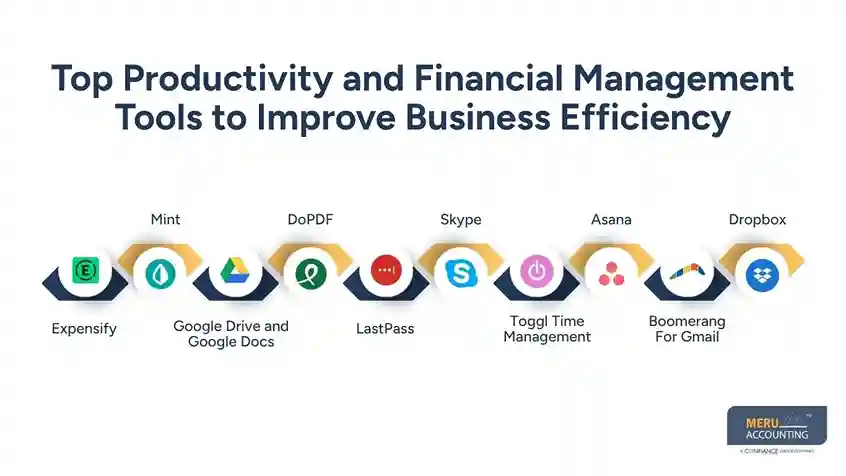
Skype
Skype provides communication features such as video calls, instant messaging, group chats, and screen sharing. It allows teams to conduct meetings and share information without delays.
Toggl Time Management
Toggl tracks how employees spend their working hours and provides time reports. It helps businesses understand productivity levels and review project profitability.
Asana
Asana helps teams manage projects, tasks, deadlines, and workflows in one place. It allows managers to track progress, assign responsibilities, and keep projects organized.
Boomerang For Gmail
Boomerang helps users schedule emails, set reminders, and manage inbox activities. It allows important messages to be sent at the right time and keeps email work organized.
Dropbox
Dropbox provides cloud storage for documents, images, and files that can be accessed from anywhere. Teams can work together on projects while keeping file updates saved automatically.
Improving Financial Planning And Forecasting With Productivity Tools
Planning for future income and expenses requires accurate information. Productivity tools give businesses access to organized records that make forecasting easier.
Good forecasting allows companies to prepare for changes and maintain steady financial growth.
Using Real-Time Business Data
Forecasting works better when businesses use updated information. Tools collect current data from daily activities. This helps managers understand present conditions before making future plans.
Setting Clear Financial Goals
Businesses need clear goals to measure success. Planning tools allow teams to set targets and track progress. This creates focus and keeps financial activities aligned with business needs.
Finding Cost Reduction Areas
Unnecessary costs can slow business progress. Data from tools helps managers identify areas where spending can be reduced. Lower waste allows businesses to use resources in a smarter way.
Preparing For Future Needs
Businesses must plan for upcoming expenses, projects, and growth needs. Forecasting tools provide information for preparation. This reduces sudden financial pressure and creates better control.
Measuring Business Results
Performance tracking shows whether plans are working. Tools provide reports that compare goals with actual results. These comparisons help businesses adjust plans when needed.
How Productivity Tools Improve Collaboration Between Finance and Business Teams
Finance and business teams must work together to maintain healthy operations. Productivity tools create a shared system where teams can exchange information.
Better teamwork supports accurate reporting and creates opportunities for stronger financial growth.
Sharing Important Updates
Finance teams need updates from sales, operations, and management teams. Shared platforms allow quick access to important information.
This reduces delays and keeps everyone aware of current business conditions.
Managing Approval Processes
Payments and purchases often require approval. Workflow tools make these processes easier to track.
Clear approval steps reduce confusion and maintain proper spending control.
Creating Common Work Records
Different teams may handle the same financial activities. Shared records prevent information gaps.
Everyone can work with the same details and avoid repeated efforts.
Supporting Faster Communication
Slow communication can affect financial decisions. Team tools allow quick discussions and updates.
Faster communication allows problems to be handled before they become larger issues.
Building Better Business Planning
Finance and operations teams need shared goals. Collaboration tools bring their work together.
This creates better planning and stronger control over business activities.
How Productivity Tools Support Sustainable Business Growth
Long-term business success requires good planning, cost control, and regular review of results. Productivity tools give companies a structured way to manage work and financial tasks. They create better visibility into business activities and allow owners to focus on areas that support financial growth.
Creating Better Work Systems
A strong work system reduces confusion and keeps tasks organized. Tools allow teams to follow clear steps for daily operations.
When processes are easier to manage, businesses can use their time and resources in a more useful way.
Managing Resources Wisely
Every business has limited resources such as money, time, and staff. Tracking tools show where these resources are being used. This information allows managers to make better choices and avoid waste.
Supporting Business Expansion
Growth requires proper preparation. Companies need clear records and reports before entering new markets or adding services. Tools provide useful information that allows leaders to plan expansion with more confidence.
Improving Customer Service Operations
Customer satisfaction affects business income. Task management and communication systems allow teams to respond better to customer needs. Better service can create stronger customer relationships and steady business results.
Building A Data-Based Approach
Business decisions become stronger when they are based on facts. Tools collect information from different activities and present useful reports. This allows leaders to understand trends and plan future actions.
Why Businesses Need Expert Support For Better Financial Management
While productivity tools provide many benefits, businesses still need proper financial knowledge to use data correctly. A tool alone cannot replace expert review and accounting skills.
Professional accounting support allows companies to turn business information into useful financial plans that contribute to long-term financial growth.
Understanding Business Numbers
Financial data needs proper review to become useful. Experts study reports and explain what the numbers mean. This allows business owners to make choices based on clear financial information.
Maintaining Accurate Records
Accounting accuracy is important for every business. Professional teams review transactions and records to maintain proper financial details. Accurate records create a reliable base for future planning.
Following Financial Rules
Businesses must follow tax and financial requirements. Expert accounting teams stay aware of important rules. This reduces the chance of mistakes and keeps business records organized.
Creating Better Financial Plans
Every business has different goals. Experts create plans based on business needs, income, costs, and future targets. This creates a practical path toward stable financial growth.
Saving Management Time
Business owners already handle many responsibilities. Accounting support allows them to focus on core business work. Professional assistance keeps financial tasks in order without adding extra pressure.
Why Choose Meru Accounting For Better Financial Management
Meru Accounting combines accounting expertise with suitable technology solutions to create organized financial processes for businesses. Our team focuses on accurate records, clear reporting, and efficient workflows that allow businesses to manage their finances with better control.
When companies use the right systems with expert accounting guidance, productivity tools become more effective by helping teams organize tasks, track financial activities, and maintain updated records. This structured approach creates better opportunities for long-term financial growth.
Experienced Accounting Support
Our team has experience in bookkeeping, accounting, and financial management services for different business needs.
We understand that each company requires a different approach to manage its financial work. We provide practical solutions that match business goals and daily operations.
Accurate Bookkeeping Services
Proper bookkeeping creates the base for reliable financial decisions. Our experts review transactions, organize records, and maintain accurate financial information. Clean records allow businesses to understand their income, expenses, and overall financial position.
Clear Financial Reporting
Financial reports give businesses important information about their performance. We prepare organized reports that make financial details easier to understand. These reports allow owners to review results and plan future actions with better knowledge.
Technology-Based Accounting Approach
Modern accounting requires proper systems and skilled handling. We use suitable software solutions and methods to manage financial tasks more efficiently. With the right tools and expert review, businesses can maintain better control over their accounting activities.
Helping Businesses Plan For The Future
Strong planning requires updated financial information and careful review. Our team helps businesses understand their records and prepare suitable financial strategies. This approach allows companies to manage challenges and work toward sustainable success.
Our Expert Perspective
From our experience at Meru Accounting, businesses gain the best results when they use productivity tools along with proper accounting guidance. These tools organize financial data, but real value comes when experts review and interpret it for better decisions. A balanced approach between technology and accounting knowledge creates more control over records and supports steady financial growth.
Key Takeaways
- Productivity tools allow businesses to organize daily work, track expenses, and manage important tasks.
- Better record-keeping creates a clearer view of business finances.
- Financial planning becomes stronger when companies use updated and accurate information.
- IT managers can use these systems to control costs and review technology spending.
- Team collaboration becomes easier when finance and business departments share information.
- Expert accounting support adds value by turning business data into useful financial decisions.
- Smart use of technology creates a stronger foundation for future success.
FAQs
Productivity tools are used to manage tasks, organize work, track information, and improve team coordination. Businesses use them to save time and keep daily activities in order.
Yes, these tools can assist with expense tracking, reporting, planning, and record management. They give businesses better visibility into their financial activities.
Small businesses can use these tools to manage work, control costs, and keep records organized. They can be useful even for small teams with limited resources.
These tools allow companies to manage tasks better, reduce wasted effort, and make decisions using accurate information. This creates better conditions for steady growth.
No, tools cannot replace professional accounting knowledge. They organize information, but experts are needed to review records, follow rules, and create financial plans.
optional anymore
on running the business