
Financial tracking in real estate operations plays a key role in reducing financial errors in property management services by improving how rent, expenses, and financial records are managed. In modern real estate operations, even small mistakes in numbers can lead to cash flow issues, tenant disputes, and reporting gaps. Property accounting ensures that every transaction is recorded in a clear and organized way, reducing the chances of misreporting.
In property management services, financial accuracy is not optional. It directly affects investor trust, tax filing, and property performance tracking. A dedicated property management accountant helps maintain this accuracy by applying consistent methods for recording income and expenses.
In this blog, we will explore how financial tracking reduces errors, why it is important, and how professionals improve accuracy in real estate operations.
What You Will Learn From This Blog
- How property accounting reduces financial errors in real estate operations
- Common mistakes in property financial management
- Role of a property management accountant in improving accuracy
- Methods used to improve rent and expense tracking
- Compliance and reporting improvements through structured accounting
- Benefits for property owners and managers
- Challenges and real solutions in property finance systems
Introduction To Property Accounting And Its Importance In Modern Real Estate Operations
Property accounting ensures every rent payment and expense is recorded in a structured format. This reduces confusion in financial statements and helps property owners maintain clear visibility of real-time financial health. It also supports consistent recordkeeping, which is important for reducing reporting errors in day-to-day property operations.
Modern real estate portfolios often include multiple properties, making financial tracking more complex. A property management accountant helps manage all financial records in one system, reducing the risk of missing entries or duplicate records. This also improves decision-making by giving investors accurate insights into rent pricing, maintenance budgets, and long-term asset planning.
With the growing use of digital tools, financial tracking in real estate has become more automated and accurate. Software-based systems help in rent tracking and expense classification, which reduces manual errors in data entry and improves overall financial reliability.
Common Financial Errors In Property Management Services
Incorrect Rent Recording
One common issue is recording wrong rent amounts or missing payments. Property accounting helps reduce these mistakes by automating rent logs.
Expense Misclassification
Expenses are often placed in the wrong category. A property management accountant ensures the correct classification of repairs, maintenance, and operational costs.
Duplicate Entries
Manual systems can lead to repeated entries. Modern accounting systems detect duplicates and avoid over-reporting, helping maintain clean financial records.
Delayed Financial Updates
Late updates in records lead to incorrect reports. With structured accounting processes, data is updated in real time, improving the accuracy of financial statements.
Reconciliation Errors
Bank reconciliation mistakes are common in property management. A finance expert carefully matches bank data with internal records to ensure consistency and reduce mismatches.
How Property Accounting Reduces Errors In Rent And Expense Tracking
Automated Rent Collection Records
Financial systems track rent payments automatically, reducing manual entry mistakes and improving accuracy in monthly rent records. Quick identification of unpaid or delayed rent becomes easier without confusion in tracking cycles.
Expense Categorization Accuracy
Clear classification rules ensure that each expense is recorded in the correct category, improving clarity in financial reporting and reducing misstatements. Better budget planning for maintenance and repairs becomes more structured and reliable.
Real-Time Financial Updates
Rent and expense data is updated instantly, which reduces reporting delays and helps maintain accurate financial statements. Faster decision-making becomes possible for property managers due to updated financial visibility.
Reduced Manual Intervention
Reduced manual work lowers the chances of human error in financial processes. A finance professional oversees systems to ensure proper recording and validation of data.
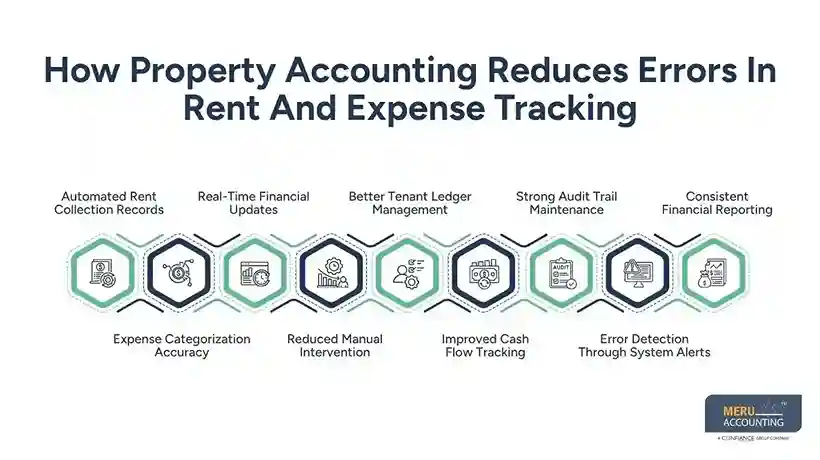
Better Tenant Ledger Management
Tenant-wise records are maintained clearly, helping avoid confusion in payments, balances, and outstanding dues. Communication with tenants becomes more transparent and supported by accurate data.
Improved Cash Flow Tracking
Accurate tracking of rent inflows and expenses helps property managers understand real cash position and avoid shortfalls in planning. Stronger liquidity management across properties supports better financial control.
Strong Audit Trail Maintenance
Every transaction is recorded with proper history, making it easier to trace errors and verify financial entries during audits. Accountability in financial operations becomes stronger with clear documentation trails.
Error Detection Through System Alerts
Modern financial systems generate alerts for unusual entries or missing data, helping identify issues before they affect reports. Early detection reduces the risk of long-term financial discrepancies.
Consistent Financial Reporting
Standardized reporting formats reduce variation in financial statements and ensure consistency across different properties and time periods. Reliable reports improve trust among stakeholders and investors.
Role of a Property Management Accountant in Financial Accuracy
Financial Record Maintenance
A property management accountant ensures all transactions are properly recorded under structured financial systems. This helps maintain clarity in income and expense tracking across all properties.
Error Detection And Correction
Regular review of records helps identify and fix errors before reports are finalized. Early correction reduces the risk of inaccurate financial statements affecting decision-making.
Budget Monitoring
Actual expenses are compared with planned budgets to detect financial inconsistencies early. This also helps in controlling overspending and improving cost control.
Compliance Support
Ensuring compliance with tax and reporting rules requires structured financial methods and careful documentation. Proper compliance reduces the risk of penalties and reporting issues during audits.
Reporting Accuracy
Accurate financial reports are prepared to reflect the true financial position of properties. Clear reporting improves trust among property owners and investors.
Improving Compliance And Reducing Reporting Mistakes Through Property Accounting
Standardized Reporting Methods
Fixed reporting formats help reduce confusion in financial statements and ensure consistency across records. Clear structure in reporting also makes comparison across periods easier and more reliable.
Tax Accuracy Improvement
Correct expense tracking supports accurate tax filing and reduces the risk of penalties. Better classification of costs also helps in identifying eligible deductions with clarity.
Audit Readiness
With property accounting, financial records remain properly organized and supported with documentation for audit checks. Easy access to transaction history helps in faster verification during audits.
Regulatory Alignment
A financial specialist ensures adherence to local financial laws and reporting standards. Careful monitoring of records helps maintain compliance with changing regulatory requirements.
Transparent Financial Records
Clear and transparent records reduce disputes between owners, managers, and tenants. Improved visibility of transactions also builds stronger trust among all stakeholders.
Benefits of Accurate Property Accounting for Property Managers and Owners
Better Financial Control
Clear visibility of income and expenses across properties helps improve overall financial control. Managers can easily track performance and identify areas that need attention.
Reduced Financial Losses
Minimizing recording and calculation errors helps avoid unnecessary financial losses. Better accuracy also prevents issues like missed payments or incorrect expense entries.
Improved Cash Flow Management
Accurate records support better planning of payments and collections across properties. This helps maintain stable cash flow and reduces liquidity pressure.
Strong Investor Confidence
Investors trust reports supported by structured financial systems and professional oversight. Reliable data builds confidence in property performance and long-term returns.
Efficient Decision Making
Clear financial insights from structured records support better business decisions. Property accounting helps improve data accuracy, which supports better planning for budgets, pricing, and investments.
Best Practices Property Management Accountants Follow to Avoid Errors
Regular Reconciliation
A property management accountant performs frequent reconciliation to ensure accuracy in financial records. This process helps match bank statements with internal entries to avoid mismatches.
Use Of Accounting Software
Digital systems reduce manual mistakes and improve processing speed. Automated features also help in maintaining consistency across large volumes of transactions.
Consistent Data Entry Standards
Standard rules help maintain uniform records across all properties. This reduces confusion and ensures that financial data follows the same format throughout.
Periodic Financial Reviews
Regular reviews help detect errors early in accounting systems. Early identification supports faster corrections and improves overall financial reliability.
Clear Documentation
Every transaction is supported with proper documents to avoid confusion later. Strong documentation also makes audits and verification processes easier and more accurate.
Role of Property Accounting
Property accounting helps maintain structured financial records, which reduces the chances of reporting mistakes. It also improves accuracy in tracking income, expenses, and overall property performance.
Challenges in Property Accounting and How Professionals Overcome Them
Handling Multiple Properties
Managing several properties can lead to confusion. Property accounting systems help centralize all records.
Manual Entry Errors
Human errors are common, but automation reduces these risks significantly. Digital tools also improve speed and accuracy in daily recordkeeping.
Changing Regulations
A property management accountant stays updated with financial laws to maintain compliance. Regular training and updates help reduce compliance risks.
Data Inconsistency
Different formats create confusion, but structured systems fix this issue. Standard templates ensure uniform reporting across all properties.
Time Management Issues
Time pressure often affects accuracy in financial work. A structured system improves efficiency by reducing manual workload and improving focus on analysis.
Why Choose Meru Accounting?
Meru Accounting provides specialized financial services designed to improve accuracy in real estate operations. Our team focuses on structured property accounting solutions that reduce errors and improve financial clarity.
We support property owners and managers by offering services handled by experienced professionals who understand global real estate requirements.
Our services include rent tracking, expense categorization, financial reporting, and compliance support. With strong experience across US and international markets, Meru Accounting ensures that accounting processes are accurate and consistent.
We also help clients migrate from manual systems or outdated tools to modern accounting platforms, reducing errors and improving reporting quality. Every specialist in our team follows strict review processes to maintain accuracy.
Key Takeaways
- Property accounting reduces financial errors in rent and expense tracking
- A property management accountant improves reporting accuracy and compliance
- Automation helps reduce manual mistakes in financial records
- Proper classification of expenses improves tax accuracy
- Structured systems improve investor trust and decision-making
- Regular reconciliation prevents financial misstatements
- Professional oversight improves long-term financial stability
FAQs
Property accounting is the process of recording, managing, and tracking financial transactions related to real estate properties in an organized way.
Structured financial tracking reduces errors by automating rent monitoring, organizing expense records, and maintaining consistent documentation.
A property management accountant manages financial records, checks accuracy, prepares reports, and ensures compliance in property operations.
Strong financial management helps owners track income, control expenses, and make better financial decisions using reliable data.
Accurate financial records support better planning of payments and collections, leading to improved cash flow stability.