
Scaling a real estate business is no easy task. With multiple properties, tenants, vendors, and complex financial regulations, real estate firms often struggle to maintain accurate records and strategic oversight. This is where a property management accountant becomes essential.
By combining financial expertise with knowledge of property management, these professionals ensure that growth is sustainable, compliant, and profitable. They not only track day-to-day financial transactions but also provide insights that guide long-term investment decisions.
With their support, real estate firms can anticipate challenges, optimize property performance, and confidently pursue expansion opportunities.
What You Will Learn From This Blog
- How a property management accountant plays a critical role in real estate operations.
- Benefits of hiring a real estate management accountant to scale your firm.
- Common financial and operational challenges faced without a dedicated accountant.
- Key metrics that guide successful property accounting.
- How accurate property accounting ensures regulatory compliance and strategic growth.
- How outsourcing accounting to a firm like Meru Accounting can make scaling easier.
Understanding the Role of a Property Management Accountant
Financial Oversight
A property management accountant ensures that every financial transaction related to properties is properly recorded. This includes rent collection, vendor payments, and maintenance expenses. Proper oversight reduces errors and improves financial visibility.
Budget Management
They track budgets for each property and project, helping management make informed decisions. For example, a property accountant can identify when maintenance costs are exceeding projections and suggest adjustments.
Cash Flow Monitoring
Monitoring cash flow is crucial for real estate firms. Property management accountants track incoming rent and outgoing expenses to prevent shortfalls that could affect operations.
Financial Reporting
Accurate reports give property owners insight into profits, losses, and overall portfolio performance. Monthly or quarterly reports allow firms to spot trends and make data-backed decisions.
Tenant and Vendor Accounting
Managing multiple tenants and vendors requires precise record-keeping. Property accountants ensure timely invoicing, payment tracking, and reconciliation to avoid disputes.
Forecasting and Planning
Beyond current operations, these accountants provide forecasts and financial plans for expansion, helping firms scale sustainably.
Benefits of Hiring a Property Management Accountant for Real Estate Firms
Accurate Financial Records
Property accountants maintain clear, organized financial records. This ensures no detail is overlooked, from utility payments to security deposits.
Cost Control
By analyzing expenses across properties, accountants identify inefficiencies and opportunities to reduce costs without compromising service quality.
They also set realistic spending limits for each property to maintain financial balance.
Simplified Tax Filing
With proper records, tax preparation becomes straightforward. Accountants ensure compliance with local and national regulations, reducing the risk of penalties.
Strategic Growth
By interpreting financial data, property management accountants highlight profitable investments, helping firms make strategic expansion decisions.
This ensures that capital is allocated to properties with higher long-term return potential.
Improved Investor Confidence
Investors prefer firms with organized finances. Accurate accounting enhances credibility, making it easier to attract capital for growth.
Operational Efficiency
Accountants streamline financial processes, allowing property managers to focus on tenant satisfaction and property maintenance rather than numbers.
This division of responsibility improves productivity across both financial and operational teams.
How a Property Management Accountant Supports Scaling Operations
Streamlined Financial Processes
They automate rent collection, expense tracking, and report generation, reducing manual errors and freeing time for strategic tasks.
This also ensures faster financial updates, allowing management to take quicker operational decisions.
Portfolio Analysis
Accountants analyze the performance of each property, helping firms decide which assets to retain, sell, or invest in further.
This helps in identifying underperforming assets early and reallocating resources more effectively.
Risk Management
Proper accounting identifies potential financial risks, such as late payments or unexpected expenses, allowing firms to plan mitigations. It also supports early warning signals that reduce the impact of financial disruptions on operations.
Expansion Budgeting
Before acquiring new properties, a property management accountant provides detailed financial projections through accurate property accounting, ensuring the firm can manage growth without overextending resources.
These projections also help in comparing multiple investment opportunities with clear financial clarity.
Investor Reporting
Scalable operations require transparent reporting. Accountants prepare clear statements for stakeholders, building trust and facilitating funding.
This transparency also improves long-term investor relationships and funding stability.
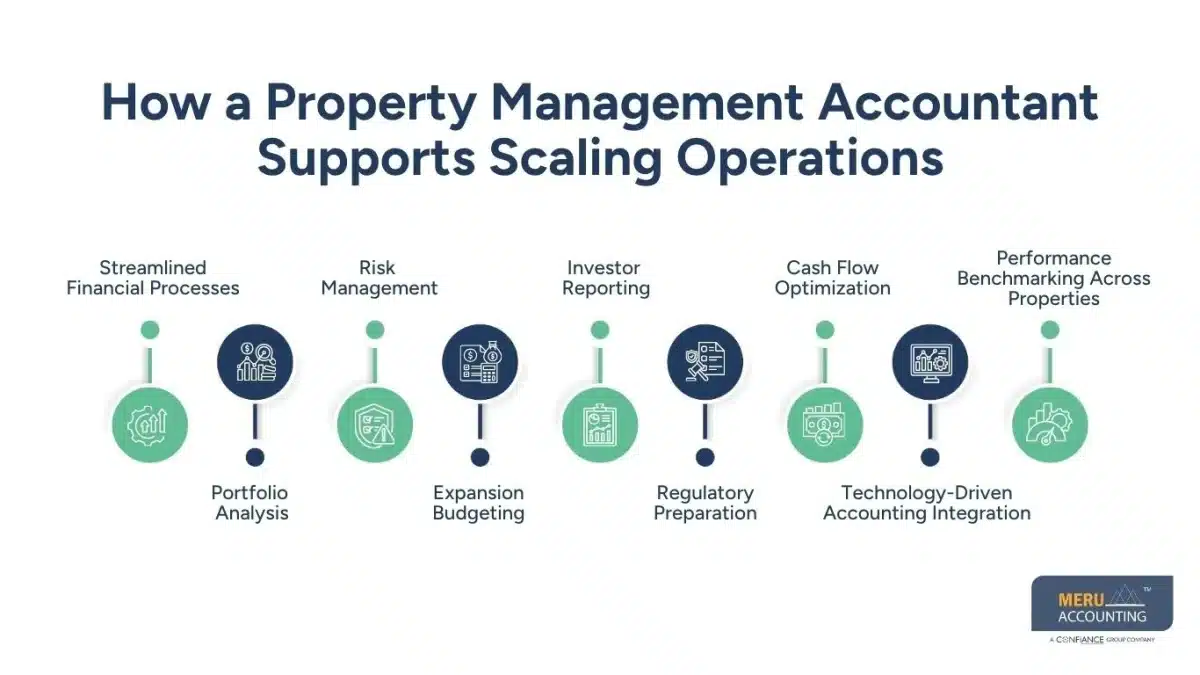
Regulatory Preparation
Scaling often involves entering new markets with different regulations. Accountants ensure that all financial operations remain compliant in each location.
Cash Flow Optimization
A property management accountant closely monitors inflows and outflows to maintain stable liquidity across multiple properties.
Operational expenses, loan obligations, and maintenance costs remain backed by sufficient cash availability.
Technology-Driven Accounting Integration
Modern accounting systems are integrated with property tools to automate data entry, reporting, and reconciliation.
Manual workload is reduced while accuracy in financial records across large property portfolios is improved.
Performance Benchmarking Across Properties
Accountants compare the financial performance of properties within the same portfolio to identify high and low performers.
Management can replicate successful strategies and improve underperforming assets for better returns.
Common Challenges Real Estate Firms Face Without a Property Management Accountant
Disorganized Financial Records
Without a dedicated accountant, records can become scattered, increasing the risk of missed payments or unrecorded income.
This disorganization can also make audits time-consuming and create confusion during financial reviews.
Tax Non-Compliance
Complex property taxes can easily lead to fines if not properly managed through professional property accounting by a property management accountant.
Failure to comply with tax regulations can damage the firm’s reputation and result in unexpected financial penalties.
Poor Decision-Making
Without financial insights, firms may invest in unprofitable properties or overspend on maintenance, limiting growth potential.
Lack of accurate data also prevents management from planning strategic expansion or cost-saving measures effectively.
Increased Operational Stress
Property managers handling accounting duties may face burnout, reducing their effectiveness in tenant relations and property maintenance.
This stress can lead to errors in record-keeping, delayed payments, and poor tenant satisfaction.
Limited Investor Trust
Investors expect full financial transparency and clear reporting of all property-related activities. Firms without proper accounting systems may struggle to secure funding or partnerships.
A lack of clear financial reporting can also make it harder to attract long-term investors or retain existing ones.
Missed Opportunities
Without proper financial analysis, profitable investment opportunities may go unnoticed, slowing business growth.
Firms may also fail to identify underperforming properties that could be sold or optimized for better returns.
Key Metrics a Property Management Accountant Tracks For Success
Occupancy Rates
Monitoring occupancy helps firms understand revenue streams and plan marketing strategies for vacant properties.
High or low occupancy levels also reflect tenant satisfaction and indicate which properties may need improvements or targeted promotions.
Rent Collection Efficiency
A property management accountant uses property accounting to track timely payments, identify problem areas, and support proactive tenant management.
Consistent tracking of rent collection ensures steady cash flow and reduces the risk of late or missed payments affecting operations.
Expense Ratios
Accountants measure costs relative to income, identifying areas for cost reduction and operational efficiency.
Analyzing expense ratios regularly allows firms to make informed budgeting and resource allocation decisions.
Maintenance Costs
Keeping maintenance spending under control ensures profitability while maintaining property value.
Careful planning of repairs and improvements enhances tenant satisfaction and preserves property quality over time.
Net Operating Income
This metric provides a clear picture of overall profitability and guides strategic decision-making.
Frequent evaluation of net operating income enables firms to benchmark performance and optimize operations for higher returns.
Capital Expenditure Planning
Proper tracking of long-term investments ensures properties remain competitive and attractive to tenants.
Detailed planning of upgrades and renovations helps management stay within financial limits while improving property appeal.
The Role of a Property Management Accountant In Regulatory Compliance
Tax Compliance
Accountants ensure all property-related taxes are filed accurately and on time, avoiding penalties.
Proper filing practices also reduce the chances of audits triggered by inconsistent or missing tax records.
Lease Compliance
Lease terms are verified financially, including rent adjustments and security deposits.
Regular monitoring of lease agreements prevents disputes between tenants and property owners.
Audit Preparation
Accurate financial records simplify audits, reducing time and stress for management. Well-organized records allow auditors to verify transactions quickly without delays.
Local Laws and Regulations
Property accountants stay updated on local and national regulations, ensuring operations remain compliant.
Continuous monitoring of legal updates helps firms adjust financial practices before rules change.
Transparent Reporting
Maintaining transparent reports demonstrates accountability to stakeholders and regulatory authorities.
Clear reporting strengthens trust with investors and improves financial credibility in the market.
Risk Mitigation
Proper compliance reduces legal risks and protects the firm’s reputation.
Early identification of compliance gaps prevents financial penalties and operational disruptions.
How Accurate Property Accounting Supports Strategic Expansion
Identifying Profitable Markets
Accountants analyze revenue and costs by location, helping firms target high-performing areas.
Location-wise financial insights also reveal market trends that guide smarter investment decisions.
Optimizing Portfolio Performance
Regular property accounting analysis by a property management accountant ensures resources are allocated to the most profitable properties.
Continuous performance tracking helps reduce investment in underperforming assets over time.
Managing Acquisition Risks
Before acquiring new properties, accountants provide financial due diligence to prevent costly mistakes.
Detailed risk assessment also highlights hidden liabilities that may impact future profitability.
Budgeting For Growth
Detailed accounting supports realistic financial planning for acquisitions, renovations, and marketing.
Well-planned budgets ensure expansion goals remain aligned with available financial resources.
Supporting Investor Relations
Clear financial records attract investors, enabling firms to access capital for expansion.
Strong reporting practices also improve investor confidence during funding discussions and reviews.
Ensuring Sustainable Operations
By monitoring expenses and cash flow, accountants help firms grow without overextending finances.
Balanced financial management ensures long-term stability during rapid business expansion.
Why Choose Meru Accounting?
Meru Accounting specializes in providing comprehensive property accounting services for real estate firms aiming to scale. Our team of certified accountants manages everything from rent tracking, vendor payments, and expense categorization to tax filing and investor reporting. With a team of dedicated property management accountants from Meru Accounting, firms can focus on growth and tenant satisfaction while we handle the financial complexities.
We also offer cloud-based bookkeeping solutions, enabling real-time access to property finances and streamlined reporting. By outsourcing your property accounting to Meru Accounting, your firm gains expertise, compliance assurance, and actionable insights for smarter investment decisions.
Key Takeaways
- A property management accountant ensures accurate financial records and streamlined operations.
- Proper accounting supports tax compliance, investor trust, and operational efficiency.
- Firms without dedicated accountants face financial mismanagement, compliance risks, and missed opportunities.
- Key metrics like occupancy rates, rent collection, and net operating income guide strategic decisions.
- Outsourcing to Meru Accounting can simplify growth, maintain compliance, and provide actionable insights for scaling operations.
FAQs
A professional in real estate accounting handles financial records, rent tracking, and reporting for real estate properties.
A property management accountant helps real estate firms scale by organizing financial records, improving cash flow visibility, and ensuring compliance with tax regulations.
Tracking performance and cash flow supports strategic decisions for expansion.
Rent collection, expense tracking, budgeting, vendor payments, and reporting are managed efficiently.
Outsourcing ensures precise records, saves time, and provides professional insights for growth.