
A real estate syndication may start with one property and a group of investors, but the money behind the deal can move in many directions. Investor contributions come in, property income is collected, loans are paid, expenses are recorded, and profits may later be split among several investors. Real estate accounting programs help bring those transactions into one organized system so sponsors can see where the money came from, where it went, and what each investor is owed.
That becomes even more important when a sponsor manages multiple properties, LLCs, or investor groups at the same time. Instead of relying on separate spreadsheets and manual entries, an accounting system can track property finances, investor equity, debt, distributions, and financial reports in a more consistent way. In this guide, we’ll look at how these programs manage real estate syndicated finance and support cleaner, more reliable syndication accounting.
What You Will Learn From This Blog
In this guide, you will learn:
- What real estate syndication accounting involves
- How real estate accounting programs manage investor and property finances
- How capital contributions and distributions are tracked
- Which financial reports matter in a syndication
- Common accounting issues that can affect real estate deals
- What to look for when choosing an accounting program
- When professional accounting support can add value
What Is Real Estate Syndication Accounting?
Real estate syndication is a structure in which multiple investors pool money to invest in a property or real estate project. A sponsor, or syndicator, often finds the deal, arranges the financing, oversees the property, and manages the investment on behalf of the group.
The accounting side must show where the money came from, where it went, and how it is shared. This can include investor contributions, acquisition costs, property income, repairs, management fees, loan payments, and other costs. The books should also show each investor’s share of the deal and any money returned to them.
Real estate syndicated finance can become more complex when a sponsor manages several properties or uses separate LLCs for each investment. Each entity may have its own bank account, loan, income, expenses, and ownership structure. Keeping these records separate helps prevent funds from being mixed between deals.
Good syndication accounting also supports clear reporting. Investors need financial information that helps them understand how a property is performing and how their investment is being handled. Sponsors need records that support tax work, audits, lender needs, and internal decisions.
How Real Estate Accounting Programs Manage Syndication Finances
Track Investor Capital Contributions
One of the first tasks is recording the money investors put into a deal. Real estate accounting programs can help track when funds are received and link those transactions to the correct property or entity.
This gives the sponsor a better view of total capital raised. It also helps maintain accurate investor equity records. When several investors contribute different amounts, a clear system is important for keeping ownership and capital data in order.
Record Property Income and Expenses
A syndication may earn rental income, parking fees, service income, or other property revenue. At the same time, the property may have costs for repairs, utilities, insurance, taxes, payroll, management, and maintenance.
Real estate accounting programs can organize these transactions by account and property. This helps sponsors see revenue and expenses without sorting through separate spreadsheets.
The result is a clearer view of property-level performance. It can also make it easier to spot unusual costs or changes in operating results.
Separate Property and Entity Finances
Many syndication deals use a separate legal entity for each property. That means the books for one investment should not be mixed with another.
Accounting systems can help maintain separate ledgers, bank accounts, and records for each entity. This is especially useful for sponsors with several active deals.
For real estate syndicated finance, entity-level records are important because they help show which investors, assets, debts, and transactions belong to each investment.
Track Debt and Loan Activity
Debt is often a major part of a real estate deal. Accounting records may need to track loan proceeds, principal payments, interest, fees, and other financing costs.
A good accounting setup can separate principal from interest and keep loan activity tied to the right property. This helps keep financial statements accurate and gives sponsors a better view of outstanding debt.
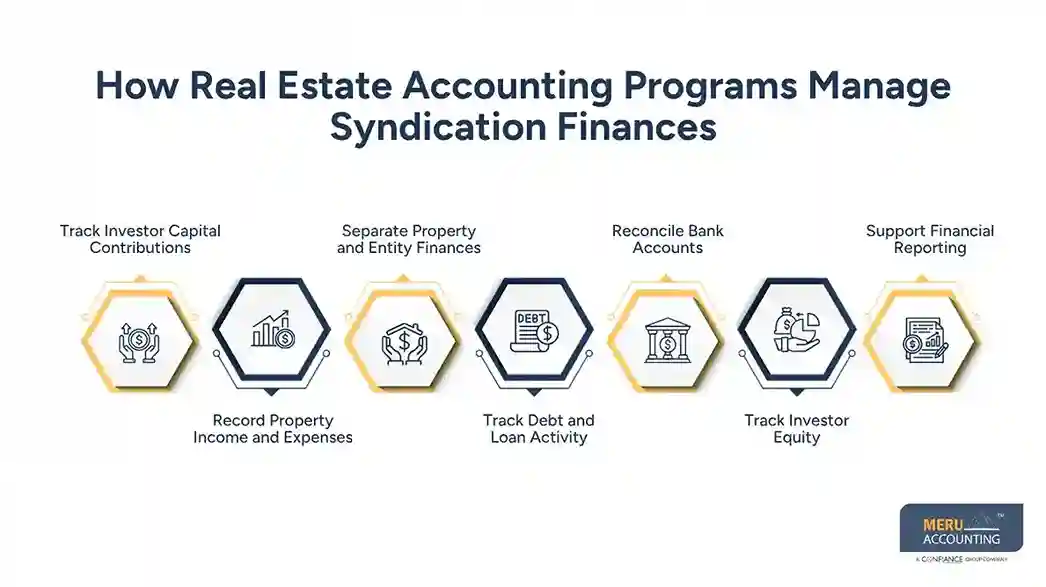
Reconcile Bank Accounts
Bank reconciliation is a key control for any real estate investment. It compares the transactions in the accounting records with the activity shown by the bank.
Real estate accounting programs can reduce manual work by importing bank activity and helping match transactions. Regular reconciliation can catch missing entries, duplicate transactions, incorrect amounts, and other errors before they affect reports.
Track Investor Equity
Investor equity is more than the amount initially invested. Capital accounts may change as investors contribute more funds, receive distributions, or receive their share of income or losses.
A structured accounting system helps maintain these records over the life of the investment. This gives the sponsor a stronger basis for investor reports and tax-related work.
Support Financial Reporting
Sponsors need reports that show both property performance and the overall financial position of a deal. Real estate accounting programs can help generate reports from the same underlying financial data.
This can save time and reduce the risk of building each report from scratch. It also helps create more consistent reporting from one period to the next.
optional anymore
on running the business
How Real Estate Accounting Programs Handle Investor Distributions
Investor distributions need careful tracking because they involve moving money from the investment to the people who own an interest in it.
Before a distribution is made, the sponsor may need to review available cash, property obligations, debt payments, reserves, and the terms of the operating agreement. The amount available for investors is not always the same as the property’s gross cash flow.
Real estate accounting programs can help record the distribution once it is approved. The system can also help track how much was paid, when it was paid, and which investor or entity received the funds.
The exact way distributions are calculated depends on the deal documents. Some structures may include a preferred return, a return of capital, or a profit split. Because these terms vary, accounting software should support the agreed structure rather than replace review of the governing documents.
For real estate syndicated finance, accurate distribution records help create a clear trail from property cash flow to investor payments.
Key Financial Reports for Real Estate Syndications
The right reports help sponsors and investors understand what is happening inside a deal. Common reports include:
Income Statement
An income statement shows revenue, expenses, and net income for a set period. It can help measure the property’s operating performance.
Balance Sheet
A balance sheet shows assets, liabilities, and equity. It gives a broader view of the financial position of the property or entity.
Cash Flow Statement
This report shows how cash moves through the business. It can help sponsors see cash from operations, investing activity, and financing activity.
Investor Capital Account Report
This report helps show each investor’s capital position and changes over time. It can include contributions, allocations, and distributions based on the accounting setup.
Distribution Report
A distribution report can show the amount paid to each investor and the date of payment. This creates a useful record for both internal review and investor communication.
Property-Level Performance Report
For sponsors with several properties, property-level reports help compare income, expenses, cash flow, and other key results across investments.
Using Real Estate Accounting Programs With Meru Accounting’s Services
The software is only as useful as the accounting structure behind it. For a real estate syndication, that means setting up the books so property activity, investor equity, debt, income, expenses, and distributions are recorded in the right place from the start.
Meru Accounting supports real estate businesses with accounting services built around that structure. Our work can include:
- Accounting setup: Organizing the chart of accounts, entities, and property-level books to fit the syndication structure.
- Bookkeeping and reconciliations: Recording transactions and matching bank and financial records so the books stay current.
- Investor and equity tracking: Maintaining records of capital contributions, ownership interests, and distributions.
- Property and debt accounting: Tracking rental income, operating costs, loan activity, interest, and other property-related transactions.
- Financial reporting: Preparing clear income statements, balance sheets, cash flow reports, and other reports sponsors may need for review and investor communication.
This approach lets sponsors use real estate accounting programs for the day-to-day work while having an accounting team review the numbers, resolve discrepancies, and keep reporting consistent. As deals and entities grow, that combination of technology and accounting expertise can make the financial side of a syndication easier to manage.
Our Expert Insight
In our experience, the biggest accounting risk in a real estate syndication is not always a missing transaction. It is often an allocation that looks right at first but does not match the deal terms. An expense, capital contribution, loan payment, or distribution may need to be split across entities or investors in a specific way. If that setup is wrong, the error can flow into investor balances and reports.
That is why we recommend reviewing the accounting structure when a deal changes—not just when the books are closed. New investors, refinanced loans, property sales, capital calls, or changes in ownership can all affect how transactions should be recorded. Real estate accounting programs can make this work easier, but experienced review is still needed to make sure the records reflect the actual deal structure.
Key Takeaways
- Real estate accounting programs can organize property, investor, debt, and cash activity in one system.
- Separate entity records help keep each syndication deal organized.
- Investor contributions and distributions need consistent tracking.
- Bank reconciliation helps catch errors before they affect financial reports.
- Income statements, balance sheets, cash flow reports, and investor reports provide key financial insight.
- Real estate syndicated finance often becomes more complex as the number of properties and investors grows.
- Software works best when it is supported by accurate setup, regular review, and professional accounting oversight.
FAQs
Track investor contributions, ownership, property income and expenses, debt, and distributions according to the deal structure.
No. Investor distributions are generally recorded as a reduction of equity or the investor’s capital account, rather than as an operating expense.
Property income shows what the property earned. Cash available for distribution also considers debt payments, reserves, capital needs, and other cash obligations.
- How should multiple LLCs be handled in a real estate syndication?
Each separate LLC should generally maintain its own financial records. This keeps property, liability, ownership, and tax information properly separated.
It may be time to consider real estate accounting programs when spreadsheets become hard to manage, or the deal involves multiple properties, investors, entities, or complex distributions.
optional anymore
on running the business