For many agents, the car is part of the job. A day may start with a trip to a listing, then move to a buyer meeting, an open house, an inspection, and a final stop at the office. These trips can add up to a large share of real estate agent expenses during the year. Because mileage can account for a meaningful portion of the expenses of a real estate agent, failing to track trips as they happen can make it difficult to distinguish business travel from personal use.
The IRS allows qualifying taxpayers to use either the standard mileage method or the actual vehicle expense method. The right method depends on the vehicle, business use, records, and tax situation. For 2026, the IRS business mileage rate is 72.5 cents per mile for January through June and 76 cents per mile from July through December.
This blog explains how to record mileage, separate business and personal use, compare the two tax methods, and keep better records for real estate agent expenses.
What You Will Learn From This Blog
- How to identify vehicle costs that may qualify as business expenses.
- How to record mileage and the business reason for each trip.
- How the standard mileage and actual expense methods differ.
- How to split vehicle use between business and personal driving.
- How to keep clear records that can support the expenses of a real estate agent on a tax return.
- How proper records can make real estate agent expenses clearer and easier to review during year-end accounting.
What Counts As Real Estate Agent Expenses For Vehicle Use?
Business Trips To Listings
Driving to a property for a showing, listing visit, photo session, or property review can be one of the expenses of a real estate agent when the trip meets the tax rules for business transportation. Record the date, place, miles, and reason for the trip.
Buyer And Seller Meetings
Travel to meet a buyer or seller may form part of real estate agent expenses when the trip has a clear business purpose. A mileage log should state who or what the meeting was for without adding private details that are not needed.
Open Houses And Inspections
Travel to an open house, home inspection, appraisal, or other work event may count as business driving when the trip is tied to the agent’s trade or business. Keep the related appointment or property record as additional proof.
Office And Vendor Trips
Trips to an office, printer, sign supplier, title company, or other business location may qualify in some cases. These trips should be recorded with the same care as other real estate agent expenses, especially when they are made for a specific business purpose.
The tax treatment can vary based on the route and purpose, so do not assume every drive from home to another place is deductible.
Personal Driving
A personal trip does not become a business trip because it happens on a workday. Grocery runs, family trips, personal errands, and other private travel should stay out of the business mileage total when calculating the expenses of a real estate agent.
How To Track Mileage For Real Estate Business Driving
Record The Start And End Miles
A strong mileage log can show the odometer reading at the start and end of a trip, making it easier to organize real estate agent expenses related to vehicle use. This gives you a clear way to check the miles claimed against the total vehicle use for the year.
Note The Date And Destination
Record the date and business destination for each trip. The IRS says records for car expenses should show items such as business mileage, total yearly mileage, date, destination, and business purpose.
Add The Business Purpose
Write a short reason such as “buyer showing,” “listing appointment,” or “property inspection.” A clear note is much stronger than a vague entry such as “work trip.”
Use A Consistent Log
You can use a paper log, spreadsheet, or mileage app, as long as the record captures the needed facts. The key is to record the trip near the time it takes place rather than trying to rebuild the year from memory.
Check The Log Each Month
A monthly review can catch gaps before they grow and make it easier to keep real estate agent expenses properly documented. Compare mileage with your calendar, listing schedule, inspection dates, and other business records to spot trips that may have been missed.
Standard Mileage Vs. Actual Vehicle Expenses
How The Standard Mileage Method Works
The standard mileage method uses an IRS-set rate for qualifying business miles. For 2026, the rate is 72.5 cents per mile for the first half of the year and 76 cents per mile from July 1 through December 31.
For example, 8,000 qualifying business miles driven in the second half of 2026 would produce a mileage amount of $6,080 before considering any separate costs that the tax rules allow.
How The Actual Expense Method Works
With the actual method, you track qualifying costs tied to the vehicle and claim the business share. These costs can include gas, oil, repairs, insurance, registration, lease payments, depreciation, tires, parking, and tolls, subject to the applicable IRS rules.
Which Method May Be Better For Your Business?
There is no single method that is best for every agent because the right choice can depend on the amount and type of real estate agent expenses incurred during the year.
An agent with high business mileage and moderate vehicle costs may prefer the standard method, while an agent with high vehicle costs and a strong business-use percentage may find the actual method worth reviewing.
Run the numbers under both methods when you are eligible to use both. A tax professional can also review limits, depreciation rules, vehicle type, and prior-year choices before you file.
Recordkeeping Requirements For Each Method
Good records matter under either method. Maintaining complete records also makes it easier to separate vehicle costs from other real estate agent expenses and determine which amounts relate to business use.
The IRS states that taxpayers generally cannot deduct amounts that are only estimated or approximated and should keep timely records and supporting documents.
Review The Method Before Filing
Do not wait until the tax return is being prepared to decide how your vehicle costs should be treated. A review during the year gives you time to fill record gaps and collect receipts that may otherwise be lost.
optional anymore
on running the business
Which Vehicle Costs Can Real Estate Agents Deduct?
Fuel And Oil
Fuel and oil may form part of real estate agent expenses under the actual vehicle cost method when the vehicle qualifies, and the costs are properly allocated to business use. Keep receipts or other records that show the amount paid.
Repairs And Tires
Repairs, tires, and routine work may form part of actual vehicle costs. Keep invoices with the date, vehicle details, and amount paid so the expense can be matched to your records.
Insurance And Registration
For real estate agent expenses, insurance and registration may be included under the actual expense method when the costs qualify and are properly divided between business and personal use. They are not separately deducted when using the standard mileage rate.
Parking And Tolls
Business parking fees and tolls can receive separate treatment under the IRS rules when tied to qualifying business travel. Keep the receipt and note the related business trip.
Depreciation Or Lease Costs
Depreciation may apply under the actual expense method for an owned vehicle, while qualifying lease costs may apply to a leased vehicle. Special rules can affect both, so these costs deserve a tax review before they are claimed.
How To Calculate Business And Personal Vehicle Use
Start With Total Annual Miles
First record the total miles driven during the year. This includes both business and personal miles and gives you the base needed for the business-use calculation.
Total The Business Miles
Next, add all miles tied to qualifying business trips. Keep the supporting mileage log rather than using a rough estimate at year-end.
Calculate The Business Percentage
For an actual expense calculation, a simple starting point for allocating vehicle-related real estate agent expenses is:
Business-use percentage = Business miles ÷ Total miles × 100
For example, if a vehicle travels 20,000 miles and 12,000 are qualifying business miles, the business-use share is 60%, which can be used to allocate eligible expenses of a real estate agent under the actual expense method.
Keep Personal Miles Separate
Personal miles should not be mixed with business miles. A clean split gives you a clearer record of the expenses of a real estate agent and reduces the risk of claiming costs tied to private use.
Review The Split At Year-End
Compare your mileage total with the vehicle odometer, service records, and other available records before finalizing your real estate agent expenses for the year. The IRS specifically requires records that show both business mileage and total mileage for the year.
How To Keep Accurate Records Of Real Estate Agent Expenses
Keep A Daily Mileage Log
A daily log is one of the simplest ways to build evidence for real estate agent expenses. Record the date, destination, purpose, starting miles, ending miles, and trip miles.
Save Receipts And Bills
If you use the actual expense method, keep fuel receipts, repair bills, insurance records, registration costs, parking receipts, and other documents related to the expenses of a real estate agent. The IRS notes that documentary evidence may be needed to support expenses.
Match Trips With Your Calendar
Your calendar can act as a useful cross-check. Listing appointments, inspections, buyer meetings, and open houses can show whether mileage entries match the business activities recorded as real estate agent expenses that day.
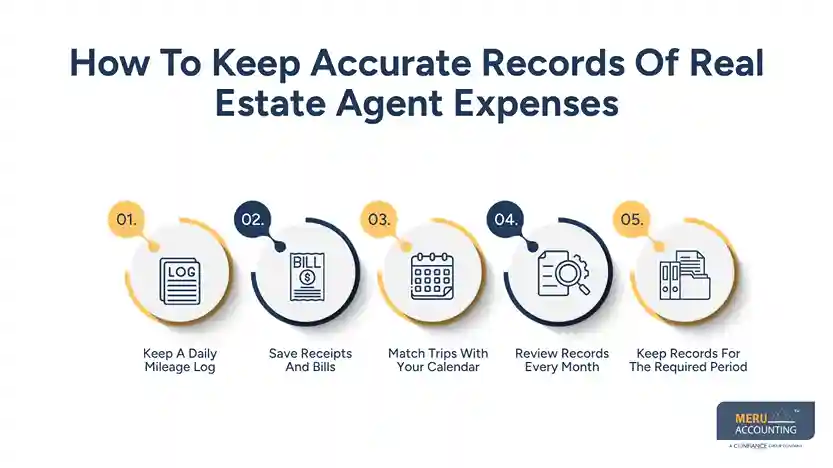
Review Records Every Month
A monthly review is easier than a large year-end clean-up. Check for missing receipts, unclear trip notes, duplicate entries, and gaps between the odometer record and mileage log.
Keep Records For The Required Period
The IRS generally says records supporting a deduction should be kept for three years from the date the related return is filed, although some situations require records for a longer period. Vehicle records can also need to be retained during the vehicle’s recovery period.
Partner With Meru Accounting For Real Estate Accounting Services
Meru Accounting provides accounting and bookkeeping services for U.S. businesses, including businesses that need organized records for real estate agent expenses and other real estate-related accounting needs. Its services can include bookkeeping, accounts payable and receivable, financial reporting, and related accounting work.
For agents who have many property visits, client meetings, inspections, and other work trips, organized books can make vehicle costs and other expenses of a real estate agent easier to review. Meru Accounting can provide accounting services based on the records and business needs of the client.
Tax deductions depend on the taxpayer’s facts and current IRS rules. A qualified tax professional should review the tax treatment of vehicle costs before a return is filed.
Our Expert Perspective
Mileage is often one of the easiest areas for a real estate agent to overlook because the trips feel like part of the daily routine. From an accounting view, the key issue is not just the number of miles. It is the link between the trip, its business purpose, and the records that back it up.
A useful approach is to record mileage when the trip occurs, save the related receipt when a cost is paid, and review the file each month. This creates a clear trail for real estate agent expenses and gives the tax preparer better records at year-end.
Key Takeaways
- Keep a mileage log for each qualifying business trip rather than estimating mileage at year-end.
- Record the date, destination, business purpose, starting mileage, ending mileage, and trip miles.
- Separate business driving from personal driving throughout the year.
- Compare the standard mileage method with the actual expense method when both are available, as the expenses of a real estate agent can vary depending on the vehicle and method selected.
- For 2026, the IRS business mileage rate is 72.5 cents per mile from January through June and 76 cents per mile from July through December.
- Keep receipts and other records for vehicle costs when using the actual expense method.
- Review real estate agent expenses each month so missing records can be found before tax filing.
- Ask a tax professional to review vehicle deductions when your situation includes leasing, depreciation, multiple vehicles, or mixed business and personal use.
- Accurate mileage records are an important part of managing the expenses of a real estate agent, particularly when vehicle use includes both business and personal trips.
FAQs
Yes, mileage for qualifying business trips to property showings can generally be included as part of real estate agent expenses when proper records are kept.
Record the date, destination, business purpose, and miles for each work trip, then keep the mileage log with your other business records.
Depending on the method used, real estate agent expenses for vehicle use may include fuel, repairs, insurance, tires, registration, parking, tolls, depreciation, or lease costs.
Usually, you cannot claim the same vehicle costs twice; the treatment depends on whether you use the standard mileage method or the actual expense method.
Divide your total vehicle use into qualifying business miles and personal miles, and claim only the portion that meets the applicable tax rules.
optional anymore
on running the business