
Real estate companies handle large volumes of financial data every day, including rental income, lease records, maintenance expenses, vendor payments, tax filing, and investor reporting. As property portfolios grow, managing these responsibilities internally becomes more difficult and time-consuming. This is why many businesses now rely on real estate asset management services to maintain organized financial records, monitor cash flow, and improve operational control across multiple properties.
At the same time, many firms are choosing outsourcing real estate tax and accounting functions to reduce internal workload and maintain accurate financial reporting.
Outsourced accounting teams manage bookkeeping, tax preparation, compliance, and reporting tasks while property owners focus on investment growth and tenant management.
Together, real estate asset management services and outsourced accounting create a more structured financial system that supports better reporting, lower operational pressure, and stronger decision-making for real estate businesses.
What You Will Learn From This Blog
- The role of real estate asset management services in property operations
- Why firms are adopting outsourcing real estate tax and accounting functions
- How outsourced accounting assists growing property portfolios
- The connection between financial reporting and asset management
- How global property investors manage accounting operations efficiently
- Important qualities to check before choosing service providers
- How Meru Accounting supports real estate businesses
- Key advantages of outsourced accounting and tax management
- Common financial challenges faced by real estate businesses
- Practical insights from real estate accounting operations
Introduction To Real Estate Asset Management Services
Real estate asset management services focus on managing the financial and operational performance of property investments. These services monitor property income, occupancy rates, maintenance costs, lease records, and overall investment performance to give investors a clear understanding of how their properties are performing.
Asset management providers also prepare financial reports that show rental income, operational expenses, and property profitability, which assist businesses in planning investments and managing tax responsibilities more effectively.
In addition, real estate asset management services organize lease agreements, tenant records, payment schedules, and renewal dates within a structured system. They also monitor recurring expenses such as repairs, insurance, utilities, and maintenance to reduce reporting mistakes and financial confusion.
Many investors also depend on these services for investment analysis and compliance documentation, as properly maintained records are important for audits, tax filing, and informed property-related decisions.
Why Companies Are Choosing Outsourced Real Estate Tax and Accounting Functions
Rising Financial Complexity
Real estate businesses now manage larger portfolios, cross-border investments, and multiple tax regulations. Outsourcing real estate tax and accounting functions gives firms access to experienced accounting professionals.
Cost Reduction
Maintaining large in-house accounting departments increases operational expenses. Outsourced accounting reduces recruitment, training, and infrastructure costs for property businesses.
Better Tax Compliance
Tax regulations for property investments continue to change frequently. Outsourced accounting firms monitor compliance requirements and prepare accurate tax reports for real estate companies.
Faster Financial Reporting
Investors require timely reports to evaluate property performance. Outsourced accounting teams prepare organized reports that improve financial visibility for decision-makers.
Access To Skilled Professionals
Experienced accounting specialists understand property accounting structures, lease accounting, depreciation rules, and tax filing requirements. Outsourcing provides direct access to this knowledge.
Focus On Business Expansion
When financial operations are managed externally through real estate asset management services, internal teams can spend more time on property acquisition, tenant relations, and investment planning.
Technology-Based Accounting Systems
Many outsourced accounting firms use advanced accounting software to manage financial records, reconciliations, reporting, and document storage. These systems increase reporting accuracy and allow property businesses to access financial information more efficiently.
Better Investor Communication
Real estate investors expect clear and timely financial updates regarding property performance and cash flow.
Outsourced accounting teams prepare organized financial statements and reports that improve communication between property managers and investors.R
How Real Estate Asset Management Services Improve Financial Operations
Organized Financial Data
Real estate asset management services maintain centralized financial records for all properties. This organized structure allows outsourced accounting teams to prepare reports more accurately.
Cash Flow Monitoring
Property owners must track rental income and operating expenses regularly. Asset management systems provide clear cash flow visibility that supports financial planning.
Budget Planning
Real estate firms create annual budgets for repairs, renovations, and operational expenses. Asset management services track spending against planned budgets and identify unusual cost increases.
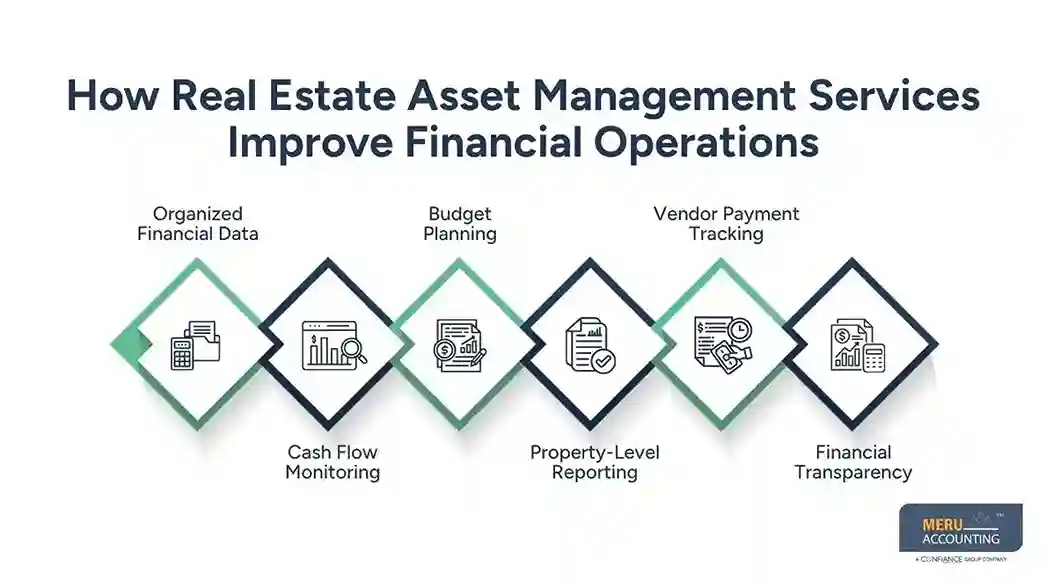
Property-Level Reporting
Each property performs differently based on location and market demand. Asset management reports provide individual property analysis that supports accounting accuracy.
Vendor Payment Tracking
Property businesses work with contractors, maintenance providers, and service vendors. Organized vendor records reduce payment disputes and accounting errors.
Financial Transparency
Investors expect detailed financial visibility before making investment decisions. Asset management services provide structured financial reports that improve investor confidence.
Benefits of Outsourcing Real Estate Accounting for Growing Property Portfolios
Easier Portfolio Expansion
As property portfolios grow, accounting workloads increase rapidly. Outsourced accounting firms manage these additional responsibilities without increasing internal staffing pressure.
Improved Accuracy
Experienced accounting teams follow structured review processes that reduce bookkeeping mistakes and reporting inconsistencies.
Better Time Management
Internal teams often spend excessive time handling invoices, reconciliations, and financial reports. Outsourcing allows staff to focus on operational growth activities.
Scalable Accounting Support
Outsourced accounting services can adjust according to portfolio size. This flexibility is useful for businesses managing seasonal or rapidly expanding property operations.
Reduced Administrative Burden
Managing payroll, bookkeeping, tax filing, and reporting internally creates administrative pressure, which is reduced through real estate asset management services. Outsourcing simplifies these responsibilities for property businesses.
Consistent Financial Reporting
Growing real estate portfolios require regular investor reporting. Outsourced accounting teams provide consistent financial statements across all managed properties.
How Outsourcing Real Estate Functions Helps Reduce Operational Burden
Lower Internal Workload
Daily accounting responsibilities often consume significant management time and internal resources. External accounting support reduces pressure on in-house teams and allows businesses to manage operations more efficiently.
Reduced Recruitment Challenges
Finding and training experienced accounting professionals can become costly and time-consuming for property businesses. External service providers remove the need for continuous hiring and staff training.
Simplified Tax Preparation
In outsourcing real estate accounting, property tax reporting includes detailed calculations, compliance checks, and document preparation handled by specialists. Professional tax specialists manage these responsibilities with greater accuracy and consistency.
Better Record Maintenance
Well-organized financial records are important during audits and compliance reviews. Structured accounting systems maintain documentation properly throughout the financial year.
Technology Support
Modern accounting firms use advanced software to automate reconciliations, reporting, and transaction tracking. This creates more accurate financial management in outsourcing real estate and reduces manual errors.
Multi-Property Coordination
Businesses managing properties across different locations require centralized financial systems, which are effectively supported by real estate asset management services. Professional accounting teams coordinate records for multiple properties through one organized process.
How Global Investors Benefit From Outsourcing Real Estate Accounting Functions
Cross-Border Financial Management
International investors often rely on real estate asset management services to manage properties across multiple countries with different financial regulations.
Professional accounting teams organize records according to regional compliance requirements.
Currency Tracking
Global property transactions involve multiple currencies and exchange rate adjustments. Experienced accounting professionals maintain accurate records for international financial activities.
International Tax Support
Every country follows different property tax laws and reporting standards. Specialized tax teams prepare financial reports according to local tax requirements and filing rules.
Centralized Reporting
Many investors prefer consolidated financial reports for all their properties. Structured reporting systems provide complete financial summaries for easier investment review and planning.
Risk Reduction
Incorrect accounting records can create legal, financial, and tax-related issues. Professional financial oversight reduces compliance risks and reporting errors significantly.
Key Features To Look For In Real Estate Asset Management Service Providers
Real Estate Industry Experience
Service providers should understand property accounting, lease structures, and investor reporting requirements.
Strong industry experience ensures better handling of complex property portfolios and long-term investment structures.
Tax Knowledge
Property taxation in real estate asset management services involves specialized rules related to depreciation, rental income, and capital gains. Strong tax knowledge is important.
Financial Reporting Capabilities
Investors require clear financial reports that explain property performance accurately. Reporting quality should always be evaluated carefully.
Technology Integration
Modern accounting software improves reporting speed and record accuracy. Service providers should use reliable accounting systems.
Data Security
Financial records contain sensitive information. Providers should maintain strong data protection and secure reporting systems.
Communication And Support
Regular communication is necessary for handling property operations smoothly. Reliable support teams improve overall financial coordination.
How Meru Accounting Supports Real Estate Businesses
Specialized Real Estate Accounting Services
Meru Accounting provides accounting and bookkeeping services for real estate businesses. We manage property accounting, lease records, expense tracking, and financial reporting. This creates more organized financial operations.
Tax Preparation And Compliance
Meru Accounting assists property firms with tax filing and compliance reporting. We also manage financial documentation carefully. Our team reduces tax-related pressure for investors and property managers.
Outsourced Bookkeeping Support
We provide outsourced bookkeeping services for real estate businesses. Our team maintains organized financial records across multiple properties. We also ensure accurate transaction management.
Financial Reporting Solutions
As part of real estate asset management services, Meru Accounting prepares detailed financial reports for property owners.
These reports show rental income, operational expenses, and investment performance clearly. This gives businesses better financial visibility.
Software Integration Services
We work with modern accounting software systems. These systems improve reporting efficiency and automate financial processes. We also maintain properly organized accounting records.
Global Client Support
Meru Accounting supports clients from different countries. We manage international property accounting requirements through structured reporting and organized accounting processes.
Our Expert Perspective
From our expert perspective, real estate businesses often face increasing challenges in managing financial operations as their property portfolios expand faster than internal systems can keep up; While owners focus on acquisitions, leasing, and tenant management, accounting complexities tend to grow, leading many businesses to rely on real estate asset management services for better financial organization.
Combining asset management support with outsourced accounting creates a more structured financial framework for real estate businesses. It improves visibility into property performance, maintains organized tax records, reduces operational burden, and supports more accurate financial reporting for long-term investment decisions.
Key Takeaways
- Real estate asset management services organize property financial operations
- Outsourcing accounting reduces internal workload for property firms
- Accurate reporting supports better investment decisions
- Outsourced tax management reduces compliance risks
- Growing portfolios require scalable accounting systems
- Global investors benefit from centralized financial reporting
- Organized financial records improve operational control
- Meru Accounting provides specialized accounting support for real estate businesses
FAQs
Real estate asset management services involve managing financial and operational activities related to property investments. These services include financial reporting, expense monitoring, lease tracking, and investment analysis.
Many firms outsource accounting to reduce operational workload, lower staffing costs, maintain accurate records, and manage tax compliance more effectively.
Outsourced accounting provides organized financial reporting, accurate bookkeeping, tax preparation, and better visibility into property performance.
Yes. Many outsourced accounting providers manage international reporting, currency tracking, and compliance requirements for global property investors.
Financial reporting allows investors and property managers to monitor rental income, expenses, profitability, and overall property performance accurately.