
A rental property can look simple from the outside. Rent comes in. Mortgage payments go out. Repairs get paid. Then tax time arrives. But once you own more than one property, things can change fast. One house may need a roof. Another may sit empty for two months. A third may be sold. You may also have loans, insurance, property tax, repair bills, and high costs that should not all be treated in the same way. This is where a real estate CPA can make a real difference.
The issue is not just finding someone who can file a tax return. You need an accountant who knows how property income, costs, depreciation, sales, loans, and business records fit together. The IRS notes that rental real estate can involve rules for income, expenses, depreciation, passive losses, and at-risk limits.
So, how to choose a real estate CPA is not a question that should be answered by looking at price alone. The better question is whether the accountant knows your type of property business and can keep your records ready for both tax work and day-to-day decisions.
What You Will Learn From This Blog
- What makes a real estate CPA different from a general tax preparer.
- Which accounting and tax tasks may matter to property owners.
- What can go wrong when property records are not kept well.
- How to compare experience, fees, services, and credentials.
- Questions that can show whether an accountant knows real estate.
- When it may be the right time to hire a CPA for your property business.
What Is A Real Estate CPA?
A real estate CPA is a certified public accountant who works with landlords, investors, agents, developers, and other property-based businesses. Unlike a general accountant, a real estate CPA understands the financial records tied to property, such as rental income, loans, repairs, improvements, property taxes, and sales. This industry knowledge matters because property records can become complex as the number of assets grows.
Real estate tax work also has its own rules. Rental income and many property costs must be reported based on the facts of the activity, while depreciation is handled over time rather than as a simple cash expense.
A landlord with two homes may have very different needs from a developer managing several projects, so the accountant’s experience should match the type of property business being run.
Credentials matter as well. Before hiring, check that the accountant is a licensed CPA and ask who will prepare and review your return. The IRS states that CPAs, attorneys, and enrolled agents have unlimited representation rights before the IRS, including matters such as audits and appeals.
What Can Go Wrong Without The Right Accountant?
A Repair May Not Be A Simple Expense
Say you spend $2,000 fixing a rental home. Another job costs $25,000 and adds a major new feature to the property.
Those two costs may not receive the same tax treatment. The IRS rules distinguish between current expenses and capital costs, so the facts and nature of the work matter.
Property Records Can Get Mixed
Imagine owning five rental homes but keeping all rent and costs in one large account.
You may know the total income, but you may not know which property earns the most, which has high repair costs, or which one is using more cash than expected.
Depreciation Can Be Missed
Depreciation is a key part of rental property tax work. The IRS says depreciation begins when qualifying property is placed in service for income production and that basis, recovery period, and method affect the deduction.
This is one area where poor records can create trouble later.
A Property Sale Can Change The Tax Picture
Selling a property is not just a bank deposit.
The sale may require a review of the property’s basis, prior depreciation, selling costs, and gain or loss. The tax result should be reviewed before the deal is treated as complete.
Small Errors Can Grow Over Time
One wrong account code may not seem serious.
But if the same error is made each month for several years, fixing the books can take much more time. Good accounting is often about keeping small issues from becoming large ones.
What Services Does A Real Estate CPA Provide?
Bookkeeping And Monthly Reports
A real estate CPA may review or manage books that track rent, property costs, loans, bills, and other transactions.
Monthly reports can show income, expenses, cash flow, and results by property.
Tax Return Preparation
Tax filing may include individual, partnership, corporate, or other returns based on the owner’s structure.
The right return and schedules depend on the facts, so the accountant should review the business before deciding what forms are needed.
Depreciation And Asset Records
Property owners need more than a list of monthly bills.
Asset records can include purchase costs, improvements, placed-in-service dates, and other data used in tax work. The IRS notes that depreciation and basis are linked, and basis can also affect gain or loss when property is sold.
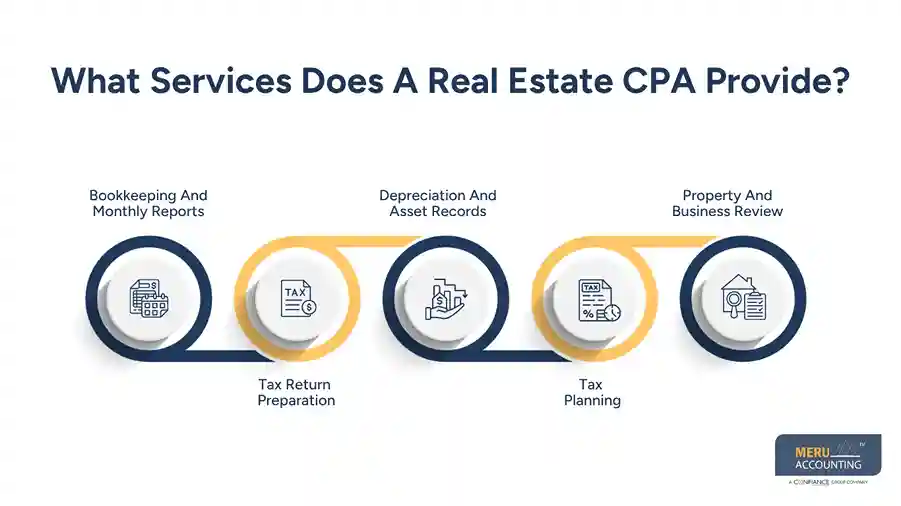
Tax Planning
Tax work should not always start after the year ends.
Before a purchase, sale, entity change, or major project, ask the CPA what records and tax points should be reviewed. Early review can give the owner more time to act.
Property And Business Review
A real estate CPA can also review financial reports to show where money is coming from and where it is going.
This can be useful when an owner has several assets and needs more than one total profit number.
optional anymore
on running the business
Why Hire A Real Estate CPA For Your Business?
A Growing Property Portfolio
Managing one rental property may feel simple, but five or ten properties can create a very different workload. Each property may have its own rent, repairs, loan, insurance, tax bill, and cash flow. A real estate CPA can set up records that keep these details clear as the portfolio grows.
Complex Tax Rules
Rental tax work can involve passive activity limits, at-risk rules, depreciation, and other tax rules. The IRS notes that rental real estate losses may be subject to these limits, with certain exceptions based on the taxpayer’s facts. A qualified CPA can review these rules instead of relying on guesswork.
Property Purchases And Sales
Buying or selling a property can affect more than your bank balance. The transaction may raise questions about basis, depreciation, costs, gain, or loss. A real estate CPA can review the numbers before closing and point out tax or record issues that may need attention.
Clearer Property-Level Reports
Suppose your books show $300,000 in rental income, but you cannot tell which property earned the most or which one had the highest repair costs. Total figures alone may not give you enough information. A better accounting setup can show income and costs for each property.
IRS Tax Matters
Tax questions can become more serious when an IRS notice, audit, collection issue, or appeal is involved. The IRS states that CPAs have unlimited representation rights before the agency. However, not every CPA handles tax disputes, so ask about this service before hiring.
How To Choose A Real Estate CPA
Start With Your Property Type
First, define what you actually do.
Are you a landlord, investor, agent, developer, property manager, or owner of commercial property? Your answer should guide the type of accountant you seek.
Ask For Real Examples
Instead of asking only, “Do you work with real estate clients?” ask what type of clients they serve.
When considering how to choose a real estate CPA, ask for examples that match your property type rather than relying only on a general claim of real estate experience.
Check Credentials And PTIN
If someone prepares federal tax returns for pay, they need a valid PTIN. The IRS says paid preparers must have a PTIN and include it on returns they prepare.
Also check the CPA’s state license and ask who will sign and review your return.
Compare The Full Fee
A low fee may cover only one tax return.
Another firm may charge more but include monthly books, year-end reports, tax planning, and review calls. Compare the full scope before you compare the price.
Test The Communication
When deciding how to choose a real estate CPA, ask a real question before you hire.
A strong sign is a clear answer that explains the issue in plain words. If every answer is vague or you cannot reach the person doing the work, think twice.
Questions To Ask Before Hiring A Real Estate CPA
How Many Real Estate Clients Do You Serve?
Do not settle for a simple yes or no.
Ask what type of property clients the firm serves and whether they have worked with businesses similar to yours.
Who Will Prepare My Return?
You may speak with a senior CPA during the sales call but later deal with another person.
Ask who will do the daily work, who will review it, and who will answer questions after filing.
What Is Included In Your Fee?
Ask if bookkeeping, tax returns, year-end close, tax planning, calls, and notices are included.
Get the answer in writing so there is less room for confusion later.
How Do You Track Each Property?
This question can reveal how well the firm understands property accounting.
Ask whether income and costs can be shown by property and how loans, improvements, and asset records will be tracked.
What Happens If The IRS Sends A Notice?
The IRS advises taxpayers to choose a preparer who can be reached after filing because questions may arise months or years later.
Ask who will review a notice and what fees may apply.
What Records Do You Need From Me?
A good accountant should be able to give you a clear list.
This may include bank statements, loan records, closing documents, rent data, invoices, property tax bills, insurance records, and details of major improvements.
When Should You Hire A Real Estate CPA?
Before Your First Purchase
If you are about to buy your first rental, this can be a good time to speak with a CPA.
You can discuss record setup, entity questions, expected costs, and the tax side of the purchase before the deal is done.
Before Buying More Properties
A growing portfolio can make weak books harder to fix.
If you plan to add more assets, review your accounting system before the next purchase adds another set of rent, debt, costs, and tax records.
Before Selling An Asset
Do not wait until the sale is over.
Ask your real estate CPA to review the asset records and tax position before closing, especially when the property has been held for many years.
After A Major Change
A new partner, new entity, large renovation, property conversion, or major sale can change your accounting and tax needs.
Bring the CPA into the discussion early rather than asking for a review after the transaction is done.
When Tax Problems Appear
A tax notice, audit, missing return, or unclear deduction is a clear reason to seek qualified advice.
The IRS also notes that taxpayers remain responsible for the accuracy of their returns, even when a paid preparer completes them.
A Practical Example: Choosing Between Two CPAs
CPA A Looks Cheaper
CPA A quotes $1,000 for the tax return.
The price looks good, but the service includes little or no monthly bookkeeping. You also learn that the CPA has few property clients.
CPA B Costs More
CPA B charges more but reviews monthly books, tracks property-level data, reviews depreciation records, and includes a year-end tax review.
The higher fee may be worth considering if those services match your needs.
Look At The Full Value
This does not mean the more costly CPA is always better.
The point is to compare the work, experience, review process, and access you receive for the fee.
Ask What You Actually Need
A person with one rental home may not need a large monthly service plan.
An investor with 15 properties and several entities may need much more.
Make The Choice Based On Fit
The best real estate CPA is not always the one with the lowest price or the largest firm.
It is the one whose skills, service scope, communication, and work process match your actual needs.
Partner With Meru Accounting For Real Estate Accounting Services
Accounting And Bookkeeping
Meru Accounting provides accounting and bookkeeping services for U.S. businesses, including businesses with real estate accounting needs.
Services can include bookkeeping, accounts payable and receivable, financial reporting, and related accounting work.
Property-Level Records
Real estate businesses often need clear records for rent, bills, repairs, loans, and other costs.
Meru Accounting provides accounting services that can be set up around the financial records and reporting needs of the business.
U.S. Accounting Needs
Meru Accounting provides services across all 50 U.S. states and works with U.S. accounting requirements.
Its team works with accounting platforms such as QuickBooks, Xero, Zoho Books, NetSuite, and Odoo.
Flexible Service Scope
A small investor and a larger property firm may need different levels of accounting work.
Meru Accounting provides services based on the records, reports, and bookkeeping needs of the business.
Our Expert Perspective
Knowing how to choose a real estate CPA starts with the work your property business needs, not with a list of generic services.
Ask about real estate experience. Ask how property records are kept. Ask who reviews the return. Ask what the fee covers. Most of all, give the accountant a real case and see how clearly they explain it.
That short test can tell you more than a polished sales pitch.
Key Takeaways
- Choose a real estate CPA with experience that matches your type of property business.
- Look beyond the tax return and review the firm’s bookkeeping and reporting process.
- Check CPA credentials and PTIN requirements before hiring.
- Ask how each property, loan, repair, and improvement will be recorded.
- Compare the full service scope instead of choosing only by price.
- Bring an accountant into major property purchases and sales early.
- Keep records for rent, costs, loans, improvements, and property basis.
- Choose a firm that can answer questions after tax season.
FAQs
A real estate CPA handles accounting, tax filing, financial records, depreciation, and tax planning for property owners and real estate businesses.
Choose a CPA for Real Estate by checking experience, CPA credentials, services, fees, communication, and knowledge of your type of property business.
A real estate CPA may charge based on the number of properties, tax returns, bookkeeping work, entities, and other services included in the engagement.
You should hire a real estate CPA before a major property purchase or sale, as your portfolio grows, or when your tax and accounting needs become more complex.
Ask about real estate experience, services included, fees, property-level accounting, tax return review, and who will handle your account.
optional anymore
on running the business