Choosing a Real Estate tax preparer for a partnership is not just about finding someone who can file Form 1065. Real estate deals can involve rental income, depreciation, partner contributions, debt, property sales, and other tax items that need to be handled with care. The wrong fit can lead to missed details, weak records, or last-minute tax issues.
Before you hire, look at more than credentials and price. A preparer should have experience with real estate partnerships, understand how partner-level reporting works, and know what to look for in your books and property records. In this guide, we’ll cover the key questions to ask and what to consider when choosing a Real Estate tax professional for your partnership.
What You Will Learn From This Blog
In this blog, you’ll learn:
- What a Real Estate tax preparer does for partnerships
- Why real estate partnerships have unique tax needs
- What skills and experience to look for
- Questions to ask before hiring a preparer
- Key tax issues your preparer should understand
- How to compare tax preparation services
- When a Real Estate tax professional may be a better fit for ongoing needs
What Does a Real Estate Tax Preparer Do for Partnerships?
A Real Estate tax preparer helps a partnership report its income, costs, assets, and other tax items in line with federal and state rules. The exact work can vary based on the type of property, number of partners, and deal structure.
For many partnerships, the work includes preparing Form 1065 and the related partner tax forms. The preparer may also review income and expense records before the return is filed.
A strong preparer may help with:
- Rental and other property income
- Property taxes and insurance
- Repairs and other operating costs
- Depreciation records
- Partner contributions and distributions
- Partnership debt
- Property purchases and sales
- Gains and losses
- Partner basis records
- Schedule K-1 reporting
The preparer should also review the books for tax issues. This does not mean they replace your bookkeeper. Instead, they can flag items that need review before tax work begins.
For example, a partnership may record a large property purchase as an expense when it should be treated as an asset. A tax preparer with real estate experience is more likely to catch this issue and ask for the right records.
Why Real Estate Partnerships Have Unique Tax Needs
Real estate partnerships have tax needs that differ from many small businesses. The partnership may own one property or a large portfolio. It may also have several partners with different ownership shares.
The partnership itself may not pay federal income tax in the same way a regular corporation does. Instead, income, gains, losses, deductions, and other items generally pass through to the partners.
That creates several areas that need close attention.
Multiple Partners
Each partner may have a different ownership share or economic interest. The tax return must reflect the agreed structure and the applicable tax rules.
Property Income and Costs
Rental income, management fees, repairs, insurance, property taxes, and other costs must be tracked and reported in the right way.
Depreciation
Real estate can involve large depreciation deductions. The useful life, placed-in-service date, improvements, and asset type can all affect the tax treatment.
Contributions and Distributions
Partners may put cash or property into the partnership and later receive cash or other assets. These events can affect basis and other tax items.
Debt and Basis
Real estate deals often use loans. Partnership debt can affect a partner’s tax basis, so debt records need to be accurate and tied to the partnership’s books.
Property Sales
Selling a property can create taxable gain or loss. The calculation may involve the property’s adjusted basis, depreciation, selling costs, and other factors.
Because of these issues, general tax knowledge may not be enough. A Real Estate tax professional should understand how property activity and partnership rules work together.
What to Look for in a Real Estate Tax Preparer
Not every tax preparer has the same level of real estate experience. Before hiring one, look beyond price.
Real Estate Experience
Ask how much of their work involves real estate investors, rental properties, and partnerships. Relevant experience can help them spot issues that a general preparer may miss. A real estate tax preparer with partnership experience should also understand how property records connect to the tax return.
Partnership Tax Knowledge
Your preparer should be comfortable with partnership returns, partner reporting, capital accounts, basis, and Schedule K-1s.
Experience With Similar Deals
A person who handles simple rental properties may not be the right fit for a partnership with several properties, multiple partners, or frequent property sales. A real estate tax preparer who has handled similar deals is more likely to understand the tax issues involved.
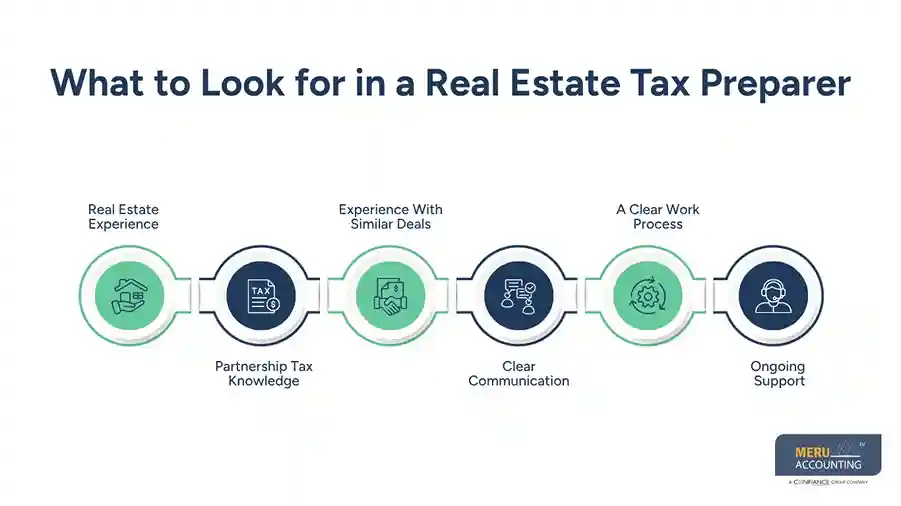
Clear Communication
Tax terms can be hard to follow. Your preparer should explain what they need, why they need it, and what an item means for your partnership.
A Clear Work Process
Ask how they collect records, review the books, prepare the return, handle questions, and complete the final review.
Ongoing Support
Some partnerships need help only during tax season. Others need support throughout the year. A Real Estate tax professional can be useful when you need help with major deals or tax planning before a transaction takes place.
optional anymore
on running the business
Questions to Ask Before Hiring a Real Estate Tax Preparer
A short interview can tell you a lot about a tax firm’s fit for your partnership.
Ask questions such as:
How much real estate partnership work do you handle?
You want to know whether real estate partnerships are a core part of the firm’s work or only an occasional job.
Who will prepare and review our return?
The person selling the service may not be the person doing the work. Ask who will handle your account and who reviews the final return.
What records do you need from us?
A good preparer should give you a clear list of records before work begins. This may include financial statements, prior returns, loan records, closing statements, and partner activity.
Do you help with tax planning?
If your partnership plans to buy, sell, refinance, or restructure property, ask whether the firm offers tax planning before major moves.
How do you handle partner tax reporting?
This question can help you understand how familiar the preparer is with partnership reporting and Schedule K-1 preparation.
How are your fees set?
Ask whether the fee is fixed, based on the partnership’s complexity, or billed by the hour. Also ask about extra charges for amended returns, tax notices, or planning work.
Real Estate Tax Issues Your Preparer Should Understand
Your preparer should know the tax issues that often arise in real estate partnerships. They do not need to provide every service in-house, but they should know when a matter needs deeper review.
Depreciation
Depreciation can be a major part of real estate tax reporting. Your preparer should review asset records and make sure depreciation is based on accurate information.
Passive Activity Rules
Rental real estate may be subject to passive activity rules. How these rules apply can depend on the taxpayer and the activity involved.
At-Risk Rules
At-risk rules can limit the amount of loss a partner may claim. The preparer should review the partner’s position before reporting losses.
Partnership Basis
Basis helps determine the tax impact of certain distributions, losses, and other partnership events. It should be tracked with care.
Capital Accounts
Capital account records help show each partner’s economic interest in the partnership. Your tax preparer should understand how these records tie into the partnership return.
Property Sales
A property sale can involve more than a simple difference between the purchase price and sale price. The tax result can be affected by adjusted basis, depreciation, selling costs, and other factors.
Like-Kind Exchanges
If the partnership is involved in a qualifying like-kind exchange, timing, records, and transaction details matter. A tax professional should review the facts before the transaction is reported.
Real Estate Tax Preparation Services by Meru Accounting
At Meru Accounting, we understand that real estate partnerships need more than basic tax filing support. Property deals can involve several moving parts, and tax records need to match the activity shown in the books.
Our Real Estate tax preparation services are designed to support partnerships that need a real estate tax preparer who understands property records and partnership tax needs. We can work with partnership records, property income and costs, asset details, and other financial data needed for tax preparation.
Our support can include:
- Real estate partnership tax preparation
- Review of income and expense records
- Property-related tax data review
- Depreciation record support
- Partner contribution and distribution records
- Support for Schedule K-1 reporting
- Tax-ready bookkeeping coordination
- Assistance with tax records for property transactions
We also focus on clear communication. You should know what records are needed and what issues may need attention before the return is filed.
If your partnership has more complex tax needs, we can also help identify areas that may need review by a CPA or other tax advisor. The goal is to keep your records clear, your filing process organized, and your tax work based on reliable financial data.
Our Expert Insight
One point we often see with real estate partnerships is that the tax return can look correct while key records behind it are incomplete. Property sales, partner distributions, new debt, and capital improvements can each change the tax picture. A good Real Estate tax professional should review these items against the partnership’s records, not just enter the numbers provided.
We also recommend involving a Real Estate tax preparer before major transactions when possible. Early review gives the partnership a chance to address tax issues before the deal closes, rather than trying to fix them when the return is due.
Key Takeaways
- Choose a Real Estate tax preparer with direct partnership experience.
- Make sure the preparer understands property income, expenses, depreciation, debt, and sales.
- Ask who will prepare and review your return.
- Confirm what records the firm needs before tax work starts.
- Ask about fees, timelines, and services outside basic return preparation.
- Consider ongoing help if your partnership buys, sells, or refinances property often.
- Work with a Real Estate tax professional who can explain tax issues in plain language.
- Keep your books and property records organized throughout the year.
FAQs
Most real estate partnerships file Form 1065 and issue a Schedule K-1 to each partner.
Yes. Partners can owe tax on their share of partnership income even when no cash is distributed.
The tax result can depend on the property’s basis, depreciation, sale price, and holding period.
They should review ownership changes, capital activity, property transactions, debt, and the partnership’s financial records.
Before major transactions when possible, especially property purchases, sales, refinancing, or ownership changes.
optional anymore
on running the business