Property accounting is a vital practice for multi-property owners who manage several real estate investments. It involves organizing, tracking, and analyzing all financial transactions related to properties. Multi-property owners face unique challenges, such as tracking rent payments, managing maintenance expenses, and calculating taxes across multiple assets. Understanding what is property accounting ensures investors can make informed financial decisions and maintain accurate records.
Modern accounting services offer tools and strategies that simplify this complex process. By integrating technology and professional expertise, multi-property owners can manage their portfolios efficiently, reduce errors, and gain deeper insight into property performance.
What You Will Learn From This Blog
- How property accounting functions and why it matters for multi-property investors
- Key components of property accounting systems
- The role of portfolio accounting in managing multiple properties
- Benefits and challenges of implementing proper accounting practices
- Best practices for effective property accounting management
- How multi-property owners can make better financial decisions
- How expert accounting services, such as Meru Accounting, enhance property management
Importance of Property Accounting For Multi-Property Owners
Accurate Financial Tracking
Understanding what is property accounting helps explain how income, expenses, and financial records are maintained accurately. This precision prevents financial discrepancies and helps avoid costly errors.
Tax Compliance and Optimization
Managing taxes across multiple properties can be complex. Property accounting tracks deductions, depreciation, and tax obligations to ensure compliance with regulations and optimize tax outcomes.
Investment Decision Support
Organized records help owners evaluate property performance and identify underperforming assets. Informed decisions about buying, selling, or improving properties become easier with clear financial insight.
Risk Reduction
Proper accounting reduces the risk of financial mismanagement, missed payments, and legal issues. It also provides a transparent audit trail for all property transactions.
Investor Confidence
Accurate and organized accounting instills confidence in stakeholders, including partners, lenders, and potential investors. Transparent records demonstrate professionalism and reliability.
Key Components of Property Accounting Systems
Rent And Income Tracking
A robust system records rental income, late fees, and other property-generated revenue, ensuring all income is accounted for accurately.
It also allows owners to generate real-time reports on rent collection trends and identify any payment delays early.
Expense Management
Understanding what is property accounting also includes how it monitors expenses such as maintenance, repairs, utilities, and property taxes to prevent overspending. Tracking expenses systematically helps owners plan budgets and allocate funds more efficiently across properties.
Lease Management
Tracking lease agreements, rent schedules, and renewal dates helps ensure timely rent collection and avoids disputes. It also supports better tenant management and planning.
Financial Reporting
Regular reports, including profit and loss statements, balance sheets, and cash flow reports, offer insights into property performance and portfolio health.
Customizable reports also allow investors to analyze trends, compare properties, and make data-driven decisions.
Tax Calculation and Filing
Automated tracking of deductions, depreciation, and tax liabilities ensures compliance and reduces the risk of penalties.
It simplifies preparation for annual filings and helps identify additional deductions to optimize tax savings.
Audit Preparedness
A detailed accounting system organizes records systematically, making it easier to provide accurate data during audits.
Comprehensive documentation also ensures transparency and reduces stress during both internal and external audits.
How Portfolio Accounting Improves Multi-Property Financial Management
Centralized Data Organization
Portfolio accounting consolidates financial data from multiple properties into one system, reducing errors and streamlining recordkeeping.
Centralized access allows managers to quickly retrieve information for faster decision-making.
Performance Comparison
Knowing what is property accounting allows owners to compare the performance of individual properties, identify high-performing assets, and allocate resources more effectively.
Direct comparison highlights trends and identifies areas needing improvement across the portfolio.
Scenario Planning
Asset portfolio management accounting enables modeling of potential scenarios, such as rent increases or major maintenance costs, to anticipate financial impact.
Forecasting different outcomes helps plan budgets and mitigate potential financial risks.
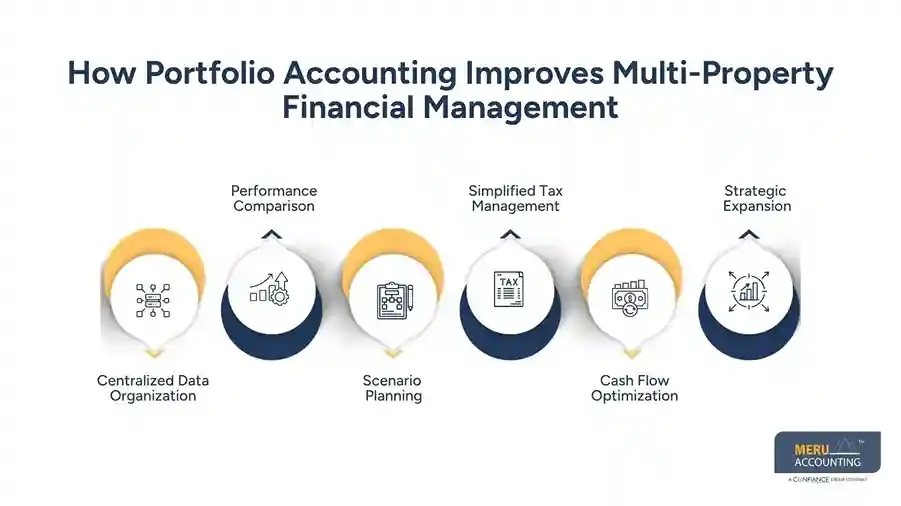
Simplified Tax Management
With all financial data in one place, tax planning and reporting become more efficient, reducing preparation time and risk of missed deductions.
Accurate records also make identifying eligible deductions and credits easier for each property.
Cash Flow Optimization
A clear overview of income and expenses across the portfolio allows for better cash flow management and investment planning.
Timely insights into cash flow trends support proactive management of both operational and capital expenditures.
Strategic Expansion
By analyzing portfolio performance, owners can make data-driven decisions about acquiring new properties or selling underperforming ones.
Informed expansion strategies maximize returns and ensure sustainable growth across the property portfolio.
Benefits of Using Portfolio Accounting For Real Estate Investors
- Automating data collection and reporting reduces manual bookkeeping and saves time for strategic decision-making.
- Professional portfolio accounting minimizes errors and ensures precise financial records.
- Clear insights into property performance help identify profitable opportunities.
- Early detection of discrepancies, overdue payments, and unusual expenses reduces financial risks.
- Organized accounting helps identify cost-saving opportunities across properties.
- Transparency for partners, lenders, and auditors enhances trust and credibility.
Challenges Faced Without Proper Property Accounting Systems
Mismanaged Income And Expenses
Without understanding what is property accounting, rental income and property expenses may not be tracked accurately, leading to financial gaps.
Inconsistent tracking can also result in unnoticed revenue leakage across properties.
Tax Errors
Incorrect or incomplete records can result in overpaying taxes or facing penalties for non-compliance.
Missing documentation often leads to reduced accuracy during tax filing and audits.
Cash Flow Problems
Without clarity on what is property accounting, inadequate tracking may lead to late payments, missed opportunities, or unexpected financial shortages.
Unmonitored cash flow patterns can create liquidity issues during high-expense periods.
Poor Investment Decisions
Limited insight into property performance can lead to uninformed choices and potential losses.
Lack of financial clarity often prevents proper evaluation of long-term investment returns.
Compliance Risks
Multi-property owners may struggle to comply with legal and regulatory requirements without organized records.
Non-compliance exposure increases when documentation and reporting standards are not consistently maintained.
Difficulty During Audits
Disorganized records complicate audits, potentially resulting in fines, penalties, or reputational damage.
Audit preparation time significantly increases when financial data is scattered or incomplete.
Best Practices For Effective Property Accounting Management
- Ensure all income, expenses, and financial transactions are recorded for each property by maintaining detailed records.
- Use modern accounting software to simplify bookkeeping, automate calculations, and generate accurate reports.
- Match bank statements with accounting records regularly to identify discrepancies and maintain accuracy.
- Keep property finances separate from personal accounts to prevent confusion and errors.
- Conduct monthly or quarterly reviews of financial performance to track progress and adjust strategies.
- Hire professional accounting services for guidance, system setup, and management to ensure efficiency and compliance.
How Multi-Property Owners Can Optimize Portfolio Accounting Strategies
Automate Routine Tasks
- Automation reduces manual effort, minimizes errors, and ensures timely financial updates.
- Automated alerts and reminders also help prevent missed payments or deadlines.
Implement Cloud-Based Systems
- Cloud platforms allow secure access to accounting data from anywhere, facilitating collaboration and decision-making.
- Real-time access ensures all stakeholders are updated with the latest financial information.
Track Key Metrics
- Monitor occupancy rates, rental income trends, maintenance costs, and return on investment (ROI) to evaluate portfolio health.
- Regularly reviewing these metrics helps identify underperforming properties and optimize strategies.
Integrate With Tax Tools
- Link property accounting systems with tax tools to simplify filing and maximize deductions.
- Integration also reduces errors and ensures timely submission of tax documents.
Conduct Periodic Audits
- Regular audits ensure records are accurate and provide insights for financial improvement.
- Audits highlight inefficiencies and help owners implement corrective measures promptly.
Utilize Professional Expertise
- Partnering with accounting firms, such as Meru Accounting, provides structured processes, accurate reporting, and guidance for financial optimization.
- Expert advice helps owners make strategic decisions and maximize portfolio profitability.
Why Choose Meru Accounting For Property Accounting Services
Meru Accounting brings a team of certified professionals with strong expertise in property and portfolio accounting. Each service is designed with a deep understanding of multi-property financial structures, ensuring accurate handling of income tracking, expenses, and compliance requirements. The focus remains on delivering reliable and structured accounting support that aligns with the needs of property owners managing multiple assets.
Every portfolio is different, so customized solutions are provided to match specific financial goals and operational requirements. Services cover end-to-end management, including income tracking, expense handling, and tax filing, ensuring complete financial control. Timely reporting further supports better decision-making by offering clear and up-to-date insights into overall property performance and financial health.
Our Expert Perspective
Structured financial management is essential for optimizing multi-property portfolios. Accurate recordkeeping, timely reporting, and professional oversight reduce financial risks while providing clear insights into property performance.
With expert accounting support, property owners can focus on portfolio growth and strategic expansion, confident that all financial processes are managed with precision and compliance.
Key Takeaways
- Understanding what is property accounting is essential for tracking income, expenses, and taxes across multiple properties.
- Financial data consolidation makes financial management more efficient and transparent.
- Accurate records reduce risks, support strategic decisions, and improve cash flow management.
- Modern accounting tools and expert services simplify bookkeeping and tax compliance.
- Meru Accounting provides specialized services to optimize multi-property financial management.
FAQs
Property accounting for multi-property owners is the process of tracking income, expenses, rent, and taxes across multiple properties in an organized financial system.
Property accounting is important because it helps owners keep accurate financial records, avoid errors in rent and expense tracking, and stay compliant with tax rules.
Portfolio accounting helps real estate investors by combining all property financial data in one place for better performance tracking and investment decisions.
Property accounting uses cloud accounting software and property management tools that automate rent tracking, expense recording, and financial reporting.
Property accounting reduces financial risks by tracking all income and expenses accurately and ensuring tax compliance across multiple properties.