
Hotels receive money from various types of sources while managing operating expenses better. Supplier invoices, payroll, and maintenance costs require suitable planning. Hotel management accounting helps businesses organize these activities smartly.
Strong cash flow management ensures hotels can meet daily obligations with better operations. It greatly supports seasonal spending, controlling expenses, and making suitable decisions. This article explains how hotel management accounting reduces cash flow challenges that are required.
What You Will Learn From This Blog
- About the role of hotel management accounting in businesses.
- More details on how cash flow management is essential for various operations.
- Information on common cash flow challenges hotels face.
- Best practices for managing hotel cash flow.
- Understand the value of accounting technology.
- See how professional accounting support benefits growing hotels.
What Is Hotel Management Accounting?
Hotels generate revenue from several departments each day. It includes various segments like room bookings, restaurants, events, and other guest-oriented services. Hotel management accounting records these transactions and gives useful financial information that helps with decisions.
Recording Daily Financial Activities
Hotels process hundreds of transactions throughout the day. There is a requirement for productive and accurate transactional recording on a daily basis.
Accurate bookkeeping reduces reporting errors and issues arising from them and creates reliable financial records that support analysis.
Monitoring Revenue and Expenses
Revenue alone does not indicate better financial health. Hotels must also monitor operating costs, supplier payments, and employee expenses as well.
Hotel accounting compares income with expenses, which supports managers in understanding profitability with better insights.
Supporting Cash Flow Management
Healthy businesses require consistent cash flow with regular functions working accurately. Delayed collections can create greater issues.
Effective cash management helps hotels monitor funds while maintaining better working capital.
Improving Financial Decisions
Reliable accounting reports help management assess performance better. Accurate data supports budgeting, staffing, and also helps with operational planning.
Financial decisions become more reliable with organised information.
Common Cash Flow Challenges in Hospitality Businesses
Hospitality businesses experience changing demand with growing changes. Seasonal revenue and ongoing expenses often create financial pressure. Hotel accounting helps identify issues more clearly and helps to handle them efficiently.
Seasonal Revenue Fluctuations
Most hotels experience busy and slow seasons. Revenue increases during holidays but declines during certain months.
Effective cash management prepares businesses for changes by improving suitable financial planning that is suitable.
High Operating Costs
Hotels operate every day of the year. Payroll, utilities, maintenance, food supplies, and housekeeping expenses continue regardless of occupancy.
Careful accounting helps higher authorities with monitoring these costs and supports spending and related decisions.
Delayed Customer Payments
Corporate bookings, travel agencies, and event organizers sometimes pay after services are delivered. Late collections affect available cash in various ways and can also create concerns.
Consistent monitoring of cash management by tracking outstanding balances is supportive with growing changes in work.
Supplier Payment Deadlines
Hotels depend on suppliers for daily operations. Missing payment deadlines may affect supplier relationships or can affect essential deliveries as well.
Accurate hotel accounting helps schedule payments along with maintaining capital in a productive manner.
How Hotel Management Accounting Improves Cash Flow Management
Financial control depends on accurate information. Hotel management accounting provides the reports and insights needed.
Preparing Accurate Cash Flow Reports
Cash flow reports show how money moves and functions in the business. Managers can identify periods of greater spending with ease.
These reports support better financial planning and identify cash shortages that can make things complicated for further planning.
Monitoring Outstanding Receivables
Outstanding guest invoices reduce available working capital. Delayed collections affect spending in many ways.
Regular monitoring improves cash management by encouraging timely collections that help greatly.
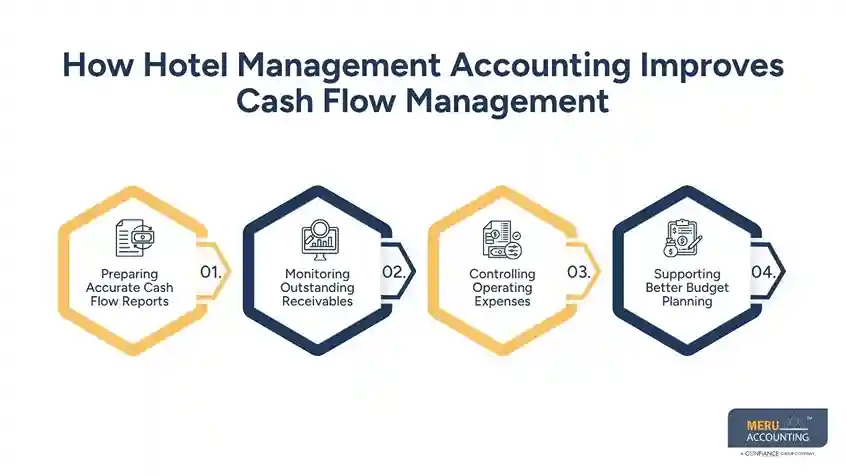
Controlling Operating Expenses
Hotels should review operating costs regularly. Small savings across different departments often improve overall performance with better support.
Hotel accounting highlights spending patterns and supports management in identifying areas that require attention.
Supporting Better Budget Planning
Budgets help hotels prepare for expected revenue and expenses. Financial data improves various levels of processes, enhancing forecasting with it.
Superior budgeting also strengthens cash management during seasonal changes.
optional anymore
on running the business
Why Financial Reporting Matters for Hotels
Financial reports help management understand business performance. Accurate reporting also supports lenders, investors, auditors, and regulatory requirements.
Measuring Business Performance
Profit and loss statements show revenue, expenses, and overall profitability. These reports help managers evaluate operational success.
Reliable reporting depends on consistent hotel management accounting practices.
Identifying Spending Trends
Financial reports reveal changes in operating costs over time. Management can compare departments and identify unusual spending patterns.
Early identification allows faster corrective action before costs increase further.
Strengthening Compliance
Hospitality businesses must maintain complete financial records for taxation, audits, and reporting obligations.
Accurate accounting reduces compliance risks and improves audit readiness through organized documentation.
How Technology Improves Hotel Management Accounting
Technology helps hotels process financial information more efficiently. It also reduces manual work and improves reporting quality. Combined with skilled professionals, hotel management accounting becomes more reliable and easier to manage.
Automating Routine Financial Tasks
Hotels handle recurring invoices, daily sales, payroll, and supplier payments. Manual processing often takes longer and increases the chance of errors.
Accounting software automates repetitive tasks while keeping financial records consistent. This allows finance teams to spend more time reviewing reports and supporting business decisions.
Improving Reporting Accuracy
Reliable financial reports begin with accurate accounting records. Missing transactions or incorrect postings reduce report quality.
Well-organized hotel management accounting ensures financial data remains complete before monthly or quarterly reports are prepared. This improves management confidence and supports better planning.
Protecting Financial Information
Hotels store valuable financial and customer information every day. Strong security practices help reduce operational risks.
Modern accounting platforms use controlled access, encrypted storage, and regular backups. These features help businesses protect financial records while supporting compliance requirements.
Best Practices for Better Cash Flow Management
Successful hospitality businesses follow consistent financial practices throughout the year. These methods improve stability and reduce avoidable cash shortages. Hotel management accounting supports these practices through reliable financial reporting.
Prepare Regular Cash Flow Forecasts
Cash flow forecasts estimate future receipts and expected payments. They help management prepare for seasonal demand and planned business activities.
Regular forecasting strengthens cash management by reducing uncertainty and improving financial planning.
Control Operating Expenses
Every department should review spending regularly. Even small cost reductions can improve overall financial performance without affecting service quality.
Hotel management accounting provides detailed expense reports that help managers identify unnecessary spending and improve efficiency.
Review Financial Performance Frequently
Monthly reporting is important, but frequent financial reviews provide greater control. Weekly or biweekly reviews allow management to identify issues before they become larger concerns.
Regular reviews also improve cash management by highlighting spending trends, outstanding obligations, and changing revenue patterns.
Why Businesses Choose Meru Accounting
Managing hospitality finances requires industry knowledge and structured accounting processes that work well. Meru Accounting supports hotels, resorts, restaurants, and multi-property businesses with practical accounting services that strengthen hotel management accounting with superior financial controls as well.
Our services include bookkeeping, financial reporting, bank reconciliation, payroll accounting, budgeting support, and other superior services as required. We also provide cloud accounting services while following established accounting standards.
As hospitality businesses grow, accounting responsibilities become more demanding. Our experienced professionals provide practical guidance that helps to achieve goals in a productive manner.
Our Expert Perspective
Hotels often experience cash flow challenges because there is less regular reviewing. Delayed or late reporting, inconsistent tracking, and limited forecasting reduce the visibility into the finances needed.
Our experience shows that many businesses focus on increasing revenue while paying less attention to other needed planning. It reduced the pace of growth for the business.
Hotel management accounting works best when financial information is reviewed throughout the month accurately rather than at the end of the month. Regular monitoring allows management to identify issues that help to make informed decisions.
We also recommend reviewing cash flow management alongside profitability. There can be issues with profits with less efficient cash flow management.
Consistent accounting procedures help for longer-term goals and faster growth.
Key Takeaways
- Hotel management accounting improves visibility into the business’s finances.
- Strong cash flow management that is needed and supports daily operations.
- Accurate accounting records help to improve budgeting and financial reporting.
- Regular forecasting helps hotels prepare for changes.
- Timely collection of customer payments supports improving working capital.
- Modern accounting technology improves reporting efficiency and data accuracy.
FAQs
Hotel management accounting is the process of recording, monitoring, and analyzing financial activities in hospitality businesses. It supports various decision-making in a suitable way.
Cash flow management helps hotels maintain enough funds for payroll, supplier payments, maintenance, and also for daily operations is supportive with panning as well.
Helps to provide accurate reports and also tracks operating expenses.Helps to monitor revenue and supports better budgeting. Such insights help management improve profitability with smarter controls where needed.
Yes. Modern accounting software automates routine tasks, improves reporting accuracy, and provides real-time financial information. Reviews that are professional remain important to maintain accuracy.
It should be considered with professional accounting support when the volume of transactions increases, reporting becomes difficult, or stronger financial control is needed for growth.
optional anymore
on running the business