
A real estate trust account must be handled carefully because the funds often belong to clients, tenants, buyers, sellers, or other parties. Errors in records, bank balances, or payment entries can create problems during a review. At Meru Accounting, we focus on keeping trust records accurate, traceable, and ready for review.
Audit rules can vary by state, province, or local regulator. You should always check the requirements that apply to your license and business type. The guide below covers practical steps that can make a trust account audit more organized, accurate, and easier to manage.
What You Will Learn From This Blog
- Understand what a trust account audit reviews and how preparation can help you avoid preventable issues.
- Learn how to organize records before your trust account audit starts.
- Identify the bank statements, ledgers, client records, receipts, and transaction documents needed for a real estate trust account.
- See how regular reconciliations can uncover missing entries, incorrect balances, and record gaps early.
- Learn how accounting software can help you manage a real estate trust account with better organization and visibility.
- Explore practical methods for finding, investigating, and correcting accounting errors before the auditor reviews your records.
What Is a Trust Account Audit And Why Is It Required?
Meaning Of A Trust Account Audit
A trust account audit is a review of records tied to money held for others. The review may check bank records, ledgers, deposits, payments, and client balances to confirm that the real estate trust account records match the funds held.
Why Regulators Review Trust Funds
Real estate firms may hold money that does not belong to the firm. Rules often seek to keep those funds apart from business money. A review can check whether the firm follows the rules for holding and moving such funds.
What An Auditor May Check
An auditor may compare bank statements with the cash book, client ledgers, deposit slips, checks, and payment records. The goal is to trace funds from receipt to payment and confirm that each amount has a clear record.
Risks Of Poor Trust Records
Poor records can cause missing entries, wrong client balances, late deposits, or funds being placed in the wrong account. Such errors may lead to extra work, fines, or other action under local rules.
Trust Rules Vary By Location
Real estate trust rules are not the same in every area. A broker should check the current rules of the local real estate regulator before making changes to its record system.
Why Early Prep Matters
Early real estate trust account preparation gives staff time to find old errors and gather missing files. Waiting until an audit date is near can make even small record gaps hard to fix.
How To Prepare Your Real Estate Trust Account For An Audit
Review Every Bank Account
Start by listing each real estate trust account used by the firm. Check the account name, bank, account number, purpose, and authorized users against the firm’s current records.
Match Bank And Ledger Data
Compare the bank balance with the internal trust ledger. Each difference should have a clear reason, such as an outstanding check, deposit in transit, or bank charge allowed under local rules.
Check Client-Level Balances
Review each client or property balance on the real estate trust account ledger. A client balance should be backed by source records that show why the money was received and how it was used.
Review Deposits And Payments
Trace deposits from receipt to bank entry and ledger entry. Do the same for checks, electronic payments, refunds, and transfers so each item has a clear audit trail.
Find Old Unresolved Items
Look for checks, deposits, or ledger entries that have stayed open for too long. Old items can point to data errors, stale checks, wrong client codes, or records that need review.
Lock The Review Date
Set a cut-off date for audit prep. Make sure bank statements, ledgers, receipts, checks, and reports all cover the same period so the review does not mix old and new data.
Essential Documents Needed For A Trust Account Audit
Bank Statements
Keep full bank statements for each account under review. Statements give the auditor an outside record that can be matched to the firm’s books.
Trust Ledgers
Client or property ledgers show the amount held for each party. Each ledger should show receipts, payments, transfers, dates, and running balances where required.
Deposit Records
Deposit slips, receipt logs, and related records can show when money was received and when it reached the bank. Keep these records in a clear order.
Payment Records
Keep copies or records of checks, electronic payments, refunds, and other approved payments. Each payment should link to the right client, deal, property, or matter.
Reconciliation Reports
Monthly reconciliation reports show how the bank balance, ledger balance, and client balances were checked. Signed or dated review records can also show who did the work.
Supporting Contracts
Leases, sales files, management agreements, settlement records, and other source files may explain why funds were received or paid. Keep only the records required by law and firm policy.
Real Estate Trust Account Reconciliation Best Practices
Reconcile Every Month
A monthly check of the real estate trust account can find errors before they grow. Do not wait for an annual audit to compare bank data with internal records.
Use A Three-Way Check
Where local rules require it, compare the bank balance, trust ledger total, and sum of client balances. All three should agree after valid timing items are taken into account.
Record Timing Items
Deposits in transit and uncleared checks can cause a short-term gap between records. List each timing item and clear it when the bank posts the entry.
Review Negative Balances
A negative client balance can signal a wrong entry, missed receipt, or payment made from funds that were not available. Review the cause at once and follow local rules for correction.
Keep Review Sign-Offs
Each monthly reconciliation should show the date and person who reviewed it. A clear sign-off creates a simple record of the firm’s control process.
Correct Errors With A Clear Trail
Never erase a wrong entry without a record of the correction. Use proper adjustment entries and keep notes that explain what changed and why.
optional anymore
on running the business
How Accounting Software Can Simplify Trust Account Audit Preparation
Keep Records In One Place
Accounting software can bring bank feeds, ledgers, payment records, and reports into one system. A well-set system can make a trust account audit easier to prepare for.
Set Clear Account Rules
Create clear rules for real estate trust account receipts, payments, transfers, refunds, and fees. Staff should know which account and client code to use for each type of entry.
Use Bank Matching Tools
Bank matching can flag entries that do not match known records. Staff can then review the item rather than searching through every transaction by hand.
Track Client Balances
A suitable system can show balances by client, property, or deal. Such views make it easier to spot unusual balances before the review begins.
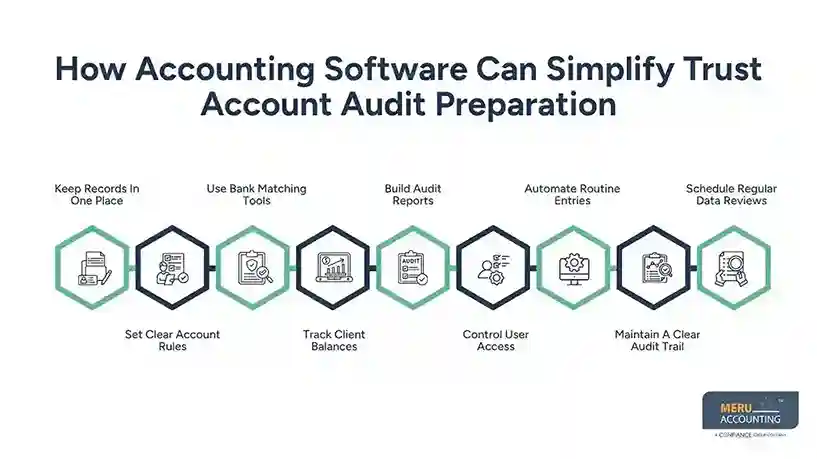
Build Audit Reports
Use reports that show receipts, payments, transfers, balances, and adjustments. Save reports for the audit period in a format that staff and reviewers can read.
Control User Access
Limit access based on job role. Staff who only enter receipts may not need rights to change account settings or approve payments.
Automate Routine Entries
Automation can reduce manual work for recurring receipts, payments, and other regular entries. Set rules with care and review automated entries to keep records accurate.
Maintain A Clear Audit Trail
Keep a clear record of each transaction, adjustment, and approval within the system. A proper audit trail makes it easier to trace changes and explain unusual entries.
Schedule Regular Data Reviews
Set a routine for reviewing account activity, balances, and transaction records. Regular checks can identify missing entries or unusual activity before audit preparation begins.
Proven Best Practices For Passing A Trust Account Audit
Start Before The Audit Date
Begin the trust account audit review well before the due date. Early work gives the firm time to fix errors, find missing records, and ask questions about unclear items.
Keep Records In Order
Use a set file order for real estate trust account statements, reconciliations, receipts, checks, ledgers, and source files. A clear file plan makes record checks faster and reduces the chance of missing key documents.
Train Staff On Trust Rules
Every staff member who handles client funds should know the firm’s process. Training should cover receipts, deposits, payments, transfers, approvals, and record retention.
Review High-Risk Transactions
Pay close attention to refunds, transfers, large payments, manual entries, and unusual adjustments. Such items often need more review because they can affect client balances.
Separate Business And Trust Funds
Do not mix firm money with money held for others. Keep fees and business funds in the proper account and follow local rules for any transfer from trust funds.
Get Expert Review When Needed
An outside accounting team can review the records before the formal review. An independent check may find gaps that busy internal staff have missed.
Manage Your Real Estate Trust Account With Meru Accounting
Managing a real estate trust account takes more than basic bookkeeping. Records need regular checks, clear ledgers, proper reconciliations, and strong review steps. Meru Accounting can assist real estate firms with bookkeeping and financial record work built around their business needs.
Regular Bookkeeping Support
Our team can record trust-related transactions, review account activity, and keep books current. Regular work can reduce the amount of clean-up needed before an audit.
Reconciliation Review
Meru Accounting can review bank and ledger data to find items that need attention. Clear reconciliation work gives management a better view of open or unusual entries.
Audit Preparation Support
We can organize records needed for a trust account audit and flag gaps that need action. Our work can give your team a cleaner starting point for the formal review.
Property-Level Records
Real estate firms may manage many properties, owners, tenants, and transactions. Proper records can show where each amount belongs and reduce confusion between separate client balances.
Our Expert Perspective
At Meru Accounting, we believe trust account audit preparation should be part of your regular accounting routine, not a last-minute exercise. Keep the real estate trust account completely separate from business funds, reconcile bank statements with client records each month, investigate unusual or aging transactions, and retain clear receipts, payment records, and correction notes.
Your staff should also follow documented trust fund procedures and understand the local rules that apply to your business. When requirements are unclear, seek advice from a qualified accounting professional. Regular reviews keep records clean, help identify problems early, and make audits easier to manage.
Key Takeaways
- Trust funds should always be kept separate from business funds.
- Regular reconciliation is an important part of trust accounting, helping ensure that bank and ledger records match.
- Each client balance should be checked to ensure that the recorded amount is accurate.
- Receipts, checks, bank statements, and supporting records should be kept in an organized manner.
- Old or unresolved transactions should be reviewed before the audit begins.
- Any accounting errors should be corrected with a clear record of the changes made.
- Staff should follow clear rules when recording and handling trust fund transactions.
- Accounting software should be configured with suitable reporting and user access controls.
- Local trust account rules should be reviewed before making changes to accounting procedures.
- Professional accounting support should be considered when records require a detailed review.
FAQs
A real estate trust account audit checks whether client funds, records, balances, and transactions follow required rules.
Prepare by reconciling bank records, checking client ledgers, gathering documents, and fixing errors before the audit date.
Common documents include bank statements, trust ledgers, deposit records, payment records, reconciliations, and related transaction files.
A real estate trust account should generally be reconciled monthly, subject to the rules set by the applicable regulator.
Common mistakes include missing records, incorrect client balances, late deposits, unreconciled items, and mixing trust funds with business funds.
optional anymore
on running the business