
Every business wants to cut costs, but cutting the wrong areas can cause new issues. One area that needs care is the bookkeeping cost. A lower cost can help a company save money, but it should not harm the quality of its books. Clear and correct records help owners track money, plan, and make wise choices.
Many owners think they must pick between low costs and good records. This is not true. With smart tools, good steps, and expert help, a business can lower its bookkeeping costs while keeping strong financial management. The main goal is to remove waste, save time, and keep all financial records safe and clear.
Good bookkeeping gives a clear view of sales, costs, cash flow, and profit. It also helps a company stay ready for tax time and daily needs. When records are kept in the right way, owners can focus more on growth instead of fixing errors.
This blog shares simple ways to lower bookkeeping costs without losing the value of good record-keeping. It will help small and large businesses find ways to save money, improve workflow, and build better financial management.
What You Will Learn From This Blog
After reading this blog, you will learn:
- What does bookkeeping cost mean, and what items add to the total cost?
- Why lower bookkeeping costs should not hurt financial management.
- How to reduce bookkeeping costs with smart tools and better work steps.
- Signs that show your business may be paying too much for bookkeeping.
- Ways to keep bookkeeping costs low for a long time.
What Is Bookkeeping Cost?
Bookkeeping cost is the money a business spends to track, sort, and update its financial records. These costs may include staff pay, software fees, external help, data entry, and time spent on daily bookkeeping tasks. The total cost can change based on the size of the company, the number of deals, and the type of help needed.
Some firms only look at the fee paid to a bookkeeper. But the true bookkeeping cost can also include hidden costs. These may come from wrong entries, missed bills, late reports, and time spent fixing errors. Small issues in books can lead to bigger financial problems if they are not fixed early.
Good bookkeeping helps with strong financial management because it gives owners a clear view of their money. Clean records help with budgets, tax work, cash checks, and plans for growth. When data is accurate, owners can make better choices with less risk.
Common items that add to bookkeeping cost include:
- Monthly bookkeeping
- software fees
- Payroll
- Staff training
- Data entry tasks
- Bank reconciliation
- Financial report setup
- Tax record preparation
Knowing these cost areas helps a business find ways to save money. The goal is not to remove key tasks but to make the work faster, easier, and more cost-effective.
Why Reducing Bookkeeping Cost Should Never Affect Financial Management
Lowering bookkeeping costs can help a business grow, but it should not lead to poor records. Good books are the basis of strong financial management. They help owners track cash, check costs, file taxes, and make smart plans. A business should save money in a way that keeps its records safe and useful.
Clear Records Help Better Business Choices
Owners need fresh financial data to know how the business is doing. Sales, costs, and profit numbers help them plan the next steps. If records are not correct, business choices may be based on wrong facts. Lower bookkeeping costs should come from better ways of working, not from poor record quality.
Bad Records Can Create Extra Costs
Wrong entries, lost bills, or missing data can cause many issues. A company may spend more time and money fixing these errors later. Good bookkeeping helps stop these problems before they grow. A smart plan for cost saving keeps records clean and correct.
Good Reports Help With Future Plans
A business needs clear reports to set goals and plan growth. These reports show income, costs, and cash needs. Cutting bookkeeping costs should not mean fewer or late reports. Strong financial management needs simple and clear financial data.
Proper Books Support Tax Work
Tax work becomes easier when all records are kept in order. Good books help find the required data and reduce stress during tax time. Poor records can lead to missed details, late work, or extra fees. Keeping good bookkeeping helps a business stay on track.
Better Books Improve Cash Control
Cash flow is key for every business. Owners need to know when money comes in and when money goes out. Clean records help them track cash and avoid financial gaps. Good financial management starts with clear and up-to-date books.
Smart Tools Can Lower Costs
The best way to reduce bookkeeping costs is to use better systems. Online tools can help with data entry, bank reconciliation, and reports. These tools save time and lower manual work. They also help keep records more correct.
Expert Help Can Add More Value
Skilled bookkeepers know how to set up a better process. They can find ways to cut waste and improve daily tasks. Professional help can lower bookkeeping costs while keeping high-quality records. This supports better financial management and helps businesses grow.
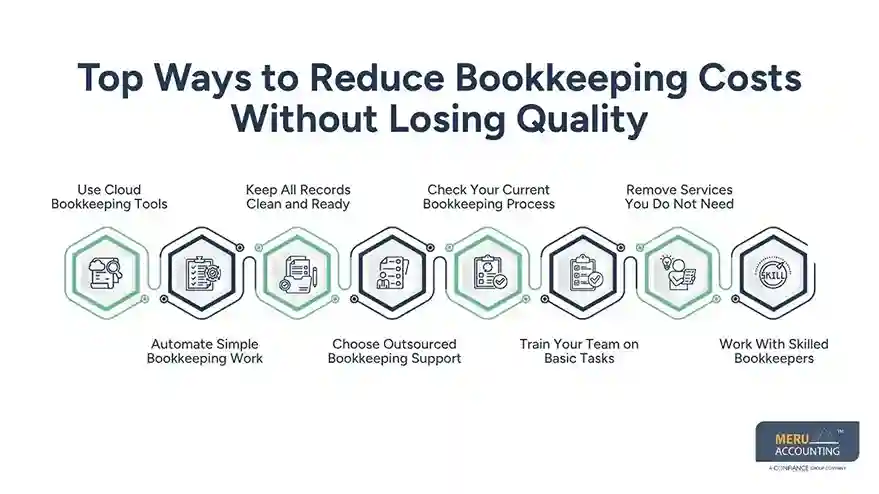
Top Ways to Reduce Bookkeeping Costs Without Losing Quality
Reducing bookkeeping costs does not mean doing less work or keeping poor records. The best way to save money is to make the workflow better, cut waste, and use the right tools. A good plan helps a business lower costs while keeping strong financial management.
The goal is to make bookkeeping easy, fast, and clear. These steps help a company spend less while keeping safe and true money records.
Use Cloud Bookkeeping Tools
Cloud tools help a business keep all financial data in one place. They help track sales, bills, costs, and bank data with less manual work. This can lower bookkeeping costs by saving time and effort. Many cloud tools can also do tasks like bank match, bill tracking, and report setup.
These tools help bookkeepers avoid repetitive work and fix fewer errors. Cloud tools also help owners see key money data at any time. This supports better financial management and helps owners make wise choices.
Automate Simple Bookkeeping Work
Many bookkeeping tasks happen each week or month. These tasks may include adding bills, checking payments, and updating records. Using smart tools can make these tasks faster and easier.
When a business cuts down on manual work, it can lower its bookkeeping costs. Team members can then spend more time on tasks that need skill and review.
Automation does not remove the need for expert help. It only helps the team save time and keep books in good shape.
Keep All Records Clean and Ready
Messy records can raise costs. When files are hard to find, bookkeepers spend more time fixing and sorting data. This can add more work and increase bookkeeping costs.
Businesses should keep bills, notes, and bank files in one safe place. A clear file system helps the team find what they need with less delay. Clean records also help with tax work and daily money checks. This builds a strong base for better financial management.
Choose Outsourced Bookkeeping Support
Many small firms do not need a full-time bookkeeper. Hiring an in-house worker can add costs like pay, training, and other work needs. Outsourced bookkeeping can be a more cost-friendly choice.
With outside help, a business can pay for the work it needs. This can lower bookkeeping cost while still giving access to skilled bookkeepers. Expert support also helps keep books clear and up to date. This helps owners improve their financial management without adding extra staff costs.
Check Your Current Bookkeeping Process
Some businesses spend more because their work steps are not simple. A review of the current process can show where time and money are lost. Look at how your team adds data, checks records, and makes reports. Small changes can help cut extra work and lower bookkeeping costs.
A better workflow also helps keep records fresh. This gives owners better data for daily financial management.
Train Your Team on Basic Tasks
Simple training can help staff handle basic book tasks. For example, team members can learn how to save bills, store files, and track daily costs. When staff follow the right steps, bookkeepers spend less time fixing errors. This helps reduce bookkeeping cost and saves time.
Good training also helps protect financial data. It makes sure that all team members follow the same work rules.
Remove Services You Do Not Need
Some businesses pay for book tasks they rarely use. Extra reports or tools may add cost without giving real value.
Review your current needs and remove tasks that do not help your goals. This can lower bookkeeping cost while keeping key work in place. The focus should stay on tasks that help with good financial management and smart business choices.
Work With Skilled Bookkeepers
Skilled bookkeepers can finish work faster and find issues early. Their skill helps reduce errors and keeps records in good order.
A good bookkeeping team can help control bookkeeping cost by using better work steps. They also help owners get clear reports. Strong bookkeeping support gives a business a better view of its money. This helps improve financial management and future planning.
Signs Your Business Is Paying Too Much for Bookkeeping
Many businesses are not sure if their bookkeeping costs are too high. A high fee does not always mean better work. Some signs can show that your business needs a new plan.
Too Much Time Goes Into Basic Tasks
If your team spends many hours on simple book tasks, your process may not work well. Repeat work can take time and raise costs. Using better tools and clear steps can lower bookkeeping costs. It also lets your team focus on growth and key work.
You Pay for Tools You Rarely Use
Some businesses pay for software plans with extra tools they do not need. These fees can add up each month. Review your tools often and keep only what helps your work. This can lower costs and support better financial management.
Your Books Have Many Errors
Frequent errors may show that your bookkeeping process needs change. Wrong data can lead to more work and higher costs. A better system can help keep records right the first time. This lowers hidden bookkeeping cost and protects your money data.
Reports Are Often Late
Late reports can make it hard for owners to plan. A business needs fresh data to track money and make good choices. A better bookkeeping system can help create reports on time. This supports strong financial management and better planning.
You Do Not Know What You Pay For
A business should know where its bookkeeping money goes. If costs are not clear, you may pay for work you do not need. Reviewing your bills and tasks can help find ways to save. This helps keep bookkeeping cost under control while keeping good records.
Best Practices for Maintaining Low Bookkeeping Cost Over Time
Keeping bookkeeping cost low is not a one-time task. A business needs the right steps to keep costs under control for the long term. Good planning, smart tools, and clear work rules can help lower costs while keeping strong financial management.
The key is to build a simple bookkeeping system that saves time and avoids waste. These best steps can help your business keep costs low without hurting record quality.
Set Clear Bookkeeping Rules
Clear rules help every team member follow the same steps. They reduce confusion and help avoid errors in daily work. A simple process for bills, payments, and records can save time. This helps lower bookkeeping cost and keeps money data clean. Clear rules also help improve financial management by making sure reports are based on true and fresh data.
Review Costs on a Regular Basis
Business needs can change over time. A service or tool that worked before may not be the best choice today. Regular cost checks help find areas where money can be saved. This helps keep bookkeeping cost at a fair level. Cost reviews also help owners make better plans for future growth and daily management.
Use the Right Bookkeeping Software
The right software can make daily tasks much easier. It can help track sales, bills, payments, and reports in less time. Using tools that match your needs can lower bookkeeping cost by reducing extra work. It also helps keep records more clear and easy to check. Better software use supports better financial management because owners can view key data when needed.
Keep Records Updated
Late records can create more work. When data is not updated, it becomes harder to know the true state of the business. Regular updates help avoid errors and save time. This can reduce bookkeeping cost and improve daily work flow. Updated records also help owners make smart choices with better management.
Avoid Doing All Work Manually
Manual work can take a lot of time and may lead to mistakes. Many simple tasks can now be done with smart tools. Reducing manual work helps save time and cut costs. It can make bookkeeping cost more easier to manage. A mix of tools and expert review helps keep books right while saving money.
optional anymore
on running the business
How Meru Accounting Helps Reduce Bookkeeping Cost
Managing books can take time and skill. Many businesses spend too much on bookkeeping because of slow work steps, errors, or a lack of expert help. Meru Accounting helps businesses control their bookkeeping cost with reliable and simple bookkeeping support.
Our team helps businesses keep clear records, track money flow, and prepare useful reports. We focus on saving time, reducing errors, and improving daily financial management.
Expert Bookkeeping Support
Meru Accounting provides skilled bookkeeping help based on your business needs. Our team handles daily book tasks with care and accuracy. This helps businesses reduce extra work and avoid costly errors. It also supports better management with clean records.
Better Use of Accounting Tools
We work with trusted tools like QuickBooks, Xero, and Zoho Books. These tools help make bookkeeping tasks faster and more simple. Better tool use can reduce manual work and control bookkeeping cost. It also helps businesses get clear reports when they need them.
Accurate Record Keeping
Accurate records are key for every business. Our team helps track income, costs, payments, and other money details. Clean records help avoid mistakes that can increase costs. This supports lower bookkeeping cost and stronger management.
Time-Saving Bookkeeping Process
A slow process can increase business costs. Meru Accounting uses simple work steps to make bookkeeping smooth and fast. This helps business owners save time and focus on growth. It also keeps bookkeeping costs easier to manage.
Support for Better Money Decisions
Good bookkeeping gives owners a clear view of their business. We help prepare reports that show important money details. These reports help with planning, budgeting, and growth. Better reports support strong management.
Flexible Service Options
Every business has different needs. Meru Accounting offers support that can fit different business sizes and goals. Flexible options help businesses avoid paying for services they do not need. This helps control bookkeeping cost while keeping quality support.
Our Expert Insight
Reducing bookkeeping cost should not mean choosing the lowest price service or removing important tasks. The best savings come from better systems, clear work steps, and the right level of expert support.
Businesses that invest in good bookkeeping often save more over time. Accurate records help avoid errors, improve cash control, and support better financial management.
A smart bookkeeping plan helps owners spend less while keeping a clear view of their money. The goal is simple: lower costs, save time, and keep financial records ready for growth.
Key Takeaways
- Bookkeeping costs can be reduced by using better tools, clear work steps, and expert support.
- Lower costs should never reduce the quality of financial records.
- Strong financial management depends on accurate and updated bookkeeping.
- Cloud tools can save time and reduce manual work.
- Outsourced bookkeeping can help businesses get expert support at a lower cost.
- Regular reviews help find ways to save money and improve workflow.
FAQs
Bookkeeping costs include expenses for recording, sorting, and updating business money records. It may include software fees, staff pay, outside bookkeeping help, and time spent on financial tasks.
A business can reduce bookkeeping costs by using cloud tools, automating simple tasks, keeping records clean, and working with skilled bookkeeping experts.
No, lower costs do not have to harm financial management. With the right process, businesses can save money while keeping accurate records and useful reports.
Yes, outsourced bookkeeping can help businesses lower costs by avoiding full-time staff expenses while still getting expert support.
Good bookkeeping helps businesses track money, plan better, reduce errors, and improve management. It gives owners clear data for better decisions.