
International property investment requires accurate rental property cash flow analysis to maintain financial stability and long-term growth. Investors managing rental properties across different countries often face challenges related to rent collection, taxation, maintenance costs, expense tracking, and financial reporting.
Without organized financial systems, it becomes difficult to measure actual property performance and identify financial risks.
Strong rental property cash flow analysis allows investors to evaluate whether rental income is sufficient to cover operating expenses, repairs, taxes, and vacancy-related losses while maintaining stable returns.
Offshore property management provides a structured system for managing property operations and maintaining accurate financial records. It assists with tenant communication, lease management, vendor payments, bookkeeping, and regular reporting, giving investors better financial visibility across multiple properties.
What You Will Learn From This Blog
- The importance of rental property cash flow analysis for international real estate investors
- The role of offshore property management in property accounting and reporting
- Common financial issues faced by global property owners
- Ways to reduce operating expenses in rental property investments
- Important financial metrics investors should review regularly
- How structured property management supports portfolio expansion
- How Meru Accounting assists global investors with accounting and bookkeeping services
Understanding Rental Property Cash Flow Analysis and Its Importance
Accurate financial monitoring is important for global investors because it provides a clear view of property income, expenses, and overall profitability. Rental property cash flow analysis begins with proper tracking of rent collections, late payments, lease renewals, and security deposits.
Investors must also monitor operating expenses such as repairs, maintenance, insurance, taxes, utilities, and management fees to understand whether a property is generating stable returns or creating financial pressure.
Organized financial reporting also assists investors in reviewing property performance and making informed business decisions. Positive cash flow shows that rental income is higher than expenses, while negative cash flow may indicate rising operational costs or declining profitability.
Regular financial reviews help investors identify risks such as vacancies, unexpected repairs, or tax liabilities before they create larger financial problems.
For long-term investors, proper financial analysis supports budgeting, reserve planning, and future portfolio expansion. Well-maintained records provide better visibility into property performance and allow investors to manage international real estate investments with greater financial control and stability.
How Offshore Property Management Enhances Rental Property Cash Flow Analysis
Centralized Financial Reporting
Offshore property management refers to outsourcing property operations and financial reporting to specialized teams located outside the investor’s home country, often combining local property handling with centralized accounting support.
Better Expense Categorization
Expense tracking becomes more accurate when structured accounting systems are used. Proper categorization reduces reporting errors and improves visibility into operating costs.
Timely Rent Collection
Late rent payments directly affect overall financial performance and monthly cash flow stability. Teams monitor payment schedules, follow up with tenants, and reduce collection delays.
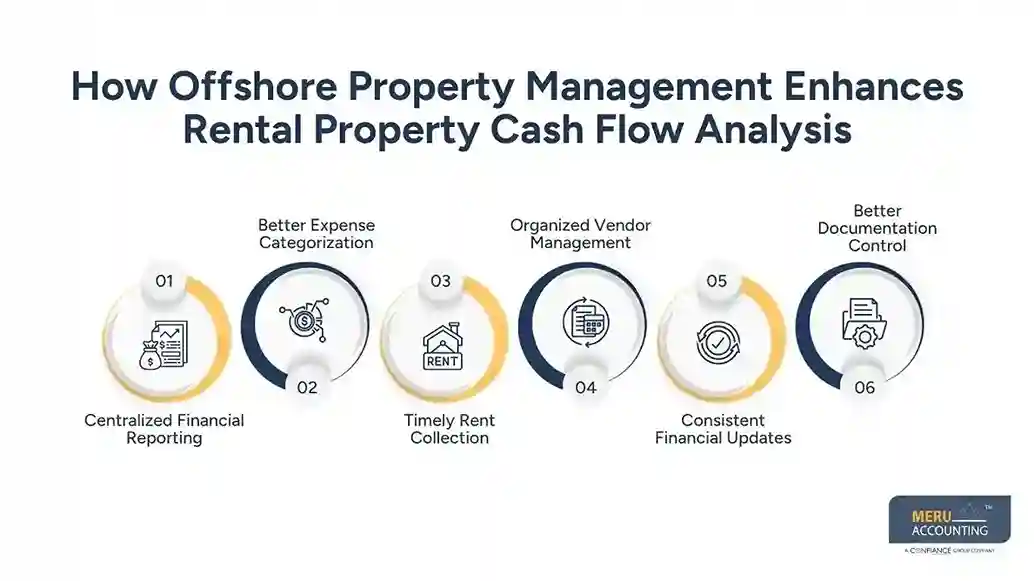
Organized Vendor Management
Repair and maintenance costs often increase due to poor vendor coordination. Vendor records, invoices, and payment schedules are managed in a more controlled manner.
Consistent Financial Updates
Investors benefit from regular financial statements and operational reports. This allows property performance review without waiting for year-end reports.
Better Documentation Control
Lease agreements, tax records, invoices, and maintenance reports remain organized under structured systems. This creates better financial transparency for property cash flow analysis.
What are the Common Cash Flow Challenges in Global Property Investments?
Currency Exchange Fluctuations
Global investors often receive rental income in different currencies. Exchange rate changes can reduce actual profits and create instability in overall cash flow.
High Maintenance Costs
Properties located in foreign regions may require expensive repairs and emergency maintenance. Without cost monitoring, operational expenses can rise quickly.
Delayed Tenant Payments
Rent collection problems affect monthly income stability. Investors managing properties remotely may struggle to monitor tenant payment behavior effectively.
Tax Compliance Issues
Different countries follow different property tax regulations. Poor tax planning may lead to penalties, reporting errors, or higher liabilities.
Vacancy Losses
Vacant rental units reduce monthly cash inflow while operating expenses continue. Rental property cash flow analysis helps investors monitor vacancy-related losses.
Weak Financial Reporting
Incomplete records create confusion during tax filing, refinancing, or investor reporting. Structured property operations reduce this issue through organized bookkeeping systems.
How Offshore Property Management Helps Reduce Operational Costs
Lower Administrative Expenses
Hiring in-house accounting and property management staff across multiple countries can become expensive. Offshore property management reduces staffing and operational overhead.
Efficient Vendor Coordination
Property repairs and maintenance become more controlled when vendors are managed through organized systems. This reduces duplicate payments and unnecessary service charges.
Better Maintenance Planning
Preventive maintenance scheduling reduces emergency repair expenses. Teams coordinate inspections and routine servicing more efficiently.
Reduced Accounting Errors
Incorrect expense entries and missing invoices can affect profitability. Organized bookkeeping records help reduce financial reporting mistakes.
Improved Tax Documentation
Proper tax records reduce the risk of penalties and compliance issues. Financial documentation is kept ready for tax reporting requirements.
Lower Vacancy Costs
Faster tenant communication and lease management reduce vacancy periods. Stable occupancy improves overall cash flow performance over time.
What Financial Metrics Should Investors Track in Rental Property Cash Flow Analysis?
Net Cash Flow
Net cash flow measures the remaining income after deducting all operating expenses, loan payments, taxes, and repairs. This metric shows the actual profitability of a rental property.
Occupancy Rate
Occupancy rate measures how often rental units remain occupied. Higher occupancy usually creates more stable income and better financial performance.
Operating Expense Ratio
This ratio compares operating expenses to total rental income. Investors use it to identify whether property expenses are becoming too high.
Net Operating Income
Net operating income shows property earnings before financing costs and taxes. It helps investors compare the performance of multiple properties.
Capital Expenditure Costs
Large expenses such as roof replacement or structural repairs affect long-term profitability. Investors should monitor these costs regularly during rental property cash flow analysis.
Debt Service Coverage
This metric measures whether rental income can comfortably cover loan payments. Low coverage ratios may indicate financial risk.
How Offshore Property Management Improves Portfolio Scalability
Easier Multi-Property Management
As investors acquire additional rental properties, financial management becomes more complex. Offshore property management creates organized systems that simplify portfolio administration.
Standardized Reporting Processes
Consistent accounting procedures allow investors to compare properties more effectively. Rental property cash flow analysis becomes easier when all reports follow the same structure.
Better Time Management
Global investors often spend excessive time handling administrative work. Streamlined property operations reduce day-to-day pressure and allow investors to focus more on expansion opportunities.
Faster Financial Review
Timely reporting allows investors to evaluate property performance quickly. This improves planning for refinancing, acquisitions, and budgeting.
Improved Investor Confidence
Well-organized financial reporting builds trust among lenders, investors, and business partners. Accurate financial analysis strengthens financial credibility and supports better decision-making for property investments.
Why Choose Meru Accounting?
Real Estate Accounting Support
Meru Accounting provides accounting and bookkeeping services designed for real estate investors and property management businesses. The company maintains organized financial records for rental properties across different regions.
Bookkeeping Management
Meru Accounting manages daily bookkeeping tasks such as expense tracking, invoice recording, bank reconciliation, and rental income monitoring. This supports accurate rental property cash flow analysis.
Financial Reporting Services
The company prepares detailed financial reports that allow investors to review property performance regularly. Organized reporting improves financial visibility and operational control.
Tax Preparation Assistance
Meru Accounting assists clients with tax documentation, reporting requirements, and compliance support. Proper tax records reduce financial uncertainty for global investors.
Expense Monitoring
Tracking maintenance expenses, vendor payments, and operational costs becomes easier with professional accounting support. Investors gain better control over profitability.
Scalable Financial Solutions
As property portfolios grow, Meru Accounting provides structured accounting systems that support long-term expansion and organized financial management. It also ensures fin
Our Expert Perspective
From our practical industry experience, many global property investors face financial confusion when managing properties across different countries. Weak bookkeeping and delayed reporting often reduce profitability.
Combining structured property operations with organized accounting improves financial control. Accurate cash flow analysis helps investors understand performance, risks, and long-term investment value.
Key Takeaways
- Rental property cash flow analysis measures property profitability after deducting expenses.
- Structured property operations create organized systems for financial reporting and management.
- Accurate income and expense tracking improves investment decision-making.
- Global investors often face challenges related to taxes, vacancies, maintenance costs, and currency fluctuations.
- Organized bookkeeping reduces financial reporting errors and operational confusion.
- Monitoring financial metrics regularly strengthens property performance analysis.
- Offshore property management supports portfolio growth through structured reporting systems.
- Meru Accounting provides accounting and bookkeeping services for global property investors.
FAQs
Rental property cash flow analysis is the process of reviewing rental income and property expenses to determine whether a rental property is making a profit or causing losses.
Offshore property management assists global investors by managing daily operations, financial records, rent collection, and reporting activities for properties located in different countries.
Cash flow analysis gives investors a clear understanding of property income, operating expenses, and overall profitability. It also helps identify financial problems early.
Expenses usually include maintenance costs, taxes, insurance, utilities, management fees, loan payments, repairs, and vacancy-related losses.
Yes. Structured property operations can reduce administrative costs, improve vendor coordination, maintain organized financial records, and lower operational inefficiencies.