A restaurant accountant can give owners an early view of financial problems that may not be clear from daily sales alone. Restaurants handle many money flows each day, including food purchases, wages, tips, rent, supplier bills, card payments, and tax payments. Even a small error can grow when it is repeated for weeks or months.
Effective restaurant accounting services bring these records into one clear system. Regular checks can show where cash is going, which costs are rising, and whether reported sales match the money received. The goal is not only to maintain accurate financial records but also to review the restaurant’s cash flow, costs, sales, expenses, and overall financial health.
Early financial checks can help owners spot warning signs and take action before small issues become larger problems.
What You Will Learn From This Blog
- Understand why a restaurant accountant matters for maintaining financial health.
- Learn about seven financial problems that need early attention.
- Understand how accounting work can reveal cost and cash issues.
- Identify the financial reports that should be reviewed regularly.
- Learn when a restaurant may need professional accounting help.
- Understand how to choose suitable restaurant accounting services.
Why A Restaurant Accountant Matters For Financial Health
A restaurant accountant does more than enter sales and expenses into accounting software. The role can include checking records, matching transactions, reviewing costs, and finding changes that may affect profit.
Restaurant finances can be hard to track because money moves through many channels. Sales may come from the POS system, online orders, delivery apps, cash, and card payments. At the same time, the business pays staff, vendors, lenders, landlords, and tax agencies.
Keep Financial Records Clear
Clear records give owners a better view of daily business activity. A restaurant accountant can check whether sales, bills, deposits, and expenses are entered in the right accounts.
The IRS states that business records should clearly show income and expenses and should be backed by suitable records.
Track Cash Movement
A restaurant can report strong sales and still face a cash shortage. Timing can cause problems when payroll, rent, vendor bills, and loan payments are due before enough cash reaches the bank.
Regular cash checks can show where money is being used and when cash may become tight.
Review Major Costs
Food and labor are major cost areas for restaurants. The National Restaurant Association reported that each accounted for about 33 cents of every sales dollar during the first half of 2026.
A restaurant accountant can compare these costs with sales and flag changes that need review.
Check Profit Trends
High sales do not always mean high profit. Rising food prices, extra labor, discounts, fees, and other expenses can reduce the amount left after costs.
Monthly reports can show whether profit is moving up or down and where the change may have started.
Give Owners Useful Insight
Owners need numbers that can guide action. Restaurant accounting services can turn raw transactions into reports that show sales, costs, cash, bills, and profit in a clear format.
7 Financial Problems A Restaurant Accountant Can Recognize Early
A restaurant accountant can review financial records for signs of trouble before a problem becomes costly. Early checks give owners more time to find the cause and decide what action is needed.
Unexplained Cash Flow Problems
Cash flow problems can occur even when sales look healthy. Large stock orders, payroll dates, loan payments, card settlement delays, or unpaid customer balances can create cash gaps.
A restaurant accountant can compare bank activity with sales and payments to find unusual cash movements.
Rising Food And Inventory Costs
Food prices can change from one month to the next. Waste, over-ordering, poor stock control, theft, and changes in supplier prices can also raise the cost of food.
Restaurant accounting services can compare purchases, stock use, and sales to find unusual changes in food costs.
High Restaurant Labor Costs
Payroll is a major expense for many restaurants. Overtime, extra shifts, poor staff scheduling, and higher wage rates can raise labor costs even when sales remain flat.
Payroll costs can be compared with sales and working hours. Such a review can show when labor spending is rising faster than revenue.
Declining Profit Margins
A restaurant may bring in more sales but earn less profit. Higher food costs, wages, rent, delivery fees, discounts, and other expenses can reduce the margin.
Gross profit and operating costs can be reviewed to find where the margin has fallen.
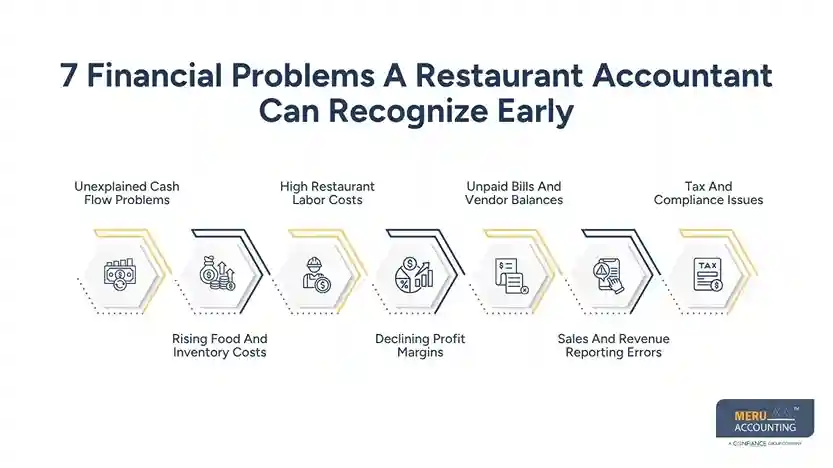
Unpaid Bills And Vendor Balances
Old vendor bills can create pressure on cash flow. Missing due dates may also lead to late charges or supply issues.
Regular accounting services can track unpaid invoices, due dates, vendor balances, and payment records.
Sales And Revenue Reporting Errors
Restaurants often use several sales channels. POS sales, delivery orders, online orders, cash sales, and card payments should agree with the accounting records.
Sales reports can be compared with bank deposits and recorded revenue. Refunds, discounts, tips, and payment fees should also be checked.
Tax And Compliance Issues
Tax records need careful attention because errors may lead to extra tax, interest, penalties, or added work. Restaurants may also have special duties related to employee tips.
The IRS requires employers to keep employment tax records for at least four years and lists wage and tip information among the records that should be retained.
Restaurant accounting services can keep key records organized and give owners a better basis for tax filing and review.
optional anymore
on running the business
How Restaurant Accounting Services Help Prevent Financial Problems
Effective restaurant accounting services should focus on regular checks rather than waiting until year-end. A steady review process can make small issues easier to find and correct.
Reconcile Bank Accounts
Bank reconciliation compares accounting records with bank activity. Missing deposits, duplicate entries, bank charges, and wrong amounts can be found during this process.
Daily or frequent transaction recording also gives owners a more current view of cash.
Review Accounts Payable
Accounts payable shows what the restaurant owes to vendors and other parties. A restaurant accountant can review old balances and upcoming bills to aid cash planning.
Check Payroll Records
Payroll review can include wages, overtime, taxes, tips, and total labor costs. Tip records need special care because federal rules apply to employee tip reporting and employer tax duties.
Compare Budget With Actual Results
A budget gives the restaurant a target for sales and costs. Actual results can then be compared with those targets.
Large differences may point to higher food costs, excess labor, weak sales, or other issues.
Keep Supporting Records
Invoices, receipts, deposit records, bank statements, and other documents provide proof of business transactions. These records can verify income, expenses, and payments and provide support for financial reports and tax filings.
Financial Reports A Restaurant Accountant Should Review Regularly
A restaurant accountant should not rely on one report to judge financial health. Different reports answer different questions about the business.
Profit And Loss Statement
A profit and loss statement shows revenue, costs, expenses, and profit for a chosen period. Monthly review can show whether the restaurant is earning more or spending more.
Balance Sheet
A balance sheet shows assets, liabilities, and owner’s equity at a set date. It can show cash levels, debt, stock, and unpaid obligations.
Cash Flow Statement
A cash flow statement shows how cash moves into and out of the business. The report can reveal whether daily operations are creating enough cash to meet near-term needs.
Accounts Payable Report
An accounts payable report lists unpaid bills and their due dates. Restaurant accounting services can use this report to aid payment planning and prevent old balances from being missed.
Sales And Cost Reports
Sales reports show how much revenue the restaurant earns. Cost reports show what the business spends to create those sales.
A restaurant accountant can compare the two to see whether rising sales are also producing enough profit.
When Should A Restaurant Hire A Restaurant Accountant?
A restaurant accountant can be useful before a business reaches a serious financial problem. Certain signs may show that professional accounting support is worth considering.
Sales Are Growing
More sales usually mean more transactions. More transactions can make bookkeeping, bank matching, payroll review, and reporting harder to manage.
Cash Keeps Running Short
Repeated cash shortages should not be treated as a normal part of business. They may point to high costs, poor payment timing, weak cash planning, or another issue.
Costs Keep Rising
Food, labor, rent, supplies, and other expenses need regular review. Restaurant accounting services can track these costs and show where spending is moving away from the plan.
Records Fall Behind
Late financial records make reports less useful. Owners may make decisions based on old data when recent sales, expenses, and payments are not yet recorded.
Tax Work Becomes Hard
Restaurants may have payroll tax, tip reporting, sales tax, and other filing needs based on their location and business setup. A restaurant accountant can organize financial data and coordinate needed tax work.
How To Choose The Right Restaurant Accounting Services
The right restaurant accounting services should match the restaurant’s size, transaction volume, accounting system, and reporting needs. Owners should check the service before handing over important financial records.
Check Restaurant Experience
Restaurant accounting has its own needs. Ask whether the provider understands food costs, payroll, tips, POS reports, vendor bills, and multiple sales channels.
Review The Service Scope
Find out what the service includes. Bookkeeping, reconciliation, accounts payable, financial reports, payroll records, and tax support may all be part of the package.
Ask About Reports
Reports should be clear enough for an owner to understand. A restaurant accountant should explain major changes instead of only sending financial statements.
Confirm Review Frequency
Ask how often accounts are reviewed. Monthly work may suit many restaurants, while businesses with high transaction volume may need more frequent checks.
Check Communication
Financial issues often need a quick answer. Choose a provider that gives owners a clear contact point and a defined process for questions and corrections.
Why Choose Meru Accounting For Restaurant Accounting Support?
Meru Accounting provides accounting and bookkeeping support for businesses that need clean records and clear financial reports. Our team can manage routine accounting work while giving owners useful information for financial review.
Focus On Accurate Records
Our team can record transactions, reconcile accounts, and keep financial records organized. Clean records give owners a stronger base for reviewing business results.
Review Important Numbers
Our accounting work can cover sales, expenses, cash, bills, and other key figures. A restaurant accountant can use these records to identify changes that need attention.
Provide Clear Reports
Owners need reports they can read and use. We can organize financial information into reports that make income, costs, and profit easier to review.
Reduce Routine Work
Daily accounting tasks can take time away from restaurant operations. Our restaurant accounting services can take care of recurring accounting work so owners have more time for core business tasks.
Build Ongoing Support
Financial review works best when records stay current. Meru Accounting can provide ongoing accounting support based on the restaurant’s needs, systems, and transaction volume.
Our Expert Perspective
From our experience, a restaurant accountant should review sales, cash flow, food costs, labor costs, vendor bills, profit margins, and tax records on a regular basis. Small changes in these areas can point to larger financial issues when left unchecked. Regular restaurant accounting services give owners timely reports, clearer records, and early insight into cost increases, cash gaps, reporting errors, and unpaid bills. Early action can protect cash flow, control costs, and support better financial decisions.
Key Takeaways
- A restaurant accountant can identify early financial risks by reviewing cash flow, sales, expenses, payroll, vendor bills, and tax records.
- Rising food, inventory, and labor costs can reduce profits, making regular cost and sales comparisons important for restaurant owners.
- Unpaid vendor bills, poor cash flow, and weak payment planning can create financial pressure even when restaurant sales remain strong.
- POS reports, delivery sales, cash receipts, card payments, and bank deposits should match accounting records to prevent revenue reporting errors.
- Regular restaurant accounting services can keep financial records current and provide clear reports on profit, cash flow, expenses, and outstanding bills.
- Reviewing profit and loss statements, balance sheets, cash flow statements, and accounts payable reports can reveal problems before they become costly.
- Early financial reviews give restaurant owners more time to control costs, plan cash needs, address errors, and make informed business decisions.
FAQs
A restaurant accounting professional can identify cash flow issues, rising food costs, high labor costs, falling profit margins, unpaid bills, sales errors, and tax problems.
A restaurant accounting professional reviews bank activity, sales, bills, payroll, and other payments to find unusual cash gaps or cash shortages.
A restaurant accountant compares food purchases, inventory use, waste, and sales to find unusual increases in food costs.
Yes, restaurant accounting services can compare sales with food, labor, and operating costs to find reasons for falling restaurant profit margins.
Restaurant accounting services can compare POS data, delivery sales, cash receipts, card payments, and bank deposits to find missing or incorrect sales records.
optional anymore
on running the business