The role of an accountant in a small business is not limited to recording sales and expenses. An accountant can keep financial records in order, prepare reports, review cash activity, manage bills, and assist with tax-related work. These tasks give owners a clearer view of how the business is doing.
A small business accountant can also turn financial data into useful information for business planning. For example, an owner may need to know whether sales are rising, costs are too high, customers are paying late, or there is enough cash for upcoming bills.
The role of an accountant in a small business can vary based on the size, type, and needs of the firm. Some businesses need basic bookkeeping and tax support, while others may need regular reports, cash planning, payroll review, and financial analysis.
Understanding these duties can help an owner decide what accounting support the business needs and when that support should be brought in.
What You Will Learn From This Blog
- What an accountant does in a small business.
- How the role of an accountant in a small business supports organized financial records.
- How accountants handle income, expenses, bills, and customer payments.
- How tax preparation and tax records fit into accounting work.
- How to compare in-house and outsourced accounting support.
- Why financial reports matter when making business choices.
- Which common financial problems the role of an accountant in a small business can help identify.
- How Meru Accounting can assist small businesses with accounting needs.
What Is the Role of an Accountant in a Small Business?
Keeping Financial Records
The role of an accountant in a small business begins with keeping financial records accurate and organized. Sales, expenses, payments, bills, and other financial activity need to be recorded in the right accounts.
Clear records give owners a better view of the money moving through the business. They also make it easier to prepare reports and review past transactions.
Reviewing Financial Activity
An accountant does more than enter figures. Financial entries may need to be checked against bank records, invoices, receipts, and other business documents.
A small business accountant can review unusual entries, missing records, duplicate transactions, or amounts that do not match the available documents.
Preparing Financial Reports
Financial reports turn accounting records into useful business information. Common reports include profit and loss statements, balance sheets, cash flow reports, and accounts receivable reports.
The role of an accountant in a small business includes preparing these reports in a form that owners can understand and use.
Providing Financial Insight
Numbers become more useful when someone can explain what they show. An accountant can point out changes in sales, expenses, unpaid invoices, or other financial areas.
A small business accountant can give owners financial information that may be useful when reviewing prices, costs, hiring plans, or future spending.
optional anymore
on running the business
Key Responsibilities of a Small Business Accountant
Managing Daily Financial Records
One important part of the role of an accountant in a small business is recording daily financial activity. Entries may include sales, purchases, bank transactions, payments, refunds, and business expenses.
Regular record work keeps the books current and reduces the amount of work left for the end of the month.
Tracking Income And Expenses
Income shows what the business earns, while expenses show what the business spends. Both need to be tracked in the right accounts.
A small business accountant can group expenses into areas such as rent, wages, supplies, software, advertising, travel, and other operating costs.
Preparing Financial Statements
Financial statements give owners a wider view of business results. A profit and loss statement can show revenue, expenses, and profit for a set period.
A balance sheet can show what the business owns, what it owes, and the value left for the owner. Cash flow reports focus on cash received and cash paid.
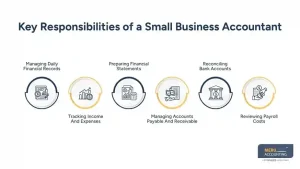
Managing Accounts Payable And Receivable
Accounts payable covers amounts the business owes to suppliers and other parties. Accounts receivable covers amounts customers still owe to the business.
The role of an accountant in a small business can include checking due dates, recording payments, and reviewing old balances that need attention.
Reconciling Bank Accounts
Bank reconciliation compares the business books with bank activity. Differences may come from bank fees, pending items, missed entries, or recording mistakes.
Regular reconciliation gives owners greater confidence that the recorded cash balance is close to the actual bank balance.
Reviewing Payroll Costs
Payroll is often one of the highest costs for a small business. Accounting work may include recording payroll entries and checking related costs.
The exact payroll duties depend on the business setup and the service being provided. Payroll tax work should always follow the rules that apply to the business.
How a Small Business Accountant Helps With Tax Compliance
Tax Preparation And Filing
The role of an accountant in a small business can include preparing financial information needed for tax filings. An accountant may review income, expenses, assets, and other relevant records.
The exact tax work depends on the business structure and the tax rules that apply to the business.
Tax Planning
Tax planning looks at financial activity before a tax deadline arrives. An accountant can review expected income, expenses, purchases, and other relevant items during the year.
Early planning gives business owners more time to review their options and prepare the funds and records needed for tax obligations.
Maintaining Tax Records
Tax-related records should be kept in an organized manner. Invoices, receipts, expense records, bank statements, and other documents may be needed to support reported figures.
A small business accountant can organize these records and make it easier to find the documents needed during tax preparation or review.
Reviewing Business Expenses
Not every payment made by a business receives the same tax treatment. An accountant can review expenses and identify items that need further attention before tax work is completed.
Business and personal spending should also be kept separate. Separate accounts make financial records easier to review.
Tracking Tax Deadlines
Different taxes can have different filing and payment dates. Missing a deadline may create additional costs or other problems.
An accountant can maintain a schedule of relevant dates and request the records needed before each filing period.
Checking Tax Records Before Filing
A review before filing can catch missing entries, unusual amounts, or incomplete records. Finding these issues early gives the business time to correct them.
The role of an accountant in a small business includes making sure the financial information used for tax work is properly organized and reviewed.
In-House vs. Outsourced Small Business Accountant
Choosing between an in-house and outsourced accountant depends on the firm’s workload, budget, accounting needs, and plans for growth. The following five factors can make the choice easier.
Comparison Factor | In-House Accountant | Outsourced Small Business Accountant |
Cost | The business pays salary, benefits, training, equipment, and other employee costs. | Costs are usually based on the agreed services, making the model suitable for firms that do not need a full-time employee. |
Workload | The role of an accountant in a small business may require daily attention when the business has regular accounting work to manage. | A good fit when the business needs weekly, monthly, seasonal, or task-based accounting support. |
Skills | The business hires an employee based on the accounting skills it needs. | The business may access a team with skills across bookkeeping, reporting, tax records, payroll, and other accounting tasks. |
Control | The owner has direct oversight of the employee and internal accounting work. | Duties, access, approvals, deadlines, and review steps can be set through an agreed service scope. |
Business Growth | More accounting work may require additional staff or changes to the employee’s role. | The service scope can be adjusted as transaction volume and accounting needs change. |
The role of an accountant in a small business should fit the firm’s size and financial workload. A small business accountant can provide useful support under either model, so owners should compare their current needs, budget, workload, and future plans before making a choice.
Why Are Accountants Important for Small Business Decision-Making?
Understanding Profit
Sales alone do not show whether a business is making money. Owners also need to know the costs linked to those sales.
An accountant can prepare reports that show revenue, expenses, and profit over a selected period.
Planning Cash Needs
A business may have strong sales but still face a cash shortage when customer payments are delayed. Cash planning can show upcoming receipts and payments.
The role of an accountant in a small business can include reviewing these figures so owners can plan for upcoming financial needs.
Reviewing Business Costs
Cost reports can show where the business spends its money. Owners can then review whether certain costs are necessary, rising too quickly, or linked to business growth.
A small business accountant can compare current costs with earlier periods and point out major changes that deserve review.
Evaluating Growth Plans
Growth may require new staff, equipment, stock, office space, or marketing spending. Each choice can affect both profit and cash.
The role of an accountant in a small business includes providing financial figures that owners can consider before making such commitments.
Reviewing Business Performance
Monthly or quarterly reports can show changes over time. Owners can compare sales, expenses, profit, debt, and cash across different periods.
Regular reviews make it easier to notice financial changes before they become larger concerns.
What Challenges Can an Accountant Help a Small Business Overcome?
Disorganized Records
Missing receipts, mixed personal and business payments, and late entries can make financial records hard to review.
An accountant can create a clear process for recording and checking financial activity.
Late Customer Payments
Unpaid customer bills can affect cash flow. An accountant can maintain accounts receivable records and show which invoices are current, late, or seriously overdue.
The role of an accountant in a small business can include regular review of these balances so owners know what customers still owe.
Rising Business Costs
Costs can rise even when sales remain stable. Rent, wages, supplies, software, and service costs can all affect profit.
An accountant can compare costs over time and identify areas that may need a closer review.
Missing Financial Information
Owners sometimes have sales data but lack a clear view of total expenses, debt, cash, or profit.
A small business accountant can bring these figures together through regular reports and account reviews.
Tax Record Problems
Incomplete or poorly arranged records can make tax preparation more difficult. Missing documents may also require extra time to locate and review.
Keeping accounting records organized throughout the year makes tax-related work easier to manage.
Limited Financial Knowledge
Business owners may understand their products and customers well but may not have deep accounting knowledge.
The role of an accountant in a small business includes explaining financial reports and accounting issues in simple terms so owners can make informed choices.
How Meru Accounting Can Assist Small Businesses
Organized Bookkeeping
Meru Accounting provides bookkeeping support designed around the needs of small businesses. Our team can record financial activity and maintain organized accounting records.
Regular bookkeeping gives owners a clearer view of business transactions without requiring them to handle every accounting task themselves.
Financial Reporting
Meru Accounting can prepare financial reports that show revenue, expenses, profit, assets, liabilities, and other key figures.
Our reporting work can give business owners useful information for regular financial reviews and planning.
Accounts Management
Our accounting team can work with accounts payable and accounts receivable based on the agreed service scope.
Regular review can give owners a better view of supplier bills, customer balances, and outstanding amounts.
Tax Accounting Support
Meru Accounting can assist with accounting records needed for tax preparation and related work. Our team can organize financial data and supporting documents based on the firm’s needs.
Tax work should always follow the rules that apply to the specific business and filing situation.
Flexible Accounting Support
Not every small business needs a full-time accountant, but understanding the role of an accountant in a small business can help owners determine which accounting tasks require professional support.
Meru Accounting offers outsourced accounting support for businesses that want accounting work handled by an external team.
Our services can be structured around the firm’s transaction volume, reporting needs, and accounting requirements.
Our Expert Perspective
The role of an accountant in a small business should not be viewed only as a record-keeping task. Financial records become valuable when they give an owner a clear view of income, costs, cash, debt, and business results.
From our experience, accounting works best when records are updated and reviewed throughout the year instead of being left until tax time. Regular checks can make errors easier to find and give owners more time to act on financial changes.
A small business accountant also cannot replace the owner’s business judgment. Accounting data gives facts and trends, while the owner must consider customers, staff, sales plans, market conditions, and other business factors before making major decisions.
Key Takeaways
- An accountant manages and reviews important financial records.
- The role of an accountant in a small business involves keeping daily records of sales, expenses, bills, and payments.
- Financial statements give owners a clear view of business results.
- Accounts payable and receivable need regular review.
- Bank reconciliation can identify gaps between books and bank activity.
- Tax records should be kept in an organized manner.
- Tax planning should be based on the rules that apply to the business.
- Meru Accounting can provide outsourced accounting support based on business needs.
FAQs
The role of an accountant in a small business is to manage financial records, prepare reports, review transactions, track money, and assist with tax-related accounting work.
An accountant gives small business owners clear financial information, which can aid decisions about cash flow, expenses, taxes, budgets, and business growth.
A small business accountant may manage bookkeeping, bank reconciliation, accounts payable, accounts receivable, financial reports, payroll records, and tax records.
A small business should consider hiring an accountant when financial tasks become hard to manage, tax work becomes more complex, records need regular review, or the owner needs better financial reports.
A business can choose based on its workload, budget, accounting needs, and staff capacity; outsourcing can be useful when a full-time accountant is not needed.
optional anymore
on running the business