
SaaS startups often work with limited resources, changing revenue cycles, and ambitious growth plans, making accurate financial planning and effective saas startup budget management essential.
Outsourced bookkeeping gives businesses access to skilled accounting professionals without building a large internal finance team. It helps founders maintain organized records, track expenses, review income patterns, and understand future cash requirements.
For SaaS companies, budget accuracy goes beyond recording transactions. It includes monitoring recurring revenue, analyzing spending, comparing actual results with plans, and identifying financial gaps early.
Professional bookkeeping creates structured reports that allow founders to make informed decisions based on reliable financial data instead of assumptions.
What You Will Learn From This Blog
- How external bookkeeping services work for SaaS companies and why they matter
- Why accurate budgeting is important for subscription-based businesses
- How financial experts identify spending gaps and reporting issues
- Ways startups can manage cash flow and reduce financial uncertainty
- How choosing the right bookkeeping partner can strengthen financial control
What is Outsourced Bookkeeping and How Does It Support SaaS Businesses?
Managing Daily Financial Records
Outsourced bookkeeping allows SaaS businesses to assign financial tasks to external experts who manage transactions, payments, accounts, and reports.
It keeps records organized by tracking subscriptions, expenses, payroll, and income for better financial visibility.
Tracking Subscription-Based Revenue
SaaS businesses rely on recurring payments, so tracking monthly plans, subscriptions, upgrades, cancellations, and refunds requires careful financial management.
A structured bookkeeping process records revenue changes accurately and gives founders a clearer view of earnings for better saas startup budget planning.
Reducing Financial Confusion
Many startups begin with small teams where founders manage several roles at once. As the company grows, handling finance tasks without proper knowledge can create confusion.
External bookkeeping specialists organize financial information and reduce errors caused by missed entries, incorrect classifications, or delayed reporting.
Creating Reliable Financial Reports
Financial reports give startups important information about their current position. Profit and loss statements, expense reports, and cash summaries show where money is coming from and where it is being spent.
Regular reporting allows management teams to review performance and adjust plans when needed.
Saving Time For Startup Teams
Managing books internally can take valuable time away from product work, customer service, and business development. Outsourcing routine finance tasks allows startup teams to focus on core operations.
Experts handle financial processes while founders spend more time on growth activities.
Understanding the Financial Challenges Behind a SaaS Startup Budget
Unpredictable Growth Costs
SaaS companies often invest heavily in product improvement, marketing campaigns, customer support, and technology tools. These costs may change quickly based on growth plans.
Without accurate tracking, startups may underestimate spending and face pressure on available funds, making saas startup budget control more difficult.
Managing Customer Acquisition Expenses
Customer acquisition costs are a major concern for SaaS businesses. Marketing platforms, sales teams, and promotional activities require ongoing investment.
A clear expense review helps companies understand whether customer growth efforts match expected returns.
Handling Recurring Expenses
SaaS startups usually have many recurring costs, including hosting, software subscriptions, employee payments, and service providers.
Small increases across multiple recurring expenses can create a large impact on monthly budgets if not monitored properly.
Forecasting Future Cash Needs
Budget planning requires an understanding of future income and expenses to create a realistic saas startup budget for sustainable growth. Startups need to estimate how much money is needed for operations and growth.
Poor forecasting may lead to sudden cash shortages or unnecessary cost cuts.
Managing Burn Rate Pressure
Burn rate shows how quickly a startup spends its available funds. High spending during early stages is common, but uncontrolled expenses can create financial risks.
Regular bookkeeping reviews help founders understand spending patterns and make timely adjustments.
Maintaining Investor Confidence
Investors expect startups to maintain clear financial records and responsible spending practices. Accurate reports create trust and show that company leaders understand their financial position.
Strong bookkeeping practices make financial discussions easier during funding rounds.
The Role of Outsourced Bookkeeping in Improving SaaS Startup Budget Accuracy
Creating Accurate Expense Records
Accurate expense records are essential for budget planning and maintaining a reliable saas startup budget that reflects actual business needs.
Bookkeeping professionals review transactions carefully and place expenses in the correct categories. This allows startups to compare planned spending with actual spending and identify differences early.
Improving Revenue Tracking
Revenue tracking for SaaS businesses requires attention to subscription cycles, payment dates, and customer changes.
Proper recording of revenue activities gives management teams a more realistic view of business performance.
Finding Budget Gaps Early
Budget gaps often appear when actual expenses move away from original plans. Regular financial reviews help identify these gaps before they become major concerns.
Early detection allows companies to change spending plans and protect available resources.
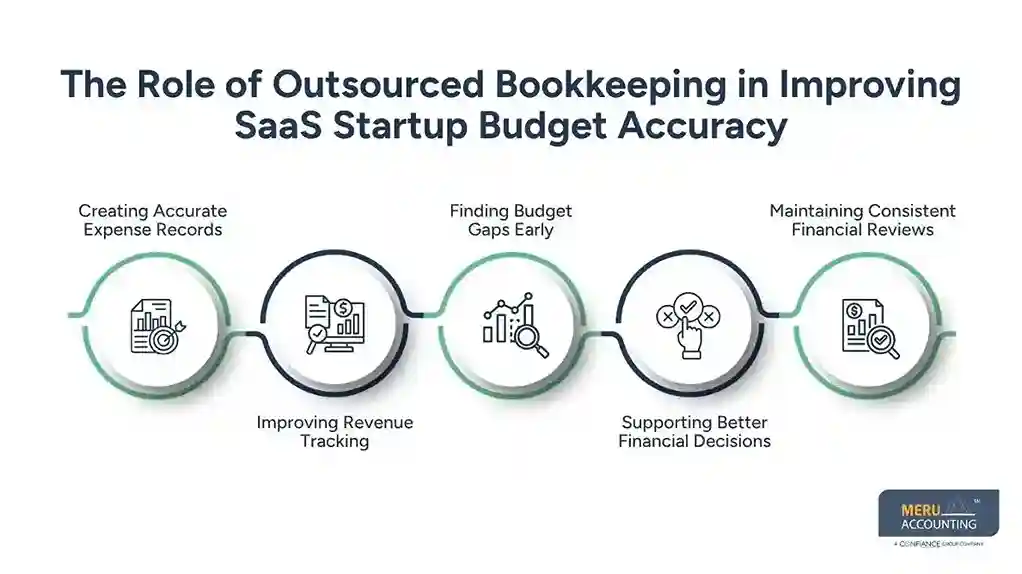
Supporting Better Financial Decisions
Business decisions depend on accurate information. When financial data is organized and updated, founders can evaluate hiring plans, pricing changes, and expansion ideas more effectively.
Reliable reports reduce guesswork and create a stronger decision process while helping founders manage their saas startup budget effectively.
Maintaining Consistent Financial Reviews
Consistent reviews help startups understand financial trends over time. Monthly comparisons show whether expenses are increasing, revenue is improving, or adjustments are needed.
This ongoing review process creates stronger budget control.
How Outsourced Bookkeeping Improves SaaS Startup Budget Accuracy
Monitoring Monthly Spending Patterns
SaaS startups need to understand how much money they spend each month to maintain an accurate saas startup budget and plan their next steps.
Regular financial reviews show changes in operating costs, employee expenses, software fees, and service payments.
Reviewing Cash Flow Movement
Cash flow reflects the movement of money inside a business. A company may show growth but still face pressure if payments and expenses are not balanced.
Bookkeeping professionals review incoming and outgoing funds to give startups a clearer view of their financial position. This makes planning easier and reduces unexpected financial stress.
Identifying Cost Reduction Areas
Every SaaS business has expenses that change over time. Some tools may no longer be useful, some services may have higher costs, and some processes may need review.
Detailed financial records help management teams identify areas where spending can be adjusted without affecting business goals.
Planning Future Hiring Decisions
Hiring decisions have a direct impact on startup finances. Salaries, benefits, and related costs must be carefully evaluated before adding new team members.
Accurate financial reports help founders understand whether the business can support new roles while maintaining stable operations.
Improving Financial Forecasting
Forecasting requires reliable past and present financial information to create a realistic saas startup budget for future growth.
When records are properly maintained, startups can create better estimates for future revenue and expenses. This creates a more practical plan for growth and reduces financial surprises.
Maintaining Financial Control During Growth
Growth periods often bring higher expenses. Without proper monitoring, increased activity can lead to unnecessary spending.
A structured bookkeeping process gives startups better control during expansion and keeps financial decisions connected with business goals.
Maintaining Accurate Expense Categorization
Proper expense categorization helps SaaS startups track technology, payroll, marketing, and operational costs with better clarity.
Organized records make saas startup budget reviews easier and allow founders to adjust spending based on actual business needs.
Avoiding Common Budgeting Mistakes in SaaS Businesses
Ignoring Small Recurring Costs
Many startups focus on major expenses but overlook smaller recurring payments. Multiple small subscriptions and service charges can slowly increase monthly costs.
Regular financial reviews help companies notice these expenses and decide whether each cost is still valuable.
Using Incorrect Financial Estimates
Budget plans based on assumptions can create problems when actual results differ, affecting the accuracy of a saas startup budget. Startups need accurate records to create realistic financial expectations.
Professional bookkeeping creates a stronger base for future planning by using actual business data.
Mixing Personal and Business Expenses
Early-stage founders sometimes mix personal and business payments, which can make records unclear. Separate accounts and proper categorization create cleaner financial reports.
Clear separation also makes tax preparation and financial reviews easier.
Delaying Financial Reviews
Waiting too long to review financial information can allow mistakes to continue for months. Regular checks make it easier to correct issues quickly.
A consistent review process keeps financial records updated and useful.
Not Tracking Revenue Changes
Subscription businesses often experience upgrades, cancellations, refunds, and pricing changes. Ignoring these factors can create inaccurate revenue expectations.
Proper tracking helps startups understand actual income patterns and maintain a more reliable saas startup budget.
Choosing the Right Outsourced Bookkeeping Partner for a SaaS Startup
Understanding SaaS Financial Needs
Not every bookkeeping provider understands subscription-based businesses. SaaS companies need professionals who know recurring revenue models, customer billing cycles, and technology-related expenses.
Choosing a partner with relevant experience creates better financial support.
Checking Industry Experience
Experience with similar businesses matters because SaaS accounting has unique requirements, especially when managing a growing saas startup budget.
A skilled provider understands common challenges and reporting needs. Reviewing past work and industry knowledge helps startups make better choices.
Reviewing Technology Compatibility
Modern businesses often use different tools for payments, customer management, payroll, and accounting.
A good bookkeeping partner should be comfortable working with existing systems and maintaining accurate information across platforms to support effective saas startup budget tracking.
Looking For Clear Communication
Financial information needs regular discussion. A reliable partner should provide clear updates and explain reports in simple terms.
Good communication allows founders to understand their financial position without confusion.
Considering Data Security Practices
Financial records contain sensitive business information. Startups should choose providers that follow strong security practices and maintain proper access controls.
Protecting financial data is essential for long-term trust.
Evaluating Service Flexibility
Startups need to change over time. A suitable bookkeeping partner should be able to adjust services as the company grows.
Flexible support allows businesses to receive the right level of assistance at different stages.
How SaaS Startups Can Improve Financial Visibility Without Expanding Internal Teams
Accessing Skilled Finance Professionals
Building a full finance department can be expensive for a young startup. Outsourcing allows companies to access experienced professionals without hiring multiple full-time employees.
This gives startups financial expertise while keeping internal costs manageable.
Reducing Operational Pressure
Founders and employees often handle many responsibilities in the early stages. Managing financial records along with daily operations can reduce productivity.
External bookkeeping services take care of routine accounting work and allow teams to focus on business priorities while improving saas startup budget visibility.
Creating Better Reporting Systems
A clear reporting system allows startups to track performance regularly. Reports show revenue trends, spending levels, and areas needing attention.
Better visibility creates more confidence during important decisions and helps maintain a controlled saas startup budget.
Supporting Funding Preparation
Investors often review financial records before making decisions. Organized reports demonstrate responsible financial management.
Accurate records help startups prepare for funding discussions and business evaluations.
Managing Growth Challenges
As startups gain customers, financial activity becomes more complex. More transactions, employees, and expenses require stronger processes.
Outsourced bookkeeping creates a system that can grow with business needs.
Maintaining Focus on Business Goals
When financial tasks are handled properly, startup teams can focus on product improvement, customer experience, and market growth.
Strong financial management becomes a support system for business progress by helping startups maintain a sustainable saas startup budget.
Why SaaS Startups Choose Meru Accounting for Reliable Financial Management
Experienced Accounting Support
Meru Accounting provides outsourced bookkeeping and accounting services designed for businesses that need accurate financial records and reliable reporting.
Our team of certified experts works with companies to organize transactions, maintain books, and create reports that support better saas startup budget planning and financial decisions.
SaaS-Focused Financial Understanding
SaaS businesses have specific financial needs related to subscriptions, recurring income, and technology expenses.
Meru Accounting helps startups manage these areas with structured accounting practices and careful record review.
Reducing Manual Finance Work
Manual financial tasks can take significant time and may create errors when handled without proper systems.
Meru Accounting assists businesses by managing routine bookkeeping activities so internal teams can focus on important operations.
Improving Reporting Quality
Clear reports allow founders to understand their business performance. Meru Accounting prepares financial information in a way that makes review and planning easier.
Reliable reporting creates stronger financial awareness.
Supporting Business Growth Plans
Growing startups need financial processes that can handle increasing activity.
Meru Accounting offers scalable bookkeeping solutions that match changing business requirements.
Building Long-Term Financial Confidence
Accurate financial management creates a stronger foundation for future decisions and helps startups maintain a balanced saas startup budget.
Meru Accounting combines professional knowledge and structured processes to help SaaS companies maintain better control over their finances.
Our Expert Perspective
From our expert perspective, SaaS businesses often face financial challenges due to unclear records, delayed reporting, and difficulty connecting financial data with future plans.
Our experience shows that a structured bookkeeping process creates better financial visibility by helping startups review spending patterns, understand cash movement, and prepare more accurate plans.
Professional bookkeeping goes beyond recording transactions by organizing financial information that allows founders to make informed decisions, maintain stronger financial control, and manage their saas startup budget effectively.
Key Takeaways
- Outsourced bookkeeping gives SaaS startups access to skilled financial support without building a large internal finance team.
- Accurate financial records create better saas startup budget planning and reduce financial uncertainty.
- Subscription revenue tracking requires careful monitoring of payments, upgrades, and cancellations.
- Regular expense reviews help identify unnecessary spending and improve cost control.
- Proper financial reports allow founders to make decisions based on real business information.
- Choosing an experienced bookkeeping partner can create stronger financial processes for future growth.
FAQs
Budget accuracy helps SaaS companies understand spending, plan future activities, and maintain a reliable saas startup budget while avoiding unexpected financial problems.
Yes, small SaaS startups can gain financial guidance and organized records without spending heavily on a full internal accounting team.
Most startups benefit from reviewing financial reports every month to track changes and make timely adjustments.
A SaaS startup should look for experience, clear communication, strong security practices, and knowledge of subscription-based businesses.
Yes, outsourced bookkeeping provides organized financial management when transaction volume increases and business operations become more complex.