Small business accounting tips can make invoice tracking easier, faster, and clearer. Many small firms make sales on credit, so cash may not come in when a bill is sent. When bills stay open for too long, cash flow can get tight. Accurate financial records give owners a clear view of what is due, who owes money, and when payment may come in.
Tracking unpaid invoices is not only about sending reminders. A firm needs clear records, due dates, payment terms, follow-up steps, and regular checks. These steps can reduce missed bills and late payment issues. Small business accounting tips also give owners a better way to review sales, cash flow, and customer payment trends.
What You Will Learn From This Blog
- Learn how to find and organize open customer invoices with ease.
- Understand small business accounting tips for tracking due dates and late payments more effectively.
- Learn how to create a clear and timely invoice follow-up process.
- Understand how accounting software can track open invoices in one place.
- Learn how to manage invoices that are significantly overdue from customers.
- Identify common invoice tracking mistakes and how to avoid them in practice.
- Understand how professional accounting support can make invoice tracking easier for your business.
Why Small Business Accounting Tips Matter for Invoice Tracking
Small business accounting tips give owners a set way to track money due from customers. Without a set process, staff may miss due dates or send the same bill twice. A clear process also makes month-end checks much easier.
Know Your Cash Position
Open bills are sales that have not yet brought cash into the bank. Owners should know the total amount due and the dates when cash is expected. A sales figure alone does not show how much cash the firm can use today.
Watch Customer Payment Trends
Some customers pay on time, while others may pay days or weeks late. Keep notes on payment habits for each key account. Such records can guide future payment terms and credit limits.
Keep Terms Clear
Each bill should show the amount due, due date, payment method, and late fee terms where allowed. Clear terms reduce confusion between the firm and its customers. Terms should match the written agreement with the customer.
Check Records Each Week
Weekly checks can catch bills that are near their due date. Staff can also spot missing payments before the delay becomes long. Small business accounting tips work best when they become part of a set weekly task.
Link Sales With Cash
A firm may show strong sales but still face a cash gap if customers pay late. Owners should compare sales, open bills, and bank cash. That view gives a better picture of the firm’s short-term cash needs.
How to Identify and Organize Unpaid Invoices
Unpaid invoices should be sorted by due date, customer, amount, and age. A simple list can work for a very small firm, but larger firms may need accounting software. The main goal is to know which bills need action first.
List Every Open Bill
One of the most useful small business accounting tips is to start with a full list of customer bills that have not been paid. Add the invoice number, customer name, amount, issue date, and due date. Remove paid bills from the open list after checking the bank record.
Use Aging Groups
Group open bills by age, such as current, 1–30 days late, 31–60 days late, and over 60 days late. Aging groups show where collection work is needed first. They also show whether late payment is becoming a wider issue.
Mark High-Value Bills
Large bills may have a greater effect on cash flow than small bills. Mark them for closer review. A late payment from one major customer can create more pressure than several small late bills.
Record Payment Notes
Keep a note after each call or email with the date and result. Record promised payment dates and any agreed change in terms. Written notes give staff a clear record if more follow-up is needed.
Recheck Bank Activity
A customer may have paid, but the payment may not yet appear in the accounting records. Check recent bank activity before sending another reminder. Small business accounting tips should include regular bank checks to avoid duplicate follow-ups and keep payment records accurate.
Small Business Accounting Tips for Monitoring Outstanding Payments
Small business accounting tips can turn invoice checks into a weekly routine. A set routine is easier to manage than checking bills only when cash becomes low.
Set a Weekly Review
Choose one day each week to review open customer bills. Check new bills, due bills, late bills, and recent payments. A weekly review can stop small delays from becoming large issues.
Use Due-Date Alerts
Set alerts before each payment date. For example, a firm may review a bill seven days before the due date and again on the due date. Alerts reduce the risk of missed follow-up work.
Review Aging Reports
An accounts receivable aging report shows how long customer balances have remained open. Review the report each week or month based on the firm’s size and sales volume. Small business accounting tips are more useful when they rely on current reports.
Track Collection Rates
Track how much billed money gets paid on time. A drop in the rate may signal a change in customer payment habits. Owners can then review terms, billing speed, or customer credit rules.
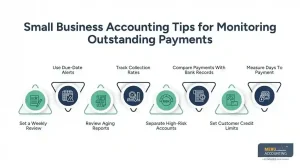
Separate High-Risk Accounts
Some accounts may show repeated late payment patterns. Place such accounts on a closer review list. Staff can then give more attention to bills that may create a cash risk.
Compare Payments With Bank Records
Match customer payments with bank deposits during each review. This check can find payments that were received but not yet marked as paid. Accurate records also reduce the risk of sending a reminder after payment.
Set Customer Credit Limits
Set clear credit limits based on customer history and business terms. Review limits when a customer often pays late or carries a high balance. A clear limit can reduce future cash flow pressure.
Measure Days To Payment
Track how many days customers take to pay after receiving a bill. Compare the result each month to spot changes in payment habits. A rising payment time may show a need for earlier follow-up.
optional anymore
on running the business
How to Set Up an Effective Invoice Follow-Up Process
A follow-up plan should tell staff what to do before and after a bill becomes due. Small business accounting tips become more useful when every step has an owner and a set time.
Confirm Before The Due Date
Send a polite check-in before the due date for large or important bills. Ask if the customer has the bill and all needed documents. Early contact can catch simple issues before payment is late.
Send A Due-Date Reminder
Send a short reminder when the payment date arrives. Include the invoice number, amount, due date, and payment options. Keep the message clear and factual.
Follow Up After A Delay
If payment does not arrive, send a second message soon after the due date. Ask when payment is expected. Keep a record of the reply and promised date.
Escalate Older Balances
Long-late balances may need a call from an owner or senior staff member. As part of effective small business accounting tips, review payment terms before taking further collection steps. Any collection action should follow the contract and applicable law.
Keep The Tone Professional
A payment request should stay polite and firm. Avoid threats or claims that are not backed by the contract. Clear records and calm communication can protect the business relationship.
How Accounting Software Helps Track Unpaid Invoices
Accounting software can bring invoices, customer balances, payments, and aging reports into one record. Small business accounting tips are easier to follow when routine checks can be done from current data.
Centralize Invoice Records
Software can keep customer bills in one place. Staff can search by customer, bill number, date, or amount. A central record makes review faster.
Show Payment Status
Many accounting systems show whether a bill is open, paid, partly paid, or late. Such status data gives staff a clear starting point for follow-up work.
Create Aging Reports
Aging reports can sort customer balances by how long they have been open. Owners can use these reports to set collection priorities. Reports also give useful data for cash planning.
Send Reminders
Some systems can send payment reminders based on set dates. One of the useful small business accounting tips is to review customer accounts before sending automated payment reminders. Automation should not replace basic record checks.
Match Bank Payments
Bank feeds can make payment matching faster. Staff can compare deposits with open customer balances and mark the right bill as paid. Regular matching keeps the records current.
How to Handle Long-Overdue Unpaid Invoices
Long-overdue unpaid invoices can create cash pressure and may raise questions about whether the full amount will be collected. Small business accounting tips can guide owners through a careful review before taking further action.
Check The Full History
Review the bill, contract, emails, payment notes, and prior calls. Confirm that the amount is correct. Errors should be fixed before stronger collection steps begin.
Contact The Customer
Ask for the reason behind the delay. The issue may be a missing document, billing error, cash problem, or dispute. A clear answer can show what step should come next.
Review Payment Options
If the contract and business policy allow it, an owner may discuss a payment plan. Any new terms should be recorded in writing. Staff should not promise terms that the firm cannot approve.
Assess Collection Risk
Very late balances may carry a higher risk of non-payment. Review the customer’s history and the amount due. Accounting records may also need an appropriate allowance or bad-debt treatment based on the firm’s accounting rules and professional advice.
Seek Professional Advice
One of the key small business accounting tips is to seek professional advice when large or disputed balances require additional review. The right action depends on the contract, business type, location, and facts. Avoid using a collection method without checking the rules that apply.
Common Invoice Tracking Mistakes Small Businesses Should Avoid
Even simple billing systems can fail when records are not checked often. Small business accounting tips can reduce errors by giving staff a fixed process.
Missing Due Dates
A firm may send bills on time but fail to track when payment is due. Use due-date alerts and weekly reviews. Every open bill should have a clear next action.
Poor Customer Records
Wrong email addresses or missing billing contacts can delay payment. Check customer details before sending bills. Update records when a contact changes.
No Aging Review
A list of open bills does not show how old each balance is. Use aging groups to find older balances. Review large and old balances first.
Sending Duplicate Reminders
Repeated messages can create confusion and harm customer trust. Following practical small business accounting tips means checking the latest payment record before sending another reminder.
How Meru Accounting Strengthens Small Business Accounting Tips for Invoice Tracking
Meru Accounting provides practical accounting support that can make invoice tracking more clear and organized. Our team can review customer balances, payment records, aging reports, and bank entries to keep financial records current.
Accurate Invoice Records
Our team can keep invoice records organized with customer names, invoice dates, amounts, and due dates. These small business accounting tips make it easier to see which customer payments are still pending.
Regular Accounts Receivable Reviews
Regular reviews can show which customer balances are current and which ones need follow-up. Our team can review aging reports and bring older balances to the owner’s attention.
Bank And Payment Reconciliation
Customer payments should be matched with the right invoices in the accounting records. We can reconcile bank activity with customer balances to reduce errors and keep payment records up to date.
Timely Payment Follow-Ups
A clear follow-up schedule can prevent late balances from being forgotten. These small business accounting tips can give staff a set process for recording reminders and checking payment status.
Better Cash Flow Visibility
Clear invoice records give owners a better view of money expected from customers. Reviewing open balances with other financial records can give a more useful view of near-term cash needs.
Ongoing Accounting Support
Meru Accounting can provide ongoing bookkeeping and accounting support based on the needs of a small business. Regular reviews can keep financial records ready for management and planning.
Our Expert Perspective
Our expert perspective is to review customer balances before and after due dates, follow up on late payments, watch repeated delays, and give priority to large balances. Keep clear notes of calls, emails, and payment promises, while reviewing invoice records each week to maintain accurate data, reduce missed follow-ups, and keep cash flow needs visible.
Regular checks can also reveal billing errors, missing payment details, or customer disputes before they grow into larger issues. A set review process gives business owners better control over customer payments and short-term cash needs.
Key Takeaways
- Review all open customer bills every week to keep payment records current.
- Sort customer bills by their due dates and how long they have remained open.
- Use aging reports to identify late balances that need prompt follow-up.
- Record every payment received and each follow-up action taken with the customer.
- Send payment reminders according to a clear and consistent schedule.
- Check bank records before sending reminders to avoid contacting customers who have already paid.
- Review large and older balances first because they can affect cash flow more.
- Keep payment terms clear on every bill, so customers know when and how to pay.
- Use accounting software to maintain accurate and up-to-date customer payment records.
- Seek advice from an accounting professional when balances are large, disputed, or seriously overdue.
FAQs
The best small business accounting tips include setting due-date alerts, reviewing aging reports, matching payments, and following up on late bills.
Small businesses can track unpaid invoices by using accounting software, aging reports, payment records, due dates, and regular account reviews.
A business should follow up before the due date for key bills and contact the customer soon after the payment becomes late.
Accounting software tracks unpaid invoices by showing open balances, due dates, payment status, aging reports, and customer payment history.
A small business should review the bill and contract, contact the customer, confirm a payment date, and seek professional advice for serious or disputed balances.
optional anymore
on running the business