
A Small business bookkeeper keeps daily financial records accurate, organized, and up to date. For many owners, tracking sales, bills, bank activity, payroll, and business expenses can take valuable time away from daily operations.
A skilled Small business bookkeeper manages these routine tasks and gives owners a clearer view of cash flow, income, expenses, and overall business performance. Accurate financial records also provide useful support for tax preparation and financial review.
The IRS states that businesses should maintain records that clearly show income and expenses and support the information reported on tax returns. Well-maintained financial records make it easier to review transactions, prepare reports, and provide supporting documents when needed.
What You Will Learn From This Blog
- What a Small business bookkeeper does and how they manage daily financial records.
- The main tasks involved in recording transactions, reconciling accounts, tracking bills, and preparing reports.
- What bookkeeping services for small businesses usually include and how services can vary by business needs.
- How professional bookkeeping can save time, keep records organized, and provide clearer financial data.
- The main factors that affect the cost of hiring a bookkeeper.
- What to check when comparing a bookkeeper’s experience, services, software skills, and pricing.
What Does a Small Business Bookkeeper Do?
Records Daily Transactions
A Small business bookkeeper records sales, bills, fees, payments, and other business activity. These entries give the owner a clear view of money coming in and going out.
Keeps Accounts Up To Date
Bank and credit card activity needs regular review and entry. A Small business bookkeeper checks these records and keeps the accounting system current.
Checks Bank Balances
Bank reconciliation compares the business records with bank data. The process can find missing entries, duplicate items, bank fees, or other gaps.
Tracks Money Owed
Unpaid customer bills can affect cash flow. A bookkeeper tracks open invoices and gives the owner a clear list of money still due.
Tracks Bills To Pay
Supplier bills and other costs also need close tracking. A Small business bookkeeper records due dates and unpaid amounts so bills are less likely to be missed.
Prepares Basic Reports
A bookkeeper can prepare reports such as profit and loss statements and balance sheets. The IRS notes that complete records are needed to prepare useful financial statements.
Key Responsibilities of a Small Business Bookkeeper
Record Income and Costs
One core duty is to record each business transaction in the right account. Accurate entries make later reviews, reports, and tax work easier.
Reconcile Bank Accounts
A Small business bookkeeper checks book data against bank statements on a set schedule. Regular checks can catch errors before they grow into larger issues.
Manage Accounts Receivable
Customer invoices need proper entry and review. A bookkeeper can track unpaid invoices and give owners a view of expected cash receipts.
Manage Accounts Payable
Bills also need a clear record. A Small business bookkeeper can track supplier bills, payment dates, and unpaid balances.
Maintain Source Records
Invoices, receipts, paid bills, deposit slips, and other source papers back up accounting entries. The IRS lists these documents as key records for business transactions.
Review Financial Data
A bookkeeper may review reports for unusual amounts, missing entries, or changes in costs. Such checks give owners better data for routine business choices.
What are Bookkeeping Services For Small Businesses?
Transaction Entry
Bookkeeping services for small businesses can cover routine entry of sales, purchases, fees, and other transactions. The exact work depends on the size and type of the firm.
Bank Reconciliation
Bank reconciliation compares recorded activity with bank and card statements. Regular checks can find missing entries, duplicate transactions, fees, and other record gaps.
Invoice Tracking
Invoice tracking covers customer bills, payments, overdue amounts, and open balances. Regular review gives owners a clear view of money still due.
Bill Tracking
Bookkeeping services for small businesses may also cover accounts payable. Bills can be sorted, recorded, and reviewed based on their due dates.
Payroll Records
Some providers include payroll record work within their package. Payroll entries should be kept apart from other costs and checked with care.
Financial Reports
Monthly reports can show income, costs, assets, and debts. These reports give owners a clearer view of current business results.
optional anymore
on running the business
Benefits of Hiring a Small Business Bookkeeper
Saves Owner Time
Bookkeeping takes regular effort and careful record work. Hiring a professional can give owners more time for sales, staff, customers, and daily business tasks.
Gives Clear Financial Data
Clean records give owners a better view of income, costs, and account balances. Regular reports also make it easier to review business results each month.
Reduces Record Errors
Missed entries, duplicate transactions, and wrong account codes can affect financial reports. A Small business bookkeeper can review records and spot these issues before they cause larger problems.
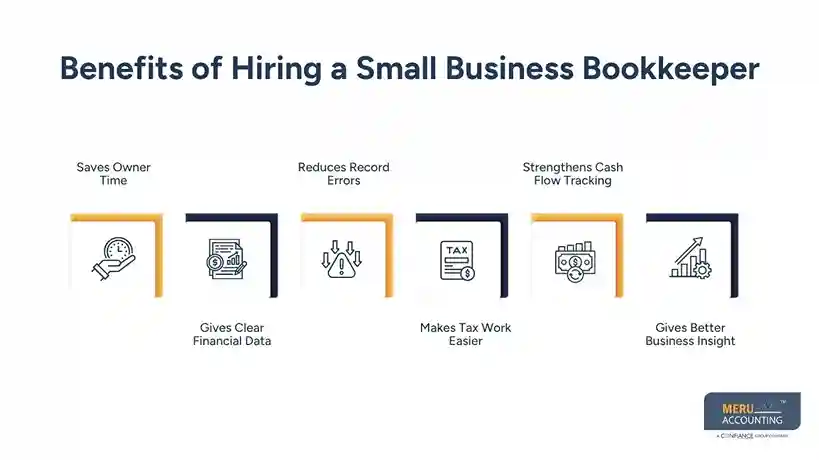
Makes Tax Work Easier
Tax returns need records that support income, expenses, and other reported amounts. The IRS states that business owners must keep records that support items reported on tax returns.
Strengthens Cash Flow Tracking
Cash flow can suffer when unpaid invoices or upcoming bills are not tracked. Regular review gives owners a clearer view of money due and expected payments.
Gives Better Business Insight
Monthly reports can show rising costs, weak sales periods, or changes in profit. Clear financial data gives owners useful information for routine business decisions.
How Much Does a Small Business Bookkeeper Cost?
Monthly Service Plans
Many firms charge a fixed monthly fee for bookkeeping services for small businesses. The price may depend on transaction volume, accounts, reports, and service scope.
Hourly Billing
Some bookkeepers charge by the hour. This may suit a firm with limited work, catch-up needs, or occasional record tasks.
Transaction Volume
More sales, bills, bank accounts, and payment entries usually mean more work. A higher transaction count can raise the cost of bookkeeping services for small businesses.
Service Scope
Basic entry costs less than a package that includes reconciliation, reports, invoice tracking, and bill tracking. Owners should compare the full scope before choosing a price.
Cleanup Work
Old or poor records may need extra work before normal monthly service starts. A catch-up project can cost more than ongoing bookkeeping.
Location and Expertise
Rates can vary by location, experience, software skills, and business type. Owners should compare value, service scope, response time, and expertise rather than price alone.
How to Choose the Right Small Business Bookkeeper
Check Relevant Experience
Choose a Small business bookkeeper who understands the type of business you run. Retail, construction, consulting, and online firms can have different record needs.
Ask About Services
Ask what the package includes before signing an agreement. Bookkeeping services for small businesses can range from basic entry to full monthly reporting.
Review Software Skills
Ask which accounting tools the provider knows well. The right fit should match the software already used by the business or offer a clear setup plan.
Confirm Review Processes
Ask how the provider checks entries, reconciles accounts, and handles errors. A clear review process gives the owner more confidence in the records.
Check Communication
Set clear rules for updates, questions, documents, and monthly reports. Clear communication matters when financial data is being shared and reviewed.
Compare the Full Cost
Do not compare monthly prices alone. Compare included work, extra fees, report quality, support, and the amount of owner time that the service can save.
Why Choose Meru Accounting For Small Business Bookkeeping?
Meru Accounting provides professional bookkeeping support designed around the needs of small businesses. Our team can manage routine records, reconciliations, invoice tracking, bill records, and financial reports while keeping the process organized.
Our bookkeeping approach focuses on accurate records, regular reporting, and clear communication. Businesses can also choose support based on their transaction volume, accounting software, and reporting needs. Working with Meru Accounting can help owners reduce routine record work and spend more time managing their businesses.
Meru Accounting can also adapt bookkeeping support as a business grows. Our team can help maintain consistent records when transaction volumes increase, new accounts are added, or reporting needs change. Regular support gives owners a dependable process for keeping financial data organized and ready for review.
Our Expert Perspective
A Small business bookkeeper should do more than enter financial transactions. Accurate records, regular reconciliations, clear reports, and timely reviews all help create reliable financial information.
Our expert perspective is to choose bookkeeping support based on the quality and scope of service rather than price alone. The right provider should understand the business, use suitable accounting software, maintain organized source records, and communicate clearly about financial activity.
Consistent bookkeeping can give small business owners better information for tax preparation, cash flow planning, and everyday decisions.
Key Takeaways
- A Small business bookkeeper records and reviews daily business transactions.
- Bookkeeping services for small businesses can include entry, reconciliation, invoice tracking, bill tracking, and reports.
- Costs vary based on transaction volume, service scope, and record quality.
- Business owners should check experience, software skills, communication, and pricing before hiring.
- IRS guidance says business records should support income, expenses, and tax return items.
- A monthly review can give owners useful data for cash flow and business decisions.
FAQs
A professional bookkeeper records income, expenses, bills, payments, bank activity, and other daily financial transactions.
Cost depends on transaction volume, business size, service scope, software used, and whether the records need cleanup.
A small business should hire one when record work takes too much time or financial data becomes hard to keep accurate.
Most small businesses should update their records regularly, with weekly or monthly updates based on transaction volume and business needs.
Yes, some bookkeeping services for small businesses include payroll records, payroll entries, and related account reconciliation, depending on the provider.
optional anymore
on running the business