
A small business owner often faces daily pressure to manage sales, expenses, tax needs, and cash flow at the same time. Without proper financial tracking, even a profitable business can face cash shortages or reporting issues. In this blog, a small business owner will learn how better recordkeeping and simple financial habits can create more control over money and reduce avoidable errors.
If you don’t keep track of your business money, you may lose cash, miss bills, or get confused during tax time. That’s why it is important to maintain proper financial records. Good recordkeeping helps business owners stay organized and make better financial decisions. In this blog, we will learn what bookkeeping is and share easy bookkeeping tips for small businesses you can start using today.
What You Will Learn From This Blog
- How bookkeeping improves financial control for small business owners
- Practical bookkeeping tips for small businesses to manage daily records
- Common bookkeeping mistakes and how to avoid them
- Ways to improve cash flow and business decision-making
- Simple methods to stay tax-ready and organized throughout the year
Why Bookkeeping is Important for Small Businesses
Track Income and Expenses
Bookkeeping helps small businesses track where money comes from and where it is spent. It allows business owners to monitor daily financial activity and manage operations in a more organized way.
Make Tax Filing Easy
Maintaining accurate financial records makes tax filing much simpler and less stressful. It reduces the chances of errors, helps avoid penalties, and saves valuable time during tax season.
Monitor Business Growth
Proper bookkeeping helps a small business owner clearly see whether the business is making a profit or facing losses. It also helps owners plan future growth, investments, and business improvements based on real financial data.
Manage Cash Flow
Bookkeeping allows businesses to keep a clear record of cash in hand, incoming payments, and outgoing expenses. This helps prevent cash shortages and ensures smooth day-to-day operations.
Build Trust with Banks and Investors
Well-maintained financial records reflect professionalism and reliability. They increase the chances of securing loans or attracting investors, as they provide clear proof of business performance.
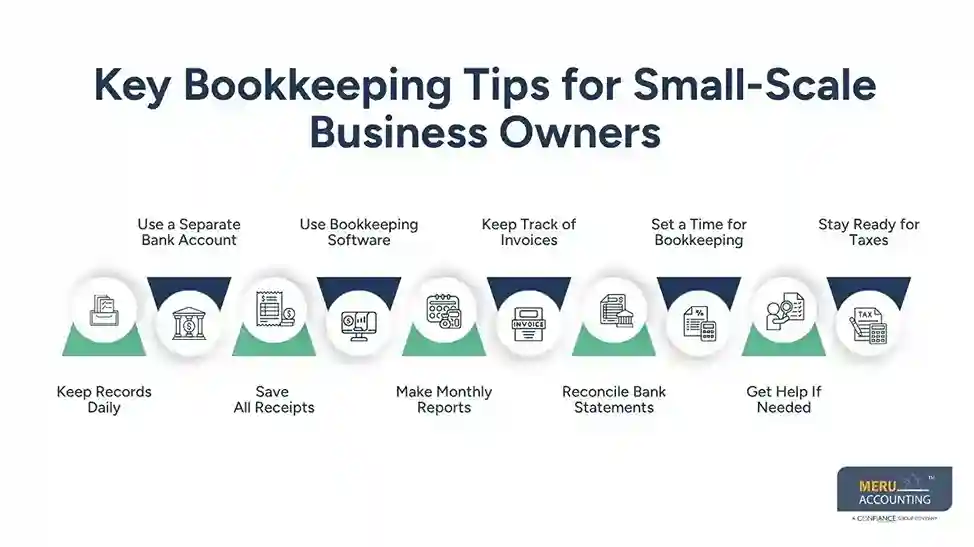
Key Bookkeeping Tips for Small-Scale Business Owners
1. Keep Records Daily
Write down all your business money details every day.
- Add sales and income
- Record expenses and bills
- Track payments from customers
Daily work helps you avoid forgetting things. It also keeps your records clean and clear.
2. Use a Separate Bank Account
- Open a business bank account
- Use it only for business needs
- Keep it clean and simple
This makes it easy to see your true business numbers.
3. Save All Receipts
Keep proof of everything you spend on your business.
- Save paper receipts
- Save online bills or emails
- Use folders or apps to store them
These receipts help at tax time and protect you from mistakes.
4. Use Bookkeeping Software
Many small business owners now use software instead of notebooks.
- Tools like QuickBooks, Zoho Books, or Wave
- Track money, make reports, and send invoices
- Easy to use, even for beginners
Good software helps you save time and avoid errors.
5. Make Monthly Reports
At the end of each month, check how your business is doing.
- Make income and expense reports
- Check profits and losses
- Plan for the next month
Reports help a small business owner make smart choices for the business future.
6. Keep Track of Invoices
If you send bills (called invoices), track who has paid.
- Send bills on time
- Follow up on the unpaid ones
- Use reminders or software to help
Getting paid on time keeps your business strong.
7. Reconcile Bank Statements
Every month, match your bank account with your records.
- Check your money records line by line
- Find and fix any errors
- Make sure everything adds up
These small business bookkeeping tips avoid overcharges or missing money.
8. Set a Time for Bookkeeping
Choose a day and time each week to do your money work.
- Treat it like any other business task
- Use a timer if needed
- Stay focused and organized
Making it a habit keeps your books in good shape.
9. Get Help If Needed
- Ask a bookkeeper to guide you
- Use online guides or classes
- Let experts like Meru Accounting help you
Help from pros can save you time and stress.
10. Stay Ready for Taxes
When your books are clean, tax time is easier.
- Track tax dates and rules
- Keep copies of tax forms
- Talk to a tax expert if needed
Being ready means fewer surprises and no last-minute stress.
Challenges in Small Business Bookkeeping
Even when you follow the best bookkeeping tips for small businesses, there can still be some problems. These challenges are common for small business owners and can make bookkeeping harder. Knowing about them can help you fix them early.
1. Not Keeping Daily Records
Many small business owners are busy and forget to write down their sales or spending each day.
- This can lead to missing or wrong records
- You may forget small costs that add up later
- It becomes hard to know your true profits
Following small business bookkeeping tips, like keeping a daily records, can help avoid this.
2. Mixing Business and Personal Money
Some owners use the same bank account for both business and personal use.
- It makes bookkeeping confusing
- You may not know what money belongs to the business
- It’s hard to get the right tax numbers
Having a separate account is one of the best bookkeeping tips for small businesses.
3. Losing Receipts
Receipts are proof of what you spent on your business.
- If you lose them, you may forget what was bought
- You could miss out on tax savings
- It’s hard to show records if needed later
Try to keep all receipts in one safe place or use a digital app to store them.
4. Waiting Too Long to Record
Some small business owners wait until the end of the month or longer to do their books.
- This can cause stress and errors
- You might forget some of the money details
- Your numbers may not be correct
One helpful approach from bookkeeping tips for small businesses is to do a little bit each week, so it doesn’t pile up.
5. Not Using the Right Software
Many owners still use paper or hard-to-use tools instead of good software.
- This takes more time
- You miss out on easy reports and alerts
- You may lose records if something happens to the book
Using simple and affordable software is one of the smartest bookkeeping tips for small businesses.
6. Forgetting to Track Invoices
If you send bills to customers but don’t track them, you might not get paid on time.
- Some customers may forget to pay
- You may miss income
- It hurts your cash flow and business plans
Good small business bookkeeping tips include setting reminders and checking unpaid bills often.
7. Not Asking for Help
Some small business owners try to do everything by themselves.
- They may not understand all the money rules
- They might make small mistakes that grow over time
- They could miss chances to save on taxes
8. Not Planning for Taxes
Many small businesses do not set aside money for taxes until it is too late.
- This leads to stress at tax time
- You may not have enough money to pay
- You might face fines or extra charges
One of the best bookkeeping tips for small businesses is to plan and stay ready for tax season.
How Proper Bookkeeping Helps a Small Business Owner Make Better Decisions
Clear Profit Understanding
Accurate records help a small business owner clearly understand the actual profit earned after all expenses. It removes guesswork and shows the real financial position of the business.
Better Investment Planning
A business owner can plan investments using real financial data instead of assumptions. Reliable figures reduce the risk of investing in areas that do not generate returns.
Risk Reduction
Structured bookkeeping practices help reduce financial uncertainty for a business owner. Early identification of cash flow or expense-related risks becomes easier with proper records.
Improved Pricing Strategy
Cost tracking allows a business owner to understand the actual cost behind each product or service. Better cost visibility supports pricing decisions that maintain healthy profit margins.
Strong Business Growth
Proper financial records allow a business owner to plan expansion in a safer and more controlled way. Growth decisions become more accurate when based on verified financial data.
Top Small Business Bookkeeping Tips for Efficiency
Here are some practical bookkeeping tips for small businesses to save time, reduce errors, and improve financial control.
Automate Recurring Transactions
Using accounting software to automate regular payments, bills, and invoices reduces manual effort. It also lowers the chances of human error and keeps financial records consistent.
Use Cloud Accounting Tools
Cloud-based systems allow business owners to access financial records anytime and from anywhere. They also make it easier to collaborate with accountants in real time.
Track Inventory Properly
Maintaining regular records of stock in and stock out helps a small business owner avoid overstocking or stock shortages. It also supports better cost control and planning.
Separate Cash and Credit Transactions
Keeping cash and credit transactions separate gives a clearer picture of actual cash flow. It prevents confusion while reviewing accounts or preparing reports.
Maintain Petty Cash Records
A small cash fund is useful for minor daily expenses. Every transaction from petty cash should be recorded to ensure transparency and accuracy.
Review Financial Reports with Team
Monthly discussion of financial reports with managers helps improve understanding of business performance. It supports better planning and decision-making.
Keep Up with Accounting Rules
Following updated accounting standards and tax regulations is important for every small business owner to ensure compliance and avoid penalties. It helps avoid penalties and keeps the business legally secure.
Common Mistakes in Small Business Bookkeeping
Mixing Personal and Business Expenses
When personal and business expenses are recorded together, it creates confusion in financial records. It also leads to incorrect profit calculation and makes tax filing more difficult.
Delaying Recording of Transactions
When a small business owner does not record transactions on time, it increases the chances of missing entries and errors. This delay reduces the accuracy of financial reports and weakens overall control.
Ignoring Receipts and Invoices
Not keeping proper receipts and invoices makes audits difficult and can also lead to the loss of eligible tax deductions. It weakens financial transparency and record accuracy.
Not Using Accounting Software
Relying only on manual bookkeeping takes more time and increases the risk of mistakes. Accounting software helps maintain organized records and improves accuracy.
Failing to Reconcile Accounts
When bank statements are not matched with internal records regularly, errors may remain unnoticed for a long time. This can lead to financial imbalance and reporting issues.
How Meru Accounting Supports Small Business Bookkeeping
At Meru Accounting, we help small business owners simplify bookkeeping through structured processes and modern cloud-based accounting systems. Our focus is on improving accuracy, reducing manual errors, and providing real-time financial clarity.
We support businesses across every stage of bookkeeping, including setup, reconciliation, reporting, and preparing tax-ready financial records. Our goal is to help you stay financially organized so you can focus more on growth, operations, and decision-making instead of day-to-day accounting stress.
We also ensure that your financial data is properly categorized and consistently maintained, so you always have a clear and reliable view of your business performance.
Our Expert Perspective
Strong bookkeeping builds financial discipline and helps small business owners stay prepared for growth, risks, and tax compliance. When simple systems are followed consistently, financial clarity improves, and confusion reduces over time. With the right approach, bookkeeping becomes a practical tool for better planning and smarter business decisions.
Key Takeaways
- Consistent bookkeeping helps a small business owner understand real profitability more clearly
- Separating personal and business finances improves accuracy and clarity
- Regular tracking of income, expenses, and invoices reduces financial stress
- Using accounting software saves time and reduces manual errors
- Monthly reviews and reconciliations improve financial accuracy and control
FAQs
Bookkeeping records should ideally be updated daily or at least weekly. Regular updates help prevent errors and keep financial data accurate and organized.
Important documents include invoices, receipts, bank statements, bills, payroll records, and tax-related documents.
Poor bookkeeping can lead to incorrect tax filing, cash flow issues, missed payments, and difficulty in tracking business performance.
Yes, bookkeeping is essential from the start, even if the business is not profitable. It helps track losses, control expenses, and plan for future growth.
Common errors include mixing personal and business expenses, missing receipts, delayed entries, and not reconciling bank statements regularly.