A small business tax advisor can do much more than prepare your yearly tax return. The right advisor can review your income, costs, business setup, records, and plans to find legal ways to lower your tax bill. Tax savings do not mean taking risky steps or claiming costs that do not fit the rules. They mean finding deductions, credits, and tax choices that apply to your business and keeping the right proof for each claim.
For many owners, tax savings are missed because they wait until filing time to review their numbers. A small business tax advisor can look at your tax position during the year, when there is still time to plan. That can make a real difference when you buy assets, hire staff, change your business setup, or see a rise in profit.
What You Will Learn From This Blog
- What a small business tax advisor does for business owners.
- How tax advisors look for legal tax-saving options.
- Which common costs may qualify as business deductions.
- How credits can cut the amount of tax you owe.
- Why your business structure can affect your tax bill.
- How planning and clean records can reduce missed tax savings.
What Does A Small Business Tax Advisor Do?
Reviews Your Business Numbers
A small business tax advisor starts with your basic numbers. They look at sales, costs, profit, payroll, assets, loans, and other items that may affect your tax return.
A clear view of your numbers makes it easier to spot areas that need review before tax filing starts.
Checks Your Business Expenses
A business tax consultant can review costs such as rent, ads, software, supplies, insurance, wages, bank fees, and professional fees.
The IRS says a business expense must generally be both ordinary and necessary to qualify as a deduction.
Review Your Tax Records
Records give your advisor the facts needed to make sound tax choices. A small business tax advisor may compare invoices, bank records, receipts, payroll data, and accounting reports.
The IRS says business records should support the income, expenses, and credits reported on a tax return.
Checks Your Tax Position
Your tax bill is not based only on sales. Profit, entity type, owner pay, deductions, credits, and other tax items can all affect the result.
A tax professional for businesses can bring these items together before you make key tax decisions.
Plans Before Filing
Waiting until the tax return is due can leave little room for action. A small business tax advisor can review your expected profit during the year and point out areas that may need attention.
Early review can also give you more time to collect proof for valid deductions.
Reviews Major Business Changes
Buying equipment, hiring staff, adding a partner, or changing your business structure can affect tax treatment.
A small business tax advisor can review these changes before you act, rather than checking their tax effect after the decision has already been made.
How A Small Business Tax Advisor Identifies Tax-Saving Opportunities
Compares Current And Past Returns
Past returns can reveal patterns in income, expenses, and tax payments. A small business tax advisor can compare those figures with your current records.
A large change may not be a problem, but it can show where a closer review is needed.
Looks For Missed Costs
Small costs can be easy to forget when you run a busy business. Software, business fees, supplies, repairs, and other valid costs can add up.
Your advisor can review your records and ask about expenses that may not have been included.
Checks Tax Credits
Credits and deductions work in different ways. The IRS explains that a credit is subtracted from tax owed, while a deduction is subtracted from income.
A business tax specialist can check whether your business may meet the rules for a credit before you claim it.
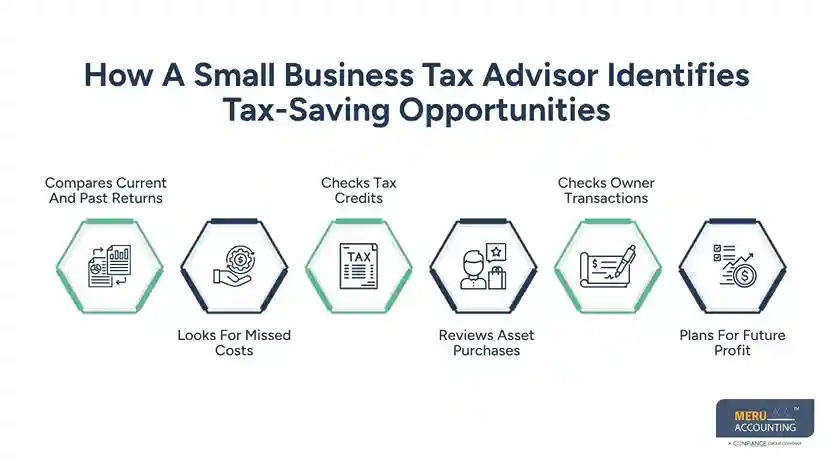
Reviews Asset Purchases
Equipment and other business assets can have special tax rules. The timing, cost, use, and type of asset can affect how the cost is treated.
A small business tax advisor can review planned purchases before you spend money, which gives you time to make an informed choice.
Checks Owner Transactions
Owner draws, wages, distributions, and other payments can be treated differently based on the business structure.
A tax consultant for businesses can review these payments and check whether they have been recorded in the right way.
Plans For Future Profit
A rise in profit can mean a larger tax bill. A small business tax advisor can use your expected income and costs to estimate your likely tax position. That gives you a better basis for planning cash flow and tax payments.
Tax Deductions And Credits Your Business May Qualify For
Home Office Costs
Some owners may qualify to claim costs linked to business use of their home. The rules depend on how the space is used and whether the required tests are met.
A small business tax advisor can check your facts before adding a home office claim to your return.
Vehicle Costs
Business use of a vehicle may qualify for a deduction when the tax rules are met. Records matter, especially for mileage, dates, and the business reason for travel.
Keep a clear log rather than trying to rebuild your trips months later.
Employee Costs
Wages and certain employee costs can be business expenses when they meet the applicable rules. Payroll records should match your accounting and tax records. A business tax professional can review these figures as part of your tax preparation.
Retirement Plan Costs
Some small employers may qualify for tax benefits when they start certain retirement plans. The IRS lists a credit for eligible employers that incur qualified plan startup costs, subject to the rules and limits. Your small business tax advisor can check whether the credit fits your facts.
Health Plan Costs
Certain small employers may qualify for tax benefits linked to employee health coverage. Eligibility depends on several factors, so the claim should be checked before filing. A tax planning specialist can review the required details and records.
Other Business Credits
Some businesses may qualify for credits linked to areas such as research, energy, fuel, or employee benefits. Not every credit fits every business.
A small business tax advisor can narrow the list to options that match your actual business activity.
How Business Structure Can Affect Your Tax Liability
Sole Proprietorship
A sole proprietorship is generally taxed through the owner’s return. The business income and costs are reported under the rules that apply to this structure.
A small business tax advisor can explain how this structure affects your tax return and owner tax payments.
Partnership
A partnership has its own filing rules, while income and other tax items can pass through to the partners.
The right treatment depends on the partnership agreement, business facts, and federal tax rules.
S Corporation
An S corporation generally passes income, losses, deductions, and credits through to shareholders for federal tax purposes. A business tax specialist can review whether the structure fits your business rather than focusing only on the possible tax result.
C Corporation
A C corporation is a separate taxpayer for federal income tax purposes. Its tax treatment differs from pass-through structures.
A small business tax advisor can compare the tax effects with your wider business needs before a change is made.
Limited Liability Company
An LLC can receive different federal tax treatment based on its ownership and elections. State law and federal tax rules can both matter.
The IRS notes that an LLC may be treated as a sole proprietorship, partnership, or corporation for federal tax purposes.
Choosing The Right Structure
Tax is only one part of the decision. Legal duties, payroll, ownership, state rules, and future plans also matter. A tax professional can model the tax side of different options so you can make a better-informed choice.
Tax Planning Strategies A Small Business Tax Advisor Can Recommend
Plan Estimated Tax Payments
Many self-employed owners need to make estimated tax payments during the year. The IRS notes that tax is generally paid as income is earned, and underpayment can lead to a penalty.
A small business tax advisor can use expected income, deductions, and credits to help you plan those payments.
Time Business Purchases
The timing of a business purchase can affect the year in which its cost is treated for tax purposes.
A qualified professional can review the purchase, the expected use, and the current rules before you commit funds.
Review Retirement Options
Retirement plans can have tax effects for both owners and staff. The right plan depends on your business size, goals, staff, and cash flow.
Your advisor can review the tax side before you choose a plan.
Review Business Growth
More sales can bring more profit, staff, payroll costs, and tax duties. Growth can also change the tax choices that make sense for the business.
A small business tax advisor can review your expected growth before the numbers become a year-end surprise.
Review Owner Pay
Owner pay needs careful review because treatment can differ by business structure.
A business tax consultant can review wages, draws, or distributions and check how they should appear in your records.
Plan For The Next Tax Year
Tax planning should not stop after a return is filed. Your income, staff, assets, and business plans may change during the next year.
A small business tax advisor can build those changes into your next tax plan.
How Small Business Tax Preparation Helps Find Missed Savings
Starts With Complete Records
Small business tax preparation begins with gathering the records needed for the return. These may include income records, invoices, receipts, bank data, payroll records, and asset details.
The IRS says records should clearly show business income and expenses and support items reported on the return.
Review Expense Categories
An expense can be missed or placed in the wrong account when records are not reviewed closely. During tax preparation, your advisor can review major expense groups and ask questions about unusual or unclear entries.
Match Accounting Records With Bank Data
Bank statements can show payments that are missing from your accounting records. They can also show income that needs to be checked. Comparing both sets of records can reveal errors or missing entries before the tax return is filed.
Checks Supporting Documents
A tax deduction needs support. The IRS states that taxpayers must be able to substantiate certain expenses with records such as receipts, bills, or other evidence. Tax preparation includes checking whether the records are strong enough for the claims being made.
Finds Forgotten Expenses
Owners may recall large purchases but forget smaller business costs paid throughout the year.
Tax record review can bring those costs back into focus when bank and accounting records are reviewed.
Builds Better Tax Records
A tax review can show where your records need more attention. The IRS notes that clear records can help track deductible expenses and prepare accurate tax returns. Clear and complete records can make future small business tax preparation easier and less rushed.
optional anymore
on running the business
Get Practical Tax Support From Meru Accounting
At Meru Accounting, we take a record-first approach to tax work. We do not promise a fixed tax saving before reviewing your business facts. Instead, our team looks at your income, costs, records, business structure, and tax position to find areas that deserve review.
Our small business tax advisor approach focuses on legal tax planning and accurate reporting. We look for deductions and credits that may fit your business while making sure the claim has proper support.
Review Your Tax Position
We start by looking at your current records and tax position. That gives us a clear base for tax planning.
Find Possible Tax Benefits
Our team checks areas where deductions or credits may apply. Each item is reviewed against the facts of your business.
Prepare Your Tax Return
Our small business tax preparation process brings together your financial records and tax information before filing.
Plan Before Deadlines
We encourage early tax review rather than waiting until the last filing date. Early planning gives you more time to act.
Review Business Changes
New staff, new assets, higher sales, or a change in structure can affect tax. We review those changes as part of your wider tax plan.
Provide Ongoing Tax Guidance
Tax questions can come up at any time of the year. Our team can review the tax side of a business decision before you act.
Our Expert Perspective
At Meru Accounting, we find that many missed tax opportunities start with a simple issue: the numbers were not reviewed early enough. A small business tax advisor can only work with the records and facts available. That is why we focus on clean records, early review, and claims that can be backed by proper evidence. Tax savings should come from valid planning, not from taking a position that cannot be supported.
Key Takeaways
- A small business tax advisor can review your income, costs, records, and business setup.
- Legal deductions can lower taxable business income when the rules are met.
- Tax credits can reduce tax owed when your business qualifies.
- Business structure can change how income and tax items are reported.
- Early tax planning gives you more time to make sound choices.
- Complete records are needed to support deductions and credits.
- Small business tax preparation can uncover costs that were missed during the year.
- A business tax advisor can review major business decisions before they affect your tax return.
- No advisor should promise a tax saving without first reviewing your facts.
FAQs
A small business tax advisor can review your income, expenses, records, business structure, deductions, credits, and tax payments. They can also guide you on tax planning during the year.
A business can lower its tax bill by claiming valid deductions and credits while keeping accurate records.
Tax planning should begin during the year so you have time to make informed choices before filing.
Ordinary and necessary costs such as wages, rent, supplies, insurance, and professional fees may qualify.
Yes, a tax professional can review your records and past returns to identify eligible deductions you may have missed.