Meeting a small business tax consultant becomes much easier when your records are ready. Before your appointment, gather your income details, expense records, bank statements, payroll files, asset records, and past tax papers. A tax consultant for small business can review your case with more clarity when these records are complete and easy to check.
You do not need to spend days making every file perfect. The main goal is to bring the records that show how your business earned and spent money during the tax year. Good preparation also gives your small business tax consultant enough information to ask useful questions and spot areas that may need more review.
What You Will Learn From This Blog
- Why preparing your documents before a tax meeting is important.
- Which business records you should collect before meeting your tax consultant.
- Which documents can support your business deductions and tax credits.
- How to organize your paper and digital tax records properly.
- Which common document preparation mistakes you should avoid.
- How Meru Accounting can assist you with your tax and accounting needs.
Why Prepare Documents Before Meeting A Small Business Tax Consultant?
Business Income Records
Collect sales invoices, receipts, payment reports, deposit records, and business bank statements. Include income received through cash, cards, online platforms, checks, and other payment methods.
Your small business tax consultant needs a complete income picture, not just the money that appears in one bank account.
Business Expense Records
Gather receipts, bills, invoices, and payment records for business costs. Common examples include rent, supplies, software, advertising, insurance, phone costs, and professional fees.
A tax consultant for small businesses can review the records and determine which costs may receive tax treatment under the rules that apply to you.
Bank And Credit Card Statements
Prepare statements for all accounts used for business transactions. Include business checking accounts, savings accounts, credit cards, and other financial accounts linked to the business.
If an account has both personal and business spending, mark the business transactions clearly for your small business tax consultant.
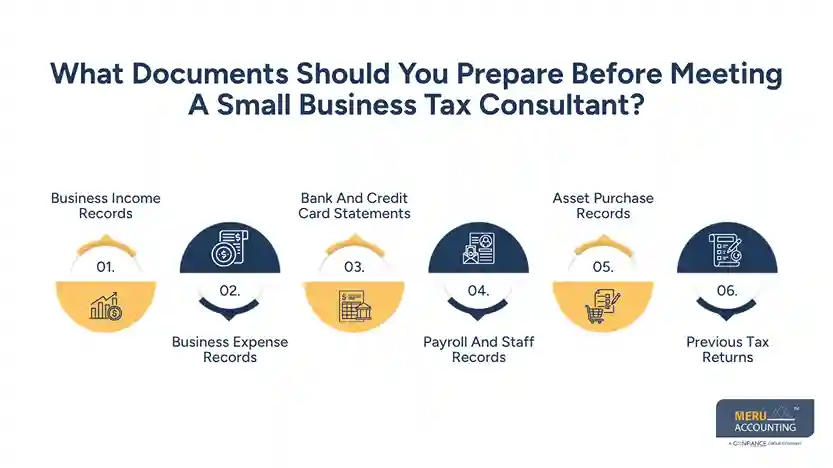
Payroll And Staff Records
If your business has employees, collect payroll summaries, wage records, tax payment records, and related filings. Keep records for benefits and other staff costs where relevant.
If you paid independent contractors, also gather payment records and any tax forms connected with those payments.
Asset Purchase Records
Prepare records for computers, vehicles, machinery, furniture, equipment, property, and other major purchases. Include purchase dates, costs, invoices, and financing details.
Your small business tax consultant may need these details when reviewing depreciation, asset sales, or other tax treatment.
Previous Tax Returns
Bring copies of recent business tax returns and related filings. Include amended returns, tax notices, payment records, and correspondence from tax agencies.
Past returns give your tax consultant for small business useful context when reviewing the current year’s records.
optional anymore
on running the business
Documents For Business Deductions And Tax Credits
Office And Supply Expenses
Keep receipts and invoices for office supplies, equipment, software, stationery, and similar business costs. Add a short note when the business reason for a purchase may not be clear.
Your small business tax consultant can then review the cost with its business purpose in mind.
Vehicle And Travel Records
Vehicle and travel costs often need more than a payment receipt. Keep mileage details, dates, trip purpose, fuel records, parking receipts, and other related documents where needed.
Do not rely on memory when a written record can be kept. Clear records make the review easier for your tax consultant for small business.
Home Office Records
If you work from home, gather records for costs linked to the space used for business. Depending on your situation, these may include rent, utilities, insurance, repairs, or other home costs.
Do not assume that every home expense qualifies. Your small business tax consultant can review your setup and explain which records matter.
Employee-Related Costs
Collect records for employee benefits, retirement plans, health plans, training, and other staff-related payments. Keep invoices and payment records with the related payroll data.
Some tax benefits have specific rules. Your tax consultant for small business can check whether the records match the requirements before anything is claimed.
Loan And Interest Records
Gather loan statements, interest details, financing papers, and records for business debt. Keep the purpose of each loan clear, especially when you have both personal and business borrowing.
Your small business tax consultant can review the records and determine how the related costs should be treated.
Professional And Business Fees
Keep records for accounting, legal, consulting, banking, software, and other professional costs. Make sure each payment can be linked to a business purpose.
A tax consultant for small business can review these costs along with your other operating expenses.
How To Organize Your Documents For A Small Business Tax Consultant
Create One Tax-Year Folder
Start with one main folder for the tax year. Create separate folders for income, expenses, payroll, assets, loans, tax returns, and tax notices.
This simple structure gives your small business tax consultant a clear path through your records.
Sort Files By Category
Do not place every receipt and invoice in one large folder. Group similar records together so you can find them when needed.
For example, keep rent records together and place software bills in another group.
Use Clear File Names
Give digital files names that tell you what they contain. Names such as Bank_Statement_January or Office_Rent_March are easier to find than Document1.
Clear names save time when your tax consultant for small business asks for a particular record.
Mark Unclear Transactions
You may find payments that you cannot identify at first. Do not delete them or guess their purpose.
Mark those transactions and add a note. Your small business tax consultant can ask the right questions during the review.
Check Your Bank Records
Compare your bookkeeping records with your bank and credit card statements. Look for missing transactions, duplicate entries, unexplained payments, or deposits that were not recorded.
A basic check can give your consultant a cleaner starting point.
Keep Backup Copies
Keep copies of important digital records in a secure location. Paper documents should also be stored where they will not be damaged or lost.
Your small business tax consultant may need older records later, so avoid keeping the only copy of an important document in one place.
Common Document Preparation Mistakes To Avoid
Mixing Personal And Business Costs
Personal spending should not be treated as a business cost simply because it came from a business account. Mixed spending needs careful review.
Tell your tax consultant for small business about such transactions rather than trying to classify them without guidance.
Keeping Only Bank Statements
Bank statements show payments and deposits, but they may not explain why a payment was made. Receipts, invoices, and notes can provide the missing context.
Give your small business tax consultant the supporting records along with the bank statements where possible.
Leaving Out Cash Income
Cash sales still form part of your business income. Keep sales records, receipts, cash logs, and deposit details that show what you received.
Your consultant needs the full income record, not just amounts that passed through your bank.
Guessing Expense Amounts
Avoid making up figures when you cannot find the supporting record. An estimate without a sound basis can create tax problems.
Ask your small business tax consultant what evidence may be needed for the expense instead.
Waiting Until The Last Day
Waiting until the day before your appointment can lead to missing records and rushed decisions. Start early so you have enough time to find missing documents and review unclear transactions.
Ignoring Tax Notices
Do not leave letters or notices from tax agencies in a separate pile. Include them with your tax documents.
Your tax consultant for small business should know about notices, outstanding amounts, questions, or past tax issues before reviewing your return.
How Meru Accounting Can Help With Your Tax Preparation
Preparing tax documents can take time, especially when your business records are spread across different systems and accounts. Meru Accounting can help you organize and review the financial information needed for your tax preparation.
Review Your Financial Records
Our team can review income, expenses, bank records, and supporting documents to identify missing or unclear information before tax filing.
Organize Tax Documents
We can help you arrange your financial records by category and tax year, making important documents easier to locate when needed.
Identify Missing Information
A review may uncover missing receipts, unexplained transactions, or incomplete records. Finding these issues early gives you time to address them.
Support Tax Preparation
Meru Accounting can assist with organizing the financial information required for tax preparation and help you understand what additional records may be needed.
Keep Records Ready
Maintaining organized records throughout the year makes future tax preparation easier. Our team can help you establish a practical record-keeping process that fits your business.
Our Expert Perspective
At Meru Accounting, we recommend focusing on accuracy and completeness rather than perfect organization before your tax meeting. Make sure your income is fully recorded, major expenses have supporting documents, and unusual or unclear transactions are marked for review. From our experience, these simple checks help your tax consultant understand your financial records faster and identify questions that need attention before the return is prepared.
Key Takeaways
- Start gathering your income records, receipts, invoices, bills, bank statements, and credit card statements before your tax meeting.
- Keep payroll, contractor, asset, loan, and previous tax records together so your small business tax consultant can review them with ease.
- Separate personal and business transactions, mark unclear payments, and avoid guessing amounts when supporting records are missing.
- Keep backup copies of important documents and ask your small business tax consultant which missing records you should provide.
- A tax consultant for small business can guide you on the records needed for your tax filing and help you address unclear tax items.
FAQs
Bring income records, expense receipts, bank statements, payroll records, asset details, loan papers, past tax returns, and tax notices.
Bring your latest tax return, business income and expense records, bank statements, payroll details, and a list of your tax questions.
Sort documents by tax year and group them into income, expenses, payroll, assets, loans, and tax return folders.
Yes, bank statements help your consultant review business deposits, payments, and other financial transactions.
Keep receipts for business costs such as supplies, rent, software, travel, advertising, equipment, insurance, and professional fees.
optional anymore
on running the business