
Software for real estate professionals has become a key part of deal work in 2026. Agents, brokers, admins, and teams need one clear place to track files, forms, tasks, dates, and client work. The right system can cut repeat work, keep files in order, and give brokers a clear view of each deal.
Modern real estate transaction software can also link forms, e-sign tools, MLS data, task lists, and back-office work. Yet, each platform has a different focus. Some suit solo agents, while others fit large broker teams or firms.
This guide reviews the main options for 2026 and shows what to check before you buy. The goal is not to pick a tool by name alone. The best choice should fit your deal count, team size, workflow, risk needs, and budget.
What You Will Learn From This Blog
- Learn how software for real estate professionals manages deals, tasks, forms, dates, and team workflows.
- The key tools found in modern real estate transaction software.
- How these systems can make deal work clearer and easier to track.
- A review of leading real estate tools for 2026.
- How to pick a system based on team size and work needs.
- How real estate transaction software can aid teamwork and file control.
What Is Software for Real Estate Professionals?
Software for real estate professionals gives agents, brokers, admins, and transaction staff one place to manage deal data. Users can keep forms, notes, tasks, dates, and signed files within each deal file, making it easier to see what is complete, what is due, and what needs review.
Real estate deals often involve many dates, such as inspection periods, loan steps, form deadlines, and closing dates. A central system lets staff assign tasks, set alerts, and track key dates without relying on separate spreadsheets, inbox notes, or paper records.
Digital form tools can also keep documents tied to the correct deal and may include form filling, file review, e-signatures, and secure file storage. Such features reduce the need to move the same data between several apps.
Team access is another key part of software for real estate professionals. Agents, brokers, admins, and deal staff may need different levels of access based on their roles.
Role-based controls can limit who can view, edit, approve, or send specific files, which is important when deals contain private client details. Compliance records also matter because brokers may need to know when a file was sent, changed, signed, or approved.
An audit trail can keep these actions recorded within the deal file and make later file checks easier.
For example, when an agent uploads a signed purchase agreement, the system can record who uploaded the file, when it was added, and whether the broker has reviewed it. A checklist can show which forms are complete and which items are still pending, while role-based access can limit sensitive files to approved team members. These records give brokers a clear history of each transaction and make it easier to find missing documents before closing.
Key Features of Real Estate Transaction Software
Central Deal Dashboard
A strong real estate transaction software tool should give users a clear deal view. The screen should show open deals, key dates, tasks, files, and deal status.
A broker should not need to open many apps just to find the next step in a file.
E-Signature Tools
E-sign tools let users send forms for review and sign-off. For software for real estate professionals, built-in signing can cut the need for extra apps and keep signed files linked to the deal.
Lone Wolf Transact, for example, lists integration with Lone Wolf Authentisign as part of its transaction workflow.
MLS And Form Links
MLS links are a useful feature in software for real estate professionals because they can cut repeat data entry. A system that can pull listing data into forms may save staff time and lower the risk of typing the same data twice.
Form access also needs to fit the state, local area, and MLS used by the firm.
Alerts And Checklists
Checklists are key for deals with many steps. A team can set a list for each deal type and assign tasks to the right staff member.
Alerts can flag a task that is late or a file item that still needs review. SkySlope lists custom checklists and automated review tools as core parts of its system.
Reports And Audit Logs
Reports let a broker see deal volume, status, task flow, and file data. Audit logs can show who took an action and when.
Such data can aid file checks and make it easier to spot gaps before a deal closes.
How Software for Real Estate Professionals Improves Transaction Management
Fewer Manual Steps
Software for real estate professionals can bring deal data into one workflow. Staff can use one deal file rather than copy details across email, sheets, and file folders.
Less repeat work can free staff to focus on client needs, deal review, and other key work.
Clear Deal Status
A live deal view gives teams a quick way to see open, pending, and closed files. Managers can spot deals that need action without asking each agent for an update.
That view is most useful when all team members use the same task and file rules.
Better File Review
Real estate transaction software can use set checklists for each deal. A broker or admin can then review files against the same set of rules.
For firms with many agents, this can make file review more clear and more consistent.
Faster Team Handoffs
Deals often move from an agent to an admin or a broker. A shared system can make each handoff more clear.
The next user can see the file, task list, notes, and due dates in one place with software for real estate professionals. That cuts the risk of key details being lost in a chat or email chain.
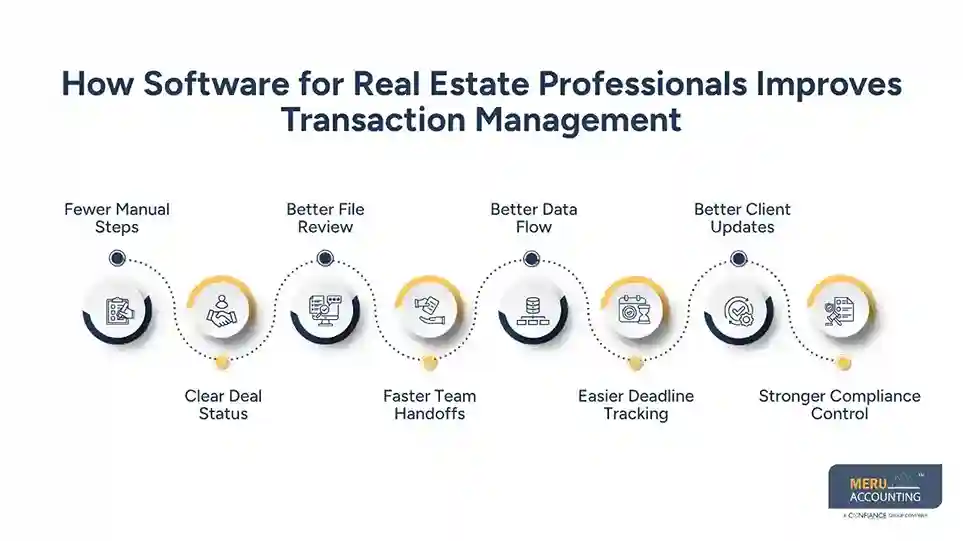
Better Data Flow
Some platforms link transaction data with CRM, MLS, forms, e-sign, and accounting tools. Dotloop, for example, provides APIs for linking with CRM and back-office tools.
A good link between apps can cut duplicate data entry and keep key records in sync.
Easier Deadline Tracking
Real estate deals include many key dates, from inspections to closing. Software can place these dates in one view and send alerts before important tasks are due.
Clear deadline tracking can reduce missed steps and keep each deal moving on time.
Better Client Updates
Teams using software for real estate professionals can use transaction data to give clients timely updates. Agents can check the deal status, pending tasks, and key dates before sharing the next update.
A clear record also makes client calls and emails easier to manage.
Stronger Compliance Control
Transaction systems can keep forms, approvals, signatures, and audit records linked to each deal. Brokers can review files before closing and spot missing items.
Standard checks can also make compliance work more consistent across the team.
optional anymore
on running the business
Best Real Estate Transaction Software Options in 2026
SkySlope
SkySlope is a strong choice for firms seeking software for real estate professionals with a focus on compliance and broker review. Its current suite includes transaction tools, forms, e-sign, offer tools, disclosures, mobile access, and back-office accounting options.
The platform says it serves more than 900,000 real estate professionals and manages more than 3 million transactions each year.
Dotloop
Dotloop is a known option for teams that want forms, e-sign, and transaction work in one system. Its developer tools also allow links with other real estate apps.
Dotloop may fit teams that want strong document work and broad app links. Firms should still check local form and MLS access before a purchase.
Lone Wolf Transact
Lone Wolf Transact is aimed at agents, teams, brokers, and MLS or association users. Its listed tools include a deal tracker, forms, MLS sync, e-sign, mobile access, and CRM links.
The vendor also says its products have managed millions of transactions and support a large base of real estate users.
Brokermint
Brokermint is a fit for brokerages that need transaction work tied to back-office tasks. It is often considered when commission tracking, accounting, and financial reports are key needs.
Brokerages should review setup needs, user roles, reports, and links with current accounting tools before a switch.
Paperless Pipeline
Paperless Pipeline can work for teams seeking software for real estate professionals with a more file-based transaction process. It can suit firms that value simple deal file control over a broad all-in-one suite.
A firm should check whether its form, e-sign, CRM, and accounting needs require added tools.
How to Choose Software for Real Estate Professionals
Check Your Deal Volume
Software for real estate professionals should match the number of deals your team handles. A solo agent may not need the same system as a 100-agent brokerage.
Start with the number of active deals, users, admins, and files handled each month.
Review Team Roles
List who will use the system and what each person needs to do. Agents may need forms and tasks, while brokers may need approval and audit tools.
Role settings should be clear and easy to manage as the team grows.
Check Integrations
Real estate transaction software works best when it fits the tools you already use. Check links for MLS, CRM, e-sign, accounting, storage, and other key apps.
Ask whether the link is native, uses an API, or needs manual export and import.
Compare Total Cost
Do not review only the base price. Check user fees, setup costs, add-ons, support plans, contract terms, and costs for extra tools.
A low monthly price may cost more if your team still needs separate tools for signing, forms, reports, or file review.
Test The User Flow
Ask for a demo or trial when evaluating software for real estate professionals. Run a real sample deal from start to close.
Check how easy it is to add a file, assign a task, send a form, get a signature, review the file, and close the deal.
Benefits of Using Real Estate Transaction Software for Teams
One Shared Workflow
Real estate transaction software gives teams a shared way to run each deal. Staff can use the same task rules, file steps, and review process.
That can reduce gaps when a deal moves between team members.
Better Broker Oversight
Brokers need a clear view of active files and open issues. A shared dashboard in software for real estate professionals can show deal status, missing files, and tasks that need review.
SkySlope, for example, offers a broker dashboard with a view of transaction status, files, and actions.
Easier Staff Handoffs
A shared file makes it easier to move work from one person to the next. The new owner can see past notes, files, dates, and open tasks.
Such a setup is useful when teams have admins or transaction coordinators who manage many files.
More Consistent File Checks
Software for real estate professionals can give each deal the same checklist. Teams can set rules for forms, approvals, signatures, and close steps.
A set process can make it easier to spot missing items before the broker signs off.
Room To Scale
A system should work as deal volume rises. More agents, more files, and more admins can make manual tracking hard to manage.
A shared platform gives firms a base for growth without adding a new sheet or inbox rule for each new user.
Meru Accounting For Real Estate Accounting Needs
Meru Accounting works with real estate firms that need clean books and clear financial records. Our team can manage bookkeeping, account reviews, financial reports, and other accounting tasks.
Bookkeeping For Real Estate Firms
Real estate firms can also use software for real estate professionals to organize transaction and accounting data in one place. Our bookkeeping team can record these items and keep accounts up to date.
Commission And Income Tracking
Commission income needs to match closed deals and payment records. Our team can review commission data, record income, and check entries against bank activity.
Expense And Account Review
Real estate firms may have many costs across agents, offices, software, and property work. We review account activity to find missing entries, wrong postings, and items that need more review.
Monthly Financial Reports
Clear reports give owners a better view of income, costs, and cash flow. Meru Accounting can prepare regular financial reports based on the firm’s bookkeeping needs.
Support For Growing Teams
Software for real estate professionals can help growing teams manage deal information while reducing repetitive accounting work. Our team can take on routine accounting work so real estate firms can keep their records current.
Our Expert Perspective
Transaction tools are useful, but software alone does not ensure clean financial records. Real estate teams still need clear processes for commissions, fees, expenses, payouts, and account checks.
Our view is to choose software for real estate professionals based on the full deal process. The system should fit the team’s work, connect with key tools, and make file and financial data easy to review.
Teams should also check how transaction data moves into their accounting process. A deal may be closed and signed, but the related income and costs still need proper recording.
For firms that want to reduce manual accounting work, Meru Accounting can manage routine bookkeeping and financial tasks alongside the team’s existing transaction process.
Key Takeaways
- Software for real estate professionals can bring deal files, tasks, forms, and dates into one place.
- Real estate transaction software can aid file review, team handoffs, and broker oversight.
- SkySlope suits firms that place high value on compliance and broker control.
- Dotloop can fit teams that need strong document and e-sign work.
- Lone Wolf Transact offers forms, MLS sync, e-sign, and deal tools.
- Brokermint may fit brokerages seeking software for real estate professionals with strong back-office features.
- Paperless Pipeline may suit teams that want a simple file-first process.
- Always check form access, MLS links, user roles, support, and total cost.
- Test the full deal flow before making a long-term software choice.
FAQs
The best option depends on team size, deal volume, required features, integrations, and budget.
Key features include document storage, e-signatures, task tracking, reminders, forms, audit logs, and team access.
Transaction management software keeps files, tasks, deadlines, forms, and deal updates in one shared system.
SkySlope, Dotloop, Lone Wolf Transact, Brokermint, and Paperless Pipeline are popular options with different team features.
Compare your deal volume, team roles, integrations, security, support, features, and total cost before choosing a platform.
optional anymore
on running the business