
A startup accountant supports dental clinics by improving financial reporting, payment tracking, insurance reimbursement visibility, and patient billing systems. Structured accounting support helps clinics maintain organized financial operations and stronger cash flow management.
Early-stage dental practices often deal with delayed reimbursements, incorrect coding, and inconsistent billing practices. Structured financial oversight helps reduce these issues and supports smoother cash flow management.
Dental billing involves coordination between insurance providers, treatment codes, co-payments, and patient invoices. Even small errors in documentation can result in claim rejection or payment delay.
What You Will Learn From This Blog
- How financial support from a startup accountant improves dental insurance processing
- Methods used to strengthen patient billing accuracy
- Ways to reduce insurance claim rejections
- Integration of dental software with accounting systems
- Key financial indicators for clinic performance
- How Meru Accounting supports dental clinics
Understanding The Role Of A Startup Accountant In Dental Practices
Financial System Setup For Clinics
A structured accounting system set up by a startup accountant helps dental clinics record income and expenses in an organized manner. Proper categorization of transactions ensures clarity in financial reporting and decision-making.
Insurance Revenue Tracking
Monitoring insurance-related revenue and reimbursement patterns helps clinics identify delays and maintain financial visibility. Organized financial tracking also supports better forecasting and revenue management.
Patient Billing Structure
Clear invoices help patients understand treatment costs, insurance coverage, and co-payment responsibilities. This reduces confusion and improves timely payments.
Compliance And Record Maintenance
Accurate financial records ensure compliance with tax regulations and insurance guidelines, often maintained systematically by a startup accounting firm. Proper documentation also supports audit readiness.
Cash Flow Tracking
Insurance reimbursements often arrive late, which affects liquidity. Regular monitoring of income and expenses helps maintain financial balance.
Common Insurance Billing Challenges Faced By Dental Clinics
Incorrect Treatment Coding Issues
Incorrect dental codes often lead to claim rejection or reduced payments from insurance providers.
Even small mismatches between treatment records and codes can slow down reimbursement cycles.
Delayed Claim Approvals
Insurance companies may take longer than expected to review and approve submitted claims.
These delays can create cash flow pressure, making support from a startup accounting firm valuable for maintaining financial stability.
Missing Or Incomplete Documentation
Incomplete patient records or missing treatment notes often result in claim denial or delays. Structured financial record systems help clinics maintain organized documentation and improve reporting consistency.
Frequent Claim Rejections
Claims are often rejected due to errors in data entry, eligibility issues, or incorrect coverage details.
Tracking rejection reasons helps clinics correct mistakes and improve future claim success rates.
Patient Insurance Confusion
Many patients are unclear about their insurance coverage, co-pays, and deductibles.
This confusion often leads to billing disputes and delayed collections, creating a need for support from a startup accounting firm.
Coordination Gaps With Insurance Providers
Poor communication between clinics and insurance companies can delay claim resolution.
Structured follow-ups and clear documentation help reduce delays and improve efficiency.
How A Startup Accountant Streamlines Dental Insurance Claim Processing
Claim Documentation Accuracy
Insurance claims require complete and accurate documentation. Structured financial workflows support organized records and improve visibility into reimbursement activity.
Faster Claim Submission Process
Organized financial systems managed by a startup accountant support quicker claim preparation and submission. This shortens payment cycles and improves cash inflow timing.
Rejected Claim Tracking
Monitoring rejected claims helps identify common errors such as coding mismatches or missing documentation. Fixing these issues improves future approval rates.
Insurance Communication Support
Clear coordination with insurance providers helps resolve claim queries faster and reduces processing delays.
Regular follow-ups with insurers help avoid claims getting stuck in unresolved status for long periods.
Revenue Cycle Monitoring
Tracking the full cycle from treatment to final payment provides visibility into pending revenue and outstanding claims.
This ongoing monitoring, when managed by a startup accounting firm, helps clinics predict cash inflow and plan operational expenses more accurately.
How A Startup Accountant Improves Patient Billing And Revenue Cycle Efficiency
Clear Invoice Structure
Patient invoices are structured in a way that clearly separates treatment cost, insurance coverage, and out-of-pocket payments.
This clarity helps patients understand charges easily and reduces billing-related queries at the front desk.
Payment Tracking Systems
Each payment from patients is recorded and tracked to ensure no outstanding dues are missed.
Regular updates in the system also help staff follow up on pending payments without delay.
Co-Payment Recording
Accurate recording of co-pay amounts helps avoid billing disputes and payment confusion.
It also ensures that insurance and patient responsibilities are correctly separated in every transaction.
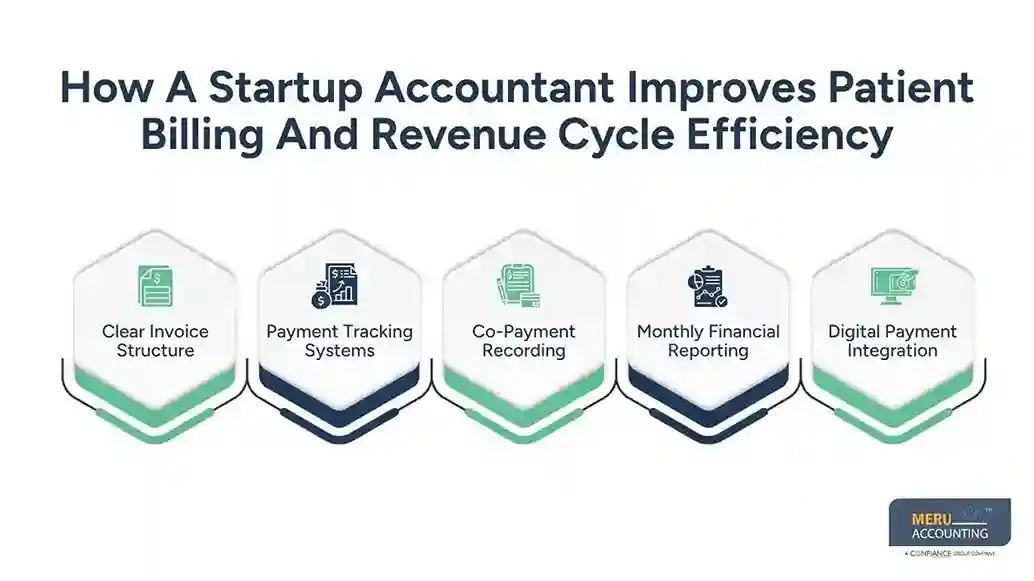
Monthly Financial Reporting
Monthly summaries prepared or reviewed by a startup accountant help clinics understand income trends, billing efficiency, and outstanding balances.
These reports also support better planning for staffing, supplies, and operational costs.
Digital Payment Integration
Integration with online payment systems improves collection speed and reduces manual handling.
It also provides patients with flexible payment options, improving overall collection rates.
How A Startup Accounting Firm Reduces Billing Errors And Claim Rejections
Standard Billing Procedures
Uniform billing methods implemented by a startup accountant across staff reduce inconsistencies and improve financial accuracy. Consistency across all billing entries helps maintain correct claim formatting and reduces manual entry mistakes.
Pre-Submission Review System
Claims are reviewed before submission to ensure accuracy in coding and documentation. Early identification of missing or incorrect details helps prevent rejection from insurance providers.
Staff Training On Billing Rules
Training sessions help clinic staff understand insurance requirements and reduce common mistakes. A better understanding of insurance rules improves accuracy in day-to-day billing work and claim preparation.
Automated Reconciliation
Matching payments with invoices helps identify mismatches and improves record accuracy, a process often streamlined by a startup accounting firm. Detection of payment gaps supports timely correction of financial records and improves reporting quality.
Audit Prepared Records
Well-maintained records maintained under a startup accountant ensure smooth audits and reduce compliance risks. Proper documentation structure supports quick response during audits and reduces verification delays.
How A Startup Accountant Integrates Accounting Systems With Dental Practice Software
System Integration Setup
Accounting tools are connected with dental practice software to reduce manual data entry, often implemented by a startup accounting firm for better efficiency. This connection reduces duplication of records and improves overall data accuracy across systems.
Real-Time Financial Updates
Transactions are updated in real time, allowing better visibility into clinic finances.
Updated records support faster decision-making and improve control over daily cash flow.
Insurance Data Synchronization
Insurance claim details are aligned with accounting records to maintain consistency, a process efficiently managed by a startup accountant. Aligned data helps reduce mismatches between billing systems and insurance submissions.
Automated Reporting Systems
Financial reports are generated automatically, saving time and reducing manual effort.
Automated outputs ensure consistent reporting formats that are easier to review and analyze.
Data Protection Measures
Patient financial data is stored securely to maintain confidentiality and compliance. Strong access controls and encryption practices help protect sensitive financial and medical billing information.
Key Financial Metrics a Startup Accountant Helps Dental Clinics Track
Revenue Per Patient
This metric helps understand how much income is generated from each patient visit. Tracking this figure over time helps identify treatment trends and patient value patterns.
Claim Approval Rate
Tracking approved vs rejected claims helps measure billing accuracy and insurance efficiency. Higher approval rates often indicate stronger documentation practices and fewer billing issues.
Outstanding Receivables
Pending payments from patients and insurance companies are monitored regularly by a startup accountant to maintain a healthy cash flow. Regular review of receivables helps clinics reduce delays in collections and maintain healthy cash flow.
Operating Expenses
Daily costs such as salaries, rent, and supplies are tracked for financial control. Expense tracking also helps identify areas where costs can be monitored more effectively.
Profit Margin Analysis
Profitability analysis compares income with operational expenses to provide insight into long-term financial performance and business stability. Margin analysis provides better insight into financial performance and long-term clinic stability.
How Meru Accounting Supports Dental Clinics
Meru Accounting offers structured financial support for dental clinics through experienced professionals who manage insurance billing, patient invoicing, and accounting systems. Financial records are organized to reduce errors and improve clarity across all transactions.
Support includes accounting system setup, software integration, financial reporting, and reimbursement tracking for improved operational visibility. Clinics also receive assistance from a startup accountant in improving billing accuracy and cash flow visibility.
Working with a startup accounting firm like Meru Accounting helps dental practices reduce administrative workload and maintain consistent financial control while focusing on patient services.
Our Expert Perspective
From our experience, most billing inefficiencies in dental clinics arise from disconnected systems rather than a lack of effort or intent. A structured accounting workflow implemented by a startup accountant, with consistent reconciliation and claim tracking, can significantly reduce revenue leakage and payment delays.
We focus on aligning accounting processes with insurance workflows and reporting systems to improve financial visibility and cash flow stability.
Key Takeaways
- Structured financial systems improve dental billing accuracy
- Insurance claim errors reduce with proper documentation and review
- Patient billing becomes clearer with organized invoices
- Integration with dental software improves financial tracking
- Key metrics help measure clinic performance and stability
- External accounting support improves overall financial control
FAQs
Accurate coding and proper record management speed up claim processing. Clear documentation reduces delays and improves approval rates.
Incomplete information, incorrect treatment codes, and missing documents are common issues. Careful verification before submission helps avoid such rejections.
Simple invoice layouts with transparent cost breakdowns improve patient understanding. Faster payments follow when billing details are easy to read.
External support from a startup accountant reduces manual workload and improves accuracy in financial records. Stronger systems help clinics manage daily transactions more effectively.
Income flow, pending receivables, operating costs, and approval ratios are key metrics. Regular tracking helps maintain stable financial control and planning.