
A startup business accountant helps DTC brands manage growth, control costs, and maintain stable financial systems. Many direct-to-consumer brands grow quickly through online stores, social media marketing, and repeat customer sales.
While growth creates new business opportunities, it also brings financial pressure, tax filing work, and inventory management challenges. A startup business professional helps founders manage these areas with better financial planning and reporting.
DTC brands often sell products through multiple online channels. These channels may include Shopify, Amazon, social commerce platforms, and their own websites.
Managing payments, refunds, taxes, shipping costs, and ad expenses across different platforms can become difficult without proper accounting support. A startup accountant helps organize financial records and gives business owners a clear understanding of their financial position.
What You Will Learn From This Blog
- Why DTC brands need financial support during growth stages
- How a startup business accountant supports online business operations
- Ways to manage profit margins in DTC businesses
- Common tax challenges faced by growing DTC brands
- Important financial KPIs every DTC brand should track
- How accounting support helps manage advertising budgets
- Why investor-ready financial reports matter for DTC startups
- How Meru Accounting supports DTC businesses with accounting services
Why Every DTC Brand Needs A Startup Business Accountant
Managing Rapid Sales Growth
DTC brands can experience sudden sales increases during festive seasons, promotions, or viral marketing campaigns. A startup business accountant helps businesses prepare for these changes by tracking revenue and managing working capital properly.
Tracking Multi-Channel Transactions
Many DTC brands sell through several platforms at once. A startup accountant records transactions from all sales channels and ensures financial records remain accurate and updated.
Monitoring Business Expenses
Online businesses spend money on ads, packaging, software tools, shipping, and customer service. An accountant for startup businesses helps track these expenses and identify areas where spending can be controlled.
Supporting Inventory Planning
Inventory problems can reduce profits and customer trust. An accountant for startups helps brands monitor inventory costs, stock movement, and reorder planning based on sales trends.
Improving Financial Reporting
DTC founders need clear reports to understand business performance. A startup accountant prepares reports that help owners monitor profit, cash flow, and business growth regularly.
Reducing Financial Risks
Growing brands may face tax penalties, delayed payments, or cash shortages. A startup finance professional helps reduce these risks by maintaining accurate financial records and planning ahead.
Understanding The Role Of A Startup Business Accountant In E-Commerce Growth
Organizing Financial Systems
A startup business accountant creates structured bookkeeping systems that help DTC brands manage daily transactions and financial records more efficiently.
Managing Revenue Recognition
DTC businesses may receive payments through subscriptions, pre-orders, or installment plans. An accountant for startups helps record revenue correctly according to accounting standards.
Supporting Cash Flow Management
Cash flow is important for inventory purchases, marketing campaigns, and supplier payments. A startup accountant tracks cash movement and helps avoid cash shortages.
Handling Vendor Payments
DTC brands work with manufacturers, shipping partners, and marketing agencies. An accountant for startup businesses manages payment schedules and helps avoid late payment issues.
Preparing Financial Statements
Accurate financial statements help founders understand business performance. A startup business specialist prepares balance sheets, income statements, and cash flow reports regularly.
Assisting With Business Planning
Growth planning requires financial forecasting and budgeting. A startup for accountants helps founders prepare realistic financial plans based on current business performance.
How A Startup Business Accountant Helps DTC Brands Manage Growth
Creating Growth Budgets
DTC brands often increase spending during expansion stages. A startup business accountant helps create budgets that support growth while maintaining financial stability.
Monitoring Customer Acquisition Costs
Customer acquisition costs affect overall profitability. An accountant for startups helps track ad spending and compare it with customer revenue to measure marketing performance.
Managing Operational Costs
Shipping charges, warehousing fees, and software subscriptions can increase quickly. An accountant for startup businesses helps brands review operational expenses regularly.
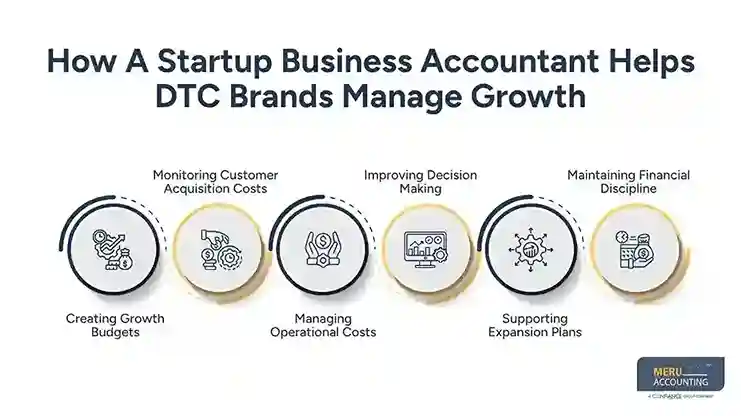
Improving Decision Making
Financial reports help founders make informed business decisions. An accountant for startups provides insights based on business performance and spending patterns.
Supporting Expansion Plans
Some DTC brands expand into new markets or product categories. A startup financial accountant helps estimate financial requirements before expansion begins.
Maintaining Financial Discipline
Fast growth can lead to uncontrolled spending. A finance professional for early-stage companies helps businesses maintain financial discipline through regular monitoring and reporting.
Managing Profit Margins With An Accountant For Startup Businesses
Monitoring Product Costs
Product manufacturing and sourcing costs directly affect profits. An accountant for startup businesses helps monitor these costs and maintain healthy margins.
Tracking Shipping Expenses
Shipping and return costs can reduce profits for DTC brands. A startup business accountant helps businesses review delivery expenses and return-related costs.
Reviewing Discount Strategies
Heavy discounts may increase sales but reduce profitability. A startup-focused financial advisor helps brands evaluate whether discount strategies are improving revenue or reducing overall profit margins.
Managing Marketing Expenses
Paid ads are a major expense for many DTC brands. An accountant for startups helps monitor advertising returns and spending efficiency.
Improving Pricing Decisions
Pricing affects both customer demand and business profit. A startup financial accountant helps brands review pricing strategies using financial analysis.
Analyzing Gross Profit Margins
Gross profit margins help businesses understand product-level performance. A startup finance specialist prepares margin analysis reports to support better decision-making.
Tax Compliance Challenges Solved By A Startup Business Accountant
Managing Sales Tax Requirements
DTC brands selling across states or countries may face different tax rules. A startup business accountant helps businesses comply with sales tax requirements.
Preparing Accurate Tax Records
Incorrect tax records may create penalties and legal issues. An accountant for startups maintains organized records for tax filing purposes.
Tracking Input Tax Credits
Businesses may qualify for certain tax credits and deductions. An accountant for startup businesses helps track eligible expenses and reduce unnecessary tax payments.
Filing Taxes On Time
Late tax filing may lead to penalties. An accountant for startups helps businesses meet filing deadlines and maintain compliance.
Handling International Tax Rules
Some DTC brands sell products globally. A financial expert for early-stage companies helps businesses understand tax obligations related to international sales.
Supporting Tax Audits
Tax authorities may request financial records during audits. An accountant for startups prepares supporting documents and helps businesses respond properly.
Importance Of Financial KPIs For DTC Brand Growth
Monitoring Revenue Growth
Revenue growth helps brands understand sales performance. An accountant for startups tracks monthly and yearly growth trends using financial reports.
Measuring Customer Retention
Customer retention affects long-term profitability. A financial expert for early-stage companies helps analyze repeat customer sales and retention patterns.
Tracking Inventory Turnover
Inventory turnover shows how quickly products are sold. A startup business accountant helps brands monitor inventory movement and avoid overstocking.
Reviewing Return Rates
Product returns increase operational costs. An accountant for startups tracks return rates and helps businesses identify possible reasons behind returns.
Analyzing Cash Flow Ratios
Cash flow ratios help measure financial stability. A startup finance expert reviews these metrics to support effective business planning.
Evaluating Net Profit Margins
Net profit margins show overall business profitability. An accountant for startups prepares profitability reports that help founders evaluate business performance.
Scaling Online Advertising Budgets With An Accountant For Startup Businesses
Tracking Ad Spending
DTC brands spend heavily on online advertising platforms. A financial expert for early-stage companies helps monitor advertising expenses across different campaigns.
Measuring Campaign Returns
Marketing campaigns should generate profitable returns. A startup business specialist helps businesses compare advertising costs with sales results.
Managing Seasonal Marketing Budgets
Sales campaigns during festive periods require larger budgets. An accountant for startup businesses helps businesses prepare for seasonal marketing expenses.
Reducing Wasteful Spending
Some campaigns may not deliver expected results. A startup business accountant reviews financial reports to identify areas of unnecessary ad spending.
Supporting Long-Term Planning
Advertising growth should align with financial capacity. A financial expert for early-stage companies helps brands increase marketing budgets without harming cash flow.
Monitoring Platform Fees
Advertising platforms charge service fees and transaction costs. A startup business specialist tracks these expenses and includes them in the profitability analysis.
How A Startup Business Accountant Supports Funding And Investor Readiness
Preparing Financial Statements For Investors
Investors review financial reports before funding businesses. A startup business accountant prepares accurate statements that present the business clearly.
Creating Revenue Forecasts
Future revenue projections help investors evaluate growth potential. An accountant for startups prepares financial forecasts using current business data.
Improving Financial Transparency
Clear financial records increase investor confidence. A financial specialist for early-stage companies ensures records are accurate, well-organized, and easy to review.
Supporting Due Diligence
Investors often conduct financial checks before funding. An accountant for startups organizes documents needed during due diligence reviews.
Managing Business Valuation Support
Business valuation depends on financial performance and future growth potential. An accountant for startup businesses helps prepare data used during valuation discussions.
Building Investor Confidence
Investors prefer businesses with organized financial systems. A startup business specialist helps create stable financial processes that support investor trust.
Why Choose Meru Accounting?
Experience With E-Commerce Businesses
Meru Accounting supports businesses across multiple industries, including e-commerce and DTC brands. The team understands online business models, inventory tracking, and multi-channel accounting processes.
Support For Cloud Accounting Systems
Meru Accounting works with accounting platforms such as Xero, QuickBooks, and Zoho Books to help DTC brands maintain accurate financial records.
Assistance With Tax Compliance
Meru Accounting helps businesses manage bookkeeping, tax filing, and financial reporting while maintaining compliance with applicable regulations.
Financial Reporting For Better Decisions
The company provides detailed financial reports that help DTC founders monitor profitability, spending, and growth performance regularly.
Flexible Outsourced Accounting Services
Meru Accounting offers outsourced accounting and bookkeeping services that help DTC brands reduce internal workload and improve financial management.
Support For Business Growth
From budgeting to financial forecasting, Meru Accounting helps DTC brands create structured financial systems that support long-term business growth.
Our Expert Perspective
Based on our experience with growing DTC brands, a startup business accountant helps businesses manage rapid growth with better cash flow control, accurate reporting, and stronger financial planning. Many DTC brands face profit tracking and tax compliance challenges during expansion stages. Proper accounting support helps founders make informed financial decisions and maintain long-term business stability.
Key Takeaways
- A startup business accountant helps DTC brands manage growth with better financial control.
- Proper accounting systems support cash flow, inventory tracking, and budgeting.
- An accountant for startup businesses helps monitor profit margins and business expenses.
- Financial KPIs help DTC founders make informed business decisions.
- Tax compliance support reduces filing errors and financial penalties.
- Advertising budgets should be tracked carefully to maintain profitability.
- Investor-ready financial reports improve funding opportunities.
- Meru Accounting provides accounting and bookkeeping support for DTC businesses.
FAQs
A startup business accountant manages bookkeeping, financial reporting, tax filing, budgeting, and cash flow tracking for DTC businesses.
Accounting helps online brands track profits, manage expenses, and maintain financial stability during business growth.
An accountant for startup businesses helps prepare tax records, file returns on time, and maintain compliance with tax rules.
Yes, a startup business specialist prepares financial reports and forecasts that investors often review before providing funding.
Outsourced accounting services help DTC brands reduce workload, improve financial accuracy, and gain expert financial support without hiring a large in-house team.