Tax for small businesses can feel hard when sales, costs, payroll, records, and tax forms all need care. Good tax work starts well before the filing date. Owners need clear records, the right tax forms, and a sound plan for payments. Federal tax duties also depend on the business type, since sole proprietors, partnerships, corporations, and S corporations can have different filing needs.
A clear small business tax guide can make the tax process easier to manage from preparation through filing. The goal is not just to file a return. The goal is to report income and costs with care, claim valid deductions, pay the right tax, and keep proof for each key item.
What You Will Learn From This Blog
- Understand how tax duties can vary based on the type of business.
- Learn which financial records should be kept throughout the year.
- Understand how to prepare income and expense data for tax filing.
- Learn which common business expenses may qualify as deductions when managing tax for small businesses.
- Understand how to estimate your business tax before filing.
- Learn how to file federal business tax returns correctly.
- Identify common tax mistakes that may increase costs or penalties when handling tax for small businesses.
- Understand when professional tax assistance may be useful for your business.
What Is Tax For Small Business?
Know The Business Type
Tax for small business starts with knowing how the business is set up. A sole proprietor may report business profit on Schedule C, while a partnership generally files Form 1065. Corporations use different returns, such as Form 1120 or Form 1120-S.
Know The Main Tax Types
Business owners may face income tax, estimated tax, self-employment tax, employment tax, or excise tax. Not every business pays every type, so the tax mix should be checked based on the business and its activities.
Check Estimated Tax
Understanding tax for small business can help self-employed owners plan required tax payments throughout the year. The IRS treats federal income tax as a pay-as-you-go tax. Estimated tax can cover income tax and self-employment tax when no employer withholds enough tax.
Separate Business And Personal Funds
A good small business tax guide should also explain why business income and costs should be kept separate from personal spending. A separate business bank account makes records easier to review and gives a clearer view of business activity.
Check State And Local Rules
Federal rules are only one part of tax work. State and local rules may also apply to income, sales, payroll, property, or other taxes. Check the rules where the business operates.
How To Prepare For Small Business Taxes
Start Early
Tax for small businesses should be planned during the year, not only near the filing date. Review sales, costs, bank data, payroll, and tax payments on a set schedule.
Review Your Books
A small business tax guide should include regular bookkeeping reviews to help identify missing or incorrect entries. Match bank and card data with the accounting records so missing or wrong entries can be found before tax work begins.
Check Business Income
Compare income in the books with invoices, bank deposits, payment apps, card reports, and other sales records. All business income should be reviewed before the return is prepared.
Review Business Costs
Sort costs into clear groups such as rent, wages, supplies, software, travel, insurance, and professional fees. Good records make it easier to review which costs may be allowed as deductions.
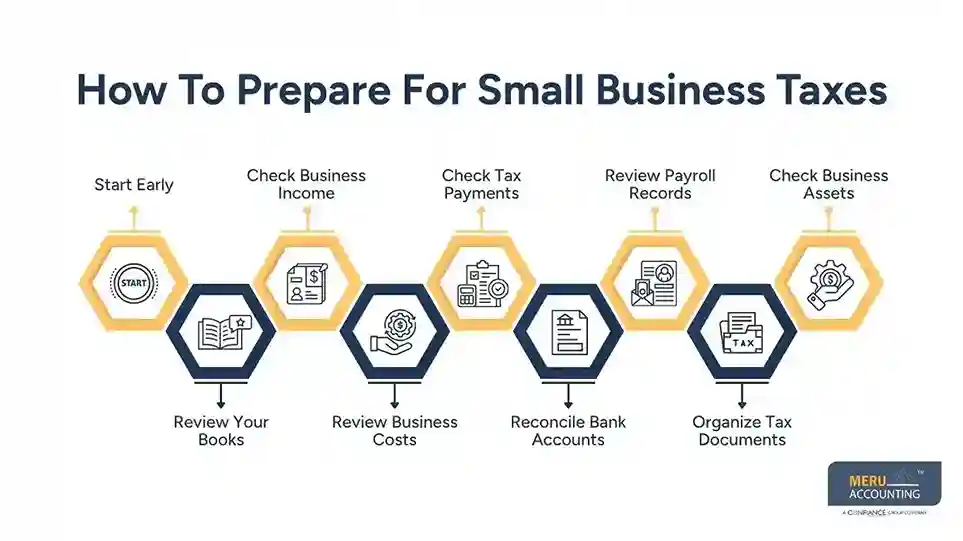
Check Tax Payments
Compare estimated tax payments with the payment records held by the owner. Reviewing these payments helps owners stay organized when handling tax for small business obligations. A payment made during the year should not be missed when the final tax amount is worked out.
Reconcile Bank Accounts
Match bank statements with accounting records at regular intervals. Reconciliation can reveal missing transactions, duplicate entries, incorrect amounts, or unexplained differences before tax preparation starts.
Review Payroll Records
Check wages, payroll taxes, employee benefits, and tax deposits against payroll reports. Correct payroll records can make year-end reporting more accurate and reduce the risk of filing errors.
Organize Tax Documents
Collect invoices, receipts, bank statements, payroll reports, loan records, asset details, and prior tax returns in one place. Organized documents make the preparation process easier and reduce the chance of missing key information.
Check Business Assets
Review equipment, vehicles, computers, furniture, and other business assets purchased during the year. Record purchase dates, costs, and business use details because these details may affect depreciation and tax reporting.
optional anymore
on running the business
Small Business Tax Guide: What Records Should You Keep?
Sales Records
A small business tax guide should start with sales records because accurate income records are essential for tax for small businesses. Keep invoices, receipts, sales slips, deposit details, and payment reports that show the amount and source of business income.
Expense Records
Keep paid bills, receipts, card statements, invoices, and proof of payment. The IRS says records should support income, expenses, and credits reported on a tax return.
Payroll Records
Keep wage data, payroll reports, tax deposits, employee forms, and other employment tax records. The IRS states that employment tax records generally need to be kept for at least four years.
Asset Records
Keep purchase dates, purchase prices, improvement costs, use details, and sale records for business assets. Such records can be needed to work out depreciation and gain or loss.
Bank And Payment Records
Keep bank statements, card reports, payment processor data, and online marketplace reports. These records can be checked against the books to find missing income or costs.
Digital Records
Electronic records can support tax for small businesses when they clearly show business income, expenses, payments, and other financial activity. The IRS notes that electronic systems should meet the same basic recordkeeping rules as paper records.
Common Tax Deductions For Small Businesses
Office Costs
Office supplies, business software, and other ordinary business costs may qualify when they meet the tax rules. Keep a clear receipt and note the business reason for each major cost.
Business Travel
Travel costs may qualify when they meet the required business purpose and other IRS rules for tax for small businesses. Keep travel dates, purpose, receipts, and related proof.
Vehicle Costs
Business vehicle use can involve special rules. Keep mileage logs, dates, trip purpose, and cost records when using a vehicle for business.
Home Office
A small business tax guide can provide an overview of the requirements for claiming a home office deduction. The rules can depend on how the space is used and other facts.
Professional Fees
Fees paid for accounting, legal, tax, and other professional business services may qualify when they meet the applicable tax rules. Keep invoices and proof of payment.
How To Calculate Tax For Small Business
Gather Tax Forms
A small business tax guide should make form selection clear. The required forms depend on the business structure and tax duties. Sole proprietors commonly use Form 1040 with Schedule C and Schedule SE.
Check The Tax Return
Review names, business details, income, expenses, deductions, credits, tax payments, and bank details before filing. Small errors can cause delays or lead to notices.
File Electronically
Many business and self-employed tax forms can be filed electronically. The IRS provides electronic filing options for several business, employment, information, and income tax forms.
Pay Tax Due
Filing and payment are separate tasks when handling tax for small business obligations. If tax is due, arrange payment through an IRS-approved method. Owners should also check whether future estimated payments are needed.
Keep A Copy
Save the filed return, schedules, payment proof, and key source records. A complete record set can make future tax work and an IRS review easier.
Confirm Filing Deadlines
Check the filing deadline that applies to the business structure and tax form. Mark the date early and allow enough time to review the return before submission.
Check Filing Confirmation
After filing electronically, save the confirmation or acceptance notice for your records. If the return is rejected, review the stated issue, correct the error, and submit the return again when required.
Common Small Business Tax Mistakes To Avoid
Mixing Personal And Business Costs
Personal spending should not be entered as a business deduction. Separate accounts and clear records make this issue easier to control.
Missing Business Income
Income from cash, cards, payment apps, online sales, and other sources should be reviewed when preparing tax for small business. The IRS states that business income must be reported even when an information form is not received.
Claiming Weak Deductions
A cost should not be claimed only because it seems related to business. Check the tax rule, keep proof, and record the business reason for the cost.
Missing Estimated Payments
A small business tax guide can help owners understand estimated tax requirements and track payment deadlines. The IRS lists quarterly dates of April 15, June 15, September 15, and January 15, subject to the next business day rule when a date falls on a weekend or legal holiday.
Filing The Wrong Form
A small business tax guide can help business owners understand which tax forms may apply to their business structure. Filing the wrong form can create extra work, so form selection should be checked before filing.
Keeping Poor Records
A small business tax guide is only useful when records are clear. Missing receipts, weak bank records, and poor expense notes can make a tax return harder to prove.
Why Choose Meru Accounting?
Small businesses often face tax work along with daily sales, payroll, bills, and financial records. Professional accounting support can bring these tasks into one clear process and reduce last-minute tax work.
Bookkeeping And Record Review
Meru Accounting can review income, expenses, bank records, and other financial data before tax preparation starts. Clear records give the tax team better data to work with and make missing entries easier to spot.
Tax Preparation Support
Preparing tax for small business requires more than adding up sales and costs. Business structure, deductions, tax payments, and required forms all need review before a return is filed.
Financial Data Checks
Bank, card, payroll, and accounting data can be checked against the books. Such checks can find gaps or errors before they affect the tax return.
Filing Assistance
Proper filing includes checking the return, required forms, payment details, and filing dates. Professional support can give owners a clear process from record review to final submission.
Ongoing Accounting Support
Tax work becomes easier when records stay current throughout the year. Regular bookkeeping and account reviews can reduce the amount of work left for tax season.
Our Expert Perspective
Planning for tax for small businesses should begin well before the filing date. Keep sales, expenses, payroll, bank activity, and tax payments updated throughout the year, then review the records, deductions, forms, and payment details before filing. Keep receipts, invoices, statements, and other proof for each major claim.
Track income during the year to plan for estimated tax payments, and seek qualified tax advice when the business has complex deductions, multiple entities, major asset sales, or other tax issues.
Key Takeaways
- Start tax preparation early and review income, expenses, bank records, payroll data, and tax payments throughout the year.
- Keep business and personal finances separate, and maintain receipts, invoices, bank statements, asset records, and other proof for each transaction.
- Report all business income from sales, cash payments, cards, payment apps, online platforms, and other sources.
- Review business deductions carefully, keep proper supporting records, and claim only expenses that meet the applicable rules for tax for small business.
- Track estimated tax payments and filing dates, choose the correct tax forms, and review the complete return before submitting it.
- Keep copies of filed returns and supporting records, and seek professional tax advice when business income, deductions, payroll, or tax rules become complex.
FAQs
Tax for small business is the set of federal, state, and local tax duties that may apply to a business based on its structure, income, workers, and activities.
Prepare taxes by organizing income, expenses, bank records, payroll data, deductions, tax payments, and required tax forms.
The required tax forms depend on the business structure, income, employees, and specific tax duties.
Common deductions may include eligible costs for rent, supplies, payroll, insurance, professional fees, travel, and business use of a vehicle.
A small business should file by the applicable tax deadline for its business structure and make required tax payments on time.
optional anymore
on running the business