A tax return rarely goes wrong at the moment it is filed. The trouble often starts much earlier: a document is missing, a bank figure does not match the books, a state filing is missed, or a question sits unanswered for days. This is where tax outsourcing companies can make a real difference. Their value is not just in preparing a return. It is in how they move a tax file from the first request for records to the final submission.
For a business owner or accounting firm, that process should be easy to follow. You should know what has been received, what still needs checking, who is working on the file, and what must happen before filing.
What You Will Learn From This Blog
- How a tax file moves from intake to final filing.
- What tax outsourcing companies check before they start a tax return.
- Which tasks may fall under outsourced tax accounting services.
- What to ask before you pick a tax outsourcing provider.
- Which errors can slow tax work or raise filing risk.
- How to check if a provider is doing good work.
What are Tax Outsourcing Companies and How do they Work?
Think of a tax return as a file that goes from one step to the next. Tax outsourcing companies take on some or all of these steps for a firm or an accounting team.
The work can start with a request for the last tax return and key records. It can then move through data checks, tax prep, review, client sign-off, filing, and file storage. The flow can vary by client, tax year, firm type, and tax needs.
Client Intake
The first talk sets the base for outsourced tax accounting services. The firm needs to know the tax type, tax year, state or states where the firm does work, and the work that must be done.
Work Allocation
Once the work scope is set, the file goes to the right tax pro or team. A basic tax return may need less review than a firm with many states, payroll data, and more tax needs.
Data Processing
Tax data comes from books, bank data, and source files. The team may check sales, costs, payroll data, fixed assets, and past-year data before using the data in the tax return.
Review Controls
Prep is not the last step. A tax pro checks the work and asks for more data if a figure seems off or two files do not match.
Filing Process
Once the client signs off, the return goes for filing. Tax outsourcing companies should keep a clear log of what was filed, the date it was filed, and if the tax body took the file.
Record Management
The final file should hold the tax return and key files used in the work. The IRS says firms should keep proof for income, tax cuts, tax credits, and other items shown on tax returns.
optional anymore
on running the business
How the Tax Outsourcing Process Works From Onboarding to Filing
The best way to understand tax outsourcing companies is to follow one file rather than look at each service in isolation. Imagine a business has sent its books, prior return, payroll records, and tax forms to the provider. What happens next?
Initial Consultation and Business Assessment
The provider first builds a picture of the client. This can include the business structure, states in which it operates, prior filings, accounting system, tax deadlines, and unusual transactions.
This step also sets expectations. If a client needs federal and state returns, tax planning, and notice work, those needs should be clear before preparation begins.
Document Collection and Data Setup
Now the paperwork starts to take shape. The team collects bank records, financial statements, prior returns, payroll data, income documents, expense records, and other records needed for outsourced tax accounting services.
Rather than sending a long list of questions at the end, tax outsourcing companies can flag missing items early. That gives the client time to provide them before preparation gets stuck.
Tax Data Review and Reconciliation
This is where numbers begin to tell a story. The provider compares tax data with the books and source records and looks for gaps or unusual changes.
For example, if sales rose sharply but reported deposits did not, the difference needs to be checked. A good tax process asks why the numbers differ before moving ahead.
Tax Preparation and Review
Once the data is ready, the preparer builds the return. The work may include income, deductions, credits, depreciation, payroll details, and state requirements.
The return then goes through review. The reviewer is not simply checking spelling or totals. They may question an unusual deduction, missing form, or figure that does not fit the client’s records.
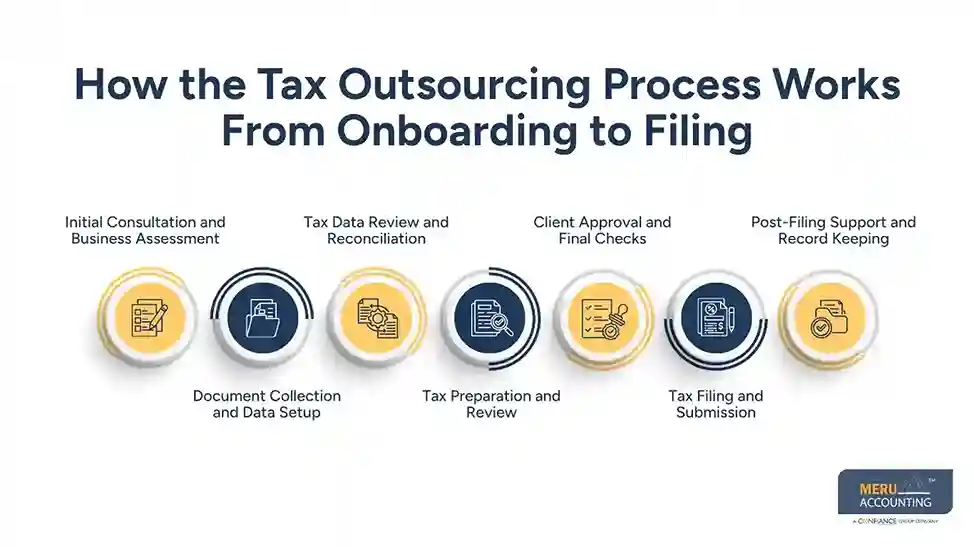
Client Approval and Final Checks
The client gets a chance to review the completed work and answer any final questions. Changes made at this stage should be recorded so the final return reflects the approved figures.
A final check can also confirm names, identification details, bank information, filing status, signatures, and required forms before submission.
Tax Filing and Submission
The return is filed only after the required approval is complete. Depending on the return, electronic filing may be required under federal rules for certain paid preparers.
The important point is that “prepared” and “filed” are not the same status. The provider should track the submission and acceptance separately.
Post-Filing Support and Record Keeping
A filed return can still lead to work. A client may receive an IRS or state notice, find a missing document, or need an amendment.
Tax outsourcing companies may also keep copies of the return, workpapers, approvals, and related records so the next tax cycle does not begin from zero.
What Services do Tax Outsourcing Companies Provide?
Not every provider offers the same package. Some focus mainly on preparation, while others provide wider outsourced tax accounting services covering tax and accounting work. That difference matters when comparing providers.
Individual and Business Tax Preparation
Preparation can cover individual returns as well as returns for businesses, partnerships, corporations, and other entities.
The amount of work tax outsourcing companies handle depends on the taxpayer. A basic return may be fairly direct, while a business with several income sources and states can require much more review.
Tax Planning and Compliance
Tax planning takes place before the return is due. It may involve reviewing expected income, deductions, estimated taxes, or business changes.
Compliance work focuses on meeting tax filing and reporting duties. These two tasks are related, but they are not the same.
Federal and State Tax Filing
A business may have federal filing needs along with one or more state returns. State rules can differ, so the provider should know where the client has filing duties.
This is one area where tax outsourcing companies need a good intake process. Missing one state requirement can create a problem even when the federal return is correct.
Bookkeeping and Tax Data Preparation
Tax preparation starts with numbers. If the books contain errors or missing entries, those issues can carry into the tax file.
This is why outsourced tax accounting services may include bookkeeping, account review, reconciliation, and tax-ready data preparation before the return is built.
Tax Research and Advisory Support
Some tax questions cannot be answered from the current numbers alone. A new business setup, asset sale, rare tax claim, or state tax issue may need more research.
The provider should state the basis for its view and keep key notes in the client file.
Key Factors to Consider When Choosing a Tax Outsourcing Company
Choosing a provider is easier when you judge the process rather than the sales pitch. Ask what actually happens to a file after you send the first set of documents.
Tax Experience
Look for experience with the type of returns you need. A provider working mainly on simple individual returns may not be the right fit for a multi-state business.
Review Process
Ask one direct question: “Who reviews the preparer’s work before filing?” The answer can tell you a lot about the provider’s internal control.
Data Security
Tax files contain sensitive financial information, so ask tax outsourcing companies how documents are shared, who can access them, and how records are stored.
Communication
Set clear rules for how to ask and answer questions. A clear system for missing files and review notes can stop small issues from causing due date problems.
Technology and Workflow
The tools matter, but the work flow matters more. Tax outsourcing companies should be able to show how files, data, tax workpapers, reviews, and final returns move through the system.
Pricing and Scope
Do not compare fees for outsourced tax accounting services without first checking what work is part of the fee. Ask if the price covers state returns, review, notices, changes, tax research, and other extra work.
optional anymore
on running the business
Common Mistakes to Avoid When Using Outsourced Tax Accounting Services
Outsourced tax accounting services can save staff time, but they still need clear client records and checks. Most issues are easier to fix before filing than after it.
Sending Incomplete Data
Sending some records now and the rest later can split the work, even when tax outsourcing companies have a clear way to gather client data. A list of needed files at the start gives the provider a good base for the work.
Treating Software as the Final Check
Tax software can spot many issues, but it cannot take the place of a human review. The IRS also sets due care rules for paid preparers who claim some tax benefits and asks them to keep key records.
Ignoring Book-to-Tax Differences
The books and tax return may not show the same figures. These gaps can be valid, but they must be checked, known, and logged.
Waiting Until Filing Day
When key questions wait until the last day, tax outsourcing companies have less time to fix issues before filing. An in-house cut-off date before the due date gives both sides time to act.
Poor Record Keeping
A tax return should not be seen as a file that is done and gone after filing. Keep the final return, source files, sign-off, and key work notes in one place for later use.
Unclear Client Ownership
Each task needs a clear owner. The deal should say who gets the records, answers key points, checks the return, signs off on filing, and deals with tax notices.
How to Measure the Performance of a Tax Outsourcing Partner
A provider that completes many returns is not automatically a good provider. The better question is whether the work is accurate, timely, easy to review, and properly documented.
Filing Accuracy
When evaluating tax outsourcing companies, track rejected returns, correction work, amended returns caused by errors, and issues found during review. These numbers show where the process needs attention.
Turnaround Time
For outsourced tax accounting services, measure how long a complete file takes to reach draft stage and how long approved returns take to reach filing. Compare similar types of returns rather than using one target for every client.
Open Issue Rate
Count files waiting for missing documents, client answers, or internal review. A growing pile of open files may point to a weak intake or follow-up process.
Review Findings
Record what reviewers find. If the same issue appears again and again, the answer may be better training or a change in the preparation process.
Client Response Time
Tax work often slows down because a question sits unanswered. Track how long it takes the provider to respond to client questions and review comments.
Record Quality
A completed client file should remain clear and easy to review months later. When reviewing tax outsourcing companies, check whether the return, key source records, approvals, and important notes can be found without hunting through old emails.
Why Choose Meru Accounting for Tax Outsourcing?
Meru Accounting provides tax, bookkeeping, and accounting services for businesses that need organized tax work. Its service model can bring tax preparation, accounting records, review, and filing tasks into a defined workflow.
Structured Tax Workflow
Meru Accounting provides services through clear work stages. Documents can be collected, tax data reviewed, returns prepared, and files checked before the final submission.
Accounting and Tax Connection
For tax outsourcing companies, tax work depends on the quality of the underlying accounting data. We provide bookkeeping and tax services, allowing tax-ready figures to be prepared from the client’s accounting records.
Multi-State Tax Needs
Businesses operating in more than one state may have several filing duties to track. Meru Accounting provides services for US businesses and can organize tax work around their federal and state filing needs.
Review Before Filing
A return should not move straight from preparation to submission. For tax outsourcing companies, review gives the team a chance to question figures, check forms, and clear open items before filing.
Practical Client Communication
Tax work involves questions on records, transactions, deductions, and approvals. Meru Accounting can organize these requests around the file so clients know what is needed and why.
Our Expert Perspective
The strongest tax outsourcing process is not the one with the longest checklist. It is the one where every handoff has a clear purpose. When a file moves from records to review to approval to filing, each person should know what has been checked and what is still open.
That is the part businesses should examine when comparing tax outsourcing companies. The real value is often found in the small controls that prevent a problem from reaching the final return.
Key Takeaways
- Tax outsourcing companies do more than file tax returns; their work can span from client intake to post-file tasks.
- A good intake step finds gaps in records and tax needs before work starts.
- Tax data should be checked against the books before it is used in a tax return.
- A review should take place before the client checks and signs off on the final return.
- Outsourced tax accounting services may cover bookkeeping, tax prep, tax filing, tax law checks, and tax research.
- A provider should be judged by tax work done right, turn time, open items, review notes, client talks, and record quality.
FAQs
Tax outsourcing companies collect client data, review records, prepare returns, complete quality checks, get approval, and file the return.
The process usually covers client onboarding, document collection, data review, tax preparation, client approval, filing, and post-filing records.
Common documents include prior tax returns, financial statements, income records, expense data, payroll records, and other tax forms required for outsourced tax accounting services. records, expense data, payroll records, and other tax forms.
Tax outsourcing companies compare tax data with accounting records, source documents, prior returns, and other relevant figures before filing.
Compare tax experience, review controls, data security, service scope, turnaround time, communication, pricing, and filing processes before choosing a provider.
optional anymore
on running the business