Filing taxes for small business starts with knowing your business type, income, costs, records, forms, and due dates. A clear process can reduce errors and make the return easier to check. Federal rules differ by business type, while state and local rules may add more filing duties.
Taxes for small businesses may feel hard when sales, costs, payroll, and payments are spread across the year. The first step is to close the books, check the records, and identify every tax duty that applies.
A sole proprietor may report business income on Schedule C with Form 1040. Partnerships,S corporations, and C corporations use other returns. The IRS states that the business form determines which taxes apply and how they are paid.
What You Will Learn From This Blog
- Understand how taxes for small businesses vary based on your business structure.
- Identify the small business tax forms that may apply to your business.
- Learn which income, expense, payroll, and financial records you need before filing.
- Understand how to calculate business income, allowable expenses, and taxable profit.
- Follow a clear step-by-step process for filing taxes for small businesses.
- Learn how to avoid common business tax mistakes, missed deadlines, and record errors.
How Do You File Business Taxes for Small Business?
Check Your Business Structure
First, confirm whether the business is a sole proprietorship, partnership, S corporation, or C corporation. The structure sets the main federal return and changes how profit or loss is reported.
Get Your Tax ID Ready
Keep your EIN, legal name, address, and prior return nearby. An EIN identifies many business tax reports filed with the IRS, so check that the details match your records.
Gather Income Records
Collect invoices, sales reports, bank deposits, payment processor reports, 1099 forms, and other income records. Compare them with the books so no taxable income is missed when preparing taxes for a small business.
Gather Expense Records
Collect receipts, bills, card statements, payroll records, rent records, and proof of payment. The IRS says records should support the income, expenses, and credits shown on a return.
Choose A Filing Method
Simple businesses may use tax software or an authorized e-file provider. Firms with payroll, several owners, complex deductions, or entity changes may need a qualified tax professional for small business tax work.
What Small Business Taxes Do You Need to File?
Federal Income Tax
Federal income tax applies based on the business structure and taxable income. Sole proprietors usually report business profit through the owner’s return, while corporations generally file separate returns.
Understanding which taxes for small business apply starts with identifying the correct federal return and related schedules.
Self-Employment Tax
Self-employment tax covers Social Security and Medicare taxes for many people who work for themselves. The IRS generally requires Schedule SE when net self-employment earnings reach $400 or more.
This small business tax duty is separate from regular federal income tax, so include it in yearly planning.
Estimated Tax
Federal income tax is pay-as-you-go. Sole proprietors, partners, and S corporation shareholders generally may need estimated payments when they expect to owe $1,000 or more at filing.
Estimated payments are an important part of planning taxes for small business because a year-end balance can be large.
Employment Tax
Employers may need to withhold federal income tax, Social Security, and Medicare taxes. Federal unemployment tax may also apply. Forms such as 941, 940, W-2, and W-3 can be required.
Information Returns
Payments to some contractors and other payees may require information returns. Review current IRS rules before year-end because the form and deadline depend on the payment and recipient.
optional anymore
on running the business
How to Determine Your Small Business Tax Obligations
Review Your Entity
Confirm the legal and tax structure first. A business may be organized one way but taxed another way after an IRS election, so keep formation and election records.
A proper small business tax review should start with these records.
Check Federal Duties
List the federal income, self-employment, employment, estimated, and excise taxes that may apply. The IRS identifies these as the main federal business tax categories.
This step gives owners a clear view of their taxes for small business before forms are prepared.
Check State Duties
State rules can include income, sales, payroll, franchise, or other taxes. Check the state agency for registration rules, filing dates, and payment duties. State rules can change the total business tax burden even when federal records are correct.
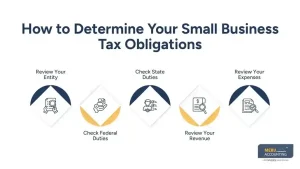
Review Your Revenue
Add income from cash, checks, cards, online platforms, and other sources. Compare the total with bank deposits and accounting reports before preparing the return.
Complete revenue records are essential when filing taxes for a small business.
Review Your Expenses
Separate business costs from personal spending. A deductible business expense generally must be ordinary and necessary for the trade or business, subject to the applicable rules.
Accurate expense records can simplify taxes for small businesses and reduce reporting errors.
What Documents Do You Need to File Business Taxes?
Income Documents
Keep invoices, receipts, bank statements, payment reports, deposit records, and 1099 forms. These records show the source and amount of business income. Complete income files give you a stronger base for taxes for a small business.
Expense Documents
Keep paid bills, receipts, invoices, card statements, canceled checks, and electronic payment records. Each file should show enough detail to explain the cost and its business purpose. The IRS notes that supporting documents should back the entries reported on the return.
Payroll Documents
Keep payroll registers, W-4 forms, W-2 and W-3 forms, payroll tax filings, and payment records. IRS guidance says employment tax records should generally be kept for at least four years. Payroll records are also important when preparing taxes for small businesses.
Asset Documents
Keep purchase dates, costs, business use, depreciation records, and sale details for equipment, vehicles, furniture, and other assets. These details can affect depreciation and gain or loss.
Bank And Card Records
Reconcile business bank and card accounts before filing. Reconciliation can find missing income, duplicate costs, and personal charges placed in business accounts. Clean bank records make taxes for small businesses easier to check.
How to Calculate Taxable Business Income and Expenses
Total Business Income
Start with gross receipts for the year. Include income from all business sources that must be reported under the applicable tax rules. Accurate gross income is the first part of taxes for small business calculations.
Remove Personal Costs
Do not treat personal spending as a business deduction. Separate business and personal accounts where possible, and review mixed transactions before preparing the return.
Classify Business Expenses
Group costs such as rent, wages, supplies, insurance, advertising, and professional fees. The IRS says ordinary and necessary business expenses may be deductible, subject to tax rules and limits. Proper classification can reduce errors in small business tax reporting.
Handle Assets Correctly
Large purchases may need depreciation or another tax treatment rather than a full current deduction. Keep the purchase date, cost, and business-use details before choosing the treatment.
Calculate Net Profit
A basic starting point is gross business income minus allowable business expenses. For example, $180,000 of receipts less $120,000 of allowable costs gives a $60,000 starting business profit. That profit figure may then feed into the required taxes for small business calculations.
How to File Business Taxes for Small Business Step by Step
Step 1: Close The Books
Finish bank and card reconciliations, review invoices, check expenses, and confirm payroll totals. Fix known errors before tax forms are prepared.
Step 2: Match Tax Records
Compare the books with 1099 forms, payment reports, bank data, and payroll records. Investigate differences instead of forcing the numbers to match.
Step 3: Prepare The Return
Complete the federal forms and schedules required for your entity. Add state and local returns when the rules require them. Correct forms are central to filing taxes for small businesses.
Step 4: Review The Return
Check income, deductions, tax payments, owner details, tax IDs, and bank details. A second review can catch errors before the return is sent. A careful review is one of the best small business tax controls.
Step 5: File Electronically
Use an approved electronic filing method when available and save the confirmation. The IRS offers e-file options for many business forms. Keep the accepted return and payment proof with your taxes for small business records.
Step 6: Pay Tax Due
Pay the balance by the required date. If estimated payments apply to the next year, set them up after reviewing the new tax estimate.
Common Mistakes to Avoid When Filing Business Taxes
Mixing Personal And Business Spending
Personal charges should not be treated as business costs. Separate accounts and clear records make small business tax review easier.
Missing Business Income
Cash sales and income without a 1099 can still be taxable. Compare sales sources with bank and payment reports before filing taxes for a small business.
Claiming Weak Deductions
A deduction should have a clear business reason and supporting proof. Taxpayers generally carry the burden of substantiating deductions.
Missing Filing Dates
Late returns or late payments may lead to penalties and interest. Keep a calendar for federal, state, and local tax dates. Missing a date can create an avoidable business tax cost.
Ignoring Payroll Duties
Hiring workers can create tax duties beyond the annual return. Track withholding, deposits, quarterly forms, and year-end forms. Payroll is a key part of managing taxes for small businesses when employees are involved.
Failing To Review
Read the complete return before signing or submitting it. Check names, tax IDs, income, deductions, payments, and bank details.
How Meru Accounting Makes Small Business Tax Filing Easier
Meru Accounting can manage the records and tax work needed for small business taxes. Our team can organize books, review income and costs, prepare tax-ready reports, and coordinate filing tasks based on the business structure.
Our process can also cover bookkeeping, payroll, financial statements, and tax planning when those services fit the business. Clear records and timely review can make small business tax work easier to manage.
For owners who find filing taxes for small business hard to manage alone, professional accounting support can provide a clear process from bookkeeping through filing.
Our Expert Perspective
Accurate taxes for small businesses start well before the return is due. In our experience, firms that reconcile accounts each month and keep source records in order face fewer year-end surprises.
A sound filing process is not just about completing forms. Each figure should have a clear source, each deduction should have proof, and each payment should be made on time.
Key Takeaways
- Know your entity type before preparing taxes for a small business.
- Keep income, expense, payroll, asset, and bank records in order.
- Check federal, state, and local filing duties before each deadline.
- Keep personal spending separate from business costs.
- Review deductions and keep proof for each claim.
- Check estimated payments to reduce year-end surprises.
- Review the return before filing and save the confirmation.
- Use professional help when income, payroll, or entity rules are complex.
FAQs
File taxes for a small business by choosing the right tax form, reporting income and expenses, claiming valid deductions, reviewing the return, and submitting it by the due date.
The required forms depend on the business structure, with common forms including Schedule C, Form 1065, Form 1120-S, and Form 1120.
Keep sales records, invoices, receipts, bank statements, payroll records, asset details, 1099 forms, and proof of deductible expenses.
Small business tax is generally based on taxable business income after allowable deductions, with the exact calculation depending on the business type and tax rules.
The due date for taxes for small businesses depends on the business structure and tax form, so check the current IRS filing deadline before submitting your return.
optional anymore
on running the business