




The introduction of GCC VAT has changed the way businesses work in Gulf countries. Governments in the UAE, Saudi Arabia, Bahrain, and Oman use VAT to raise money. Companies must now follow new tax rules and report their sales properly. Understanding GCC VAT accounting is key to staying compliant.
Businesses that ignore VAT may face fines or penalties. They may also have issues during audits or cross-border trade. Many companies must train staff and update their accounting systems. Proper VAT tracking ensures refunds are claimed and reports are correct.
What is GCC VAT?
- GCC VAT is a tax on goods and services.
- Most countries charge 5%, and Saudi Arabia charges 15%.
- VAT helps governments fund roads, schools, and services.
- Businesses must register if their turnover is above the limit.
- GCC VAT accounting tracks VAT collected and VAT paid.
- Correct accounting avoids mistakes and helps with audits.
Countries Implementing GCC VAT
1. United Arab Emirates (UAE)
- VAT started on January 1, 2018, at 5%.
- Companies file monthly or quarterly VAT returns.
- Accurate records are needed for audits.
- GCC VAT accounting ensures correct reports and payments.
- Accounting systems must be updated for VAT rules.
2. Saudi Arabia
- VAT started on January 1, 2018, at 5%, and later 15%.
- Companies must calculate VAT on sales and imports.
- Not following rules can bring fines or license issues.
- GCC VAT accounting helps keep filings correct.
- Staff must be trained to handle VAT processes.
3. Bahrain
- VAT began on January 1, 2019, at 5%.
- Businesses must adapt systems for VAT reporting.
- Filing returns regularly avoids fines.
- GCC VAT accounting ensures accurate VAT tracking.
- Proper records are needed for audits.
4. Oman
- VAT started on April 16, 2021, at 5%.
- Companies must understand how to charge VAT.
- Correct reporting avoids fines and legal issues.
- GCC VAT accounting tracks VAT paid and collected.
- Staff training and software updates are key.
5. Kuwait and Qatar
- VAT is planned but not yet implemented.
- Businesses should prepare for future VAT rules.
- Advanced GCC VAT accounting helps with readiness.
- Early planning allows smooth VAT adoption.
- Keeping current records helps with future compliance.
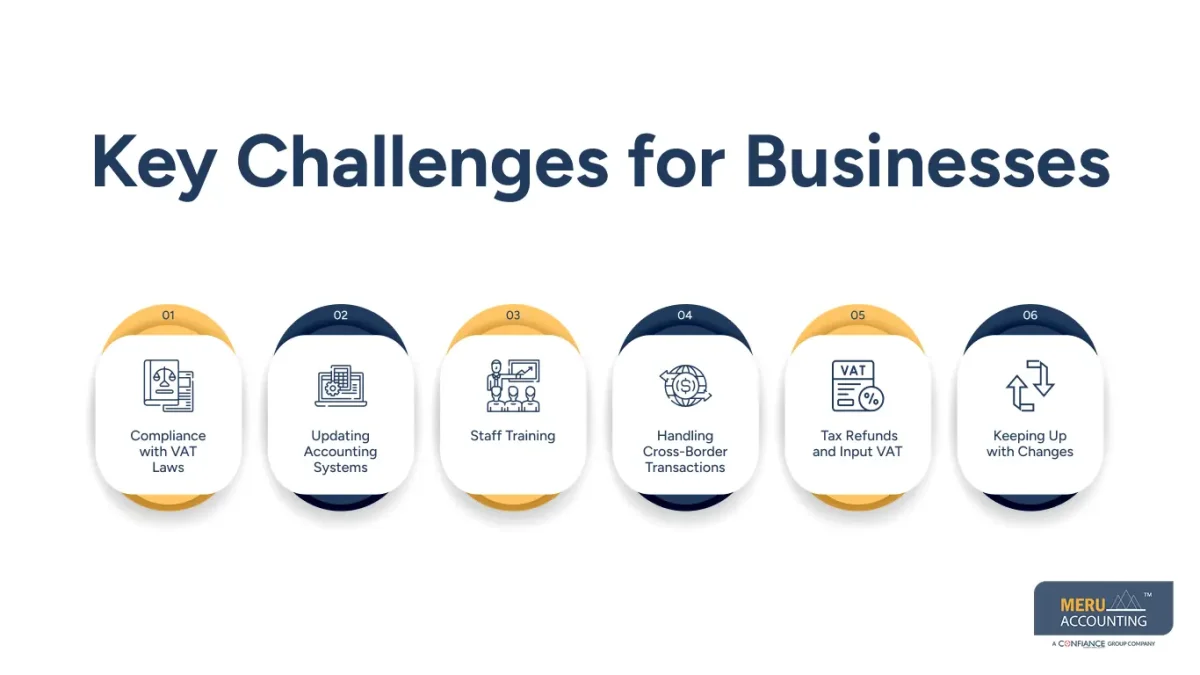
Key Challenges for Businesses
1. Compliance with VAT Laws
- Each country has different VAT rules.
- Filing returns on time is mandatory.
- Businesses must follow GCC VAT accounting rules.
- Auditors need correct records for all sales.
- Non-compliance brings fines and penalties.
2. Updating Accounting Systems
- Most software needs VAT modules.
- Companies must track VAT on sales and purchases.
- GCC VAT accounting ensures calculations are correct.
- Software must generate ready-to-file reports.
- Automation reduces human mistakes.
3. Staff Training
- Employees must learn VAT rules and steps.
- Training lowers errors in invoices and reports.
- Knowledge of GCC VAT accounting is key.
- Staff must handle audits and queries.
- Regular training keeps staff updated.
4. Handling Cross-Border Transactions
- Imports and exports have special VAT rules.
- Correct VAT must be applied to all transactions.
- GCC VAT accounting tracks these for reporting.
- Invoices and customs papers are needed.
- Mistakes can cause fines or shipment delays.
5. Tax Refunds and Input VAT
- Businesses can claim VAT paid on purchases.
- Correct records are needed to claim refunds.
- GCC VAT accounting ensures claims are correct.
- Input VAT must match output VAT for audits.
- Mistakes may lead to claim rejection.
6. Keeping Up with Changes
- VAT laws change over time.
- Companies must update policies and procedures.
- Good GCC VAT accounting adapts to changes fast.
- Watching government updates prevents mistakes.
- Awareness of changes reduces risk of fines.
Solutions to Overcome Challenges
1. Professional VAT Services
- VAT consultants reduce compliance risks.
- They guide on GCC VAT accounting and forms.
- Experts help claim VAT correctly and file on time.
- Consultants also help prepare for audits.
2. Using Advanced Accounting Software
- Software automates VAT calculations and records.
- Ensures accurate GCC VAT accounting and less errors.
- Produces ready-to-file VAT reports easily.
- Tracks VAT across many transactions efficiently.
3. Regular Staff Training
- Continuous training keeps staff aware of VAT rules.
- Reduces mistakes in invoices and returns.
- Staff learns to handle audits and queries.
- Knowledge of GCC VAT accounting becomes routine.
4. Internal Audits
- Regular checks catch mistakes early.
- Ensures accurate GCC VAT accounting and filings.
- Helps improve internal processes.
- Prevents problems during government inspections.
5. Documentation and Record-Keeping
- Keep invoices, receipts, and contracts.
- Makes VAT filing and audits easier.
- Helps claim input VAT and calculate output VAT.
- Proper records are key to smooth GCC VAT accounting.
Benefits of Proper GCC VAT Accounting
- Avoids fines, penalties, and legal issues.
- Provides clear records for audits and reports.
- Helps plan finances and cash flow.
- Supports cross-border trade and compliance.
- Reduces risks in VAT-related matters.
Steps to Implement GCC VAT Accounting
Understand VAT Rules
Study the rules in each country of operation.
Stay updated to avoid mistakes.
Register for VAT
Required for businesses above the threshold.
Registration ensures legal compliance.
Update Accounting Systems
Use software for GCC VAT accounting.
Automate invoicing and reporting.
Train Staff
Employees must know VAT steps.
Reduces errors in reports and filing.
Keep Records
Save invoices, receipts, and documents.
Helps during audits and VAT claims.
File Returns on Time
Follow deadlines strictly.
Avoid penalties with timely filing.
Use Professional Help
VAT consultants guide on complex issues.
Ensures correct GCC VAT accounting and compliance.
Impact of GCC VAT on Small Businesses
New Challenges
Small businesses face new rules under GCC VAT.
They must adapt to new reporting and accounting needs.
Registration Requirement
Businesses must register if turnover passes the threshold.
Failing to register can lead to fines and penalties.
Filing Returns
VAT returns may need help from external experts.
Professional support ensures accurate and timely submissions.
Accurate Records
Proper accounting keeps records clear and correct.
It helps track liabilities and recover input VAT.
Cash Flow Risks
VAT mistakes can hurt cash flow badly.
Errors may lead to fines and financial stress.
Supply Chain and Vendor Management
Supplier Changes
VAT changes how businesses work with suppliers.
Contracts and processes must follow new rules.
Input VAT Claims
Input VAT can be claimed if invoices are correct.
Proper documents ensure full VAT recovery.
Vendor Documentation
Suppliers must give proper invoices.
Missing paperwork can block VAT claims.
Tracking Payments
Systems track VAT paid to suppliers.
This prevents errors and double charges.
Audit Readiness
Good records make audits faster and smoother.
Organized files save time on inspections.
Staff Coordination
Train staff to handle supplier VAT rules.
This reduces errors and delays.
Tech Support
Use software to track VAT on purchases.
Automation helps avoid mistakes.
Cash Flow Management under GCC VAT
Cash Flow Impact
- VAT changes the money that comes in and goes out.
- Businesses must plan cash to avoid shortfalls.
Refund Delays
- Delayed VAT refunds can hurt cash.
- Planning helps operations run smoothly.
Tracking VAT Liabilities
- Keep track of VAT owed and refunds due.
- Clear tracking ensures payments are on time.
On-Time Payments
- Pay VAT as per schedule.
- Timely payment avoids stress and fines.
Steady Liquidity
- Good accounting keeps money available.
- It supports daily work and avoids penalties.
Technology and Automation in GCC VAT Accounting
Software Use
Many companies use software to manage VAT.
Digital tools simplify work and reduce mistakes.
Automation Benefits
Automation handles VAT calculations and reports.
It speeds up monthly processes efficiently.
Error Reduction
Automation lowers human errors and saves time.
Staff can focus on more important tasks.
Cloud Systems
Cloud systems track VAT across locations.
They allow real-time monitoring and reporting.
Digital Solutions
Digital tools enable faster filing and tracking.
Businesses can act quickly on compliance changes.
Sector-Specific Challenges under GCC VAT
Unique Rules
Retail, construction, and e-commerce have their own rules.
Following them avoids costly errors.
Exemptions and Zero-Rating
Some items or services may be exempt or zero-rated.
Tracking them ensures correct reporting.
Error Reduction
Accounting helps spot mistakes early.
This reduces audits and fines.
System Adjustments
Businesses must update their systems.
Proper setup keeps compliance smooth.
Regular Reviews
Check VAT records often to avoid mistakes.
Frequent review keeps data correct.
Staff Awareness
Train staff on sector rules.
This prevents errors and delays.
Vendor Coordination
Work with suppliers on VAT rules.
Correct invoices avoid issues.
Tech Tools
Use software to track VAT rules.
Automation lowers risk and saves time.
Role of Professional Consultants
Expert Guidance
VAT consultants guide businesses on complex rules.
Their advice ensures compliance in all situations.
Registration Support
Experts help with registration and audits.
They provide step-by-step guidance for smooth operations.
Reduce Mistakes
Professional accounting lowers errors and risks.
Consultants help avoid penalties.
Refund Advice
Consultants guide VAT refunds and input claims.
Eligible VAT can be recovered without delays.
Time Savings
Experts save time and ensure smooth operations.
Owners can focus on core business tasks.
The introduction of GCC VAT has changed business operations in Gulf countries. Companies face challenges like compliance, staff training, and system updates. Proper GCC VAT accounting keeps businesses safe and compliant.
Meru Accounting offers expert VAT services to help companies manage compliance. We provide accurate VAT filing, staff training, and system setup. Our team helps track VAT correctly and supports audits. With Meru Accounting, businesses can focus on growth and leave VAT compliance to experts. Trust us for smooth GCC VAT accounting and reduced risks.


