




As businesses grow, managing supplier records becomes more complex and time-consuming. One area that often creates issues is vendor account reconciliation. It involves matching supplier statements with internal records to ensure all payments, credits, and invoices are correct.
When this process is handled manually or without a structured system, errors can build up over time. These errors may lead to incorrect payments, missed invoices, or disputes with suppliers. Outsourced teams help reduce these issues by applying structured checks, clear workflows, and consistent review methods.
This blog explains how outsourced teams improve accuracy in vendor account reconciliation, why it matters for growing businesses, and how professional support improves financial control.
What You Will Learn From This Blog
- Understanding of what vendor account reconciliation means in simple terms and how it helps match supplier records with internal financial data.
- Awareness of common problems businesses face while managing vendor records such as missing invoices, duplicate entries, and manual mistakes.
- Insight into how outsourced teams improve accuracy and reduce errors through structured checks, regular reviews, and proper accounting systems.
- Clarity on why bookkeeping support services are important for scaling businesses dealing with increasing transaction volumes and complex records.
- Knowledge of how to select the right external partner by checking experience, working process, technology use, and data security practices.
- Practical understanding of best practices for maintaining long-term accuracy in vendor records through regular reconciliation, timely updates, and consistent monitoring.
Introduction to Vendor Account Reconciliation in Growing Businesses
Vendor account reconciliation is the process of comparing supplier statements with internal accounting records to ensure that payments, bills, and credits are accurately matched. It helps businesses confirm that financial entries on both sides are consistent and free from errors.
This process plays an important role in maintaining accurate financial data and reducing mismatches that can affect reporting.
As companies grow, the number of suppliers and transactions increases, making payment tracking more complex and increasing the chances of mistakes.
In such situations, accurate reconciliation becomes essential for financial control. It supports better cash planning, reduces unexpected payment issues, and ensures that financial decisions are based on correct data.
At the same time, it also helps maintain strong supplier relationships by ensuring timely and accurate payments, which builds trust and avoids disputes.
To manage this effectively, growing businesses need structured systems instead of manual tracking methods. As transaction volume rises, manual processes become harder to maintain and more prone to errors.
A well-organized reconciliation process ensures consistency, improves accuracy, and supports smooth financial operations as the business expands.
Common Challenges Businesses Face in Vendor Account Reconciliation
Data Entry Errors
Manual entry often leads to small mistakes. Even a single incorrect digit can create mismatches in vendor account reconciliation records. These small errors can stay unnoticed for a long time and affect final reports.
Missing Or Duplicate Invoices
Invoices can be missed or recorded twice. This creates confusion during monthly or quarterly checks. It also leads to incorrect payment records and supplier disputes if not corrected on time.
Lack Of Regular Review
Many businesses do not review vendor account reconciliation frequently, which leads to growing discrepancies. This allows small issues to grow into larger ones. Over time, this makes reconciliation more complex and time-consuming.
Poor Coordination Between Teams
When finance and purchase teams do not communicate well, records often become inconsistent. This gap in coordination can lead to missing data and unclear payment tracking.
Time Pressure During Closings
Month-end closing creates pressure, leading to rushed reconciliation and higher chances of errors. In such situations, accuracy is often compromised due to tight reporting deadlines.
How Outsourced Teams Strengthen Vendor Account Reconciliation Accuracy for Businesses
Structured Review Process
Outsourced teams follow step-by-step review methods. They check each entry against supplier statements carefully. This reduces the chance of missed or incorrect entries in records.
Use Of Accounting Tools
They use accounting systems that support efficient vendor account reconciliation and reduce manual dependency. This reduces manual mistakes. It also improves speed and consistency in financial tracking.
Regular Reconciliation Cycles
Instead of waiting for month-end, outsourced teams often perform checks at regular intervals. This keeps records updated. It helps identify issues early before they grow into larger problems.
Error Detection Systems
They identify mismatches early and correct them before they affect financial reports. This ensures financial statements remain accurate and reliable for decision-making.
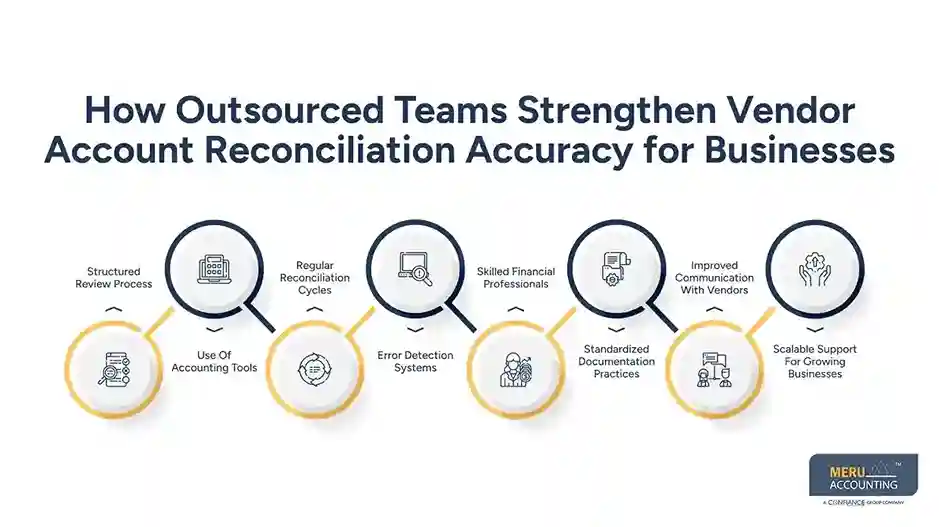
Skilled Financial Professionals
Trained professionals handle reconciliation tasks with better accuracy and attention to detail. Their experience helps in handling complex vendor accounts more effectively.
Standardized Documentation Practices
Outsourced teams maintain consistent documentation for every transaction and adjustment. This improves traceability and makes audits and reviews more efficient.
Improved Communication With Vendors
They coordinate directly with vendors to resolve discrepancies quickly. This reduces delays in confirmation and helps maintain smoother financial relationships.
Scalable Support For Growing Businesses
As transaction volumes increase, outsourced teams scale their support without compromising accuracy. This ensures vendor reconciliation remains stable even during rapid business growth.
Role Of Account Reconciliation Bookkeeping Services In Scaling Businesses
Support For Growing Transactions
As transaction volume increases, account reconciliation bookkeeping services help manage vendor data more efficiently. This ensures that growing financial activity does not lead to confusion or delays in processing.
Better Record Organization
These services keep supplier records organized as part of structured account reconciliation bookkeeping services, making payments easier to track. A clear structure helps reduce missing or unclear entries in vendor accounts.
Reduced Workload For Internal Teams
Internal staff can focus on core tasks while external teams handle reconciliation work. This improves overall productivity and allows better use of internal resources.
Improved Financial Reporting
Clean vendor records maintained through account reconciliation bookkeeping services improve financial reporting quality for decision-making. Accurate reports help management understand the real financial position of the business.
Consistent Monitoring
Regular checks ensure that vendor accounts remain accurate throughout the year. Continuous monitoring helps identify and fix issues before they impact financial closing.
Key Benefits Of Outsourcing Vendor Account Reconciliation
Higher Accuracy In Records
Outsourced teams improve vendor account reconciliation accuracy by using structured review systems. This leads to more reliable vendor account reconciliation records and fewer mismatches.
Cost Control
Hiring external teams is often more cost-effective than building a full in-house finance team. It helps businesses manage expenses without compromising on accuracy.
Faster Processing Time
Reconciliation tasks are completed faster due to dedicated focus and systems. This improves reporting timelines and keeps financial updates on schedule.
Better Cash Visibility
Clear vendor records help businesses understand their cash flow position better. It supports better planning for payments and future expenses.
Reduced Risk Of Disputes
Accurate records reduce the chances of disagreements with suppliers over payments. This helps maintain smoother business relationships and avoids unnecessary conflicts.
How To Choose The Right Outsourced Partner For Vendor Account Reconciliation
Check Industry Experience
Choose a partner with experience in handling vendor accounts across different industries. This helps ensure they understand varied financial patterns and challenges.
Review Process Structure
A clear workflow ensures consistency in reconciliation tasks. It also helps maintain accuracy and reduces the chance of missed steps in the process.
Technology Use
Look for partners who use modern accounting systems for better accuracy. Advanced tools help in faster tracking and error detection.
Data Security Measures
Financial data must be handled with strict protection and access control. Strong security practices reduce the risk of data misuse or leakage.
Communication Style
Regular updates and clear communication help avoid confusion and delays. It also ensures that issues are resolved quickly without affecting financial timelines.
Best Practices For Maintaining Accurate Vendor Account Reconciliation
Regular Reconciliation Schedule
Performing vendor account reconciliation weekly or monthly helps keep records clean and updated. This also makes it easier to spot issues early before they grow.
Standardized Documentation
Using consistent formats for invoices and payments reduces confusion. It ensures that every entry follows the same structure across all records.
Timely Data Entry
Entering data as soon as transactions occur reduces backlog and errors. This keeps financial records current and more reliable for review.
Internal Review Checks
Even with outsourced support, internal reviews help ensure accuracy. This adds an extra layer of control before final reports are prepared.
Supplier Statement Verification
Always compare internal records with supplier statements to confirm consistency. This helps detect mismatches and ensures correct payment tracking.
How Meru Accounting Supports Vendor Account Reconciliation Accuracy
Meru Accounting provides structured support for businesses that need reliable vendor account management. Our team of certified expert focuses on accuracy, timely updates, and clear reporting systems to help businesses maintain stable financial records even as transaction volumes increase.
With skilled accounting professionals and a process-driven approach, each reconciliation task is handled with consistency, reducing errors and improving overall clarity in vendor records.
As businesses grow, Meru Accounting supports increasing vendor transactions without disruption, ensuring smooth financial control during expansion. Modern accounting tools are used to track invoices, payments, and supplier balances, improving visibility and accuracy. Regular checks and a strong focus on timelines help ensure vendor accounts remain updated, helping businesses rely on clean and correct financial data for decision-making.
Our Expert Perspective
Growing businesses often experience a common challenge where vendor records start becoming inconsistent as transaction volumes increase beyond the capacity of internal systems. In many cases, teams rely heavily on spreadsheets, which can lead to missed entries, delayed reconciliations, and reduced financial accuracy over time.
A structured support system using account reconciliation bookkeeping services helps address these gaps more effectively. The focus goes beyond basic data entry and extends to maintaining consistency in how financial information is reviewed, validated, and corrected on a continuous basis.
Businesses that implement disciplined vendor reconciliation processes typically experience improved accuracy in financial records, fewer payment disputes, and stronger clarity in overall reporting.
Key Takeaways
- Vendor account reconciliation is important for financial accuracy
- Growing businesses often face errors due to high transaction volume
- Outsourced teams help reduce mistakes through structured review systems
- Regular reconciliation improves cash clarity and supplier trust
- Choosing the right partner improves long-term financial control
- Consistent practices are key to maintaining clean vendor records
FAQs
It is the process of matching supplier statements with company records to ensure all payments and invoices are correct.
They handle more transactions, which increases the chance of missed entries and errors in records.
They use structured checks, accounting tools, and regular reviews to reduce mistakes and keep records updated.
Yes, it often reduces costs compared to hiring full-time internal staff while maintaining accuracy.
It should ideally be done monthly or even weekly, depending on transaction volume.


