Managing financial records has become more structured and technology-driven in recent years. This shift has led many businesses to hire a virtual assistant accountant who can efficiently manage bookkeeping, tax preparation, support, and financial reporting without being physically present in the office.
This approach helps companies maintain accurate records while reducing internal workload. Choosing the right professional for financial support is not only about reducing costs. It is about ensuring accuracy, timely reporting, and compliance with financial rules.
A well-matched virtual assistant accountant can help businesses stay organized, avoid reporting delays, and improve financial clarity. This blog explains how to select the right remote accounting professional, what skills to look for in a virtual accountant, and how they can support your bookkeeping, tax, and reporting needs effectively.
What You Will Learn From This Blog
- Role and importance of a virtual accountant in modern business operations
- Step-by-step process to hire the right financial support professional
- Key benefits of outsourcing bookkeeping, tax, and reporting tasks
- Situations where external accounting support becomes necessary
- Skills, qualifications, and experience required for selection
- Cost structure and pricing models used in the industry
- The difference between independent professionals and agency-based services
- Practical insights for better financial decision-making
What Is A Virtual Accounting Support Professional?
Remote Financial Management Role
A virtual assistant accountant works remotely to manage financial records, ensuring accuracy in daily transactions and reporting.
Communication with business owners and internal teams is maintained through digital platforms for smooth financial coordination.
Bookkeeping Responsibilities
A virtual accountant records financial transactions, maintains ledgers, and ensures all entries are updated regularly for business clarity.
Regular bank reconciliations and account monitoring help minimize discrepancies and maintain accuracy.
Tax Preparation Assistance
They organize financial data required for tax filing, helping businesses stay prepared for compliance deadlines.
Support is also provided in compiling documents and aligning records for timely and accurate tax submissions.
Reporting Support
They prepare financial summaries such as income statements and balance sheets to help business owners understand performance.
Clear financial insights enable better decision-making and assist in tracking business growth trends.
Digital Accounting Tools
Most virtual assistant accountants use cloud-based accounting platforms to maintain real-time financial accuracy and reporting.
Automation features within these platforms streamline processes and improve overall efficiency.
Step-By-Step Guide to Hiring the Right Virtual Assistant Accountant For Bookkeeping, Tax, And Reporting Support
Identify Business Requirements
Start by clearly defining what financial tasks you need a virtual accountant to support with, such as bookkeeping, tax documentation, or reporting.
Clarity in requirements helps in selecting a candidate with the right level of expertise and avoids mismatched expectations.
Shortlist Qualified Candidates
Look for a virtual assistant accountant with strong accounting knowledge, relevant training, and experience in financial management.
Review resumes and profiles carefully to ensure alignment with your business needs and industry requirements.
Check Technical Knowledge
Ensure the candidate is familiar with accounting systems and understands basic financial principles.
Knowledge of cloud-based tools and software improves efficiency and ensures smooth remote collaboration.
Test Practical Skills
Assign sample tasks such as invoice recording or report preparation to assess accuracy and speed.
Practical testing provides real insight into how effectively the candidate can handle day-to-day accounting tasks.
Evaluate Communication Ability
A virtual assistant accountant should be able to explain reports clearly and respond promptly to queries.
Strong communication ensures better coordination and reduces the chances of misunderstandings.
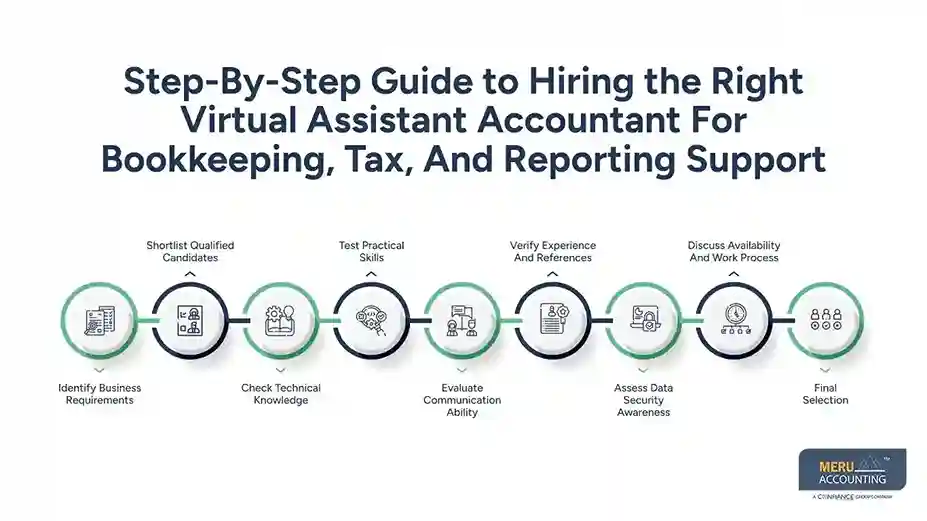
Verify Experience And References
Check previous work experience and ask for references to validate the candidate’s reliability.
Feedback from past clients or employers helps in understanding work quality and professionalism.
Assess Data Security Awareness
Handling financial data requires strict attention to confidentiality and data protection practices.
Awareness of secure systems and protocols helps safeguard sensitive business information.
Discuss Availability And Work Process
Clarify working hours, turnaround time, and communication channels before finalizing the candidate.
Defined processes help maintain consistency and ensure timely completion of tasks.
Final Selection
Choose a virtual accountant who demonstrates consistency, attention to detail, and reliability in handling financial tasks.
A well-selected professional contributes to accurate financial management and long-term business stability.
Benefits Of Hiring A Virtual Accountant For Your Business
Reduced Operational Costs
Businesses save money by avoiding full-time hiring expenses and infrastructure costs. Lower overhead allows funds to be allocated toward core business activities and growth initiatives.
Improved Accuracy
A virtual assistant accountant ensures regular updates and structured processes, reducing errors in financial records. Consistent monitoring and reconciliation help maintain reliable and error-free financial data.
Better Time Management
Business owners can focus on growth while a virtual assistant accountant handles financial tasks externally. Delegating routine accounting work improves productivity and reduces internal workload pressure.
Flexible Scalability
A virtual accountant offers flexible support that can be increased or reduced based on business workload. This adaptability ensures businesses only pay for the services they actually need at any given time.
Tax Preparation Readiness
A virtual assistant accountant maintains records in an organized manner, making tax preparation smoother. Well-maintained documentation helps avoid last-minute stress and ensures compliance with deadlines.
Enhanced Financial Visibility
Regular reports provide better understanding of business performance. Clear insights into income, expenses, and profitability support more informed decision-making.
When Do You Need External Financial Support?
Business Expansion
As transactions increase, hiring a virtual assistant accountant helps manage records more efficiently.
Growing operations require structured financial processes to maintain accuracy and control.
Tax Filing Periods
Organized financial data is essential during compliance deadlines. Proper preparation reduces the risk of errors, penalties, and last-minute complications.
Lack Of Internal Team
Small businesses often require a virtual accountant when no internal accounting team is available.
External support ensures that financial tasks are handled consistently without hiring full-time staff.
Cash Flow Confusion
Difficulty in tracking income and expenses signals the need for professional assistance.
Clear cash flow monitoring helps maintain financial stability and avoid liquidity issues.
Delayed Reporting
When financial reports are not prepared on time, external help becomes necessary.
Timely reporting is important for decision-making and maintaining business transparency.
Strategic Planning
A virtual assistant accountant provides the financial clarity needed for expansion or investment decisions.
Accurate insights support better budgeting, forecasting, and long-term business planning.
How To Evaluate A Virtual Assistant Accountant Before Hiring
Educational Background
When hiring a virtual assistant accountant, a formal education in accounting or finance ensures strong foundational knowledge. A strong academic background supports better understanding of financial principles and standards.
Software Skills
Experience with accounting tools improves efficiency and accuracy.
Familiarity with cloud-based systems enables smoother remote collaboration and real-time updates.
Industry Experience
A virtual assistant accountant with industry experience handles real-world financial scenarios more effectively.
Relevant experience helps in understanding specific business challenges and compliance requirements.
Certifications And Training
Additional certifications reflect updated knowledge and professional commitment.
Continuous learning ensures alignment with current accounting practices and regulations.
Client Feedback
Larger businesses may require a more experienced virtual assistant accountant, leading to higher service costs.
Reviews and testimonials provide insights into reliability, work quality, and professionalism.
Analytical Ability
Strong problem-solving skills are important for handling financial discrepancies.
Analytical thinking helps in identifying trends and improving financial decision-making.
Cost Factors And Pricing Models For Accounting Support Services
Hourly Charges
Some professionals charge based on hours worked, suitable for short-term tasks.
This model provides flexibility for businesses with occasional accounting needs.
Monthly Packages
Fixed monthly pricing is common for ongoing financial support.
Predictable costs make budgeting easier for long-term financial management.
Task-Based Pricing
Charges depend on specific assignments such as reporting or reconciliation.
This approach works well for businesses requiring support on defined activities.
Experience Level
More experienced professionals usually charge higher fees.
Higher costs often reflect deeper expertise and the ability to handle complex tasks.
Technology Usage
Use of advanced tools may influence pricing structures.
Automation and modern systems can improve efficiency but may impact service costs.
Business Complexity
Larger businesses with complex transactions may require higher service costs.
Increased workload and detailed reporting needs contribute to higher pricing.
Freelance Vs Agency-Based Financial Support: Which Is Better?
Independent Professionals
Freelancers offer flexible and cost-effective solutions for smaller tasks. Direct communication allows for quick adjustments and personalized support.
Structured Agency Services
Agencies provide trained virtual assistant accountants with standardized processes and backup support. Access to a team ensures continuity and reduces operational disruptions.
Skill Consistency
Agency-based professionals often follow uniform quality standards. Standardized workflows help maintain consistency in financial processes.
Availability
Agencies usually ensure continuous availability even during peak workload periods. Dedicated teams help manage deadlines without delays or interruptions.
Risk Management
Agencies reduce dependency on a single virtual assistant accountant. Backup resources minimize risks related to absence or turnover.
Scalability
Agency services can scale quickly based on business requirements. Additional resources can be allocated easily as business needs grow.
Why Choose Meru Accounting?
Meru Accounting provides structured financial support services designed for businesses that require reliable bookkeeping, tax preparation assistance, and reporting solutions.
The team focuses on delivering accurate financial records, timely reporting, and compliance-ready documentation. Businesses benefit from trained professionals who understand multiple industries and financial systems.
Key advantages include:
- Dedicated financial support professionals
- Structured bookkeeping and reporting processes
- Tax documentation assistance
- Cloud-based accounting integration
- Scalable service models for growing businesses
Meru Accounting focuses on accuracy, clarity, and consistent financial control to support better business decisions.
Our Expert Perspective
Accurate financial management depends on maintaining structured processes that ensure consistency in records and reporting. Regular bookkeeping, proper categorization of transactions, and timely financial updates help prevent discrepancies and improve overall clarity.
Early adoption of a virtual assistant accountant supports the development of disciplined financial systems, reducing errors and strengthening control over day-to-day accounting activities. With continuous structured support, businesses experience improved reporting accuracy, better financial visibility, and more reliable decision-making over time.
Key Takeaways
- A virtual accountant helps businesses manage financial records efficiently
- Clear requirement planning is essential before hiring
- Skills, experience, and software knowledge are key selection factors
- Agencies often provide more consistent service than independent professionals
- Proper evaluation reduces financial errors and improves reporting quality
- Structured support improves tax readiness and financial clarity
FAQs
Check their accounting knowledge, software skills, and past experience with real financial tasks.
Give a short test like bookkeeping entry or report preparation to confirm accuracy before hiring.
They should know bookkeeping, financial reporting, tax documentation support, and accounting tools.
Attention to detail and clear communication are also important for daily financial work.
Cost depends on experience level, workload, and pricing model such as hourly or monthly plans.
Basic tasks cost less, while full bookkeeping and reporting support costs more.
They can organize financial data and prepare tax-ready reports for filing purposes.
Final filing may still require a licensed tax expert, depending on local rules.
Freelancers are suitable for small and flexible tasks at a lower cost.
Agencies offer structured support, backup staff, and more consistent service quality.