A warehouse can look well-stocked and still struggle to fill customer orders. An item may show as available in the system but be missing from its shelf, while other products sit unused for months. These gaps can lead to missed sales, extra costs, and delays. Effective warehouse inventory management helps businesses keep stock records accurate and ensure the right products are available when needed.
The challenge is to keep enough stock on hand without tying up too much cash in goods that aren’t selling. This takes clear stock control, smart storage, and a close watch on inventory movement. With the right processes and warehouse inventory optimization solutions, businesses can reduce errors, make better use of warehouse space, and keep orders moving.
What You Will Learn From This Blog
- What warehouse inventory management means and how it works.
- Common stock control issues that affect warehouse operations.
- Ten best practices to improve stock accuracy and efficiency.
- Key metrics used to track warehouse inventory performance.
- Ways to reduce storage and handling costs without causing stockouts.
- How inventory tools and expert support can help improve stock control.
What Is Warehouse Inventory Management?
Warehouse inventory management is the process of tracking, storing, and controlling goods held in a warehouse. It covers each stage of stock handling, from receiving products and placing them in storage to picking, packing, and shipping customer orders.
A good system keeps stock records up to date and gives teams a clear view of what is in stock, where each item is kept, and when more stock is needed. It also helps link warehouse activity with sales and purchasing records.
For example, when a warehouse receives 200 units of a product, staff should record the quantity, check it against the purchase order, and assign a storage location. When 35 units are sold, the stock record should drop to 165. If the system does not reflect that sale, the business may accept orders for goods it no longer has.
Good stock control helps prevent such gaps and gives managers better data for daily work and future plans.
Common Warehouse Inventory Management Challenges
Even well-run warehouses can face issues that affect stock accuracy and order flow. Some common ones include:
- Inaccurate Stock Counts: Manual entries, missed scans, and unrecorded stock moves can cause system counts to differ from actual stock.
- Overstocking: Buying more goods than needed ties up cash, takes up space, and raises the risk of damage or loss.
- Stockouts: Poor demand plans or late reorders can leave key items out of stock when customers need them.
- Poor Stock Visibility: Businesses with more than one warehouse may struggle to see the full stock position across all sites.
- Picking and Packing Errors: Similar product names, poor shelf labels, and rushed work can lead to wrong items or quantities being sent.
- Slow Stock Movement: Goods that sit too long take up space and may lose value, expire, or become hard to sell.
These issues often link to weak processes, poor data, or a lack of clear stock control rules. Fixing them starts with a closer look at how goods move through the warehouse.
10 Best Practices for Effective Warehouse Inventory Management
A clear stock control plan helps teams work with fewer errors and less waste. These practices can help improve daily warehouse work.
1. Organize Warehouse Space and Assign Storage Locations
Give each item a set storage location and mark shelves, bins, and racks with clear codes. Place fast-moving goods near packing areas to cut travel time, while keeping slow-moving items in less busy zones. A clear layout helps staff find and put away stock with less delay.
2. Use SKU Codes and Barcode Scanning
Give each product a unique stock keeping unit (SKU). Use barcode scans to record goods as they arrive, move, or leave the warehouse. This cuts the risk of typing errors and helps staff confirm the right item and count at each step.
3. Set Minimum and Maximum Stock Levels
Set a minimum stock level for each item to show when a new order is needed. A maximum level can help stop the business from buying too much. Review both levels as sales patterns, lead times, and supplier terms change.
4. Apply FIFO or FEFO Inventory Methods
Use first-in, first-out (FIFO) for goods that should sell in the order they arrive. For items with an expiry date, first-expired, first-out (FEFO) is often a better fit. Both methods help limit waste and reduce the risk of old stock being left behind.
5. Conduct Regular Cycle Counts
Count a small group of items on a set schedule instead of waiting for one large yearly count. High-value and fast-moving goods may need more frequent checks. Compare physical counts with system records, then find and fix the cause of any gap.
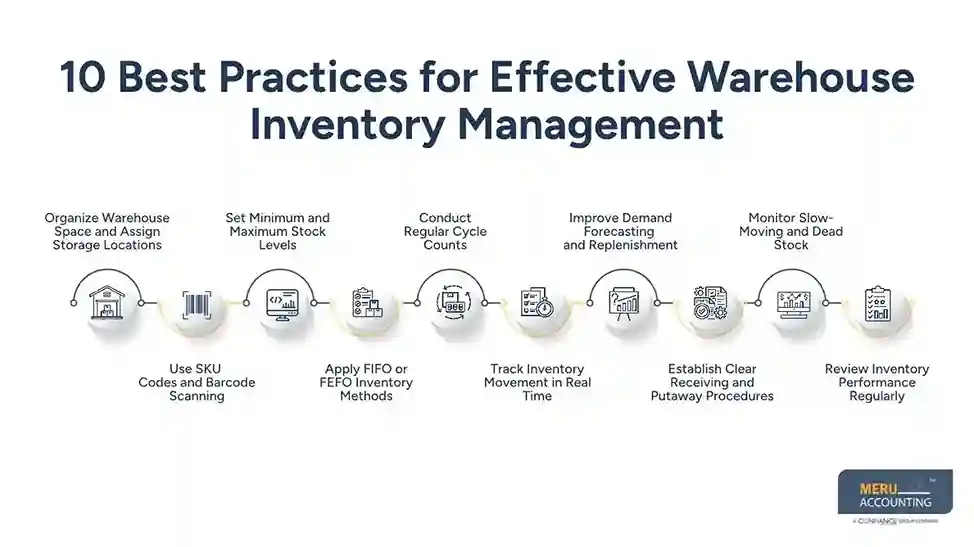
6. Track Inventory Movement in Real Time
Record each receipt, sale, return, transfer, and stock adjustment as it happens. Delayed updates can lead to wrong stock data and poor buying choices. Real-time records give teams a more useful view of stock on hand.
7. Improve Demand Forecasting and Replenishment
Use past sales, current orders, seasonal trends, and supplier lead times to plan stock needs. Do not rely on last month’s sales alone. A product may sell more during a holiday period or a seasonal rush, so reorder plans should reflect these changes.
8. Establish Clear Receiving and Putaway Procedures
Check every delivery against the purchase order and supplier invoice. Look for wrong items, short counts, and damaged goods before adding them to stock records. Once checked, move each item to its assigned location and update the system.
9. Monitor Slow-Moving and Dead Stock
Review stock that has not sold or moved for a set period. Find out whether the item has low demand, a pricing issue, or too much stock on hand. Based on the cause, a business may run a sale, return goods to a supplier, or stop future orders.
10. Review Inventory Performance Regularly
Check stock reports, order errors, count gaps, and storage costs each month. Look for patterns rather than fixing each issue on its own. If the same items keep showing count errors, review their labels, storage spots, and scan steps.
How to Measure Warehouse Inventory Management Performance
Tracking the right metrics helps managers see where stock control is working and where it needs attention. These measures can also help compare results over time.
1. Inventory Accuracy Rate
This shows how closely system records match the actual stock count.
Formula:
Inventory Accuracy Rate = (Number of Items With Matching Counts ÷ Total Items Counted) × 100
For example, if 950 out of 1,000 items match the system records, the accuracy rate is 95%.
2. Inventory Turnover Ratio
This shows how often a business sells and replaces its stock during a set period.
Formula:
Inventory Turnover = Cost of Goods Sold ÷ Average Inventory Value
A very low rate may point to excess or slow-moving stock. A very high rate may mean the business needs to check whether it holds enough stock to meet demand.
3. Order Picking Accuracy
This tracks how often warehouse staff pick the right items and quantities for each order.
Formula:
Picking Accuracy = (Correct Orders Picked ÷ Total Orders Picked) × 100
A low rate may point to poor shelf labels, similar product codes, or gaps in staff training.
4. Stockout Rate
This shows how often a business cannot fill an order due to a lack of stock. A high rate may point to poor demand plans, late supplier deliveries, or weak reorder rules.
5. Order Fulfillment Time
This measures the time from when an order is placed to when it is ready to ship or has been shipped. Tracking this measure can help find delays in picking, packing, and dispatch.
6. Inventory Carrying Cost
This covers the cost of holding stock, such as storage, insurance, handling, damage, and the cost of cash tied up in goods. Keeping track of these costs helps managers spot ways to use space and cash more wisely.
optional anymore
on running the business
How to Reduce Warehouse Inventory Costs Without Affecting Stock Availability
Cutting stock costs does not mean keeping less of every item. It means holding the right amount of stock and reducing waste across the warehouse.
Here are five ways to do this:
- Find Excess Stock: Review sales data and stock levels to spot items that the business has more of than it needs. Set a plan to sell or return extra goods where possible.
- Make Better Use of Storage Space: Review shelf layouts and item locations. Keep high-demand goods easy to reach and avoid paying for space that does not add value.
- Reduce Picking and Handling Errors: Use clear labels, barcode scans, and set pick lists. Fewer errors mean less time spent on returns, rework, and stock fixes.
- Set Smarter Reorder Points: Base reorder levels on demand, supplier lead times, and safety stock needs. This helps avoid both excess stock and missed sales.
- Limit Damage and Stock Loss: Set clear rules for how goods are moved, stored, and checked. Review damaged and missing stock to find repeat causes.
The aim of warehouse inventory management is to balance stock costs with customer needs. Cutting stock too far can lead to missed orders, while holding too much can tie up cash that the business could use elsewhere.
Warehouse Inventory Optimization Solutions From Meru Accounting
Inventory decisions affect more than stock levels. They also impact cash flow, cost of goods sold, and profit margins. Without clear financial records, businesses may struggle to track stock costs, review supplier payments, or identify where money is tied up.
At Meru Accounting, we bring multi-industry accounting and bookkeeping experience to businesses that need better control over their inventory-related finances. Our team understands how purchases, sales, supplier bills, and stock costs affect financial performance. We provide outsourced support that fits your existing workflow and business needs.
Our services include:
- Inventory Cost Tracking: Record stock purchases and related costs to help monitor inventory expenses and cost of goods sold.
- Accounts Payable Management: Track supplier bills, due dates, and payments to keep vendor accounts up to date.
- Sales and Payment Reconciliation: Match sales, customer payments, and related transactions with financial records.
- Account Reconciliation: Review account balances and transaction records to identify missing entries and discrepancies.
- Financial Reporting: Prepare monthly reports to help you review sales, expenses, gross profit, and cash flow.
- Ongoing Bookkeeping: Manage routine accounting tasks and keep your financial records current.
With Meru Accounting, you get a dedicated accounting team that works with your existing systems and processes. We help you maintain reliable financial records, understand inventory costs, and make better business decisions without adding to your in-house workload.
Our Expert Insight
One area businesses often overlook is how inventory valuation affects gross profit. Tracking the number of units on hand is only part of the job. Each item must also have the right cost in the books.
For example, if a business buys the same product at $20 per unit in January and $24 in March, the cost method it uses, such as FIFO or weighted average, will affect the value of its remaining stock and its cost of goods sold.
We recommend reviewing freight costs, purchase returns, damaged goods, and stock adjustments before closing the books each month. These items can affect inventory value and reported profit. Getting them right helps business owners make better pricing and purchasing decisions.
Key Takeaways
- Good warehouse inventory management helps businesses keep stock records accurate, reduce errors, and meet customer demand.
- Barcode scans, clear storage locations, and regular cycle counts can help prevent stock discrepancies.
- FIFO and FEFO methods help reduce waste, especially for goods with a limited shelf life.
- Demand forecasts and smart reorder points help prevent both overstocking and stockouts.
- Tracking inventory accuracy, turnover, and order picking errors helps measure warehouse performance.
- The right warehouse inventory optimization solutions can improve stock visibility, reduce manual work, and support better decisions.
- Accurate bookkeeping and stock-related financial reports help business owners understand inventory costs and cash flow.
FAQs
Multiply average daily sales by supplier lead time, then add safety stock. This helps prevent stockouts while waiting for new deliveries.
A WMS manages warehouse tasks like storage, picking, and shipping. An inventory system tracks stock levels, orders, and replenishment.
It is the total cost of holding stock, including storage, insurance, handling, damage, and the cost of money tied up in inventory.
ABC analysis groups items by value and importance. It helps businesses focus more attention on high-value items and manage lower-value stock with simpler controls.
Inventory valuation affects the cost of goods sold and gross profit. Incorrect stock costs can lead to inaccurate financial statements.
optional anymore
on running the business