
Bookkeeping for painting contractors plays a key role in tracking job costs, paint, labor, invoices, and client payments. Painting firms often manage many jobs at the same time, with each project having different material needs, crew hours, subcontractor bills, and payment terms. Without clear records, one job can show too much profit while another shows too much cost.
Strong bookkeeping for painting contractors keeps each cost linked to the right project. It also gives owners a clear view of unpaid invoices, project margins, cash flow, and operating costs. A painting business can then review each job based on real numbers instead of rough estimates.
What You Will Learn From This Blog
- How bookkeeping for painting contractors tracks costs by project.
- How to record paint, supplies, labor, and subcontractor costs.
- How progress billing affects invoices and project records.
- How to compare estimated costs with actual job costs.
- How a painting bookkeeper can keep records current and organized.
- How painting contractor bookkeeping can show job profit and cash needs.
Understanding Bookkeeping For Painting Contractors
Why Job-Based Records Matter
Bookkeeping for painting contractors should show income and costs for each project. A single business-level expense report does not show which painting job earned a good margin.
Project-based records give owners a clear view of sales, labor, materials, and other direct costs. Such records also make job reviews more useful when several crews work across different sites.
Tracking Direct Job Costs
Direct costs can include paint, brushes, supplies, crew wages, subcontractor charges, and job-related travel. Each cost should be assigned to the project that caused the expense.
Bookkeeping for painting contractors becomes more useful when direct costs are recorded without long delays. Current cost data gives owners a better view of the amount spent on open jobs.
Recording Operating Costs
Office rent, admin wages, software, phone bills, and other general costs often serve the full business. Such costs should stay separate from direct project costs unless there is a valid reason to allocate them.
Painting contractor bookkeeping should keep these account types distinct. A clean split gives a better view of both job profit and total business profit.
Using Job Codes
Each painting project should have a unique job code that appears on bills, time records, purchase records, and invoices. The same code can then link project income with project costs.
A painting bookkeeper can check these codes during routine entry and account review. This process lowers the risk of putting costs under the wrong customer or project.
Keeping Source Records
Receipts, vendor invoices, payroll records, time sheets, customer invoices, and bank statements provide essential documentation for accounting records. Each document should be accurately recorded and matched with the related accounting entry.
Bookkeeping for painting contractors should maintain complete and organized documentation. Proper records create a clear audit trail and provide reliable information for tax preparation and financial reviews.
optional anymore
on running the business
8 Essential Bookkeeping Tips For Painting Contractors
Track Job Costs By Painting Project
Bookkeeping for painting contractors should start with a cost plan for every project. The plan can include paint, labor, supplies, equipment, subcontractors, travel, and other direct costs.
Each bill and time entry should be assigned to the correct job. A painting bookkeeper can review project costs as work moves forward and flag entries that seem out of place.
Maintain Accurate Records Of Paint And Material Expenses
Paint and other supplies can make up a large share of project costs. Each purchase should show the vendor, date, quantity, amount, and related job when the item is bought for one project.
Painting contractor bookkeeping should also record material waste and extra purchases when they occur. Comparing actual material use with the original job estimate can reveal cost gaps before the job closes.
Monitor Labor And Subcontractor Costs
Labor can change the final profit of a painting job by a large amount. Track crew hours, pay rates, overtime, payroll costs, and job codes so labor costs reach the correct project.
A painting bookkeeper can also record subcontractor bills under the right job and period. Late labor or subcontractor entries can make an open project appear more profitable than it is.
Manage Progress Billing And Project Invoicing
Many painting contracts use progress billing based on agreed stages or work completed. Each invoice should match the contract terms and state the work covered, amount due, and payment terms.
Bookkeeping for painting contractors should match progress invoices with project records. This lets owners compare the amount billed with the amount collected and the cost already incurred.
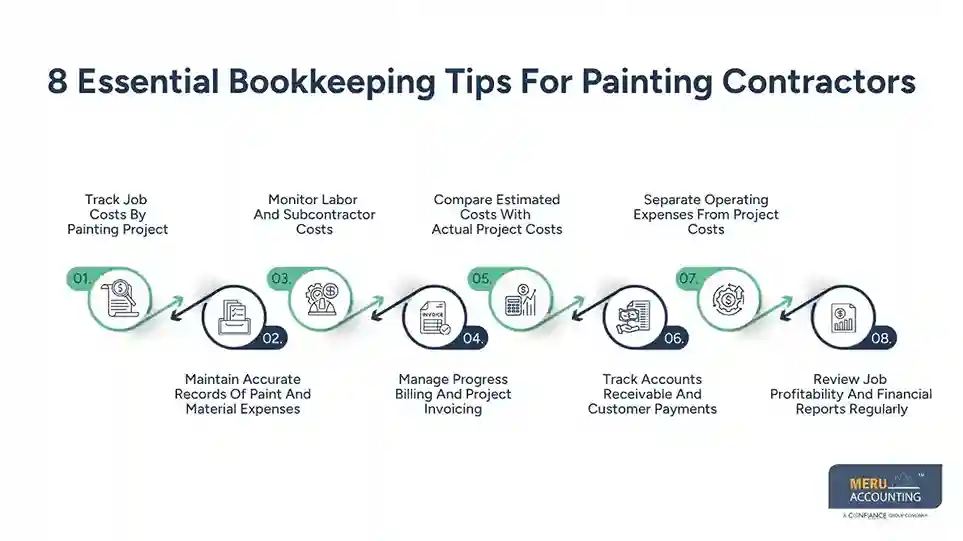
Compare Estimated Costs With Actual Project Costs
A project estimate gives the expected cost before work begins. Actual job records show what the firm is spending as the work moves ahead.
Painting contractor bookkeeping should compare these figures during the project, not only after completion. A large gap in labor, paint, or supply costs can signal a scope change, waste, or an estimate issue.
Track Accounts Receivable And Customer Payments
Sending an invoice does not mean the money has been collected. Records should show each invoice, due date, amount due, payment received, and remaining balance.
Bookkeeping for painting contractors should include regular receivable reviews. A painting bookkeeper can keep aging records current so old balances are easy to identify and review.
Separate Operating Expenses From Project Costs
General business costs should not be mixed with direct painting job costs. Office rent, accounting fees, software, admin wages, and other overhead can be kept in suitable operating expense accounts.
Painting contractor bookkeeping needs this separation to produce useful project reports. Mixing costs can make one job look less profitable while making the overall business report harder to read.
Review Job Profitability And Financial Reports Regularly
Job profit should be reviewed while work is still in progress. Compare contract revenue with paint, labor, subcontractor, and other direct costs to see how the project is performing.
Bookkeeping for painting contractors should also include monthly financial reports. Income statements, balance sheets, cash reports, and receivable reports can show broader business trends.
How A Painting Bookkeeper Strengthens Financial Management
Keeps Records Current
A painting bookkeeper can post bills, payments, invoices, and other transactions on a set schedule. Current records give owners a more accurate view of open jobs and cash needs.
Bookkeeping for painting contractors loses value when key entries remain pending for long periods. Regular posting keeps project reports closer to actual results.
Checks Job Cost Entries
Bills and time records should be reviewed to confirm that costs are assigned to the correct project. Regular checks can identify duplicate entries, incorrect job codes, and unrecorded costs.
Accurate cost allocation provides a reliable basis for job profit reports and future financial reviews.
Reviews Customer Balances
Open invoices need regular review because unpaid sales do not create collected cash. A current receivable report can show which customer balances are due and how long they have remained open.
The accounts receivable process should keep aging reports current and record payments as they are received. Bookkeeping records can then provide a clearer view of expected cash.
Prepares Financial Reports
A painting bookkeeper can prepare routine reports covering income, expenses, assets, liabilities, receivables, and cash. Job reports can also show project revenue and direct costs.
Painting contractor bookkeeping becomes more useful when these reports are reviewed on a set schedule. Owners can use the data when reviewing prices, costs, and project results.
Keeps Tax Records Organized
Tax filings rely on accurate income and expense records. Receipts, invoices, payroll data, bank entries, and other source records should match the accounting records.
Bookkeeping for painting contractors can keep these records arranged throughout the year. Tax professionals can then work from a more complete set of financial data.
Common Bookkeeping Challenges For Painting Contractors
Mixed Project Costs
A paint bill can be placed under the wrong job when job codes are missing or unclear. This error can change the reported profit of two projects at once.
Late Labor Entries
Late time sheets can leave labor costs out of current reports. Bookkeeping for painting contractors should record crew hours on time to keep project costs current.
Missed Change Orders
Extra work can raise both project revenue and costs. Painting contractor bookkeeping should record approved changes and related invoices based on the contract terms.
Delayed Customer Payments
Long overdue invoices can put pressure on cash flow. A painting bookkeeper can keep payment records and aging reports current for regular review.
Weak Cost Estimates
An estimate that misses prep work, labor hours, material use, or site costs can reduce the final job margin. Past job records give useful data for future estimates.
How Painting Contractor Bookkeeping Supports Business Growth
Better Job Pricing
Past job records show what similar projects have actually cost. Bookkeeping for painting contractors gives owners useful data for setting future prices.
Stronger Cash Planning
Current invoices, bills, payroll costs, and expected payments give a clearer view of upcoming cash needs. Painting contractor bookkeeping keeps these figures in one financial record.
Better Material Control
Material records can show where paint use runs above the original plan. A painting bookkeeper can compare purchase trends across projects and identify unusual cost changes.
Clearer Profit Reports
Sales alone do not show business profit. Bookkeeping for painting contractors separates project costs from general expenses so owners can review the actual result.
More Informed Expansion
Growth plans need sound financial data. Clear financial records give owners a solid base when reviewing hiring, equipment, project size, and new service areas.
Accounting And Bookkeeping Services From Meru Accounting
Meru Accounting provides accounting and bookkeeping services for businesses that need clear financial records. Services can include bookkeeping, account reconciliation, financial reporting, accounts receivable, accounts payable, payroll records, and tax related bookkeeping.
For painting firms, bookkeeping for painting contractors can be structured around project revenue, paint costs, material bills, labor records, subcontractor costs, progress invoices, and customer payments. This gives owners a clearer view of each job and the overall business.
Our team can maintain accounting records based on the firm’s needs and existing processes. Painting contractor bookkeeping can then be kept organized across project records, financial accounts, and routine reports.
Partner with Meru Accounting for accounting and bookkeeping services designed around your business needs.
Our Expert Perspective
From an accounting view, the most useful part of bookkeeping for painting contractors is the link between each job and its actual costs. Paint, labor, subcontractor bills, and progress invoices should not sit as loose entries with no project link.
A painting bookkeeper can create a steady process for recording and checking these items. That process gives owners better data during the job rather than only after the final invoice.
Well-maintained painting contractor bookkeeping also creates useful history. Past job costs can be reviewed when preparing future bids, setting labor budgets, checking material use, and reviewing project margins.
Key Takeaways
- Bookkeeping for painting contractors should link all project costs to the correct painting job.
- Paint and material purchases should be recorded under the appropriate project.
- Crew hours, payroll costs, and subcontractor bills should be recorded accurately and on time.
- Progress billing should match the agreed contract terms and completed project work.
- Estimated project costs should be compared with actual costs throughout each job.
- Customer invoices and outstanding payment balances should be reviewed regularly.
- Direct project costs should remain separate from general business operating expenses.
- Project profitability and financial reports should be reviewed on a regular schedule.
- Past project cost records should be used when preparing future painting estimates.
- Source records should remain complete and organized for tax and financial reviews.
FAQs
Bookkeeping for painting contractors works best when each painting job is tracked separately, including labor, paint, materials, subcontractors, invoices, and payments.
Painting contractors should maintain an accounts receivable report that shows invoice dates, due dates, payments received, and outstanding balances.
Track paint and material costs by recording each purchase with the vendor, amount, date, quantity, and related project.
Progress billing allows painting contractors to invoice clients at agreed work stages based on the contract terms and completed work.
Painting contractors can track job profit by comparing project revenue with actual labor, material, subcontractor, and other direct costs.
optional anymore
on running the business