Asset inventory management tracks business assets, their location, use, cost, and condition. It covers computers, machines, tools, office equipment, and other items that a company owns. Effective records show what a business owns, who uses each item, and when it needs repair or replacement.
However, keeping a list is not enough. Businesses must check whether records match physical assets and whether each item provides value. Key performance indicators (KPIs) measure results, while audit findings reveal gaps in records and control. Together, these checks give managers clear facts to reduce waste, control costs, and make better buying decisions.
What You Will Learn From This Blog
- How asset inventory management works and why performance checks matter.
- Which KPIs measure asset accuracy, use, loss, cost, and compliance.
- How audit findings reveal errors and weak controls.
- How to link KPI results with audit reports.
- How inventory management firms improve tracking and record checks.
- Which practices can raise accuracy and reduce waste.
What is Asset Inventory Management and Performance Evaluation?
Asset inventory management is the process of recording, tracking, checking, and maintaining business assets. Performance evaluation measures how well these tasks meet company goals and control rules.
Asset Records
Each record should show the asset name, unique ID, purchase date, cost, location, and assigned user. These details make it easier to trace items and check changes.
Asset Tracking
Tracking records each move, repair, transfer, and disposal. For example, when a laptop moves to another team, its new location and assigned user should be recorded.
Performance Goals
Managers should set clear targets for accuracy, asset use, and timely checks. Targets must fit the value and risk of each asset.
Regular Reviews
Monthly or quarterly reviews show whether results are getting better or worse. Repeated errors may point to poor data entry or unclear staff duties.
Staff Duties
Each asset should have a named owner or team responsible for its care. Clear duties reduce confusion when an item is lost, damaged, or moved.
Why KPIs and Audit Findings Matter in Asset Inventory Management
KPIs show how well a process performs, while audit findings reveal where controls fail. Together, they give managers facts to guide action.
Measure Accuracy
KPIs show whether records match physical assets. Inventory management firms confirm accuracy through physical counts and source records.
Control Costs
Unused equipment and repeat repairs can raise costs. Regular reviews show where a business can reuse, repair, or replace assets.
Reduce Asset Loss
Missing items may point to late updates, poor tracking, or weak access rules. A timely review can find the cause.
Improve Audit Readiness
Clear records, approved transfers, and disposal notes provide proof of control. Effective asset inventory management makes it easier to answer audit questions.
Plan New Purchases
Managers can check idle assets before buying new equipment. This can prevent extra spending on items the business already owns.
Key KPIs to Measure Asset Inventory Management Performance
KPIs turn asset records into clear measures that teams can review over time. Each measure needs a set formula, a review period, and a person who acts on poor results.
Asset Accuracy Rate
This rate shows how many checked assets match their records.
Formula: (Assets with matching records ÷ Total assets checked) × 100.
If 490 of 500 assets match, the accuracy rate is 98%. The team should check the remaining 10 items and record the cause of each error.
Asset Utilization Rate
This rate shows the share of usable assets in active use.
Formula: (Assets in use ÷ Total usable assets) × 100.
If 72 of 90 machines are in use, the rate is 80%. A low rate may point to excess stock or poor planning.
Asset Loss and Shrinkage Rate
This measure tracks assets that cannot be found during a physical count.
Formula: (Confirmed missing assets ÷ Total recorded assets) × 100.
If five of 1,000 assets are missing, the rate is 0.5%. Each case needs review before the business decides whether it resulted from theft, poor asset inventory management records, or an unreported move.
Inventory Turnover and Idle Asset Rate
Turnover measures how often stock is used or replaced during a period. The idle asset rate shows the share of usable items that remain unused.
Formula: (Idle usable assets ÷ Total usable assets) × 100.
If 20 of 100 usable items are idle, the rate is 20%. Managers can review demand and move spare items before buying more.
Asset Maintenance and Downtime Rate
This KPI measures the time an asset remains out of service due to faults or repairs.
Formula: (Downtime hours ÷ Planned service hours) × 100.
If a machine is down for 12 of 200 planned hours, its downtime rate is 6%. Teams should review repair costs and lost work alongside this result.
Asset Lifecycle Cost
Lifecycle cost includes the cost of buying, running, repairing, and disposing of an asset.
Formula: Purchase cost + Operating cost + Repair cost + Disposal cost − Resale value.
A cheap machine may cost more over time if it needs frequent repairs. Managers should compare similar assets before choosing one.
Audit Compliance Rate
This KPI measures the share of tested controls that meet company rules.
Formula: (Controls that pass ÷ Total controls tested) × 100.
If 45 of 50 controls pass, compliance is 90%. Each failed control needs an owner, a due date, and proof of correction.n
How to Determine Asset Inventory Management Using Audit Findings
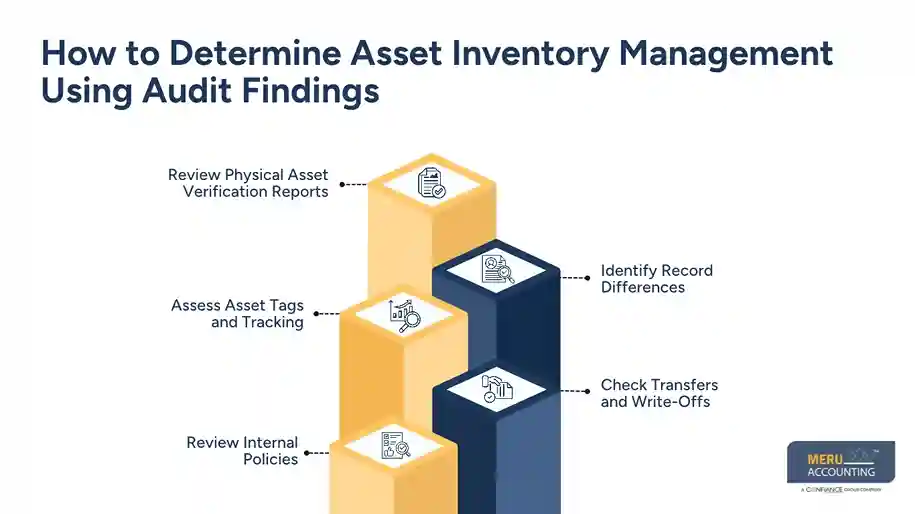
Audit findings show whether asset records and daily practices match company rules. Teams should check the evidence, find the cause, and set a clear plan to fix each gap.
Review Physical Asset Verification Reports
Compare count reports with earlier asset inventory management results to find repeat errors. Check the count date, location, sample size, and staff involved.
Identify Record Differences
Look for missing items, duplicate entries, wrong locations, and incorrect asset codes. Check bills, transfer notes, and repair logs before changing records.
Assess Asset Tags and Tracking
Confirm that each asset has a readable tag or unique ID. Check whether staff record moves and update the register on time.
Check Transfers and Write-Offs
Review approval forms for transfers, disposals, and write-offs. Each record should show the reason, date, approval, and new location or sale value where relevant.
Review Internal Policies
Compare actual asset inventory management practices with written rules for asset use, checks, and disposal. Record each gap, its risk, and the action needed to close it.
How to Connect KPIs With Asset Audit Findings
KPI results show the size of a problem, while audit findings can explain its cause. Linking both gives managers a clear way to act.
Match Findings With KPIs
A missing laptop can affect both the accuracy rate and the loss rate. Linking the results shows the wider effect of one issue.
Find the Root Cause
Repeated errors in work handled by inventory management firms may result from late updates or unclear duties. Review the process that caused the problem instead of fixing only the record.
Rank Risks
A missing machine worth thousands may need faster action than a minor tag error. Consider asset value, safety, and business impact.
Set Corrective Actions
Assign each task to a named person and set a due date. Keep proof of each change for the next review.
Check the Results
Repeat the count or control test after the fix. Close the audit point only when the evidence shows that the issue has been resolved.
optional anymore
on running the business
Common Asset Inventory Management Issues and How to Address Them
Weak records, poor tracking, and late updates can reduce control and raise costs. A clear review process can address these issues.
Inaccurate Records
Old locations, costs, and user details lead to poor reports in asset inventory management. Update the register whenever an asset is bought, moved, or sold.
Missing or Untagged Assets
Missing tags make items hard to trace. Use unique IDs and regular physical checks to confirm each item’s location.
Low Asset Use
Idle equipment takes up space and ties up funds. Review demand and move usable assets to teams that need them.
Weak Audit Trails
Missing forms and approvals make it hard to trace changes. Inventory management firms should keep records in one approved system and limit access to authorised staff.
Delayed Maintenance
Late repairs can raise costs and extend downtime. Set service dates and track missed checks to reduce repeat faults.
How Inventory Management Firms Improve Asset Tracking and Audit Accuracy
Inventory management firms may provide staff, tools, and set processes for asset checks. Businesses should review their skills, service scope, data security, and results before hiring a provider.
Use Digital Records
A shared asset register gives staff access to current data. Unique IDs reduce duplicate entries and make items easier to trace.
Plan Physical Counts
High-value assets may need more frequent checks than low-cost items. A risk-based plan directs staff time to areas with the greatest risk.
Keep Audit Trails
Record who changed each entry, when it changed, and why. This makes it easier to review transfers, repairs, and disposals during asset inventory management audits.
Set Service Targets
Agree on count accuracy, report timing, and the handling of missing items. Review results at set intervals and ask for proof of action.
Check Provider Skills
Review staff experience, access rules, and service terms. Confirm who owns the records and how the business can access them if the contract ends.
Best Practices for Improving Asset Inventory Management KPIs
Good results depend on clear rules, regular checks, and staff who know their duties.
Keep One Main Register
Use one approved source for asset data. Set rules for who can add, edit, or remove records.
Set Clear Targets
Choose targets based on asset value, use, and risk. Review them when business needs or asset levels change.
Train Staff
Show staff how to tag assets, report damage, and record moves when working with inventory management firms. Clear steps can reduce errors and missed updates.
Schedule Regular Audits
Set count dates and assign staff to check records. Review open audit points until each issue has proof of closure.
Review Costs Before Buying
Check idle assets, repair costs, and past use before approving new purchases. This gives managers a sound basis for repair, reuse, or replacement.
How Meru Accounting Provides Value Through Better Financial Records
Meru Accounting provides accounting and bookkeeping services that give businesses clear financial records for asset cost reviews. These records can be checked against physical counts and approved asset changes.
Review Asset Costs
Meru Accounting records agreed purchase and repair costs within the scope of its services. Clear entries make it easier to review spending.
Maintain Fixed Asset Schedules
A fixed asset schedule records cost, purchase date, useful life, and depreciation. Businesses can compare these details with the asset register.
Review Financial Reports
Asset costs affect budgets and profit reports. Clear records give managers a better view of repair costs and future spending needs.
Keep Supporting Documents
Bills, approvals, and disposal notes provide evidence for recorded entries. Physical checks and asset security still remain the business’s duty.
Set Clear Review Duties
Meru Accounting provides services based on agreed business needs. Businesses should assign staff to check asset locations, approve changes, and protect equipment.
Our Expert Perspective
Asset inventory management should be judged by evidence, not by the number of items in a system. A high accuracy rate does not prove that assets are used well or that costs are under control. Managers should review KPIs with audit findings, find the cause of each gap, and confirm that each fix works.
Key Takeaways
- Asset inventory management tracks assets from purchase to disposal.
- KPIs measure accuracy, use, loss, downtime, cost, and compliance.
- Physical counts show whether records match actual assets.
- Audit findings need a clear owner, due date, and proof of correction.
- Regular checks can reduce errors and waste.
- Inventory management firms should be judged by their skills, controls, and results.
- Meru Accounting provides accounting and bookkeeping services for clear asset-related financial records.
FAQs
Asset inventory management performance is measured through KPIs such as asset accuracy, utilization, loss rate, downtime, lifecycle cost, and audit compliance.
The key KPIs are asset accuracy rate, asset loss rate, asset utilization rate, and audit compliance rate because they show gaps in records and asset control.
Audit findings reveal missing assets, record errors, weak tracking, and policy gaps that businesses can correct through clear action plans.
Audit frequency depends on asset value, risk, company policy, and past errors, with high-value assets often needing more frequent checks.
Inventory management firms can improve audit accuracy through regular physical counts, unique asset tags, updated records, and clear audit trails.
optional anymore
on running the business