Paying bills may seem like a simple task until your business has dozens of vendors, invoices, and due dates to track. At that point, even a small mistake can lead to late fees, duplicate payments, or strained vendor relationships. This is why many owners turn to accounts payable companies for help managing bills without adding another full-time employee.
But outsourcing isn’t always the most cost-effective choice. The service fee, level of support, and amount of work your team can handle all matter. So, is hiring an outside AP team worth the cost, or is it better to keep the work in-house?
Let’s look at the costs, benefits, and key factors that can help you make the right choice for your business.
What You Will Learn From This Blog
- What accounts payable companies do for small firms.
- Signs your current AP process needs help.
- Key gains and limits of AP outsourcing.
- When to outsource accounts payable services for small businesses.
- What to check before you hire an AP firm.
- How to keep control over bills and payments when you outsource.
What Do Accounts Payable Companies Do for Small Businesses?
Accounts payable (AP) is the work of tracking and paying the money your business owes to vendors, suppliers, and service firms. An AP firm takes on some or all of this work based on your needs.
Here are the main tasks these firms may handle:
1. Invoice Receipt and Data Entry
The firm collects bills from vendors by email, portal, or other agreed means. It checks key details, such as the vendor name, invoice date, due date, amount, and bill number. The data is then added to your AP system or books.
2. Invoice Review and Approval
Before a bill is paid, it must be checked against the order, contract, or proof of work. The AP team can flag wrong amounts, missing details, and duplicate bills. Your team can then review and approve the bill.
3. Vendor Account Management
AP staff track open bills, payment dates, vendor records, and account balances. They may also follow up with vendors to resolve billing issues or ask for missing records.
4. Payment Scheduling and Tracking
Once a bill is approved, the AP team can prepare it for payment based on the terms and due date. It can track paid and unpaid bills and flag items that need your review. The final release of funds should follow your approval rules.
5. Reconciliation and AP Reports
The team can match vendor statements with your books and check for open or unpaid bills. It may also prepare reports on due dates, aging balances, and cash needs. These reports help you plan payments with fewer surprises.
The scope can vary across accounts payable companies. Some handle only invoice entry, while others manage the full AP cycle. Always check what is part of the fee before you sign a deal.
optional anymore
on running the business
Signs Your Small Business Has Outgrown Its Current Accounts Payable Process
A basic AP setup may work well when you have few bills and a small team. But as your firm grows, the same process may no longer be enough.
Watch for these signs:
1. Invoice Backlogs Keep Growing
If bills sit in an inbox for days before anyone checks them, your team may not have enough time to keep up. This can lead to missed due dates and late fees.
2. Vendor Payments Are Often Late
Late payments can harm vendor ties. You may also lose early payment discounts or face supply delays if a vendor puts your account on hold.
3. Errors and Duplicate Bills Are More Common
Manual entry can lead to wrong amounts, missed bills, or the same invoice being paid twice. These errors take time to find and fix.
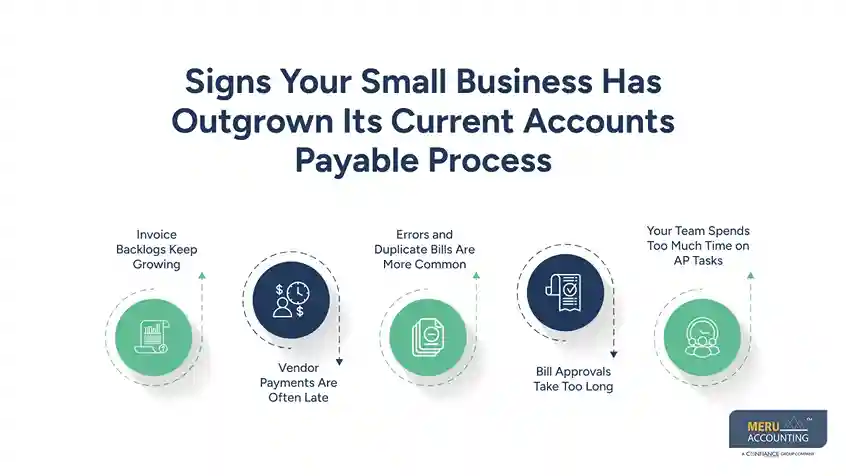
4. Bill Approvals Take Too Long
When each bill needs input from more than one person, a slow approval flow can hold up the whole process. This gets harder as you add staff, sites, and vendors.
5. Your Team Spends Too Much Time on AP Tasks
If staff spend hours sorting bills, checking due dates, and fixing data, they have less time for work that helps the firm grow.
If these issues keep coming up, it may be time to review your process. You may need better tools, more staff, or help from an outside AP team.
Are Accounts Payable Companies Worth It? Key Benefits for Growing Businesses
For many small firms, AP outsourcing can be worth the cost when the time and risk it saves are greater than the fee. Here are the main gains to weigh.
1. Lower Staff and Admin Costs
Hiring an in-house AP clerk means more than paying a salary. You may also need to cover payroll taxes, benefits, training, software, and paid time off. Outsourcing can give you access to AP support without adding a full-time role.
2. Faster Invoice Processing
A set process for bill intake, review, and approval can help cut delays. Bills are less likely to sit in one person’s inbox or get lost in a pile of papers.
3. Fewer Manual Errors
A clear review process can help catch duplicate bills, wrong amounts, and missing data before payment. This does not remove all risk, but it adds another check to the AP cycle.
4. Better Cash Flow Planning
A clear view of bills due over the next few weeks helps you plan cash needs. You can see which bills need to be paid first and avoid last-minute cash gaps.
5. More Time for Core Work
Owners and staff can spend less time on routine bill tasks. They can focus more on sales, customer care, stock, and other work that drives growth.
Still, outsourcing is not a fix for every AP issue. Poor records, weak approval rules, and unclear roles can cause problems even when an outside team handles the work.
When Does It Make Sense to Outsource Accounts Payable Services for Small Businesses?
Not every small firm needs an outside AP team. The right time depends on the size of your workload and the cost of keeping it in-house.
Here are cases where it may make sense:
1. Your Monthly Invoice Count Has Grown
A rise in bills means more data to enter, check, approve, and pay. If your team cannot keep up, an outside firm can help handle the extra work.
2. You Cannot Justify a Full-Time AP Hire
Some firms have enough AP work to need help but not enough to keep a full-time staff member busy. In this case, outsourced support may be a better fit.
3. You Have More Vendors or Business Sites
More vendors and sites can make it hard to track bills, due dates, and approval steps. An AP team can help bring these tasks into one clear process.
4. Your Current Staff Are Overloaded
If your bookkeeper or office staff are spending too much time on AP, other tasks may fall behind. Outsourcing can free up time for bank checks, reports, and other key work.
5. You Need More Reliable AP Reports
If you cannot get a clear view of open bills and due dates, you may need a better way to track payables. An outside team can help keep AP data current and ready for review.
Before you outsource accounts payable services for small businesses, review your monthly bill count, staff hours, and current error rate. This will help you judge if the fee is worth it.
What to Check Before Choosing an Accounts Payable Company
Choosing a provider is not just about finding the lowest price. You need a team that can handle your bill flow, follow your rules, and keep your data safe.
Check these points before you hire:
1. Service Scope
Ask which tasks are part of the service. Does the firm handle bill entry, vendor follow-ups, approvals, payment setup, and reports? Also ask what tasks will stay with your team.
2. Industry and Business Experience
Your AP needs may vary by trade. A firm that knows your type of business may be better placed to deal with vendor terms, order records, and common billing issues.
3. Invoice Checks and Approval Rules
Ask how the firm checks bills before they move to payment. Make sure your team can set approval limits and review bills that fall outside set rules.
4. Data Safety and User Access
AP records can hold bank details, vendor data, and other private facts. Ask how the firm limits access, protects files, and handles staff access when a role changes.
5. Reports and Communication
You should know how often you will get AP reports and who to contact when an issue comes up. Ask for sample reports so you can see if they show due bills, open items, and aging balances.
6. Pricing and Extra Fees
Ask if the fee is based on invoice count, hours, or a set monthly rate. Check for extra fees for rush work, vendor setup, old bill entry, or reports. Compare the full cost, not just the base price.
7. Ability to Scale
Your bill count may rise as your firm grows. Choose a provider that can handle more work without a sharp rise in cost or a drop in service.
Outsource Accounts Payable Services for Small Businesses With Meru Accounting
Every vendor invoice needs the right checks before it becomes a payment. A missing purchase record, an incorrect charge, or an overlooked credit can throw off your AP records. At Meru Accounting, we bring a structured approach to accounts payable, helping businesses keep vendor bills, payment records, and account balances in order.
Our team supports the full AP cycle with services such as:
- Invoice Processing: Record vendor invoices, check key details, and flag missing or duplicate entries.
- Bill Verification: Review invoices against purchase orders, contracts, and supporting records where available.
- Vendor Account Management: Maintain vendor records, track outstanding balances, and follow up on account issues.
- Payment Due Date Tracking: Monitor payment terms and upcoming due dates to help avoid missed payments.
- Vendor Statement Reconciliation: Compare vendor statements with your books and identify unmatched bills, credits, or payments.
- Accounts Payable Reporting: Prepare AP aging reports and summaries of outstanding bills to support cash flow planning.
With experience in outsourced accounting and bookkeeping, we understand how AP records connect with the wider financial picture. Our team works around your business processes, reporting needs, and approval rules, so AP tasks fit into your existing workflow.
From routine invoice entry to vendor reconciliation and AP reporting, Meru Accounting provides dedicated support to help you maintain accurate, organized, and up-to-date payables records.
Our Expert Insight
When comparing in-house AP costs with outsourcing, look beyond the monthly invoice count. A business handling 100 simple invoices has a very different workload from one dealing with price changes, credit memos, and vendor disputes.
We recommend tracking the cost per invoice, including staff time spent on data entry, follow-ups, and error fixes. Also, review whether your business takes advantage of early-payment discounts. For example, a 2% discount for paying within 10 days can lower costs, but only if early payment won’t strain cash flow.
Before choosing an AP provider, review one month’s invoices and staff hours. This will help you see where the time and money go and whether outsourcing can offer real savings.
Key Takeaways
- Accounts payable companies can help small firms manage bills, vendor records, and payment tasks.
- Outsourcing may cost less than hiring a full-time AP clerk when the workload is not steady.
- Late bills, invoice backlogs, and repeat errors are signs your AP process may need help.
- Compare service scope, fees, data safety, and approval rules before you hire.
- Keep final payment approval and cash control within your business.
- Review AP reports each month to spot old bills and cash flow risks.
FAQs
Not if communication roles are clear. Agree on who handles vendor questions, payment updates, and billing issues before the service begins.
Yes. Many providers can match invoices with purchase orders and receiving records. This helps flag price differences, short shipments, and bills for goods not received.
Open bills should be reviewed and matched with vendor statements before the transition. Share their due dates, approval status, and payment history to avoid duplicate or missed payments.
They can help maintain organized invoices, approval records, payment details, and vendor statements. These records make it easier to support transactions during an audit.
It can be a good fit, especially if your team handles many purchase orders and vendor invoices. Look for a provider that can match bills with purchase and receiving records before sending them for approval.
optional anymore
on running the business