A property may look profitable until loan payments, repair bills, and empty months start to eat into the returns. Real estate financial services give buyers, landlords, and developers a way to assess these costs before they commit their money. These services cover funding plans, cash flow reviews, loan costs, budgets, and financial records.
The right plan for a family home may not suit a rental flat or a new office block. By matching finance to the property type and investment stage, owners can make better choices and avoid costly gaps in their budgets.
What You Will Learn From This Blog
- What real estate financial services include and how they fit into property deals.
- How finance needs differ for homes, rental units, commercial sites, and new builds.
- How funding choices change from the first purchase to a sale or refinance.
- When real estate financial consulting firms may be worth hiring.
- Which costs, loan terms, and risks to review before making a property investment.
Introduction to Real Estate Financial Services
What These Services Include
Real estate financial services cover the financial work behind a property deal, from loan planning to income and cost reviews. They give owners a clear view of the money needed to buy, run, or sell a property. The scope may include cash flow reports, budgets, tax records, and return estimates.
Why Property Finance Needs Careful Planning
A landlord may buy a flat with enough money for the down payment but little left for repairs. If the plumbing fails or rent stops for a month, loan payments still fall due. Real estate financial solutions can bring these risks into the budget before the owner signs the deal.
Who Uses Real Estate Finance Services
Home buyers need to plan loan payments, while landlords must weigh rent against upkeep and debt. Builders face a different task because they spend money long before a project earns income. Real estate financial services should match the needs of each buyer, owner, or developer.
The Role of Cash Flow and Budget Review
A property can rise in value and still run short of cash. Late rent, empty units, or large repair bills may leave an owner unable to meet a payment on time. Real estate financial solutions include cash flow reviews that show when money may fall short and how much cash to keep in reserve.
How Financial Advice Shapes Property Decisions
Two properties with the same asking price may have very different costs and returns. One may have steady tenants, while the other needs major repairs and may remain empty for months. Real estate financial services let buyers compare these costs before choosing which deal fits their budget.
Types of Real Estate Financial Services for Different Property Investments
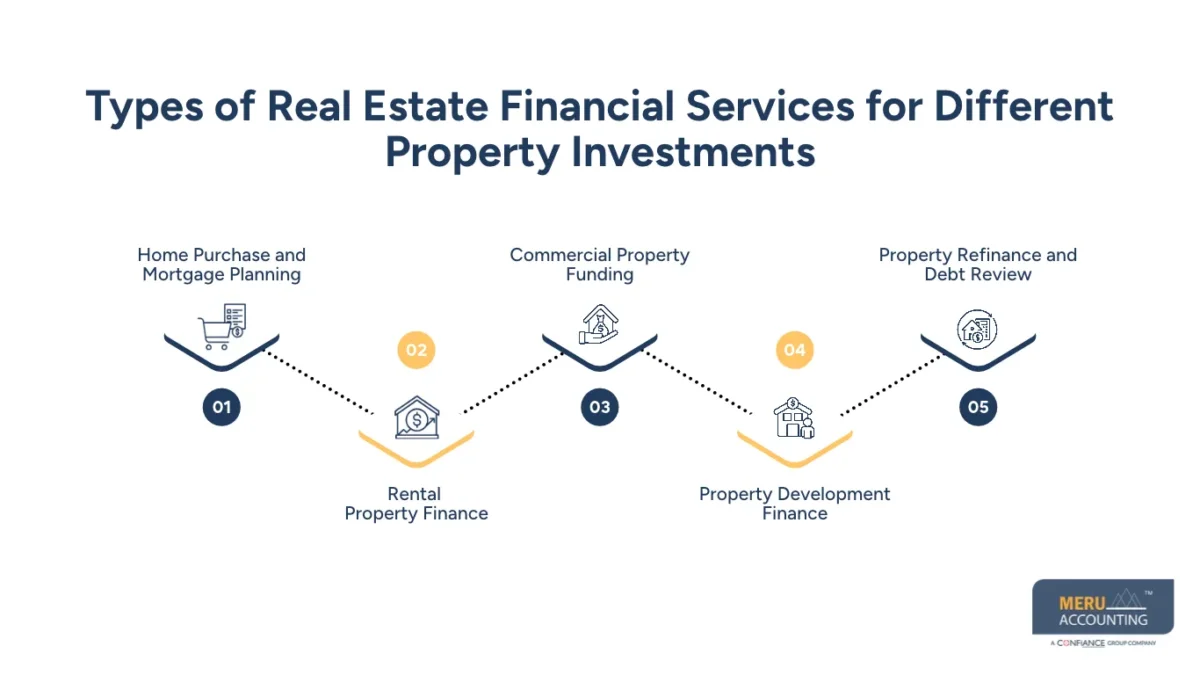
Home Purchase and Mortgage Planning
Home buyers need to account for the down payment, loan fees, insurance, property tax, and future repairs. Real estate financial services can bring these costs into one plan and show how monthly payments fit the buyer’s income. Compare the full loan cost rather than choosing an offer based on its rate alone.
Rental Property Finance
Rental income does not equal profit. Owners must deduct loan costs, upkeep, tax, insurance, management fees, and losses from empty periods. Real estate financial solutions can compare expected rent with these costs before a purchase. For example, a flat earning $2,000 a month may leave much less after all bills are paid.
Commercial Property Funding
Offices, shops, and warehouses may rely on long leases to meet loan payments. Lenders often review rent records, lease terms, property value, and net operating income. Property financial services can give owners a clearer view of expected income, planned repairs, and the cash needed when a tenant leaves.
Property Development Finance
Builders must fund land, permits, design work, labor, and materials before sales begin. Real estate financial services can set out costs by project stage and compare actual spending with the approved budget. A reserve for delays and price rises matters because a late project may also delay the cash expected from buyers.
Property Refinance and Debt Review
Refinancing replaces an existing loan with a new one, often to change the rate, term, or payment plan. Real estate financial solutions can compare both loans, including fees and total interest. A lower monthly payment may cost more over time if the new loan runs for longer.
How Real Estate Financing Changes at Each Investment Stage
Stage 1: Planning and Property Search
Before viewing properties, set a budget based on your savings, income, and current debt. Real estate financial services can help lay out the likely purchase costs and cash reserve needed after closing. A firm budget can rule out deals that would leave too little money for daily needs.
Stage 2: Purchase and Deal Closure
Once you choose a property, list the down payment, legal fees, valuation costs, and loan charges. Real estate financial consulting firms can include these items in the closing budget, giving buyers a clearer estimate of the total cash required to complete the purchase. Keep funds for repairs separate and read all loan terms before signing.
Stage 3: Build or Renovation Work
A building project can run over budget when hidden damage, labor delays, or material price rises occur. Track each bill against the first estimate and check the funds left before approving extra work. Property cost management can give owners a clear view of project spending and the cash needed to finish.
Stage 4: Rental or Business Operation
Once tenants move in, owners must track rent, loan payments, repairs, insurance, and tax. Real estate accounting services can turn these figures into monthly reports that show whether income covers regular costs. A cash reserve can cover empty periods or urgent work without forcing the owner to borrow more.
Stage 5: Growth, Refinance, or Sale
An owner may later buy another property, change a loan, or sell an existing asset. Real estate financial services can compare the cash expected from each choice after debt, fees, and tax. A higher sale price does not always mean a better return once all costs are counted.
How to Choose the Right Financing Option for Your Property
Compare Loan Types
Fixed-rate loans keep the agreed rate steady for the set period, while variable-rate loans may change as market rates move. Construction and commercial loans can have different payment rules. Real estate financial solutions can help compare the terms, but borrowers should confirm the final offer with the lender.
Review the Full Cost of Borrowing
The interest rate is only one part of a loan’s cost. Include processing fees, legal charges, valuation costs, insurance, and early repayment fees in your review. Real estate financial services can set out the figures side by side so you can compare the full amount due.
Check Your Ability to Repay
Ask whether you could still meet payments if rent fell, rates rose, or your income dropped. Real estate financial services can include budget tests based on less favorable cases. Use cautious income estimates and leave room for repairs, taxes, and other bills.
Match the Loan to Your Investment Period
A long-term rental and a property bought for resale may need different loan terms. Check when payments begin, how long the loan runs, and whether early repayment carries a fee. The best option should fit your expected holding period and cash needs.
Review the Risks Before You Sign
Property prices may fall, tenants may leave, and building costs may rise. Test the deal under these conditions before taking on debt. A lender’s approval does not mean the property is right for your finances, so review the figures and seek qualified advice when needed.
optional anymore
on running the business
When Should You Work With Real Estate Financial Consulting Firms?
When a Deal Has Many Costs
Large deals may involve several loans, contractors, tax bills, and payment dates. Real estate financial consulting firms can review the figures and set out a cash plan for each stage. This service may be useful when a mistake could lead to a large loss.
When You Need a Property Return Review
A property with high rent may still offer a weak return once costs are paid. Real estate financial services can assess rent, debt, upkeep, and other expenses to estimate likely returns. Ask which figures are known and which depend on estimates, since no forecast can promise a profit.
When You Plan to Refinance
A new loan may cut the monthly payment but add years of interest or new fees. Real estate financial consulting firms can compare the old and new terms over your planned holding period. Check the total cost before making a change.
When You Manage Several Properties
Owners with many units need a clear view of rent, debt, repair costs, and cash reserves across the portfolio. Real estate financial services can review these figures and show where cash is tied up. This can inform choices about new purchases, loan payments, and major repairs.
What to Check Before Hiring a Consultant
Review the firm’s experience with your property type, fee structure, qualifications, and reports. Ask how the firm earns its fees and whether it receives payments from lenders or other providers. Choose firms that explain their real estate financial services and make their assumptions clear.
Key Factors to Evaluate Before Choosing a Real Estate Financing Strategy
Your Available Cash
Work out how much you can invest without using funds needed for daily costs. Keep money aside for fees, repairs, and unexpected bills after the purchase. Real estate financial services should account for these cash needs rather than focus only on the amount required to close the deal.
Income and Debt Levels
Review your regular income, current loan payments, and other fixed bills before applying for finance. Lenders may use debt-to-income measures, though rules vary by loan and market. Real estate financial consulting firms can review income, existing debt, and projected loan payments to assess whether a financing option fits the available budget.
Property Income and Running Costs
Estimate rent after allowing for empty periods, repairs, insurance, tax, and management fees. For a home, include regular upkeep and major work that may be due. Real estate financial services can use these figures to build a budget based on likely costs rather than best-case results.
Interest Rates and Loan Terms
Check whether the rate can change, how long the loan lasts, and when payments fall due. Read the rules for late payments, early repayment, and any required reserve. A smaller monthly payment may still lead to a higher total cost if the loan term is longer.
Tax, Legal, and Market Risks
Tax rules, ownership costs, and lending terms vary by location and deal type. Seek advice from a qualified tax or legal professional on the rules that apply to your case. Review local rent demand and sale prices too, since weak demand can affect income and resale value.
Real Estate Accounting and Bookkeeping Services by Meru Accounting
Meru Accounting provides accounting and bookkeeping services for real estate companies, property managers, landlords, and property investment firms. Our services cover property income, expenses, accounts payable and receivable, payroll, tax-related work, and financial reporting.
Property Income and Expense Accounting
Meru Accounting records rental income, maintenance costs, insurance payments, utility bills, and other property transactions. Our team maintains accurate income and expense records for financial reviews conducted by real estate financial consulting firms.
Property Expense and Vendor Payment Management
Our accounts payable services cover supplier invoices, contractor bills, payment records, and outstanding balances. We maintain organized vendor accounts and track amounts due for property-related expenses.
Rental Income and Accounts Receivable
Meru Accounting records rent due from tenants, tracks outstanding balances, and updates payment records. Our accounts receivable services provide a clear view of expected income and unpaid amounts.
Financial Reporting for Real Estate Companies
Our real estate financial services include financial reporting on income, expenses, account balances, and cash movements. Real estate businesses use these reports to review operating costs and compare financial results across reporting periods.
Accounting Services for Growing Property Businesses
Meru Accounting provides bookkeeping, account reconciliation, payroll, tax-related, and financial reporting services for growing property businesses. Our team maintains organized financial records across multiple properties and projects.
Our Expert Perspective
A property deal should be judged by the cash it can bring in and the bills the owner must pay, not just by its expected rise in value.
For example, a rental unit may earn steady income for months and then need a costly repair before a new tenant moves in. Owners who review their cash plan at set times can spot gaps before they grow.
Real estate financial services are most useful when the figures reflect actual income and costs, and when owners update the plan as facts change. Treat expected returns as estimates, not promises.
Key Takeaways
- Real estate financial services cover loan planning, budgets, cash flow reviews, and property cost records.
- Funding needs vary by property type and investment stage.
- Compare the full loan cost, not just the rate or monthly payment.
- Keep cash aside for repairs, empty units, and unexpected bills.
- Real estate financial consulting firms may be useful for complex deals, refinancing, and large portfolios.
- Meru Accounting provides bookkeeping, accounting, and financial reporting services for organized property records.
- Review risks and seek qualified advice before making major financial choices.
FAQs
Real estate financial services include property loan planning, cash flow analysis, budget reviews, refinancing, and financial reporting for property buyers, owners, and developers.
Real estate financial services vary by property type, with home buyers needing mortgage plans, landlords reviewing rental income, and developers planning construction costs and project funding.
Property financing may involve mortgage loans at purchase, construction loans during development, cash flow planning during ownership, and refinancing or sale planning at the exit stage.
Real estate financial consulting firms are useful for complex property deals, investment return reviews, refinancing decisions, cash flow planning, and multi-property portfolio management.
Financial planning can reduce property investment risks by accounting for loan costs, repairs, vacant periods, tax bills, changing interest rates, and unexpected expenses before committing funds.
optional anymore
on running the business