A missed bonus, an incorrect overtime payment, or a tax notice can turn an ordinary payday into a problem for a business. And often, the issue isn’t a lack of effort. It’s a payroll process that has become too hard for the current team to manage. As employee count grows and pay rules get more complex, even a well-run business can find it hard to keep every pay cycle on track. This is where outsourcing payroll may be worth considering.
However, handing payroll over to an outside firm isn’t always the best move. Some businesses need better software or a stronger in-house process, while others have reached a point where outside support makes more sense. The key is knowing which signs to look for before payroll errors, rising costs, or missed deadlines start affecting the business.
What You Will Learn From This Blog
- What outsourcing payroll means and how the process works.
- Ten signs that show your business may need outside payroll help.
- When to move from in-house payroll to an outside team.
- What to check when you compare payroll providers.
- How to get your records and staff ready for the move.
- How Meru Accounting can help with payroll tasks.
What Is Outsourcing Payroll and How Does It Work?
Outsourcing payroll means hiring an outside firm or team to handle some or all of your payroll tasks. These tasks may include wage checks, tax withholdings, pay runs, payslips, payroll reports, and record-keeping. The scope of work will depend on your needs and the terms you agree on with the provider.
The process starts with a review of your current payroll setup. The provider learns about your staff, pay rates, work hours, pay dates, tax details, and current records. Your team then shares the data needed for each pay run through an agreed and secure method.
Once the data is in place, the provider checks the hours and pay details, works out gross pay and deductions, and prepares the payroll run. Your business should review and approve the figures before pay is sent. The provider may also help with tax filings, payslips, reports, and year-end records, based on the service plan.
It is worth noting that outsourcing does not remove every duty from the employer. In the US, the business must still make sure that payroll taxes are paid and filed on time. The employer should know who handles each task, who checks the work, and who takes action if an error occurs.
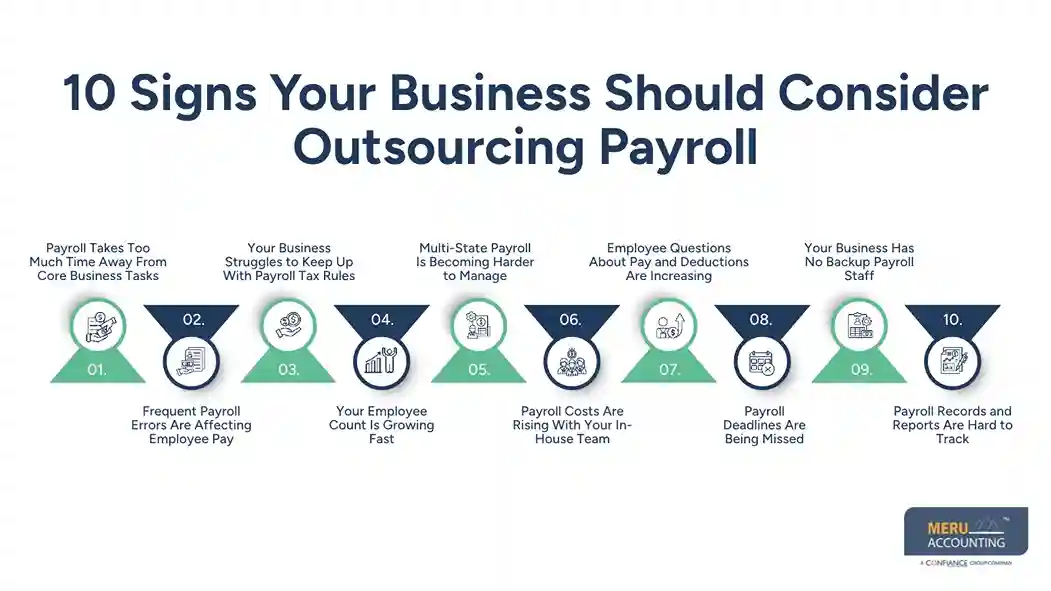
10 Signs Your Business Should Consider Outsourcing Payroll
Not all payroll issues call for outside help. But when the same problems keep coming up, they can point to a need for a better process. Here are ten signs to watch for.
1. Payroll Takes Too Much Time Away From Core Business Tasks
If your team spends hours each pay cycle on time sheets, wage checks, tax data, and pay reports, payroll may be taking time away from key work. This is more of a concern when owners or senior staff have to step in to get each pay run done.
An outside team can take on routine payroll work, so your staff can focus on sales, service, staff needs, and daily work. Track how many hours your team spends on payroll each month. This will help you judge if the cost of outside help is worth it.
2. Frequent Payroll Errors Are Affecting Employee Pay
Wrong work hours, missed overtime, poor tax data, and wrong pay rates can lead to errors. Even small mistakes can harm staff trust when they happen more than once.
If your team has to fix pay after each run, review the cause. A lack of checks, poor data, or manual entry may be part of the issue. Outsourcing payroll may help add a clear review process, but you should still check how the provider finds and fixes errors.
3. Your Business Struggles to Keep Up With Payroll Tax Rules
US payroll rules can vary by state and local area. Tax rates, filing dates, wage rules, and forms may change. A business that hires staff in new states may face more rules than it did before.
If your team finds it hard to track these changes, outside payroll support may help. Before you hire a provider, ask what tax tasks it handles and what your business must still do. Do not assume that hiring a firm makes the employer free from tax duties.
4. Your Employee Count Is Growing Fast
A payroll process that works for ten staff may not work well for fifty or more. As your team grows, you may need to track new hires, pay changes, leave, benefits, overtime, and staff exits.
More staff also means more data to check each pay cycle. If your current process is no longer easy to manage, outsourcing payroll may give your team more room to grow without adding the same level of admin work.
5. Multi-State Payroll Is Becoming Harder to Manage
Hiring staff in more than one state can add new tax and pay rules to your process. Your team may need to track where staff work, which tax rules apply, and what forms must be filed.
This can be hard to manage with basic tools or a small in-house team. A payroll provider with multi-state experience may help keep records and pay runs in order. Check that the firm knows the rules for each state where your staff works.
6. Payroll Costs Are Rising With Your In-House Team
Payroll has costs beyond staff wages. You may also pay for software, training, tax support, data storage, and time spent fixing errors. These costs can rise as your team grows.
Compare the full cost of in-house payroll with the fee charged by an outside firm. Include staff time, software, and the cost of any extra support. This gives you a fair view of the likely savings, rather than judging by the monthly service fee alone.
7. Employee Questions About Pay and Deductions Are Increasing
Staff may ask why their net pay changed, why a tax amount is higher, or why overtime was not added. If these questions keep coming up, your payroll process may need better checks and clearer reports.
An outside team may help your business keep pay records in order and give staff clear answers. Still, ask how employee questions will be handled. A good service plan should set out who will respond and how fast they will do so.
8. Payroll Deadlines Are Being Missed
Late pay runs, tax filings, or reports can cause stress for both staff and owners. They may also lead to fees or other issues, based on the task and the rules that apply.
If missed dates are now a pattern, review your payroll calendar and the steps that cause delays. An outside team may help set a clear work plan with set dates for data sharing, review, approval, and pay.
9. Your Business Has No Backup Payroll Staff
Payroll can become a risk if only one person knows how to run it. If that person is sick, on leave, or leaves the firm, the pay run may be delayed.
A backup plan is key, even if you keep payroll in-house. Outsourcing can give you access to a team rather than relying on one staff member. Ask how the provider shares work and keeps the process going when a team member is away.
10. Payroll Records and Reports Are Hard to Track
Poor records make it hard to check past pay, tax data, staff costs, and changes to wages. They can also slow down audits and year-end work.
If payroll data is kept in many files or tools, it may be time to set up a clearer process. An outside team can help keep reports and records in one system, as long as both sides agree on access, file rules, and record storage.

optional anymore
on running the business
When Is the Right Time to Switch to Outsourcing Payroll?
Spotting payroll issues is the first step. The next is knowing when your business should make the move. There is no fixed employee count or revenue level that makes outsourcing the right choice. It depends on the time, cost, risk, and skill needed to run payroll well.
Here are a few points that can help you decide:
- When payroll takes more time than it should: If each pay run needs long hours of work and repeated checks, an outside team may help.
- When your business enters new markets: Hiring staff in new states can add tax and pay rules. A provider with the right skills may help you keep up.
- When in-house costs no longer make sense: If staff, tools, and training cost more than an outside service, it may be time to compare both options.
- When payroll work depends on one person: A provider with a team can help lower the risk of delays due to staff leaves or turnover.
- When you need better checks and reports: If you lack clear records or a set review process, outsourcing may help bring more order to payroll work.
Before you make a choice, review your last three to six months of payroll work. Look at the time spent, errors found, late tasks, staff queries, and total costs. This will help you make a choice based on facts rather than guesswork.
What Should Businesses Evaluate Before Outsourcing Payroll?
Choosing a provider is not just about finding the lowest fee. You need a team that can handle your payroll needs, protect staff data, and keep work on track. When you compare payroll outsourcing companies, look at these key points.
1. Range of Payroll Services
Check which tasks are part of the service. These may include pay runs, wage checks, tax withholdings, payslips, payroll reports, and year-end support. Ask if tax filing and tax payments are also covered or if your business must handle them.
2. Data Security and Access Controls
Payroll files hold private data, such as pay rates, tax details, and bank data. Ask how the firm stores and shares files, who can view them, and how it deals with data loss or a breach. It should have clear access rules and safe ways to share data.
3. Industry and Business Size Experience
Payroll needs can vary by field. A firm that works with retail staff may have to deal with shift work and overtime, while a firm that serves builders may need to track jobs and varied pay rates. Look for a team that knows your type of work and can handle your staff size.
4. Review Process and Accountability
Ask who checks the payroll data before each pay run and who gives final approval. Find out how errors are fixed and who will be your main point of contact. A clear review process can help both sides spot issues before pay is sent.
5. Pricing and Service Terms
Ask for a clear fee list. Some firms charge by staff count, pay run, or month. Check for extra fees for new hires, year-end work, tax forms, or special reports. Also review the contract, exit terms, and notice period before you sign.
How to Prepare Your Business for the Payroll Outsourcing Process
A smooth move starts with clean data and clear roles. Before you begin outsourcing payroll, take these steps:
- Review current payroll records: Gather staff details, pay rates, tax forms, work hours, and past pay reports. Fix gaps where you can.
- List your payroll needs: Note pay dates, pay types, overtime rules, benefits, tax tasks, and reports your team needs.
- Set clear roles: Decide who will share data, check reports, approve pay, and contact the provider if a problem comes up.
- Agree on data sharing: Set up a safe way to send staff and pay data. Limit access to people who need it.
- Check the first pay run: Review the first set of figures with care. Check gross pay, deductions, tax amounts, and net pay before approval.
- Keep a review plan: Set dates to check reports, fees, service quality, and open issues with the provider.
Do not rush the move just to meet the next pay date. Allow enough time to check records and test the new process. Your team should also know who to contact if a pay issue comes up.
How Meru Accounting Supports Businesses With Outsourced Payroll Services
A growing workforce brings more than new faces to the payroll list. Every new hire, pay rate change, overtime entry, deduction, and employee exit needs to be recorded and checked. When these details are spread across files or handled by a busy in-house team, payroll can become harder to manage. Meru Accounting helps businesses take this work off their hands with outsourced payroll support built around their existing processes and workforce needs.
Our payroll services cover the tasks that keep each pay cycle on track, including:
- Payroll Processing: Calculate employee wages, overtime, deductions, and net pay based on approved payroll data.
- Payroll Records and Reporting: Maintain payroll records and prepare reports that help businesses review wage costs and pay details.
- Employee Pay Data Management: Track changes in pay rates, employee details, and other payroll inputs.
- Payroll Reconciliation: Review payroll figures against related accounting records to help identify gaps and incorrect entries.
- Payroll Tax Support: Assist with payroll tax calculations, records, and related filing tasks based on the agreed scope of work.
Whether you need help with regular pay runs or want to move your entire payroll process to an outside team, Meru Accounting can support the tasks that make the most sense for your business. You retain control over payroll approvals and key decisions while our team handles the agreed work behind each pay cycle.
Our Expert Insight
One detail businesses often miss is the link between payroll and accounting records. Even when employees are paid correctly, wage expenses, benefits, bonuses, and employer payroll taxes may be posted to the wrong accounts or period. This can lead to mismatched payroll reports and financial statements.
We recommend checking payroll records against the general ledger each month. Businesses should also make sure that new hires, pay changes, bonuses, and employee exits are recorded in the right pay period. These checks help catch errors before they affect financial reports or tax records.
Our advice: Don’t judge a payroll provider only by how quickly it processes pay. Look at its review process, payroll reconciliation practices, and how it handles employee changes. These details matter just as much as paying employees on time.
Key Takeaways
- Outsourcing payroll can help businesses that spend too much time on pay runs and related tasks.
- Frequent pay errors, missed deadlines, and poor records are signs that your current process needs review.
- Business growth and hiring across states can make payroll harder to manage in-house.
- Compare the full cost of in-house payroll with outside service fees before making a choice.
- Check data security, service scope, review steps, and industry experience before hiring a provider.
- A clear plan for data sharing, approvals, and reports can make the move easier.
- Employers must still know their payroll tax duties, even when an outside firm handles the work.
FAQs
There is no fixed employee count. Even a small business with 10 employees may need outside payroll support if pay rules are complex or the in-house team lacks time to manage payroll.
Businesses can outsource payroll processing, wage calculations, overtime, tax withholdings, payslips, payroll reports, and year-end support. Some providers also handle payroll tax filings and payments.
Look for relevant industry experience, clear pricing, data security, and reliable support. Ask how the provider handles payroll errors, tax filings, employee changes, and payroll reports.
Yes. Many providers handle multi-state payroll, including state tax withholding and related filings. Make sure the provider has experience with the states where your employees work.
Employers generally remain responsible for making sure payroll taxes are paid and filed correctly. Before signing an agreement, confirm which tax tasks the provider handles and how payments and filings are tracked.
optional anymore
on running the business