A non profit CPA reviews how a nonprofit receives, records, spends, and reports its funds. When an organization manages government grants, private donations, and program fees, each source may have different rules. A missed deadline, an unsupported expense, or a wrong fund entry can lead to repayment demands, audit findings, or delays in future funding identified by a non profit CPA.
For example, a nonprofit receives a $50,000 grant for a meal program. If it charges office rent to that grant without approval, the expense may be questioned even if the payment was real. The team must show that the cost meets the award terms and has proper records.
Sound accounting by a non profit CPA connects grant rules, donor limits, and financial reports. A CPA for non profit organization can review these areas and flag gaps before they become larger problems.
What You Will Learn From This Blog
- How a non profit CPA reviews grant costs and reporting duties.
- Which records prove that expenses meet grant terms.
- How fund accounting tracks donor limits and program spending.
- What nonprofits need to prepare for financial audits.
- How a CPA for non profit organization can review accounting errors and control gaps.
Introduction to Non profit CPA Services
Non profit CPA services cover grant cost reviews, donor fund tracking, financial reporting, and tax filing duties. A non profit CPA checks whether expenses match grant award terms and approved budgets. For example, a grant-funded purchase should have an invoice, proof of payment, approval, and records that link the cost to the funded work. These checks give the organization a clear record of how it used the funds.
Donor fund tracking is another key task. If a donor gives $8,000 for school supplies, the accounting records should show eligible purchases and the remaining balance. Monthly financial reports should also match the general ledger and reconciled accounts, with unusual entries, unpaid bills, and fund balances reviewed before reports reach management.
US nonprofits may also need annual tax filings and state reports based on their legal status and activities. A CPA for non profit organization can review the applicable filing duties, reporting dates, and financial records to identify gaps and keep required submissions on schedule.
optional anymore
on running the business
Understanding Grant Compliance Requirements for Nonprofits
Grant compliance means following award terms, tracking eligible costs, and submitting accurate reports by the required dates.
Federal and State Grant Reporting Obligations
Government grants may require financial reports, progress updates, and records of program results. Staff should maintain a schedule of due dates, required data, and the person responsible for each report.
Grant Budget Tracking and Expense Documentation
A non profit CPA can compare actual costs with the approved budget each month. If a $40,000 grant allows $20,000 for wages and $20,000 for supplies, unexpected spending in either category should be reviewed before further costs are charged.
Restricted and Unrestricted Grant Funds
Restricted funds must follow the terms set by the grantor or donor. Unrestricted funds generally allow wider use for the nonprofit’s mission, subject to applicable terms and law.
Common Grant Compliance Mistakes and How to Prevent Them
Common errors include duplicate charges, late reports, missing receipts, and unapproved budget changes. Monthly reviews and clear cost codes can catch these issues before reports are filed, allowing a cpa for non profit organization to identify errors before submission.
Fund Accounting Principles for Nonprofit Organizations
Fund accounting tracks money according to its purpose and restrictions. It shows which funds are available for general use and which must remain tied to specific needs.
Fund Accounting vs. Traditional Business Accounting
Businesses often focus on profit, while nonprofits must also show how funds serve their mission. Under US nonprofit accounting rules, net assets are generally reported as with donor restrictions or without donor restrictions.
Tracking Donor Restrictions and Fund Allocations
Record donor terms when a gift arrives. If a donor gives $10,000 for a health camp, the ledger should track eligible costs and the remaining balance.
Revenue Recognition for Grants and Donations
Grant income depends on the agreement and the applicable accounting rules. Under US GAAP, a conditional contribution generally requires a barrier to be met and a right of return or release to be overcome before recognition. A CPA for non profit organization should review grant terms before recording revenue.
Preparing Accurate Nonprofit Financial Statements
A non profit CPA should ensure financial statements match the ledger and report assets, liabilities, revenue, expenses, and cash flows. Expense reports should also show program, management, and fundraising costs where required.
Audit Readiness for Nonprofit Organizations
Audit readiness means having records available to explain financial transactions and balances. Regular checks reduce the need to rebuild files at year-end.
Essential Financial Records and Supporting Documents
Keep bank statements, reconciliations, invoices, payroll records, grant agreements, donor letters, and approval records. A CPA for non profit organization should ensure each item links to the relevant ledger entry.
Internal Controls for Financial Accuracy
Separate payment approval from payment release where possible. Smaller nonprofits can use independent board review of bank statements and major payments when staffing limits make full separation difficult.
Preparing for a Single Audit and Independent Financial Audit
A single audit may apply to US nonprofits that spend federal awards above the threshold under the Uniform Guidance. The threshold is generally $750,000 for fiscal years beginning before December 16, 2024, and $1 million for fiscal years beginning on or after that date, subject to the applicable rules. A non profit CPA can assess audit readiness based on the applicable requirements.
Resolving Audit Findings and Strengthening Compliance
Each finding should have a named owner, a deadline, and a corrective action plan. If payroll costs lack time records, set a timekeeping process, assign a reviewer, and retain evidence that the new checks are working.
How a Non Profit CPA Strengthens Financial Reporting and Accountability
A non profit CPA checks whether financial reports match the records and rules behind them.
Clear Board Reports
Compare actual spending with the budget and explain major differences. This gives board members a sound basis for decisions on programs, staffing, and cash needs.
Early Grant Risk Checks
Review posted costs, unpaid bills, and planned spending against grant limits. Early checks give staff time to correct errors or seek approval for changes.
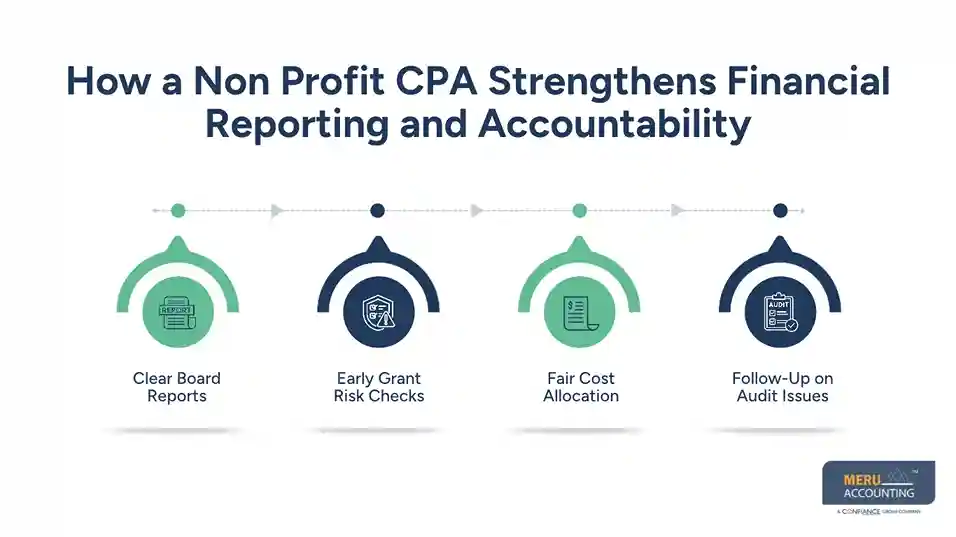
Fair Cost Allocation
Shared costs, such as rent and staff wages, need a reasonable basis for allocation. A CPA for non profit organization should review calculations showing each program’s share.
Follow-Up on Audit Issues
Track each finding until the required change is in place. A new policy alone is not enough; the nonprofit should retain evidence that staff follow it.
Common Accounting Challenges Nonprofits Face
Mixed Program Costs
Using one cost code for all programs can lead to incorrect grant charges. Separate codes and monthly reviews help a CPA for non profit organization identify errors in grant charges.
Missing Expense Proof
A bank statement proves that money left the account, but not why the cost was valid. Retain invoices, approvals, and proof of delivery where relevant.
Late Reports
Reports may be delayed when duties and deadlines are unclear. Assign an owner and allow time for review before each submission date.
Weak Cost Allocation
Charging all shared expenses to one program can distort reported costs. A CPA for non profit organization can review cost allocation methods and verify calculations against actual use.
Best Practices for Grant Management, Fund Accounting, and Audit Preparation
Review Grant Terms First
A non profit CPA can review approved costs, award dates, reporting duties, and budget limits before spending begins. Share key rules with program staff.
Reconcile Accounts Monthly
Match bank balances with the ledger and investigate unexplained differences. A CPA for non profit organization can review grant balances, payroll entries, and fund transfers before month-end close.
Keep Donor Records
Store gift letters and agreements with the relevant fund records. Check that spending follows the donor’s stated purpose.
Set Approval Rules
Document who can approve purchases, release payments, and post adjustments. Use independent review when staffing limits prevent separation of duties.
Nonprofit Accounting Services From Meru Accounting
Meru Accounting provides accounting and bookkeeping services that help nonprofits maintain clear financial records, track grant expenses, and prepare accurate financial reports.
- Bookkeeping and General Ledger Management: Accurate transaction records and organized ledger accounts make it easier to track income, expenses, and fund balances.
- Account Reconciliation: Regular checks of bank statements against accounting records help identify missing entries, payment errors, and unexplained differences.
- Grant Expense Tracking: Organized grant records make it easier to compare actual spending with approved budgets and review expenses against grant terms.
- Payroll Accounting: Clear payroll entries and wage records help maintain accurate labor costs and financial reports.
- Financial Reporting: Reports on income, expenses, cash flow, and account balances give nonprofit leaders a clear view of their financial position.
Meru Accounting’s services can help nonprofits maintain consistent records for financial reviews and audit preparation. The scope of work depends on each organization’s requirements. Independent audits, formal CPA opinions, and specialized grant compliance engagements may require separate services from qualified professionals.
Our Expert Perspective
The key question is whether a nonprofit can explain why each cost belongs to a specific grant or fund. If the answer depends on memory or missing emails, the process needs attention. A non profit CPA should review the full trail, from the award terms to the final report, with special care for payroll and shared costs.
Key Takeaways
- A non profit CPA reviews grant costs, fund balances, and financial reports against applicable rules.
- Every grant expense needs clear proof and a valid link to the award.
- Fund accounting keeps donor restrictions and available balances clear.
- Regular reconciliations and documented controls reduce audit risk.
- A CPA for non profit organization can review gaps and set corrective steps.
FAQs
A non profit CPA reviews grant expenses, award terms, financial reports, and supporting records to check compliance with funder rules.
Nonprofits should use separate fund codes, record donor terms, and review eligible expenses and remaining balances regularly.
Key documents include bank statements, grant agreements, invoices, payroll records, account reconciliations, donor letters, and financial statements.
A nonprofit should reconcile accounts, review federal grant expenses, organize supporting records, and confirm the applicable audit requirements.
A nonprofit should consider hiring a CPA when grant reporting becomes complex, fund records are unclear, or audit preparation reveals gaps.
optional anymore
on running the business