A business may have enough orders, regular customers, and rising sales but still face a cash shortage when supplier bills become due. Accounts payable financing gives businesses another way to manage these payments without using all their cash at once. It allows buyers to extend payment time while suppliers may receive funds earlier through a bank or finance provider.
Understanding accounts payable financing requires more than knowing how a payment is made. Businesses must review its accounting treatment, interest charges, payment terms, and effect on financial reports. The right plan can ease cash pressure, maintain supplier ties, and keep daily work on track. However, poor cost control or unclear terms can create new debt and cash flow risks.
What You Will Learn From This Blog
- The meaning and working process of accounts payable financing.
- Different types of supplier finance and how each one works.
- How to record finance deals, journal entries, and cash flow changes.
- Common fees, interest rates, and ways to work out the total cost.
- How to assess accounts payable financing companies before signing an agreement.
- Supplier payment plans and key steps for managing finance costs.
What is Accounts Payable Financing?
Accounts payable financing is a way for a business to manage money owed to suppliers through a third-party finance provider or an agreed payment plan. The provider may pay the supplier early, while the buyer pays the provider on a later date.
Purpose of Accounts Payable Financing
The main aim is to manage the gap between buying goods and paying for them. A business can keep more cash on hand for wages, rent, stock, and other daily costs while meeting its supplier duties.
Role of Buyers and Suppliers
The buyer receives goods or services and approves the invoice. The supplier may receive early payment from a bank or finance firm, while the buyer pays the agreed amount on the due date.
Role of Finance Providers
Accounts payable financing companies review the buyer’s credit profile and payment record before setting financing terms. They pay approved supplier bills and collect funds from the buyer as per the deal.
Difference From a Business Loan
A business loan gives a firm funds for a set term, while this form of finance is linked to supplier bills. The amount, payment date, and fee may depend on each approved invoice.
When Businesses Use It
Firms with long customer payment cycles, high stock costs, or seasonal sales may use this plan. It is also useful when a supplier seeks early payment, but the buyer needs more time.
optional anymore
on running the business
How Does Accounts Payable Financing Work?
The process starts when a buyer gets an invoice and ends when the buyer pays the finance provider. Each party must agree on the payment terms before the deal begins.
Supplier Sends an Invoice
The supplier sends an invoice after the goods or services are delivered. The buyer checks the price, order details, tax, and due date before it enters the payment process.
Buyer Approves the Invoice
The buyer confirms that the bill is valid and meets the agreed terms. Only approved bills move to the finance stage, which lowers the risk of wrong or duplicate payments.
Finance Provider Pays the Supplier
The finance firm pays the supplier before the normal due date, after deducting any agreed fee or charge. The supplier gets cash sooner without waiting for the buyer’s payment cycle.
Buyer Pays on the Agreed Date
The buyer pays the finance provider on the due date set in the deal. The payment may be later than the original supplier invoice date, based on the approved terms.
Records are Updated
The accounts team records the payment, finance charge, and outstanding amount. The firm must also match bank entries with invoices to maintain accurate financial records.
Types of Accounts Payable Financing
Different plans suit different business needs. The choice depends on who pays the fee, how long the buyer needs, and whether the supplier wants early cash.
Supply Chain Financing
A bank or finance firm pays the supplier early after the buyer approves the invoice. The buyer then pays the provider at a later date under the agreed terms.
Reverse Factoring
Reverse factoring is set up by the buyer, who works with a finance provider to offer early payment to suppliers. The provider bases its terms on the buyer’s credit standing and payment record.
Dynamic Discounting
The buyer pays the supplier early in return for a discount on the invoice. The discount can change based on how many days before the due date the payment is made.
Extended Payment Terms
The buyer and supplier agree to a longer payment period than the usual terms. Both sides must review the effect on prices, cash needs, and future orders before making this change.
Early Payment Programs
Accounts payable financing companies may offer early payment programs through which suppliers can choose to receive funds before the due date. The supplier may pay a fee for early cash, while the buyer keeps its normal payment date.
Accounting Treatment of Accounts Payable Financing
The accounting treatment depends on the terms of the deal, the role of the finance provider, and the nature of the liability. Businesses should not assume that every supplier finance deal remains a trade payable.
Recording Supplier Invoices and Financing Transactions
The buyer first records the supplier invoice as a trade payable when the goods or services are received. When the finance provider pays the supplier, the firm must assess whether the liability remains a trade payable or becomes a borrowing.
Journal Entries for Accounts Payable Financing
Assume a business receives goods worth $10,000 and the finance provider pays the supplier. The entries below show a basic case where the liability is treated as a borrowing.
Transaction | Debit | Credit |
Goods purchase | Purchases/Inventory $10,000 | Accounts Payable $10,000 |
Transfer to borrowing | Accounts Payable $10,000 | Finance Payable $10,000 |
Payment to provider | Finance Payable $10,000 | Bank $10,000 |
Any interest or fee must be recorded as an expense based on the deal terms. These entries are examples, not a fixed rule for all contracts.
Balance Sheet Classification: Trade Payables vs. Borrowings
A liability may remain under trade payables if its nature and terms are similar to normal supplier credit. If the deal changes the nature of the debt, it may need to be shown as a borrowing. The contract and relevant accounting rules decide the correct treatment.
Cash Flow Statement Treatment
The cash flow statement must show the real nature of cash paid and received. A payment to a finance provider may be an operating or financing cash flow, based on the facts and the relevant reporting rules. Non-cash changes must also be assessed.
Financial Statement Disclosure Requirements
Under IFRS, amendments to IAS 7 and IFRS 7 require details of supplier finance arrangements for annual periods starting on or after 1 January 2024. Disclosures include key terms, amounts due, payment date ranges, and liquidity risk. US GAAP also has disclosure rules under FASB ASU 2022-04.
Costs and Fees Associated With Accounts Payable Financing
The cost of finance is not limited to the interest rate. A business must review all fees, discounts, and payment charges before it selects a plan.
Interest Rates and Financing Charges
The finance provider may charge interest based on the amount paid and the time until the buyer repays it. Rates can vary by credit risk, payment period, and deal size.
Transaction and Platform Fees
Some providers charge a fee for each approved invoice or payment. Online platforms may also have setup, service, or monthly fees that add to the total cost.
Early Payment Discounts
A supplier may offer a discount when the buyer pays before the due date. For example, a 2% discount on a $10,000 bill saves $200, but the buyer must compare this saving with the cost of using its own cash.
Factors Affecting Financing Costs
The buyer’s credit score, payment history, invoice value, industry, and repayment period can affect the price. Higher risk or longer payment terms may lead to higher charges.
How to Calculate the Total Cost of Accounts Payable Financing
Add interest, transaction fees, setup charges, and other costs to find the total finance cost. For example, if a $10,000 invoice carries $100 in interest and $25 in fees, the total cost is $125, or 1.25% of the invoice value.
Accounts Payable Financing Companies: Services and Selection Criteria
Accounts payable financing companies offer different payment plans, credit terms, and fee structures. Businesses should compare their services with their cash needs rather than choosing a provider based only on a low rate.
Types of Accounts Payable Financing Companies
Banks, specialist finance firms, supply chain finance firms, and fintech platforms offer these services. Their credit rules, payment terms, and fees may differ.
Banks vs. Fintech Financing Providers
Banks may offer established credit facilities and larger finance limits, subject to strict checks. Fintech providers may offer online invoice approval and faster processing, but their fees and service terms need careful review.
Key Features to Compare Before Choosing a Provider
Compare interest rates, payment limits, supplier coverage, approval time, platform fees, and contract terms. Also check whether the provider can connect with your current accounting system.
Eligibility Requirements and Documentation
Providers may ask for bank statements, tax records, company details, supplier invoices, and financial reports. Some may also review credit history, annual sales, and past payment records.
Questions to Ask Before Signing a Financing Agreement
Ask how fees are charged, what happens after a late payment, and whether early repayment carries a penalty. Also check the contract period, data security rules, and the process for ending the deal.
Supplier Payment Strategies Using Accounts Payable Financing
A payment plan must meet the needs of both the buyer and supplier. A firm should set clear payment dates and review its cash needs before it uses finance.
Extending Payment Terms Without Disrupting Supplier Relationships
Discuss longer payment terms with suppliers before changing the due date. Clear talks and fair terms can prevent disputes and keep supply orders on track.
Improving Supplier Cash Flow Through Early Payments
Early payment plans give suppliers access to cash before the normal due date. This can be useful for small suppliers that need funds to buy stock, pay staff, or meet other costs.
Managing Payment Schedules and Cash Requirements
Set payment dates based on expected cash inflows and major business costs. A weekly or monthly review can show when funds may fall short and when bills need attention.
Prioritizing Supplier Payments
Give priority to suppliers that provide key stock, raw goods, or services needed for daily work. Also review overdue bills, late fees, and the risk of supply delays before setting payment order.
Balancing Working Capital and Supplier Relationships
Longer payment terms can keep more cash in the business, but late payments can harm supplier ties. Firms must balance cash needs with fair payment terms and a clear record of past dues.
Best Practices for Managing Accounts Payable Financing
A clear finance policy can keep payment plans under control. Regular checks also make it easier to spot high costs, missed dates, and errors in financial records.
Establishing Clear Financing Policies
Set rules for who can approve finance deals, which suppliers can take part, and what limits apply. Record these rules so that each team follows the same steps.
Monitoring Outstanding Financing Obligations
Keep a list of unpaid bills, finance charges, due dates, and provider balances. Review this list often to avoid missed payments and extra fees.
Reviewing Financing Costs Regularly
Compare the cost of each plan with other ways to pay suppliers. If fees rise or payment terms change, review the deal before using it for more invoices.
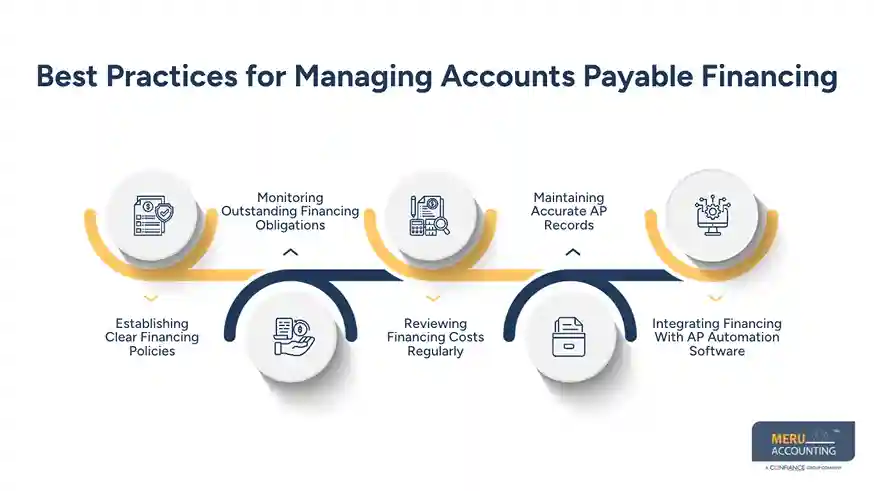
Maintaining Accurate AP Records
Match invoices, approval notes, provider statements, and bank entries on a set schedule. Correct records make it easier to prepare reports and check unpaid amounts.
Integrating Financing With AP Automation Software
AP software can track invoices, approval steps, due dates, and payment status. Link it with finance records to reduce manual work and lower the risk of missed or duplicate entries.
Meru Accounting's Accounts Payable and Finance Record Services
Managing supplier bills and finance records calls for clear checks and timely reports. Meru Accounting provides accounts payable and bookkeeping services that cover invoice entry, bill review, payment tracking, account matching, and financial reporting.
Invoice Entry and Review
The team records supplier bills and checks key details such as invoice dates, amounts, and due dates. This keeps AP records in line with the source documents.
Payment Tracking and Account Matching
Payment records are matched with bank entries and supplier statements. Open bills and unpaid amounts are reviewed to keep the AP balance up to date.
Finance Cost and Liability Records
Finance charges, provider payments, and outstanding balances are recorded in the right accounts based on the agreed terms and accounting policy.
Regular Financial Reports
AP ageing reports and account summaries show unpaid bills, due dates, and supplier balances. These reports give business owners a clear view of payment needs.
Our Expert Perspective
Accounts payable financing should be treated as a cash planning choice, not as extra cash without a cost. Before signing a deal, a business should review its total fees, debt level, supplier terms, and cash forecast. Clear records and regular checks are just as important as the finance rate.
Key Takeaways
- Accounts payable financing allows a buyer to manage supplier payments through a bank or finance provider.
- Supply chain finance, reverse factoring, and dynamic discounting have different terms and costs.
- Accounting treatment depends on the terms and nature of the liability.
- Interest, service fees, and other charges must be included when working out the total cost.
- Accounts payable financing companies should be checked for fees, credit rules, and contract terms.
- Clear payment plans can protect cash flow and maintain supplier ties.
- Regular AP reviews and accurate records keep finance duties under control.
FAQs
Accounts payable financing allows small businesses to extend supplier payment time while a bank or finance provider pays approved invoices early.
The main types include supply chain financing, reverse factoring, dynamic discounting, extended payment terms, and early payment programs.
Accounts payable financing is recorded based on the agreement, with the liability classified as trade payables or borrowings and related fees recorded as expenses.
The total cost may include interest, transaction fees, platform charges, setup fees, and other costs linked to the payment agreement.
Compare interest rates, service fees, repayment terms, credit limits, invoice approval time, software links, and contract conditions before selecting a provider.
optional anymore
on running the business