Hiring a trucking CPA shouldn’t come down to picking the firm with the lowest fee or the one that promises the biggest tax savings. The real question is whether they know the trucking business well enough to handle its books, taxes, and day-to-day financial needs. A CPA who mainly works with retail stores or professional firms may not be the right fit for a company that deals with fuel costs, driver pay, truck loans, and interstate operations.
Before you sign an engagement letter, take time to check their trucking experience, services, credentials, and fee structure. A good CPA for trucking business should understand how your company operates, explain your financials in plain English, and give you sound advice when decisions about trucks, drivers, or business growth come up.
What You Will Learn From This Blog
- Why trucking companies need a CPA with industry knowledge.
- What tax, accounting, and payroll services to look for.
- How to assess a CPA’s skills and trucking experience.
- What questions to ask before signing an agreement.
- How trucking CPA fees are set and what can affect the cost.
- Which warning signs to watch for when hiring a CPA.
- How outsourced CPA support can help your trucking business.
Why Your Trucking Business Needs a Specialized Trucking CPA
Trucking has a cost structure that can be hard to manage without industry knowledge. A large share of your income may go toward fuel, repairs, driver wages, insurance, truck loans, and other costs. If these costs aren’t tracked well, you may not know how much each truck, route, or job earns.
A trucking CPA knows how these costs affect your books and tax plan. They can help you review your income and costs, keep tax records in order, and spot gaps before they grow into larger issues.
Here are a few reasons to work with a CPA who knows the trucking field:
1. Better Control Over Trucking Costs
Fuel prices, repair bills, tolls, and driver costs can change from month to month. A CPA who knows trucking can help you sort these costs and review them against your income. This can show which trucks or routes bring in a profit and where costs are too high.
2. Tax Planning That Fits Your Business
Trucking firms may have to deal with fuel tax, heavy vehicle use tax, payroll tax, and tax rules tied to truck and trailer assets. A skilled CPA can help you plan for these costs, track due dates, and claim valid tax breaks based on your records.
3. Accurate Financial Reports
Good reports help you see if your business is making money. Your CPA can review your profit and loss statement, balance sheet, and cash flow report. These reports can help you plan truck buys, set rates, and manage debt.
4. Support as Your Fleet Grows
Adding trucks, hiring drivers, or taking on new routes can change your tax and cash flow needs. A CPA for trucking business can help you review the cost of growth and plan for the extra funds your company may need.
What Services Should a Trucking CPA Offer?
Before you hire a CPA, check the full range of services they offer. Your needs may vary based on whether you run one truck, work as an owner-operator, or manage a fleet with many drivers.
1. Trucking Tax Preparation and Planning
Your CPA should know how to prepare business tax returns and plan for tax costs through the year. They should also review valid business costs, truck and trailer assets, and tax rules that apply to your business setup.
2. Bookkeeping and Financial Reporting
Clean books help you track income, costs, bills, and payments. Your CPA or accounting team should keep records up to date and prepare reports that show your business’s financial health.
3. Payroll and Driver Pay Support
If you have drivers or office staff, payroll must be correct and on time. Look for support with wage records, payroll tax deposits, tax forms, and year-end reports. If you use owner-operators or contractors, ask how the CPA handles their pay records and tax forms.
4. IFTA and Fuel Tax Support
The International Fuel Tax Agreement (IFTA) sets rules for fuel tax reports for eligible carriers that operate across member areas. Your CPA should know how to review fuel use, miles traveled, and fuel receipts to help prepare correct IFTA reports.
5. Form 2290 and Truck Depreciation
Heavy highway vehicle use tax may apply to certain heavy trucks used on public roads. Form 2290 is used to report this tax. Your CPA should also know how to review truck and trailer costs, depreciation, and asset records when preparing your tax plan.
6. Accounts Payable and Receivable
Late customer payments can put pressure on cash flow, while missed vendor bills can lead to fees or service issues. A trucking CPA should be able to help you track unpaid invoices, review bills, and keep payment records in order.
optional anymore
on running the business
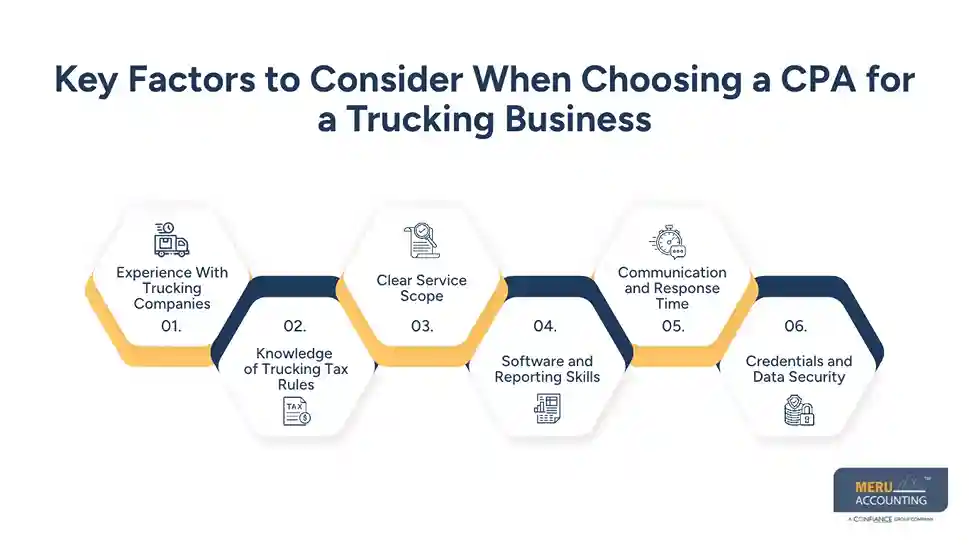
Key Factors to Consider When Choosing a CPA for a Trucking Business
Finding the right CPA takes more than checking a website or comparing fees. Review these key points before you make a choice.
1. Experience With Trucking Companies
Ask how long the CPA has worked with trucking firms and what types of clients they serve. Experience with owner-operators may not be the same as working with a fleet that has many drivers and trucks. Choose a CPA whose past work is close to your business model.
2. Knowledge of Trucking Tax Rules
Ask about their work with IFTA, Form 2290, payroll tax, truck depreciation, and state tax rules. They should know which rules apply to your business and when to refer you to a specialist for matters outside their scope.
3. Clear Service Scope
Some CPAs only prepare tax returns, while others offer year-round bookkeeping, payroll, and financial reports. Make sure you know what part of the fee is included and what will cost extra. A clear service list can help you avoid gaps and surprise bills.
 4. Software and Reporting Skills
Ask which accounting tools they use and how they track your records. The tool should fit your business size and needs. Your CPA should also be able to give you clear reports and explain what the numbers mean.
5. Communication and Response Time
Tax and cash flow issues may need quick action. Ask who will handle your account, how often you’ll get updates, and how you can reach the team. A good CPA should explain issues in plain terms and not leave you waiting for key answers.
6. Credentials and Data Security
Check the CPA’s active license through the right state board. If you hire a firm, ask who will review your work and how they protect bank, payroll, and tax data. You should also have a clear way to share files and control access.
Questions to Ask Before Hiring a Trucking CPA
Before you sign an agreement, ask direct questions about the CPA’s work, fees, and process. Their answers can help you judge if they are a good fit.
- How many trucking clients do you work with? Ask if they serve owner-operators, small fleets, or large carriers.
- Do you handle IFTA and Form 2290? Find out if they prepare these filings or only offer basic tax support.
- Can you help with year-round tax planning? Tax support should not stop after you file your return.
- What reports will I get each month? Ask if you will get profit and loss, balance sheet, and cash flow reports.
- Who will manage my account? Find out if you will work with one CPA, a team, or a support contact.
- How do you charge for your services? Ask about fixed fees, hourly rates, extra filing fees, and any added costs.
- How do you keep my data safe? Ask about secure file sharing, user access, and data protection steps.
A CPA for trucking business should give clear answers and explain what they can and can’t do. Be careful if a firm makes claims it can’t back up or avoids clear answers about fees and duties.
How Much Does a Trucking CPA Cost?
The cost of hiring a trucking CPA depends on your business size, number of trucks, monthly transactions, and the services you need. An owner-operator with one truck may need basic bookkeeping and tax filing, while a fleet owner may need payroll, monthly reports, tax planning, and more support.
Here are the main factors that affect CPA fees:
1. Type of Services
Tax return preparation may cost less than full-service accounting. If you need bookkeeping, payroll, IFTA reports, accounts payable, and tax planning, the total fee will likely be higher.
2. Number of Trucks and Drivers
A larger fleet often means more fuel records, repair bills, payroll entries, and customer invoices. This can increase the time needed to manage your books and prepare reports.
3. Business Structure
Your business structure can affect the work needed to prepare tax returns. A sole proprietorship, partnership, LLC, and corporation may have different filing needs and tax rules.
4. Pricing Model
Most CPA firms use one or more of these pricing models:
- Hourly fees: You pay for the time spent on your accounting and tax work.
- Monthly packages: You pay a set fee for agreed services, such as bookkeeping and financial reports.
- Fixed project fees: You pay a set amount for work such as tax return preparation, cleanup, or catch-up bookkeeping.
When comparing quotes, don’t look at price alone. Check what each fee covers, how often you’ll get reports, and whether tax planning is part of the service. The right trucking CPA should offer clear pricing that fits your workload and business needs.
Red Flags to Watch for When Hiring a Trucking CPA
A low fee or a strong sales pitch doesn’t always mean you’ve found the right CPA. Watch for these warning signs before you share your financial records or sign an agreement.
1. Little or No Trucking Industry Experience
A CPA who has never worked with a trucking company may not know how to handle fuel records, fleet costs, driver pay, or IFTA reports. Ask for examples of the type of trucking clients they serve.
2. Promises of Guaranteed Tax Savings
No CPA can promise a fixed tax refund or a certain amount of tax savings before reviewing your records. Be cautious of anyone who suggests claiming expenses without checking if they qualify.
3. Unclear Fees and Service Terms
If the firm can’t explain its fees, filing duties, or service limits, you may face extra costs later. Ask for a written agreement that lists the work covered and any added charges.
4. Poor Communication
Late replies can lead to missed deadlines and delays in key business choices. Your CPA should tell you when to expect reports, answer questions, and alert you to issues that need your attention.
5. Weak Data Security
Your financial records may include bank details, tax IDs, driver pay data, and other private information. Avoid firms that lack secure file-sharing methods or can’t explain who can access your records.
Get CPA and Accounting Support for Your Trucking Business From Meru Accounting
A trucking company needs more than someone to file its tax returns once a year. It needs accurate books, well-organized expense records, timely financial reports, and support with the tax and payroll tasks that come with running a fleet. Meru Accounting provides accounting professionals who can help manage these responsibilities and keep your financial records ready for review.
Our trucking accounting and CPA support covers:
- Bookkeeping for Trucking Companies: Track freight income, fuel purchases, truck repairs, insurance, tolls, permits, and other operating costs.
- Tax Preparation and Support: Organize financial records, review eligible business expenses, and assist with business tax preparation.
- Fleet Expense Tracking: Keep truck-related costs organized to help you review spending and compare operating expenses.
- Payroll Accounting: Manage driver and staff payroll records, wage entries, and payroll reports.
- Accounts Payable and Receivable: Track carrier payments, customer invoices, fuel bills, repair shop payments, and vendor balances.
- Financial Reporting: Prepare profit and loss statements, balance sheets, and cash flow reports to support business decisions.
- Catch-Up and Cleanup Accounting: Correct gaps in past records and bring overdue books up to date.
Our team understands that trucking accounts involve many moving parts, from daily fuel purchases to large equipment costs. We bring multi-industry accounting experience, trained professionals, and a review process to each engagement. Whether you need help with specific accounting tasks or ongoing financial support, Meru Accounting can provide services that fit your operation.
Looking for accounting support for your trucking company? Talk to Meru Accounting about the services your business needs.
Our Expert Insight
When reviewing a CPA’s experience, don’t just ask how many trucking clients they serve. Ask how they handle situations where tax rules differ based on how a truck is owned, financed, or used. For example, a truck bought with a loan, leased under an operating agreement, or purchased outright can have different accounting and tax treatment. A CPA should be able to explain these differences and identify what records are needed before preparing the return.
We also recommend checking whether the CPA reviews tax positions against current IRS rules rather than relying on the same approach every year. Equipment purchases, business use, depreciation elections, and changes in ownership can all affect the right tax treatment. These are the kinds of details that help distinguish a CPA with hands-on trucking experience from one who simply handles general business tax returns.
Key Takeaways
- Choose a trucking CPA with real experience in the transportation industry.
- Check their knowledge of IFTA, Form 2290, truck depreciation, and payroll tax.
- Review the full service list before comparing CPA fees.
- Ask about monthly reports, communication, data security, and account management.
- Avoid firms that promise fixed tax savings or offer unclear service terms.
- Look for a CPA for trucking business who can support your current needs and future growth.
- Review costs by truck where possible to get a better view of fleet performance.
FAQs
A trucking CPA handles tax preparation, tax planning, financial reporting, and accounting needs for trucking companies. They can also help with IFTA reporting, Form 2290, payroll, and fleet expense reviews.
Yes. An owner-operator can benefit from a CPA who understands business expenses, self-employment taxes, truck depreciation, and tax filing rules. This can help keep records accurate and avoid costly filing errors.
Look for a CPA with experience serving owner-operators, small fleets, or large trucking companies. Check their credentials, ask about IFTA and Form 2290, review their service fees, and speak with them before hiring.
Yes. A CPA can review eligible business expenses, depreciation options, and tax planning strategies to help reduce your tax liability within the law. Your actual tax savings will depend on your income, expenses, and business structure.
Outsourcing can be a good option if you want professional accounting support without hiring a full in-house team. It can help manage bookkeeping, payroll, tax records, and financial reports while reducing the workload on your staff.
optional anymore
on running the business