Homeowners associations (HOAs) manage regular payments, community expenses, vendor bills, reserve funds, and financial reports. Handling these tasks requires accurate records and clear payment processes. HOA accounting services provide a structured way to manage these financial duties while keeping resident accounts and association funds in order.
As communities grow, manual payment tracking and bank reconciliation can become difficult. Missed dues, duplicate entries, delayed vendor payments, and errors in financial reports can affect the association’s financial position. HOA accounting software brings payment records, bank transactions, and financial data into one system, making it easier to review each transaction.
HOA accounting services also include payment management, accounts receivable, accounts payable, fund tracking, and monthly financial reviews. When an association needs additional accounting resources, outsourced HOA accounting services can take care of routine financial tasks while board members focus on community matters.
What You Will Learn From This Blog
- The main financial duties of homeowners associations and the role of professional accounting.
- How HOA accounting software manages dues, online payments, and recurring transactions.
- Which software features are important for accurate payment reconciliation.
- How outsourced HOA accounting services manage resident payments and financial records.
- Common accounting problems faced by HOAs and ways to address them.
- How professional accounting teams manage financial records and reporting.
Introduction to HOA Accounting Services and Financial Management
HOA accounting services cover the financial work required to manage homeowners association funds, resident payments, and community expenses. These services create a clear record of money received, money paid, and funds set aside for future needs.
Financial Planning and Budget Control
An HOA needs a yearly budget to plan for routine costs, repairs, insurance, utilities, and reserve contributions. Accounting records allow board members to compare actual spending with approved budgets and review any major differences.
Resident Payment Records
Each homeowner’s account must show the amount due, payment date, outstanding balance, and any late fee. Clear records reduce disputes and make it easier to identify unpaid assessments.
Expense Tracking
Community costs may include landscaping, cleaning, security, repairs, and utility bills. Proper expense records show where association funds are spent and whether payments match approved invoices.
Financial Reporting
Monthly financial statements give board members an overview of income, expenses, cash balances, and outstanding dues. Regular reports also make it easier to review financial performance before board meetings.
Fund Management
Many HOAs maintain separate operating and reserve funds. Accounting records must show how much money is available in each fund and whether spending follows the association’s approved rules.
optional anymore
on running the business
Key Financial Responsibilities of Homeowners Associations
Managing community finances requires regular reviews of income, expenses, and outstanding payments. HOA accounting services bring these duties into a consistent process.
Managing HOA Dues, Assessments, and Resident Payments
HOAs collect monthly, quarterly, or annual dues from homeowners. Accounting staff record each payment against the correct resident account and track unpaid assessments, payment dates, and late fees.
Tracking Operating Expenses and Community Maintenance Costs
Routine expenses include repairs, cleaning, security, landscaping, and utility bills. Each cost must be entered under the right expense category to keep financial reports accurate.
Preparing Financial Statements and Annual Budgets
Associations need income statements, balance sheets, cash flow details, and budget reports. These records allow board members to review current finances and plan future community expenses.
Managing Vendor Payments and Accounts Payable
HOAs often work with contractors, maintenance firms, and service providers. Invoice checks, approval records, payment dates, and vendor balances must be tracked to avoid duplicate or late payments.
Maintaining Financial Records and Compliance
HOA financial records should include bank statements, invoices, payment receipts, contracts, and approved budgets. Record retention, reporting, and audit needs may vary by state law and governing documents.
How HOA Accounting Software Simplifies Payment Management
HOA accounting software brings resident accounts, payment records, and financial transactions into a single system. It reduces the need for repeated data entry and gives accounting teams a clear view of collections.
Automating Monthly HOA Fee Collection
Software can create monthly dues based on each property’s approved assessment rate. It can also generate payment notices and update resident balances when payments are recorded.
Processing Online Payments and Recurring Transactions
Homeowners can pay through approved online payment options, depending on the software and payment provider. Recurring payment settings can reduce missed due dates, while payment confirmations provide a record of each transaction.
Tracking Outstanding Dues and Late Payment Fees
The system can show unpaid balances, overdue accounts, and payment history. Late fees should follow the association’s governing documents and applicable state rules rather than being applied without review.
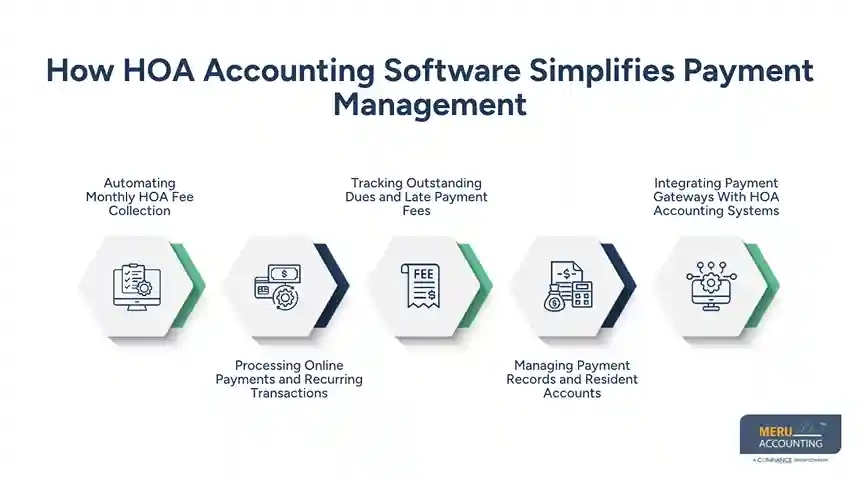
Managing Payment Records and Resident Accounts
Each property account can contain assessment charges, payment dates, credits, and outstanding amounts. This gives accounting teams a clear record when residents ask about their balances.
Integrating Payment Gateways With HOA Accounting Systems
Payment gateway integration can transfer transaction details into the accounting system. Teams should review processing fees, settlement dates, refund records, and failed payments before closing the monthly accounts.
Essential HOA Accounting Software Features for Payment Reconciliation
Payment reconciliation means comparing recorded transactions with bank and payment processor statements. HOA accounting services rely on accurate reconciliation to confirm that collections and expenses match actual financial activity.
Automated Bank Reconciliation
The software can import bank transactions and compare them with entries in the general ledger. Unmatched payments, bank fees, and missing entries can then be reviewed before the books are closed.
Real-Time Transaction Tracking and Reporting
Transaction dashboards show recorded payments, pending settlements, expenses, and outstanding balances. However, reporting accuracy depends on timely data entry and regular checks by the accounting team.
Accounts Receivable and Payable Management
Accounts receivable records the dues and assessments owed by homeowners. Accounts payable tracks vendor invoices, approved expenses, payment dates, and unpaid bills.
General Ledger and Fund Accounting
A general ledger records all financial activity under suitable account categories. Fund accounting separates operating funds, reserve funds, and other restricted balances so that each amount can be tracked correctly.
Payment Exception and Duplicate Entry Checks
Some systems flag repeated transaction references, failed payments, and entries that do not match bank records. These alerts allow accounting staff to review possible errors before they affect financial reports.
Outsourced HOA Accounting Services: Managing Payments and Reconciliation
Outsourced HOA accounting services involve assigning selected financial tasks to an external accounting team. This arrangement can be useful for associations that do not have a full-time accounting department or need additional help with monthly financial work.
What Do Outsourced HOA Accounting Services Include?
These services may include dues tracking, accounts payable, accounts receivable, bank reconciliation, general ledger maintenance, and monthly financial reports. The exact scope depends on the agreement between the association and the accounting provider.
How Outsourced HOA Accounting Services Handle Resident Payments
The accounting team records resident payments, reviews unpaid balances, and matches collections with property accounts. Payment exceptions and disputed charges can be reported to the association for further review.
Bank Reconciliation and Monthly Financial Closing
The team compares bank statements with ledger entries and checks deposits, withdrawals, fees, and outstanding transactions. Once the records are reviewed, monthly financial statements can be prepared for board review.
Accounts Payable, Receivable, and Vendor Management
Accounting staff record vendor bills, track payment approvals, and maintain outstanding balances. They also review resident dues and prepare reports showing overdue assessments.
Financial Reporting and Budget Preparation
Monthly reports can include income, expenses, cash balances, reserve fund details, and budget comparisons. These records give board members a clear basis for financial decisions.
Reserve Fund Tracking and Financial Reviews
Reserve funds are set aside for major repairs and future replacement costs. Accounting teams can track deposits, approved withdrawals, and available balances to keep reserve records separate from routine operating expenses.
Internal Controls and Payment Approval
A clear approval process reduces the risk of unauthorized spending and payment errors. Associations should define who can approve invoices, access bank accounts, change payment details, and review financial reports.
Software Access and Data Security
An outsourcing arrangement should define user access, data ownership, record retention, and security procedures. Multi-factor authentication and role-based permissions can reduce the risk of unauthorized access to financial information.
Common HOA Accounting Challenges and How Software Solutions Address Them
Even with accounting software, associations may face payment delays, missing records, and reconciliation errors. HOA accounting services combine system-based checks with regular financial reviews to address these issues.
Delayed HOA Fee Payments and Unpaid Assessments
Late dues can affect the association’s cash position and its ability to pay routine expenses. Automated reminders, overdue balance reports, and payment history records make collection follow-ups more organized.
Bank Statement and Ledger Discrepancies
A bank deposit may not match the amount recorded in the accounting system due to processing fees, timing differences, or entry errors. Reconciliation reports help identify these differences for review.
Manual Reconciliation and Duplicate Transactions
Manual data entry can lead to repeated entries and missed transactions. Bank feeds and transaction matching reduce repetitive work, while accounting staff should still review unusual or unmatched items.
Inaccurate Financial Reporting
Incorrect account categories, missing invoices, and unrecorded payments can affect financial statements. Monthly ledger reviews and account checks help maintain accurate reports.
Managing Multiple HOA Funds and Reserve Accounts
Associations may maintain operating funds, reserve funds, and special assessment accounts. Fund accounting records each balance separately and provides a clearer view of available money.
Delayed Vendor Payments and Approval Errors
Missing invoices or unclear approval steps can delay payments to contractors. Digital invoice records and approval tracking make it easier to check bills before payment is released.
Choose Meru Accounting for Professional HOA Accounting Services
Managing HOA finances requires accurate bookkeeping, timely payment records, and regular bank reconciliation. At Meru Accounting, we provide professional accounting and bookkeeping services covering accounts payable, accounts receivable, financial reporting, payroll, and general ledger maintenance.
For homeowners associations seeking outsourced HOA accounting services, our accounting processes cover resident payment records, community expenses, vendor accounts, and regular financial reviews. These processes give HOA boards a clearer view of collected dues, outstanding balances, operating costs, and available funds.
Our accounting professionals work with established accounting platforms, including QuickBooks and Xero, to maintain financial records and prepare reports. The accounting process can be aligned with an association’s transaction volume, reporting requirements, payment records, and financial procedures.
Our HOA accounting services can include:
- Recording homeowner dues, assessments, and payment transactions.
- Managing vendor invoices, accounts payable, and payment records.
- Reviewing bank statements and reconciling financial transactions.
- Maintaining general ledger entries and separate fund records.
- Preparing monthly financial statements and budget comparison reports.
We place importance on accurate financial records, consistent bookkeeping, and clear reporting. HOA boards retain control over payment authorization, spending approvals, and financial decisions, while our defined accounting processes maintain an organized record of association finances.
Our Expert Perspective
In HOA accounting, recording a payment is only one part of the financial process. The payment must also match the right homeowner account, appear in the correct ledger, and agree with the bank statement.
For example, if an association receives 100 resident payments in one month, even a small number of unmatched entries can affect its outstanding dues report. A regular reconciliation process can identify these differences before the monthly financial statements are shared with the board.
Our view is that software and accounting expertise should work together. Software can record and match transactions, but accounting professionals must review exceptions, check account balances, and confirm that financial reports reflect the actual records.
Key Takeaways
- HOA accounting services cover resident dues, assessments, vendor bills, expense tracking, and financial reporting.
- HOA accounting software can automate recurring dues, record online payments, and track overdue balances.
- Bank reconciliation compares accounting entries with actual bank transactions.
- Fund accounting keeps operating and reserve balances separate.
- Outsourced HOA accounting services can include bookkeeping, payment tracking, bank reconciliation, and monthly reporting.
- Payment approvals and bank access should remain subject to clear internal controls.
- Regular financial reviews give HOA boards a better view of cash balances, expenses, and outstanding dues.
FAQs
HOA accounting services record homeowner dues, track incoming payments, match bank transactions, and identify differences in financial records.
HOA accounting software should include online payment processing, recurring dues collection, automated bank reconciliation, resident account tracking, and financial reporting.
Outsourced HOA accounting services track overdue balances, maintain payment records, prepare collection reports, and record late fees based on HOA policies.
The best approach is to compare recorded homeowner payments with bank deposits, review unmatched transactions, and correct ledger differences every month.
Yes, HOA accounting software with fund accounting features can track operating funds, reserve balances, special assessments, and expenses separately.
optional anymore
on running the business