Payroll Compliance is a key responsibility for businesses across different industries. Employers must calculate wages, manage overtime, withhold taxes, maintain employee records and submit payroll reports within the required deadlines.
However, these tasks become more complex when businesses operate across multiple locations or employ workers under different pay structures. A mistake in wage calculations, employee classification or tax deductions can lead to penalties, employee disputes and additional costs.
Each industry has its own payroll needs. Healthcare organizations manage shift-based pay, construction firms deal with project-based wages, and restaurants must track employee tips. Manual payroll processes can make these tasks harder to manage, particularly when labor laws and tax rules change.
Payroll automation brings these tasks into a structured process by recording employee data, applying approved pay rules, and tracking important deadlines. For businesses with limited internal resources, outsourced payroll compliance services can also provide access to professional payroll management and tax reporting.
What You Will Learn From This Blog
- Why payroll rules and reporting duties differ across industries.
- Common payroll errors that create legal and financial risks.
- Industry-specific payroll requirements for six major sectors.
- How automation manages wage calculations, deductions and tax reports.
- What to consider when choosing payroll software.
- When outsourced payroll compliance services are a practical option.
- Best practices for maintaining accurate payroll records.
Why Payroll Compliance Requirements Differ by Industry
Payroll rules are not the same for every business. Employee roles, work hours, pay structures and statutory duties affect how employers calculate and report wages.
Industry-Specific Wage and Hour Regulations
Different industries have different work patterns and wage rules. Hospitals may operate around the clock, while retail stores often use weekend and holiday shifts. Employers must apply the correct minimum wage, overtime and working-hour rules based on federal, state and local laws.
Employee Classification and Overtime Requirements
Businesses must identify employees as exempt or non-exempt under applicable wage laws. For example, an IT company may employ salaried professionals and hourly support staff. Incorrect classification can lead to unpaid overtime claims and other legal costs.
Tax Withholding and Payroll Reporting Obligations
Employers must calculate federal income tax withholding, Social Security, Medicare and applicable unemployment taxes. They must also meet the correct deposit and reporting schedules. Payroll Compliance requires accurate employee tax details and timely submission of the required returns.
Industry-Specific Benefits and Statutory Deductions
Healthcare firms may offer insurance and retirement benefits, while construction companies may have project-related fringe benefit duties. Employers must record eligible benefits, employee contributions and approved deductions correctly to avoid incorrect net pay.
Common Payroll Compliance Challenges Across Industries
Even businesses with established payroll teams can face errors when employee data, pay rules and reporting tasks are not reviewed regularly.
Inaccurate Employee and Payroll Records
Incorrect employee details, outdated tax forms and missing work-hour records can affect payroll results. Businesses need a clear process to update personal details, pay rates and employment status whenever a change occurs.
Miscalculated Wages, Overtime and Deductions
Manual calculations can lead to incorrect overtime payments, missed allowances and wrong deductions. For example, an hourly employee working extra shifts may receive less than the amount required under applicable overtime rules.
Missed Tax Filing and Payroll Submission Deadlines
Late tax deposits and incomplete returns can result in interest or penalties. Businesses with several pay groups may find it difficult to track each filing date without a central payroll calendar.
Changing Labor Laws and Regulatory Requirements
Federal, state and local rules may change minimum wages, tax rates and employee rights. Employers must review these changes before applying new rates or updating their payroll process.
Errors in Employee Classification and Benefits Administration
Treating a worker as an independent contractor when the law considers them an employee can create tax and wage risks. Incorrect benefit deductions can also affect employee pay and company reporting.
Industry-Wise Payroll Compliance Requirements
The nature of employee work has a direct effect on payroll calculations, wage records and reporting duties. The following industries show why a single payroll process may not suit every business.
Payroll Compliance in Healthcare and Medical Organizations
Hospitals and medical centers employ doctors, nurses, technicians and administrative staff under different pay structures. Night shifts, weekend duties, overtime and on-call hours must be recorded correctly. Payroll teams must also review benefit deductions, paid leave and employee status before each pay cycle.
Construction and Contracting Companies
Construction firms often employ workers across several job sites, with different wage rates and work schedules. Federal projects may also fall under Davis-Bacon requirements, which set prevailing wage and fringe benefit standards for covered work. Employers must retain accurate hours, job classifications and wage records for each project.
Retail and E-Commerce Businesses
Retail businesses often manage part-time workers, seasonal staff, commissions and changing work schedules. Payroll teams must track hours across locations and calculate overtime based on the applicable workweek. E-commerce firms with warehouse staff must also record shift hours and approved deductions accurately.
Manufacturing and Industrial Companies
Manufacturing firms may run multiple shifts, employ hourly workers and pay shift allowances or production-based incentives. Payroll teams must account for regular hours, overtime and eligible bonuses. Accurate attendance data is important when employees move between departments or production sites.
Hospitality and Restaurant Businesses
Hotels and restaurants often employ servers, cooks, housekeeping staff and front-desk teams. Employers must record tips, service charges, regular wages and overtime correctly. Under federal rules, tip credits and tip pooling have specific conditions, while state laws may set higher standards.
Payroll Compliance in Professional Services and IT Companies
IT and professional service firms may employ salaried staff, hourly consultants and remote workers. Payroll teams must review employee classification, work locations, tax withholding and benefit deductions. Remote employees working in different states may create additional registration and payroll tax duties.
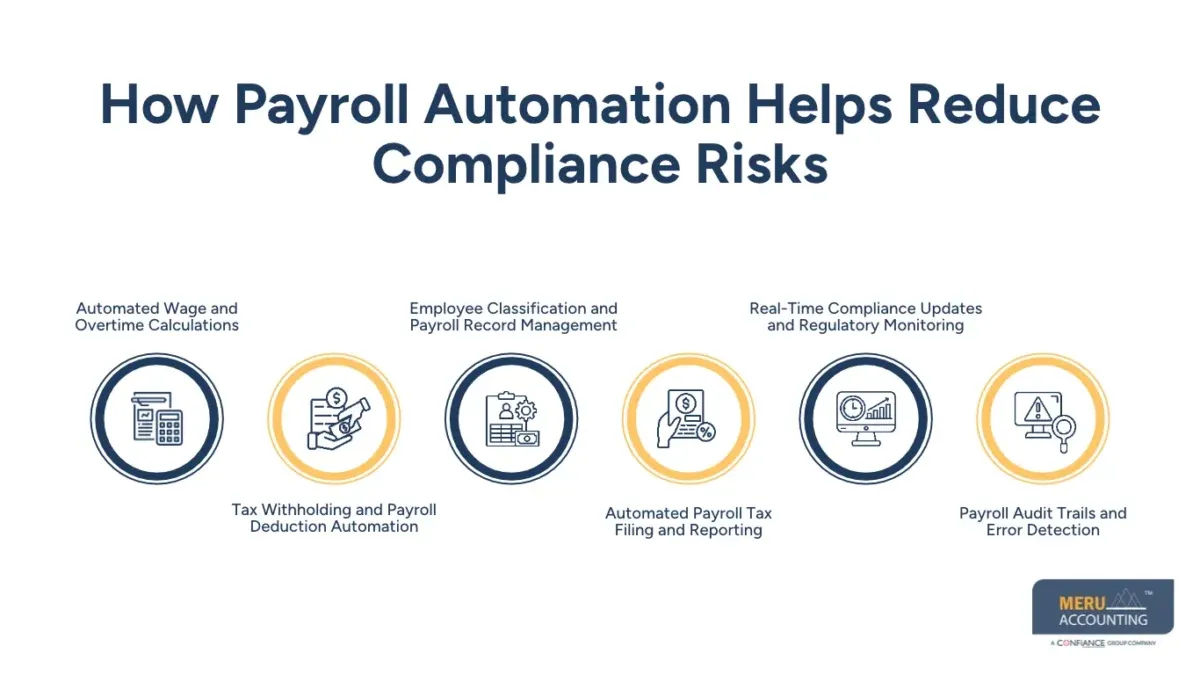
How Payroll Automation Helps Reduce Compliance Risks
Automation reduces the amount of manual work involved in payroll processing. It also creates a clear record of calculations, approvals and tax submissions.
Automated Wage and Overtime Calculations
Payroll software can import approved attendance data and calculate regular wages, overtime and shift payments. For example, a hospital can use recorded shift hours to calculate extra pay without entering each figure by hand. Payroll teams must still review the rules and source data.
Tax Withholding and Payroll Deduction Automation
Software can apply approved tax settings and deduction rules during each pay cycle. It can calculate federal withholding and other applicable payroll taxes based on employee records. Regular review remains necessary when tax details or employee benefits change.
Employee Classification and Payroll Record Management
A central employee database keeps pay rates, job titles, tax forms and employment status in one place. Access controls can limit who changes sensitive details. However, software cannot decide every legal classification question without proper review.
Automated Payroll Tax Filing and Reporting
Payroll systems can prepare tax reports, calculate deposits and track filing dates. Some platforms also offer tax filing and payment services. Employers should confirm who is responsible for submission and check that each payment and return has been accepted.
Real-Time Compliance Updates and Regulatory Monitoring
Some payroll platforms provide alerts about tax rate changes, filing dates and new payroll rules. These alerts give payroll teams time to review required changes before the next pay cycle. Businesses should confirm that the software covers every state and locality where they employ workers.
Payroll Audit Trails and Error Detection
Automated systems record payroll changes, approvals and payment details. Exception reports can flag unusual hours, duplicate entries or unexpected deductions. These records make it easier to trace errors and provide supporting documents during an audit.
optional anymore
on running the business
How to Choose Payroll Automation Software for Industry-Specific Compliance
The right software should match the company’s workforce, pay structure and reporting needs rather than offering only basic wage calculations.
Industry-Specific Payroll and Tax Requirements
Check whether the software can manage shift pay, tips, commissions, project wages and other industry-related pay rules. It should also cover the federal, state and local tax duties that apply to the business.
Integration With HR, Accounting and Time-Tracking Systems
Choose software that can exchange approved employee and attendance data with HR and accounting systems. This reduces repeated data entry and keeps payroll expenses aligned with financial records.
Employee Data Security and Access Controls
Payroll systems store tax details, bank information and employee records. Look for encryption, role-based access, secure login controls and clear data backup policies to reduce the risk of unauthorized access.
Payroll Reporting and Audit Documentation
The platform should provide wage reports, tax summaries, deduction records and payment confirmations. These documents allow payroll teams to check results and retain evidence of completed tasks.
Multi-State and Multi-Location Payroll Capabilities
Businesses with employees in several states need software that can manage different tax rates, local rules and filing duties. Check whether the platform can track employee work locations and handle changes when staff moves.
When Should Businesses Consider Outsourced Payroll Compliance Services?
Managing payroll in-house may become difficult when a company grows, hires workers in several states, or faces complex wage rules. In such cases, outsourced payroll compliance services can reduce the administrative burden and provide access to experienced payroll professionals.
Managing Complex Industry-Specific Payroll Regulations
Businesses with shift workers, tipped employees or project-based staff may need regular payroll reviews. An outsourcing provider can manage agreed payroll tasks based on the company’s industry and applicable rules.
Reducing Internal Payroll Errors and Administrative Workloads
Small payroll teams often spend time checking attendance, entering data and preparing reports. Outsourcing routine tasks can give internal staff more time for employee management and financial review.
Handling Multi-State Payroll Tax Requirements
Employers with staff in different states may face separate tax registration, withholding and filing duties. Outsourced payroll compliance services can manage assigned state-level payroll tasks and track relevant filing dates.
Maintaining Accurate Payroll Records and Compliance Reports
A payroll provider can maintain wage reports, tax records and payment details as part of the agreed service. Businesses should confirm record access, retention periods and responsibility for correcting errors.
Evaluating the Cost of Outsourced Payroll Compliance Services
Compare provider fees with the cost of internal payroll staff, software, training and error correction. The right choice depends on workforce size, payroll frequency, reporting needs and the level of service included in the agreement.
Best Practices for Maintaining Payroll Compliance Through Automation
Technology alone cannot prevent every payroll error. Businesses need clear review steps and regular checks to keep payroll data accurate.
Conduct Regular Payroll Audits
Review wage calculations, tax deposits, deductions and employee payments at set intervals. Compare payroll reports with attendance and accounting records to find differences before they become larger issues.
Verify Employee Information and Classification
Check employee tax forms, job titles, pay rates and work locations before processing payroll. Review worker classification when job duties or working arrangements change.
Review Automated Payroll Calculations
Do not approve payroll only because the software has completed its calculations. Check unusual overtime, large deductions, bonus payments and changes in net pay before releasing wages.
Monitor Regulatory Changes and Filing Deadlines
Assign responsibility for tracking tax updates and labor law changes. Review official government notices and update payroll settings only after confirming which rules apply to the business.
Maintain Secure Payroll Documentation
Keep payroll registers, tax returns, deposit confirmations and employee records in a secure system. For US federal employment tax records, the IRS generally requires retention for at least four years, subject to applicable record rules.
Why Choose Meru Accounting for Payroll Compliance Services
At Meru Accounting, we provide payroll services that cover employee wage calculations, overtime payments, tax deductions, payroll processing and employee payment records. Our payroll processes account for employee work hours, pay rates, bonuses and applicable deductions to maintain accurate payroll data and reduce calculation errors.
Our outsourced payroll compliance services include regular payroll processing, employee payment records, payroll tax reporting and payroll documentation. We maintain organized payroll records and review wage calculations, deductions and payment details to reduce discrepancies during each pay cycle.
We also connect payroll records with accounting and financial reporting to maintain accurate salary expenses, payroll liabilities and related business transactions. With our accounting and payroll expertise, we provide businesses with structured payroll management and reliable financial records across recurring pay cycles.
Our Expert Perspective
Payroll errors often begin before the actual pay run. Missing attendance data, outdated employee details and unclear approval rules can affect the final payment even when the software works correctly. In our view, businesses should first establish accurate employee records and clear payroll procedures before automating routine tasks. Automation can then reduce repeated work, flag unusual entries and create a record of each payroll action. Final approval and legal review should remain part of the process.
Key Takeaways
- Payroll Compliance requirements vary by industry because employee roles, work hours and pay structures are different.
- Healthcare, construction, retail, manufacturing, hospitality and IT businesses must review their own wage and reporting duties.
- Payroll automation can reduce manual errors in wage calculations, tax withholding and payroll reports.
- Accurate employee records and correct worker classification remain essential for legal payroll processing.
- Businesses operating across several states should review local tax and wage rules before each payroll cycle.
- Outsourced payroll compliance services can reduce internal workloads when payroll needs become difficult to manage.
- Even when businesses use automated payroll software, regular audits, secure records, and human review remain necessary.
FAQs
Payroll Compliance requirements in the US vary by industry and include minimum wage, overtime, tax withholding, employee classification and payroll recordkeeping.
Payroll automation reduces compliance risks by calculating wages, tracking overtime, applying tax deductions, monitoring filing deadlines and maintaining payroll records.
Healthcare businesses manage shift pay, construction firms track project wages and prevailing wage rules, while retail businesses handle overtime, seasonal workers and employee tips.
Businesses can manage multi-state Payroll Compliance by applying the correct state and local tax rules, tracking employee work locations and meeting separate filing deadlines.
Outsourced payroll compliance services manage payroll calculations, tax reporting, employee records and filing schedules to reduce manual errors and administrative workloads.
optional anymore
on running the business