
Choosing an accountant for real estate investors is an important step when rental income, loan costs, tax bills, repairs, and other cash needs must stay under control. Real estate can bring strong returns, but poor records can make cash gaps hard to spot. A skilled accounting professional can maintain clear records of income and expenses, giving property owners a better view of where funds are generated and spent.
A qualified professional should offer more than basic bookkeeping services. The right specialist should understand rental income, property expenses, debt obligations, repairs, tax requirements, and owner contributions, while ensuring these areas are recorded and reported accurately.
Accurate records can also give a clear view of real estate investment cash flow before a new deal is made.
The main aim is to find an accountant for real estate investors who can give useful reports, keep records in order, and offer sound input when cash choices need to be made.
What You Will Learn From This Blog
- how an accountant for real estate investors can track income and costs
- which accounting tasks matter most for rental property owners
- how to assess a real estate investment accountant before hiring one
- which reports can give a clear view of real estate investment cash flow
- how clean books can aid property and cash planning
- what questions to ask before you choose an accounting firm
- how good accounting can aid better property choices
- why property-level records matter as an investment portfolio grows
How A Real Estate Investment Accountant Supports Cash Flow Management
A real estate investment accountant can organize rental income by property, unit, and owner account, while also recording repairs, taxes, insurance, loan costs, and other expenses in the right categories. Clear financial records make it easier to assess which properties generate steady income and which may need further review.
Cash flow can also be affected by the timing of large payments. A real estate investment accountant can track upcoming tax bills, loan payments, insurance costs, and repair expenses against expected rental income, giving investors a clearer view of future cash needs.
Accurate tracking of owner contributions and withdrawals is also important. Keeping these amounts separate from rental income and property expenses gives investors a more reliable picture of each property’s financial performance.
Key Accounting Services Real Estate Investors Should Look For
Property-level bookkeeping
Each property should have a clear record of rent and costs. An accountant for real estate investors can set up a bookkeeping system that lets the owner review each asset without mixing all property data together.
Income and expense tracking
Rent, late fees, management fees, repair costs, and other items need clear records. A real estate investment accountant can place each item in the right account for a better cash and tax view.
Tax record support
Rental tax work can involve many types of income and costs. A real estate investment accountant can keep the records needed for tax work and flag items that may need a tax review.
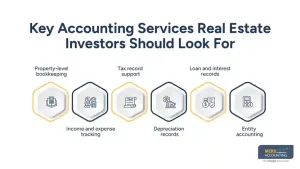
Depreciation records
Depreciation can reduce taxable income, but it is not a direct cash expense. A qualified accounting professional can record depreciation separately from cash transactions, providing a clearer view of both tax position and actual cash flow.
Loan and interest records
Principal and interest have different roles in financial reports. Clear loan records can show the cash paid to lenders while keeping the right costs in the right place.
Entity accounting
Some investors own more than one property through separate firms or entities. An accountant for real estate investors should know how to keep each entity’s income, costs, assets, and owner funds apart.
How To Choose An Accountant For Real Estate Investors
Check real estate experience
Ask if the accountant has worked with rental owners, property firms, or real estate investors. Real estate books have needs that may not appear in a basic small business account.
Ask about reports
Find out which reports you will get each month. A strong accountant for real estate investors should be able to explain how the reports will show rent, costs, debt, cash, and property results.
Review tax knowledge
Ask about the type of tax work the accountant handles for rental owners. Tax rules can vary based on the property, owner, use, entity type, and deal, so the accountant should know when a tax matter needs a deeper review.
Test their process
Ask how bank data, bills, receipts, loan records, and property costs will be checked. A clear work process can reduce errors and make month-end review easier.
Ask about communication
A good real estate investment accountant should be easy to reach when a cash or property question comes up. Ask who will handle your work and how often you will get updates.
Compare value, not just price
The lowest fee may not be the best choice if the books are weak or reports arrive late. Compare service scope, experience, report quality, response time, and tax knowledge before making a choice.
optional anymore
on running the business
How An Accountant Can Improve Real Estate Investment Cash Flow
Finds rising costs
Costs can rise slowly and go unseen when no one reviews the books. A real estate investment accountant can compare past months and point out large shifts in repairs, fees, utilities, or other costs.
Sets cash plans
A good cash plan should account for rent, loan payments, tax bills, repairs, and planned work. An accountant for real estate investors can use past records to give a better base for such plans.
Shows weak assets
A property may earn rent yet leave little cash after debt and operating costs. A real estate investment accountant can show the net cash result so the owner can review the asset with better data.
Plans for large bills
Roof work, tax bills, insurance, and loan costs can create major cash needs. A clear cash report can show when funds may be tight and where more cash may need to be kept.
Reviews rent trends
Rent changes can affect the cash result of a property. An accountant for real estate investors can track rent trends along with costs to give a fuller view of the asset.
Checks cash after debt
Profit and available cash are not always the same. A qualified accounting professional can show the funds remaining after loan payments and other key cash expenses, giving property owners a clearer basis for future cash planning.
Cash Flow Reports Every Real Estate Investor Should Review
Cash flow statement
A cash flow statement shows money that comes in and money that goes out. Reviewing it each month can show if the property has enough cash to meet near-term needs.
Profit and loss report
A profit and loss report shows income and costs for a set period. An accountant for real estate investors can use it with cash data so owners do not rely on profit alone.
Balance sheet
A balance sheet shows assets, debts, and owner value at a set date. It can give useful context when an investor is checking debt levels or planning a new purchase.
Rent report
A rent report can show rent due, rent paid, unpaid amounts, and changes over time. Such data can point to weak collection or a fall in rental income.
Expense report
An expense report can show where property cash is going. A real estate investment accountant can sort costs by type and property so high-cost areas are easier to spot.
Debt report
A debt report can show outstanding loan balances, payment amounts, and interest costs in a clear format. Reviewing these figures can help investors understand how borrowing affects available cash and assess future financing needs.
How Professional Accounting Helps Investors Make Better Property Decisions
Compares property results
Not all assets bring the same cash results. An accountant for real estate investors can place income and costs side by side so an owner can compare properties on the same basis.
Checks new deal numbers
Before buying a property, investors can review expected rent, debt, repairs, tax, and other costs. A real estate investment accountant can check the figures used in the plan and flag gaps in the numbers.
Reviews repair choices
A large repair may affect cash for months. Good records can show past repair spend and give the owner better data when judging future work.
Guides hold or sell reviews
An asset may look strong due to rising value but may give poor cash flow. An accountant for real estate investors can provide the financial data needed for a wider hold or sell review.
Tracks return goals
Investors may have set goals for cash yield, debt paydown, or net income. Regular reports can show whether each asset is moving toward those goals.
Aids portfolio planning
As the number of properties grows, mixed records can make decisions harder. A real estate investment accountant can give a single view of income, costs, debt, and cash across the portfolio.
Benefits Of Working With An Accountant For Real Estate Investors
Better record control
Clean books make it easier to know what was earned and what was spent. An accountant for real estate investors can bring more order to records that may span many properties and accounts.
More useful cash data
A real estate investment accountant can turn raw bank and bill data into reports that are easier to read. Clear data can aid both short-term cash plans and long-term property reviews.
Fewer missed items
Real estate owners deal with many small costs. Regular account review can make it less likely that key income or expense items remain unrecorded.
Better tax readiness
Well-kept books give a stronger base for tax work. An accountant for real estate investors can keep key records ready for review and tax filing.
More time for investors
Bookkeeping can take many hours when rent, bills, loan data, and property costs are handled by the owner. Outsourcing the work can give investors more time for property work and deal review.
Stronger financial control
A clear view of real estate investment cash flow can aid better control of funds. Owners can see where cash is used and plan for future needs with more care.
Why Real Estate Investors Choose Meru Accounting?
Real estate-focused accounting
Meru Accounting provides accounting services designed to meet the needs of property owners and real estate investors. Our approach focuses on clear records for rental income, property costs, loans, and other key transactions.
Clear property-level records
Meru Accounting can organize financial data by property so investors can see how each asset performs. Separate records can make it easier to review income, costs, and real estate investment cash flow.
Regular financial reports
Timely reports from an accountant for real estate investors can give investors a better view of their current financial position. Meru Accounting can provide useful accounting data that can aid monthly cash reviews and property-level checks.
Tax-ready bookkeeping
Real estate records often include rent, repairs, insurance, loan costs, property taxes, and other items. Our accounting process can keep these transactions well organized for easier tax review and filing.
Support as portfolios grow
A growing property portfolio can create more accounts, transactions, entities, and financial records. Meru Accounting can provide accounting support that can adapt as investors add new properties or change their investment structure.
Practical financial support
Our goal is to give investors financial information that is easy to understand and useful for day-to-day decisions. With the right records in place, investors can spend less time sorting books and more time reviewing their property plans.
Our Expert Insight
Our expert view is that the right accountant for real estate investors should do more than record transactions or prepare year-end accounts. A skilled real estate investment accountant should understand property income, costs, loans, taxes, and real estate investment cash flow, while giving clear reports that investors can use to make sound choices. Before hiring, investors should check the accountant’s real estate experience, reporting process, tax knowledge, communication, fees, and ability to manage a growing portfolio. Simple and clear financial records can give investors a better view of each property and provide a stronger base for future investment plans.
Key Takeaways
- choose an accountant for real estate investors with direct real estate experience
- ask for clear monthly reports that show income, costs, debt, and cash
- keep each property and entity properly tracked
- review real estate investment cash flow on a regular basis
- keep loan, repair, tax, and depreciation records clear
- compare the full service value before choosing an accountant
- use financial data when reviewing new deals, existing assets, and portfolio growth
- work with a real estate investment accountant who can explain financial data in simple terms
FAQs
Choose an accountant for real estate investors with experience in rental property accounting, tax records, property-level bookkeeping, cash flow reports, and real estate investment needs.
A real estate investor should look for an accountant who can track rental income, property costs, loans, repairs, taxes, depreciation, and real estate investment cash flow.
The cost varies based on the number of properties, accounting tasks, tax needs, reporting needs, and level of service required by the investor.
Yes, an accountant for real estate investors can review income, expenses, debt payments, and property results to show where cash is being lost or where better planning may be needed.
A real estate investment accountant can keep property records clear, track key costs, prepare useful reports, and give investors better financial data for property and cash flow decisions.
optional anymore
on running the business