
Property businesses handle large amounts of financial data every month. Rent collection, vendor payments, maintenance bills, taxes, and tenant deposits all require proper tracking. Due to these responsibilities, many firms now depend on accountants for property to maintain accurate records and organized financial reports.
Proper accounting allows property managers to monitor business performance, maintain compliance, and reduce financial confusion. Financial reporting is one of the most important parts of property operations. Incorrect reports may lead to tax penalties, cash shortages, missed payments, and disputes with property owners.
Professional accountants maintain clear records that reflect the true financial condition of each property. This is why many businesses rely on experienced accounting professionals for long-term financial management.
What You Will Learn From This Blog
- Why is accurate reporting important in property businesses
- How rental income and expenses are tracked properly
- Common financial issues faced by property managers
- The role of accountants in financial operations
- Why budgeting and cash planning matter
- How accounting professionals manage tax compliance
- Mistakes property companies make without accounting experts
- How Meru Accounting assists property management firms
Why Accurate Financial Reporting Matters in Property Management Accounting
Clear Financial Records Create Better Control
Property companies manage different types of income and expenses every day. Without proper reporting, businesses may lose track of rental payments, maintenance charges, or pending invoices. Well-prepared financial statements help managers evaluate the performance and profitability of each property unit.
Monthly Reporting Keeps Operations Organized
Monthly financial reports prepared by accountants for property show income, operational expenses, unpaid dues, and repair costs clearly.
In property management accounting, regular reporting keeps financial records updated and easy to review. Structured accounting reports simplify audits, tax filing, and financial reviews.
Accurate Reports Assist Property Owners
Property owners expect detailed financial updates that clearly reflect the performance of their investments. Clear statements give owners details about occupancy rates, maintenance spending, and rental income. Reliable reporting also builds trust between owners and property managers.
Financial Errors Can Affect Business Stability
Incorrect entries or missing transactions may create financial problems later. Small mistakes can grow into large reporting issues if they are ignored for several months. Professional accounting review reduces such risks and maintains financial accuracy.
Regulatory Compliance Depends On Proper Records
Government regulations require businesses to maintain correct financial records. Companies that fail to maintain proper reports may face penalties, audits, or legal issues. Experienced accountants for property make sure reports meet financial and tax requirements.
How Property Management Accounting Helps Track Rental Income and Expenses
Rental Income Must Be Recorded Properly
Every property may have different lease terms, rent dates, and payment methods. Recording rental income accurately is necessary to avoid missing payments or incorrect balances. Proper systems also track late fees and security deposits.
Expense Tracking Prevents Overspending
Property operations include repair costs, utility bills, staff wages, insurance payments, and vendor charges. In property management accounting, expense tracking allows businesses to monitor operational spending closely.
Separate Property Accounts Improve Clarity
Many companies manage multiple buildings or rental units at the same time. Separate accounting records for each property make reporting easier, especially when managed by experienced property accountants.
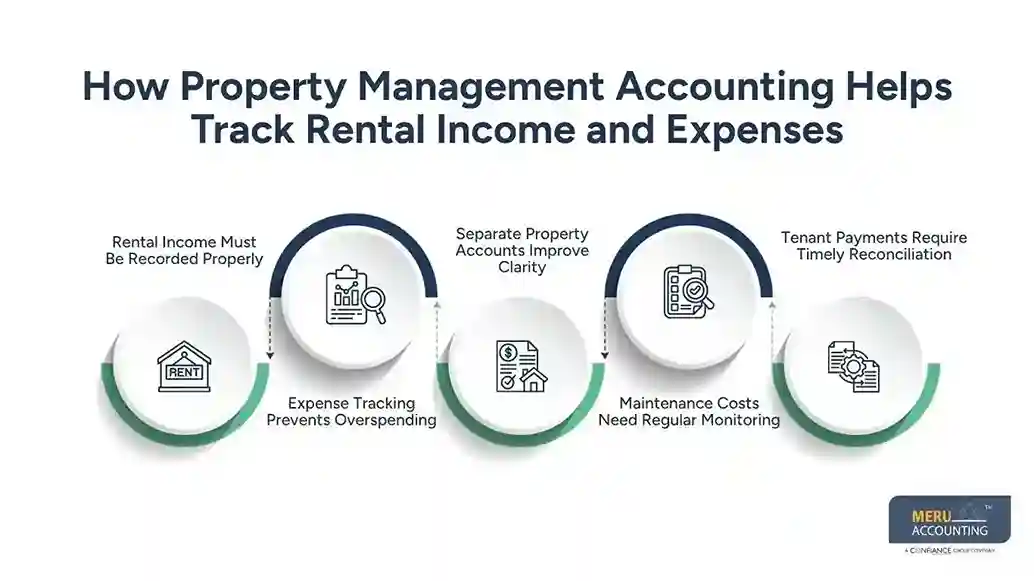
Maintenance Costs Need Regular Monitoring
Maintenance expenses can increase quickly if they are not tracked properly. Financial records help companies identify repeated repair costs and plan future maintenance budgets.
Tenant Payments Require Timely Reconciliation
Tenant payments must match lease agreements and bank deposits. Reconciliation ensures that financial records match actual transactions. This process also reduces accounting errors.
Key Financial Challenges Faced by Property Management Companies
Managing Multiple Financial Transactions
Property businesses process many transactions every month. Rent collection, repairs, taxes, and vendor invoices create large amounts of financial data.
Managing these transactions without accountants for property often becomes difficult for growing property businesses.
Delayed Rent Payments Affect Cash Flow
Late tenant payments create pressure on operational budgets. Companies may struggle to pay vendors or maintenance expenses if rental income is delayed. Financial planning reduces such problems.
Tax Regulations Continue To Change
Tax rules related to property operations may change over time. Property managers often find it difficult to remain updated with compliance requirements. Professional accountants reduce this burden by managing tax reporting.
Financial Reporting Errors Create Owner Disputes
Incorrect financial statements may create disagreements between owners and management companies. Clear and accurate reports prepared by accountants for property reduce such conflicts and improve communication with property owners.
Lack of Financial Planning Creates Business Risk
Some businesses focus only on daily operations and ignore long-term financial planning. Without proper forecasting, companies may struggle during market slowdowns or periods of low occupancy.
The Role of Accountants For Property In Managing Financial Operations
Daily Transaction Recording Maintains Accuracy
Professional accountants record daily income and expenses systematically. This creates organized financial records that are easy to review during audits or tax filing.
Bank Reconciliation Reduces Reporting Errors
Bank reconciliation compares company records with bank statements. This process identifies missing entries, duplicate transactions, or accounting mistakes before they become larger issues.
Financial Reporting Assists Decision Making
Detailed reports prepared by accountants for property provide management teams with accurate information about profitability and operational costs. Business decisions become more reliable when financial data is correct.
Accountants Monitor Outstanding Payments
Late rent payments and unpaid invoices affect cash flow. Experienced accountants for property track outstanding balances and prepare financial follow-up reports for management teams.
Record Management Supports Compliance
Property companies must maintain invoices, receipts, contracts, and tax records properly. Organized documentation reduces stress during audits and financial reviews.
Professional Oversight Reduces Financial Risk
Accounting professionals review financial data regularly to identify unusual transactions or reporting errors. This process reduces the risk of fraud and financial mismanagement.
Importance of Budgeting and Cash Flow Management in Property Management Accounting
Budget Planning Controls Operational Costs
Budgets prepared with the support of accountants for property allow businesses to estimate maintenance expenses, staffing costs, and administrative spending effectively. Financial planning prevents unnecessary overspending.
Cash Flow Monitoring Maintains Stability
Cash flow management tracks incoming rent payments and outgoing expenses. In property management accounting, proper cash flow planning keeps daily operations stable.
Emergency Funds Reduce Financial Pressure
Unexpected repairs or vacant units may affect monthly income. Reserve funds provide financial security during difficult periods.
Expense Forecasting Supports Business Growth
Financial forecasting allows companies to prepare for future expenses. Long-term planning also supports property expansion and investment decisions.
Budget Reviews Improve Financial Management
Regular budget reviews help management teams compare actual spending with planned expenses. This process highlights areas where costs can be controlled more effectively and ensures that resources are being used wisely across all business operations.
Tax Compliance and Regulatory Support Provided by Accountants For Property
Tax Filing Requires Accurate Financial Records
Property companies must file taxes based on accurate income and expense records maintained by accountants for property. Incorrect reporting may result in penalties or delayed filings.
Accountants Track Deductible Expenses
Certain operational costs may qualify for tax deductions. Professional accountants identify eligible deductions and maintain proper documentation for tax reporting.
Payroll Compliance Needs Careful Monitoring
Companies with employees must manage payroll taxes and salary records correctly. Accounting professionals ensure payroll reporting meets legal requirements.
Financial Audits Become Easier With Organized Records
Audits require detailed financial documents and transaction records. Proper accounting systems make audits faster and less stressful.
Regulatory Reporting Protects Business Reputation
Compliance failures may damage business reputation and investor trust. Experienced accountants for property maintain records that follow legal and financial standards.
Common Mistakes Property Management Companies Make Without Professional Accounting Support
Mixing Personal And Business Expenses
Some business owners fail to separate company expenses from personal spending. This creates confusion during tax filing and financial reviews.
Missing Financial Deadlines
Late tax filing, unpaid invoices, or delayed reporting may lead to penalties. Organized accounting systems reduce missed deadlines.
Poor Record Keeping Creates Confusion
Missing receipts, incomplete invoices, and disorganized records create accounting difficulties. Proper documentation is necessary for accurate reporting.
Ignoring Cash Flow Problems
Some businesses focus only on profit without reviewing cash flow properly, which accountants for property regularly monitor. Positive revenue does not always mean strong financial stability.
Incorrect Expense Categorization
Improper expense classification affects reporting accuracy and tax preparation. Financial professionals ensure expenses are recorded correctly.
Why Property Management Companies Choose Meru Accounting
Experienced Property Accounting Team
At Meru Accounting, we understand the financial needs of property management businesses. Our team works with companies managing residential, commercial, and rental properties across different regions.
Accurate Financial Reporting Services
At Meru Accounting, our accountants for property prepare organized financial reports that provide clear visibility into rental income, operational expenses, and property performance. Accurate records allow businesses to make informed financial decisions.
Tax And Compliance Assistance
Our experts manage tax filing, compliance reporting, and financial documentation according to industry requirements. This reduces reporting stress for property management firms.
Cloud-Based Accounting Solutions
We work with modern accounting platforms that allow clients to access financial records securely from any location. Digital systems also improve reporting accuracy and document management.
Customized Accounting Support
Every property business has different financial requirements. Our services are designed according to the size, structure, and operational needs of each client.
Our Expert Perspective
At Meru Accounting, we believe accurate financial reporting is essential for stable property management operations. Based on our experience, companies with organized accounting systems usually maintain better cash flow control, fewer reporting errors, and stronger transparency with property owners and investors.
Key Takeaways
- Accurate reporting keeps property finances organized
- Proper accounting reduces financial mistakes
- Rental income and expenses require regular monitoring
- Budget planning supported by accountants for property improves financial stability
- Tax compliance depends on organized financial records
- Cash flow management is important for daily operations
- Professional accounting reduces reporting stress
- Property owners expect transparent financial reports
- Regular financial reviews reduce business risk
- Meru Accounting provides accounting support for property management companies
FAQs
Accountants for property manage financial records, prepare reports, track expenses, handle taxes, and maintain accurate property accounts.
Property management accounting keeps rental income, expenses, and financial reports organized for better business management.
Monthly financial report reviews help companies monitor income, expenses, and cash flow regularly.
Yes, experienced accountants reduce mistakes by maintaining organized records and reviewing transactions carefully.
Outsourcing gives access to professional accounting support without maintaining a large in-house accounting team.