
A dental practice generates a lot of financial data every day—patient payments, insurance claims, payroll, lab fees, supply purchases, equipment costs, and more. Looking at these transactions one by one does not tell you much. What matters is how they come together to show the financial health of your practice. Accounting for dental practices helps turn that day-to-day activity into clear financial records you can use.
When your books are accurate and up to date, you can see what your practice earns, what it spends, what patients or insurers still owe, and how much profit remains. This gives you a better base for decisions and shows why accounting for dental practices matters beyond tax time.
In this blog, we’ll cover the key financial tasks every dentist should understand, from tracking income and expenses to managing accounts receivable and cash flow. We’ll also look at common accounting challenges and when dental accounting services may be worth considering.
What You Will Learn From This Blog
This guide will help you understand:
- The role of accounting for dental practices
- Key financial tasks you should track each month
- How to record income and practice costs
- Ways to manage accounts receivable and cash flow
- Common accounting issues that can hurt a practice
- When professional dental accounting services may be useful
- Financial reports that can help you make better business choices
What Is Accounting for Dental Practices?
Accounting for dental practices is the process of recording, sorting, checking, and reviewing the financial activity of a dental office. It covers more than simply entering bills or checking a bank balance. A dental practice may receive money from patients, dental plans, and other sources. At the same time, it may pay for staff, rent, supplies, lab work, equipment, software, insurance, and other costs.
Good accounting brings these records into one clear view. It can show how much the practice earns, where money is spent, what is still owed, and how much cash is on hand. It also helps you keep business and personal funds apart. This is vital for clean records and easier tax work.
Your accounting records should also match your bank and credit card activity. Regular checks can help find missed costs, duplicate entries, and other errors before they affect your reports.
For a dentist, the goal is not just to have balanced books. The goal is to have useful financial data that can guide daily and long-term choices.
Key Financial Tasks in Accounting for Dental Practices
A dental practice has many moving parts, which makes accounting for dental practices an ongoing task. A set monthly process can help you stay on top of them.
Record Practice Income
Track all income when it enters your accounting system. This may include patient payments, insurance payments, and other practice income.
Make sure payments are tied to the right source and account. This helps you compare your books with your practice system and bank records.
Track Operating Costs
Record costs such as:
- Payroll and staff benefits
- Dental supplies
- Dental lab fees
- Office rent
- Utilities
- Business insurance
- Software and service fees
- Repairs and upkeep
- Marketing costs
- Professional fees
Use clear account names so you can see where money goes each month.
Reconcile Bank and Card Accounts
Bank and card reconciliation is a key part of good bookkeeping. It means checking your accounting records against your bank and card statements.
Do this on a regular basis. It can help catch errors, missing entries, bank fees, and charges that were not entered in the books.
Review Payroll
Payroll can be one of the highest costs in a dental office. Review wages, taxes, benefits, and other staff costs on a set schedule.
Good payroll records also help keep tax records clean and make it easier to review labor costs over time.
Review Financial Reports
Do not wait until tax time to look at your numbers. Review key reports each month.
A profit and loss statement can show income and costs. A balance sheet can show assets, debts, and equity. Cash flow data can help you see how money moves in and out of the practice.
How to Track Dental Practice Income and Expenses
A clean system is one of the most important parts of accounting for dental practices. Each transaction should be placed in the right account and tied to the right source.
Dental income can be more complex than it may seem. A patient may pay part of a bill while an insurance plan pays the rest. Adjustments, write-offs, refunds, and other items may also affect the final amount.
Keep these items clear in your records. Do not treat every deposit as simple practice revenue without checking what it includes.
Expenses need the same level of care. A dental office may buy small supplies each week while making larger purchases, such as chairs, imaging tools, or other equipment.
Keep invoices, receipts, and payment records in a system that is easy to find. This can save time when you review your books or prepare for tax work.
It is also wise to set clear rules for business and personal spending. Personal costs should not be mixed with practice costs. A separate business bank account and business card can make this much easier.
Your accounting system should also match the way your practice works. Use account groups that let you track major costs and income streams without making the chart of accounts too hard to manage.
Accounts Receivable and Cash Flow Management for Dentists
A practice can show strong revenue and still have cash flow issues. The reason is simple: money earned is not always money collected.
Accounts receivable is the money owed to your practice. This may include unpaid patient balances and amounts due from dental plans.
Keep an eye on your accounts receivable aging report. It can show how much is owed and how long each balance has been open.
Older balances may need more attention. A clear process for claims, patient bills, payment follow-up, and account review can help reduce delays.
Cash flow is another area that accounting for dental practices should help you monitor. You need enough cash to cover payroll, rent, supplies, taxes, loan payments, and other bills.
A basic cash flow review can help you spot times when cash may be tight. This is useful when planning large purchases or deciding when to add staff.
Do not judge practice health by revenue alone. Look at collections, outstanding balances, costs, and cash on hand together.
optional anymore
on running the business
Common Accounting Challenges Dental Practices Face
Dental practices can face several issues when accounting for dental practices is delayed or poorly managed.
Delayed Bookkeeping
When books are left for months, it becomes harder to spot errors or know how the practice is doing. Monthly bookkeeping gives you a more useful view.
Poor Tracking of Insurance Payments
Insurance payments and adjustments can make dental records harder to follow. If these items are not tracked well, your reports may not show the full picture.
Unreconciled Accounts
Bank and card accounts that are not checked can hide errors. Regular reconciliation helps keep records accurate.
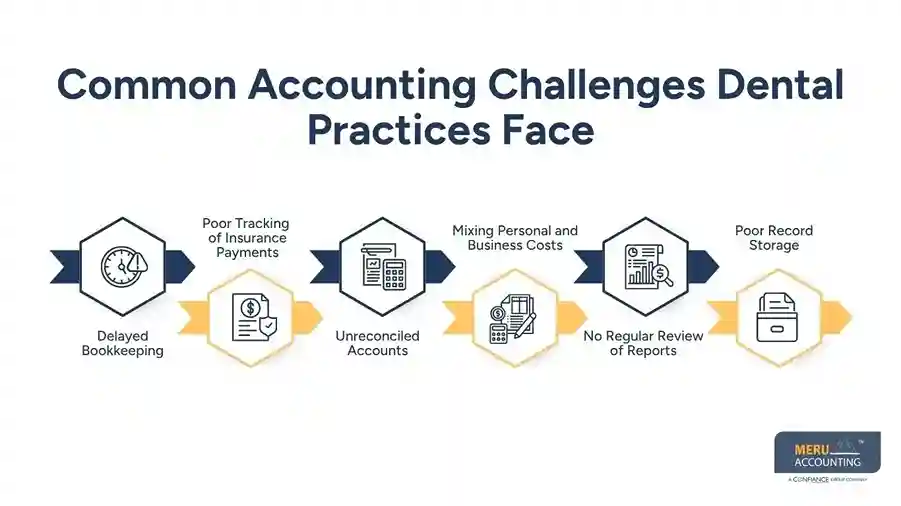
Mixing Personal and Business Costs
Using practice accounts for personal costs can make records less clear. It can also add work during tax and financial reviews.
No Regular Review of Reports
Some owners only look at financial reports when a tax return is due. That can leave useful data on the table. Monthly reviews can help you spot cost changes and cash issues sooner.
Poor Record Storage
Missing receipts or invoices can slow down tax work and financial reviews. Digital records with a clear filing system can make this task easier.
How Meru Accounting Supports Dental Practices
Accounting for dental practices is important, but it can take time away from running your office and caring for patients. Meru Accounting provides dental accounting services designed to help dental practice owners keep financial records clear, current, and ready for review.
Our dental accounting services include:
- Monthly bookkeeping and account reconciliation
- Income and expense tracking
- Accounts receivable support
- Payroll record support
- Financial statement preparation
- Clean records for tax preparation
- Review of key practice financial data
The right level of support depends on the size of your practice, your staff, your accounting system, and your needs. A good process should fit the way your office works rather than add more work to your day.
Meru Accounting can help organize your financial records, so you have a clearer view of practice performance and can spend more time on your patients and business.
Our Expert Insight
One of the most useful numbers for a dental practice is not revenue alone. Dentists should look at production, collections, and adjusted production together. A practice can show strong production while collections lag because of unpaid patient balances, insurance delays, or adjustments. Looking at these figures side by side gives a more useful view of how well the practice is turning services into collected income.
We also recommend watching changes in cost per dollar collected. If supply, lab, payroll, or other costs rise faster than collections, the practice may be working harder without seeing the same gain in profit. Monthly financial reports can help spot this trend early and give the practice owner time to review pricing, staffing, spending, or collection processes.
Good accounting for dental practices should support decisions, not just record past transactions. When your books are current and your reports are set up to show the numbers that matter to your practice, you can act on financial changes before they become larger problems.
Key Takeaways
- Accounting for dental practices is a key part of running a financially healthy dental office.
- Track practice income, expenses, payroll, and other financial activity on a regular basis.
- Reconcile bank and card accounts to help keep records accurate.
- Keep patient and insurance payments clear in your accounting records.
- Review accounts receivable to find old or unpaid balances.
- Use monthly financial reports to track practice performance.
- Keep personal and business expenses separate.
- Good records can make tax work and financial planning easier.
- Professional accounting support can save time and improve financial visibility.
FAQs
One common mistake is focusing on production or revenue without comparing it with collections, adjustments, and operating costs. This can make a practice look more profitable than it really is.
Monthly reviews are a good practice for most dental offices. They let you spot changes in collections, payroll, supply costs, profit, and cash flow while there is still time to act.
Production is the value of dental services provided, while collections are the amounts actually received from patients and insurance plans. The gap between them can point to issues with claims, adjustments, or outstanding balances.
Accurate financial records can show current cash flow, operating costs, debt, and available funds. A dentist can use this information to assess whether a large equipment purchase fits the practice’s budget.
Outsourcing may make sense when bookkeeping takes time away from practice management, financial records fall behind, or the owner needs more detailed financial reporting. Dental accounting services can provide ongoing support without requiring an in-house accounting team.
optional anymore
on running the business