
The hospitality industry relies on daily transactions, guest services, employee management, supplier payments, and accurate financial planning. Hotels, resorts, and restaurants need proper records to track income, expenses, and business performance. Effective accounting for hospitality businesses allows owners to maintain financial clarity, manage cash flow, control costs, and make better decisions for long-term stability.
While guest satisfaction remains a priority, strong financial management supported by hospitality accounting services is equally important for long-term business success.
Accurate records help hospitality businesses identify profitable areas, reduce unnecessary spending, handle tax requirements, and plan future growth. A well-organized accounting process creates better control over finances and allows businesses to build a stronger foundation.
What You Will Learn From This Blog
- Why financial accuracy is important for hospitality businesses
- Common accounting challenges faced by hotels and restaurants
- Important accounting practices for long-term business growth
- How cost control can protect hospitality profits
- Why professional accounting support can benefit hospitality companies
Why Accurate Financial Management Matters for Hospitality Success
Better Control Over Daily Operations
Hospitality businesses can track expenses like supplies, wages, and services through proper financial records, which is a key part of accounting for hospitality businesses. Accurate tracking reduces waste and allows owners to manage daily operations effectively.
Clear View Of Business Performance
Financial reports created through proper accounting for hospitality practices show revenue, expenses, and profits to present a clear picture of business results. Regular reviews allow management teams to identify issues and make informed decisions.
Strong Cash Flow Planning
Accurate records maintained through hospitality accounting services allow hospitality businesses to monitor cash movement and prepare for future financial needs. Proper planning maintains payment schedules and manages seasonal changes efficiently.
Better Budget Management
A clear budget helps businesses compare planned spending with actual expenses. Strong budget control reduces unnecessary costs and creates better financial discipline.
Easier Tax Preparation
Organized financial records make tax reporting and compliance tasks simpler for businesses. Proper documentation provides accurate information during audits or financial reviews.
Better Long-Term Planning
Reliable financial data helps owners plan expansions, investments, and new services. Strong financial planning creates a stable base for future business growth.
Key Challenges in Hospitality Accounting and Financial Operations
Managing Different Revenue Sources
Hospitality businesses earn income from rooms, food services, events, and other guest facilities. Separate tracking of each revenue source becomes difficult without proper financial records, making accounting for hospitality essential for maintaining accurate revenue visibility.
Controlling High Operating Expenses
Hospitality businesses manage costs like supplies, wages, maintenance, and service charges regularly, and effective financial management helps keep these expenses under control. Careful expense monitoring helps reduce unnecessary spending and protects profitability.
Handling Seasonal Business Changes
Hospitality demand changes throughout the year, with busy and slow periods affecting revenue flow. Proper financial planning allows businesses to manage resources during seasonal changes.
Managing Inventory Records
Hotels and restaurants handle food items, cleaning products, and guest supplies every day. Accurate inventory tracking through effective hospitality accounting services reduces shortages, waste, and unnecessary purchasing costs.
Lack Of Regular Financial Reviews
Some hospitality businesses review financial records only during tax periods or yearly checks, which can lead to gaps in financial visibility, highlighting the need for consistent accounting for hospitality management practices.
Regular financial reviews help identify issues early and provide better overall business clarity.
Essential Accounting Practices for Long-Term Hospitality Growth
Maintain Complete Financial Records
Accurate records are the base of good financial management and form an important part of effective accounting for hospitality operations. Every transaction, payment, and expense should be recorded properly.
Complete records create reliable reports that allow owners to understand business activity.
Track Income And Expenses
Monitoring income and expenses regularly helps businesses notice changes in performance. Owners can compare current results with previous periods and identify important trends.
This makes financial decisions more practical and informed.
Prepare Financial Reports
Monthly and yearly reports prepared through professional hospitality accounting services give businesses useful information about revenue, costs, and profits.
These reports allow management teams to review results and plan future actions with better clarity.
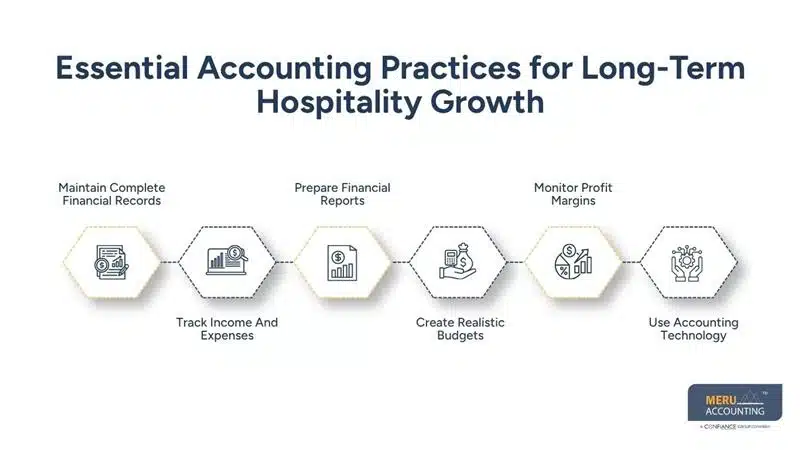
Create Realistic Budgets
A realistic budget helps businesses manage spending based on expected income. It allows owners to prepare for regular costs and unexpected expenses. Budget planning also creates better discipline in daily financial decisions.
Monitor Profit Margins
Profit margins show how much income remains after covering expenses. Reviewing margins helps businesses understand whether their pricing and cost decisions are working. This is a key outcome of effective accounting for hospitality operations.
Use Accounting Technology
Modern accounting tools combined with hospitality accounting services can organize records, reduce manual work, and create reports faster. They allow businesses to maintain better financial visibility.
How Cost Control Strategies Improve Hospitality Profit Margins
Review Food And Supply Costs
Food and supply expenses directly affect hospitality profits and require regular monitoring. Proper cost checks reduce waste, control purchases, and maintain service quality.
Reduce Unnecessary Expenses
Regular review of operational spending through proper accounting for hospitality processes helps businesses find areas where costs can be reduced. Careful expense planning creates stronger financial control and stability.
Improve Inventory Planning
Accurate inventory planning helps businesses maintain the right stock levels and avoid waste. Tracking usage patterns reduces losses and keeps daily operations organized.
Analyze Department Results
Department-wise financial reviews show revenue performance and increasing cost areas. Clear analysis helps owners allocate resources toward more valuable activities.
Prepare For Demand Changes
Hospitality businesses experience changes in customer demand during different seasons. Financial preparation allows better resource management during busy and slow periods.
Why Outsourced Hospitality Accounting Services Help Businesses Scale
Access To Skilled Financial Experts
Hospitality businesses often need expert support for reporting, bookkeeping, tax records, and financial reviews, making hospitality accounting services valuable for maintaining organized financial operations.
Outsourced professionals provide financial knowledge while allowing owners to focus on guest services.
Reduce Administrative Work
Managing accounts requires time and regular attention from internal teams. Outsourcing routine tasks reduces workload and keeps financial processes properly managed, improving overall accounting for hospitality operations efficiency.
Better Financial Reports
Professional accounting teams offering hospitality accounting services prepare clear reports covering revenue, expenses, and business results. Accurate reports provide better visibility for planning and future decisions.
Support During Growth Periods
Growing hospitality businesses face higher financial needs with new locations and added expenses. Outsourced accounting support creates stronger systems for managing business expansion.
Improved Record Organization
Poor financial records can create issues during audits, tax periods, and financial reviews. Organized records ensure important documents remain accurate and easy to access through proper accounting for hospitality practices.
How Accounting Supports Better Resource Allocation in the Hospitality Industry
Better Staff Planning
Labor costs are a major expense in hospitality businesses and require careful management. Financial reports created through accounting for hospitality systems help owners plan staffing needs and avoid unnecessary workforce costs.
Smarter Purchasing Decisions
Accounting records provide details about supplier costs and spending patterns. Better purchasing decisions reduce excess spending and create stronger supply control.
Efficient Use Of Business Assets
Hotels and restaurants manage assets such as equipment, furniture, and property resources. Tracking asset costs through hospitality accounting services allows owners to plan maintenance and manage resources more effectively.
Better Department Management
Financial information shows the performance of different departments within a hospitality business. Clear department analysis allows owners to focus resources on valuable areas.
Planning Future Investments
Financial reports created through hospitality accounting services provide useful insights before investing in renovations, technology, or services. Better planning reduces risks and creates stronger investment decisions.
Why Choose Meru Accounting For Hospitality Accounting Support
Industry-Focused Accounting Knowledge
Hospitality businesses have unique financial needs, including revenue tracking, expense management, payroll records, and cost analysis.
At Meru Accounting, we specialize in accounting for hospitality businesses with tailored financial strategies that match industry needs.
Reliable Bookkeeping Services
Accurate bookkeeping creates the base for better financial decisions and organized records.
At Meru Accounting, we manage transaction entries, reconciliations, and reporting tasks through reliable services built on accounting for hospitality operations for smoother financial management.
Support For Financial Planning
Growing hospitality companies need clear financial information before making important business decisions. We provide reports that help owners review performance, manage budgets, and prepare for future needs.
Technology-Based Accounting Solutions
Modern accounting systems allow businesses to manage financial data with greater accuracy and speed. Meru Accounting assists with software setup, data management, and reporting processes for better control.
Focus On Accuracy And Compliance
Financial errors can create challenges during reviews, tax periods, and business planning. We maintain accurate records and follow proper accounting practices to improve financial confidence.
Our Expert Perspective
Our expert team believes that proper financial management is essential for hospitality businesses to maintain stability and growth. Experience across different industries shows that accurate records, regular reviews, and cost control are key elements of effective accounting for hospitality operations.
These practices allow businesses to understand performance, manage expenses, and make better decisions. A strong accounting process helps hospitality companies balance quality service with financial planning, creating a reliable foundation for long-term success.
Key Takeaways
- Accurate financial records are important for hospitality business success.
- Proper accounting for hospitality businesses allows owners to understand income, expenses, and profits clearly.
- Cost control plays an important role in protecting business margins.
- Regular financial reports create better planning opportunities.
- Inventory, payroll, and expense tracking should be managed carefully.
- Professional accounting support can reduce workload and improve financial organization.
- A strong financial system allows hospitality businesses to prepare for future growth.
FAQs
Accounting for hospitality businesses is important because it helps track income, expenses, profits, and financial activities. It allows owners to make better decisions and manage their operations properly.
Common challenges include managing high expenses, tracking multiple income sources, controlling inventory, handling payroll, and preparing accurate financial reports.
Yes, small hotels can benefit from outsourced accounting services because they get access to professional financial support without needing a large internal accounting team.
Cost control reduces unnecessary spending and allows businesses to use their money more wisely. Better expense management can protect profit margins.
Hospitality businesses should review financial reports regularly, such as monthly, to understand performance, identify issues, and plan future actions.