
Accounting for insurance agencies has become more important as insurance providers adopt subscription-based plans. Many customers now prefer monthly or yearly premium payments instead of paying the full amount at once.
This approach creates steady recurring income for agencies while giving customers greater payment flexibility. Managing recurring payments, renewals, refunds, commissions, and revenue recognition requires an organized accounting process to keep financial records accurate.
Many agencies rely on insurance agency accounting software to automate recurring billing, track payments, generate financial reports, and maintain customer records in one system.
Combined with professional accounting practices, the right software reduces billing errors, keeps books up to date, and provides clear financial insights. As subscription-based insurance continues to grow, accounting for insurance agencies plays a key role in maintaining compliance, supporting business growth, and delivering better financial control.
What You Will Learn From This Blog
- Understand how subscription-based insurance models work.
- Learn why recurring revenue needs specialized accounting.
- Discover how accounting software manages recurring billing.
- Know the common revenue recognition challenges.
- Learn best practices for subscription accounting.
- Find out which financial reports agencies should review.
- Understand the business benefits of organized accounting.
- See how Meru Accounting can simplify subscription accounting.
What is a Subscription-Based Insurance Model?
Subscription-based insurance allows customers to pay fixed premiums at regular intervals instead of making a large annual payment. Monthly, quarterly, or annual subscriptions make insurance products more affordable and flexible.
As more insurers adopt this model, accounting for insurance agencies becomes more detailed because every recurring payment must be recorded correctly.
Monthly Payment Structure
Customers pay a fixed amount every month based on their selected coverage. Regular billing creates predictable cash flow while making insurance easier to afford for many customers.
Flexible Policy Changes
Subscribers can upgrade, downgrade, or cancel their plans based on changing needs. Every policy adjustment changes billing amounts, making accounting for insurance agencies essential for maintaining accurate financial records.
Automatic Renewals
Many subscription policies renew automatically unless customers cancel. Recurring renewals require proper revenue tracking and payment verification to avoid billing mistakes.
Customer-Centered Pricing
Insurance providers can introduce different subscription plans for individuals, families, or businesses. Different pricing levels increase billing complexity, making organized accounting even more valuable.
Predictable Business Income
Recurring subscriptions generate consistent revenue instead of depending only on new policy sales. This stable income allows agencies to prepare budgets, manage expenses, and forecast future performance more accurately.
Why Accounting for Insurance Agencies Is Essential for Subscription Revenue
Subscription income arrives throughout the year instead of in one payment. Every transaction must be recorded accurately to keep financial statements reliable. Accounting for insurance agencies creates an organized process for managing this recurring revenue.
Recording Recurring Income
Monthly subscription payments arrive continuously. Proper recording prevents missing transactions and keeps financial reports complete.
Managing Customer Payments
Customers may pay through cards, bank transfers, or automatic debit systems. Recording every payment correctly reduces billing disputes and improves customer trust.
Tracking Policy Renewals
Policy renewals increase recurring revenue but require careful monitoring. Accounting for insurance agencies ensures renewals appear correctly in financial records without duplication.
Handling Refunds and Cancellations
Customers sometimes cancel subscriptions before the policy period ends. Refund calculations should remain accurate to maintain reliable financial statements.
Maintaining Regulatory Compliance
Insurance businesses must follow accounting standards and local tax rules. Organized accounting creates reliable financial records for audits and compliance requirements.
Supporting Business Decisions
Accurate financial information allows owners to review profitability and recurring income trends. Reliable reports make future planning easier and reduce financial uncertainty.
How Insurance Agency Accounting Software Simplifies Recurring Billing
Managing hundreds or thousands of recurring payments manually takes time and increases the chance of mistakes. Modern insurance agency accounting software automates many billing tasks while keeping accounting records updated.
Automatic Invoice Generation
The software creates recurring invoices based on customer billing schedules. Automatic billing reduces manual work and keeps payment cycles consistent.
Payment Tracking
Each payment is matched with the correct customer account. This feature allows agencies to identify overdue payments quickly.
Revenue Recording
Every completed payment updates accounting records automatically. When paired with accounting for insurance agencies, this process keeps financial data accurate and current.
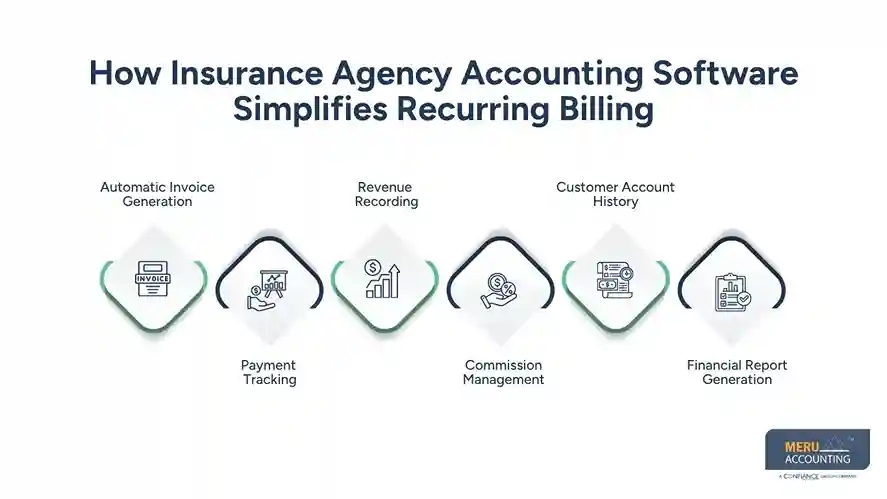
Commission Management
Insurance agencies often pay commissions to agents after successful policy sales. Good insurance agency accounting software records commissions separately from subscription income, making profitability easier to analyze.
Customer Account History
The software stores payment records, invoices, refunds, and policy changes in one location. Complete customer histories make account reviews faster and improve service quality.
Financial Report Generation
Modern insurance agency accounting software creates reports for revenue, expenses, cash flow, and recurring income. These reports provide agency owners with timely financial information for better planning.
optional anymore
on running the business
Revenue Recognition Challenges in Subscription-Based Insurance
Subscription insurance creates steady income, but recording that income correctly is not always simple. Accounting for insurance agencies ensures revenue is recognized during the correct accounting period rather than only when payments are received.
Recognizing Earned Revenue
Revenue should be recognized according to the agency’s revenue recognition policy and applicable accounting standards. Commission income and service fees should be recorded when earned, while customer premiums collected on behalf of insurers should be accounted for appropriately to maintain accurate financial records.
Managing Deferred Revenue
Payments received before the coverage period should first be recorded as deferred revenue. Accounting for insurance agencies keeps these balances organized until the income becomes earned.
Recording Mid-Term Policy Changes
Customers may change coverage during an active subscription. Each policy update changes premium amounts, requiring accurate adjustments in accounting records.
Processing Refunds Correctly
Policy cancellations may require partial refunds based on the remaining coverage period. Proper accounting prevents overstating revenue and keeps reports reliable.
Following Accounting Standards
Insurance agencies should follow applicable accounting guidance such as IFRS 15 or ASC 606 when recognizing subscription revenue. Consistent accounting practices create financial statements that investors, lenders, and regulators can trust.
Monitoring Multiple Revenue Sources
Many agencies earn income from subscriptions, commissions, policy fees, and service charges. Accounting for insurance agencies separates each income source for better financial reporting and analysis.
Managing Commission Revenue and Premium Reconciliations
Insurance agencies handle more than recurring customer payments. They also manage commission income, carrier settlements, premium collections, and policy-related transactions. Accounting for insurance agencies ensures these financial activities are recorded accurately, reconciled regularly, and reported correctly.
Commission Receivable Tracking
Agencies earn commissions from insurance carriers after eligible policies are issued or renewed. Recording commission receivables accurately helps monitor expected income and improves cash flow planning.
Premium Reconciliation
Customer premium payments should be reconciled with carrier statements and agency records. Regular reconciliations identify missing payments, duplicate transactions, and posting errors before they affect financial reports.
Carrier Payable Management
Premiums collected on behalf of insurance carriers should be tracked separately from agency income. Proper accounting helps agencies settle carrier balances accurately and on time.
Producer Commission Management
Producer commissions should be calculated based on policy sales, renewals, or agreed compensation structures. Organized accounting ensures accurate commission payments while simplifying financial reporting.
Client Premium Handling
Customer premium payments require careful recording from receipt through settlement. Maintaining complete payment records improves transparency, reduces billing disputes, and supports regulatory compliance.
Trust and Fiduciary Account Monitoring
When agencies maintain trust or fiduciary accounts for client funds, those balances should be monitored and reconciled separately from operating accounts. Proper oversight helps protect client funds and supports compliance with applicable regulatory requirements.
Best Practices for Managing Subscription-Based Insurance Accounting
Accounting for insurance agencies requires a structured process to keep recurring billing, reporting, and compliance under control. These practices reduce errors and make financial management easier.
Automate Recurring Transactions
Using insurance agency accounting software reduces manual data entry and records recurring payments consistently. Automation also lowers the chance of duplicate or missed transactions.
Reconcile Accounts Regularly
Bank accounts and payment gateway records should match accounting records every month. Regular reconciliation identifies missing payments and corrects differences quickly.
Review Customer Accounts
Subscription accounts should be reviewed for unpaid invoices, duplicate payments, or policy changes. Routine reviews maintain accurate customer balances.
Maintain Complete Documentation
Every invoice, payment receipt, refund, and policy amendment should be stored securely. Complete records simplify audits and answer customer questions faster.
Monitor Deferred Revenue
In accounting for insurance agencies, deferred revenue should be reviewed at the end of each reporting period. This process ensures earned revenue is transferred correctly into income.
Use Reliable Accounting Systems
Modern insurance agency accounting software combines billing, accounting, reporting, and customer information in one system. Centralized data creates better financial visibility across the business.
Financial Reports Every Insurance Agency Should Monitor
Financial reports provide a clear picture of subscription performance. Accounting for insurance agencies creates reports that allow owners to monitor growth and make informed decisions.
Profit and Loss Statement
This report shows total revenue, operating costs, commissions, and net profit. Owners can evaluate whether subscription plans remain profitable.
Cash Flow Statement
Cash flow reports track incoming subscription payments and outgoing business expenses. Healthy cash flow allows agencies to meet operating costs on time.
Balance Sheet
The balance sheet summarizes assets, liabilities, equity, and deferred revenue. Regular reviews help agencies understand their financial position.
Accounts Receivable Report
Outstanding customer balances appear in this report. Agencies can follow up on overdue payments before they affect cash flow.
Subscription Revenue Report
Recurring income should be reviewed by policy type, customer group, or billing cycle. These reports reveal revenue trends and customer retention patterns.
Commission Report
Commission reports separate agent earnings from subscription income. Insurance agency accounting software generates these reports automatically, reducing manual calculations.
Benefits of Using Accounting for Insurance Agencies for Subscription Businesses
Subscription insurance creates continuous financial activity. Accounting for insurance agencies provides the structure needed to manage that activity efficiently.
Faster Policy Reconciliation
Accurate reconciliation of policy transactions, customer payments, and carrier records helps agencies identify discrepancies quickly. Faster reconciliations improve financial accuracy and support timely month-end closing.
Better Commission Tracking
Proper accounting records commissions by agent, carrier, and policy type. Clear commission tracking improves payment accuracy and provides better insight into agency profitability.
Improved Renewal Visibility
Organized accounting helps monitor upcoming policy renewals and recurring billing cycles. Better renewal visibility supports customer retention and more predictable recurring income.
Reduced Billing Disputes
Accurate invoicing, payment tracking, and customer account records minimize billing errors. Reliable financial records also help resolve customer inquiries more efficiently.
Easier Producer Commission Management
Tracking producer commissions separately from agency revenue simplifies payroll calculations and commission reporting. This process ensures producers are compensated accurately and on time.
Better Recurring Revenue Forecasting
Consistent tracking of subscription payments, renewals, and cancellations provides reliable revenue forecasts. Better financial forecasting helps agencies plan budgets, ma
Why Choose Meru Accounting for Insurance Agency Accounting?
Managing recurring insurance revenue requires industry knowledge, accurate accounting processes, and dependable reporting. Meru Accounting provides specialized accounting for insurance agencies services designed to simplify subscription-based business models.
Our customized solutions help insurance agencies maintain accurate records, improve financial visibility, and stay focused on business growth.
Industry-Focused Experience
Our team understands recurring billing, commission accounting, policy renewals, deferred revenue, and insurance reporting requirements. We apply proven accounting practices that address the day-to-day financial needs of insurance agencies.
Cloud-Based Accounting Solutions
We work with leading insurance agency accounting software platforms to maintain secure, real-time financial records. Cloud-based systems also provide easy access to financial information from anywhere while keeping data protected.
Accurate Financial Reporting
Our accountants prepare reliable financial statements, management reports, and cash flow reports that support informed decisions. Timely reporting gives agency owners a clear view of financial performance and recurring revenue trends.
Regulatory Compliance
We maintain accounting records that align with applicable accounting standards and tax requirements. Our compliance-focused approach reduces reporting errors and keeps your financial records audit-ready.
Scalable Accounting Services
Whether your agency manages hundreds or thousands of subscribers, our accounting for insurance agencies services grow with your business needs. As your client base expands, our processes adapt without affecting reporting accuracy or efficiency.
Dedicated Professional Support
Our experienced accounting team provides timely guidance, consistent reporting, and dependable financial management so you can focus on serving policyholders. We work as an extension of your team, providing ongoing support whenever your business requires it.
Our Expert Perspective
Subscription-based insurance creates recurring financial activity that requires disciplined accounting for insurance agencies and consistent financial oversight.
An insurance agency managing 1,500 active monthly policies may process thousands of recurring customer payments, commission transactions, policy renewals, cancellations, endorsements, and refunds every month. Without standardized accounting procedures, these transactions can lead to reconciliation errors, delayed reporting, and inaccurate financial records.
Based on our experience working with businesses that manage recurring billing, agencies achieve stronger financial control when billing, reconciliations, commission tracking, revenue recording, and reporting follow one organized process.
Combining experienced accounting professionals with dependable insurance agency accounting software helps maintain accurate records, timely financial reports, and better decision-making that supports sustainable business growth.
Key Takeaways
- Subscription insurance requires accurate recurring revenue accounting.
- Accounting for insurance agencies keeps financial records organized.
- Revenue should be recognized during the correct accounting period.
- Deferred revenue needs continuous monitoring.
- Regular reconciliations reduce accounting errors.
- Financial reports guide better business decisions.
- Insurance agency accounting software automates recurring billing and reporting.
- Organized accounting strengthens compliance and customer confidence.
- Professional accounting services reduce financial risk.
FAQs
Accounting for insurance agencies records recurring premiums, renewals, refunds, and earned revenue accurately.
Using proper accounting methods and insurance agency accounting software keeps recurring payments organized and accurate.
Insurance agency accounting software automates recurring billing, tracks payments, and generates financial reports.
Common challenges include revenue recognition, deferred revenue tracking, policy changes, refunds, and recurring billing.
Accounting for insurance agencies creates accurate financial reports that support compliance, planning, and business growth.
optional anymore
on running the business