
Retail stores handle many financial transactions every day, including sales, inventory purchases, supplier payments, customer refunds, payroll, and operating expenses. Proper accounting for retail business keeps these records accurate and organized, making it easier to track profit, manage cash flow, control costs, and meet tax obligations.
As a retail business grows, managing inventory and sales across multiple channels becomes more complex. A structured accounting process, combined with reliable retail accounting software, simplifies recordkeeping, tracks inventory, generates financial reports, and provides valuable insights for better business decisions.
This blog explains the key aspects of accounting for retail businesses, common accounting methods, and practical practices that help retail store owners maintain accurate financial records.
What You Will Learn From This Blog
- Understand the basics of accounting for retail businesses.
- Learn why accurate accounting matters for retail stores.
- Explore the main financial records every retailer should maintain.
- Understand how retail accounting differs from other industries.
- Compare common accounting methods used by retailers.
- Learn how retail accounting software simplifies financial management.
- Identify common accounting mistakes and ways to avoid them.
- Explore best practices for maintaining reliable financial records.
- Learn how modern accounting tools simplify daily retail operations.
Understanding Accounting for Retail Business
Meaning of Retail Accounting
Accounting for retail business is the process of recording, organizing, and reviewing financial transactions such as sales, inventory purchases, expenses, payroll, taxes, and supplier payments. It provides a clear view of business performance and supports informed financial decisions.
Daily Financial Transactions
Retail stores process numerous sales, refunds, discounts, and inventory purchases every day, making accurate transaction recording essential. Keeping records updated reduces errors and simplifies monthly financial reporting.
Inventory and Cost Tracking
Inventory tracking includes monitoring stock purchases, product movement, damaged goods, and the cost of goods sold. Accurate inventory records prevent stock issues and provide reliable profit calculations.
Financial Reports for Retail Stores
Retail accounting generates reports such as income statements, balance sheets, cash flow statements, inventory reports, and sales summaries. These reports allow store owners to monitor performance, control expenses, and plan future growth.
Tax Compliance and Record Keeping
Organized financial records, including sales tax data, invoices, payroll, and expense receipts, are necessary for accurate tax filing and audits. Proper documentation also reduces reporting errors and keeps financial records complete.
Decision Making Through Financial Data
Reliable financial information allows retailers to analyze sales trends, manage expenses, identify slow-moving inventory, and plan future investments. Effective accounting for retail business turns financial data into practical insights for better business decisions.
Why Accurate Accounting Matters for Retail Store Owners
Better Cash Flow Management
Accurate accounting tracks incoming and outgoing cash, making it easier to pay suppliers, employees, rent, and other business expenses on time. Regular cash flow monitoring reduces the risk of shortages and supports better financial planning.
Clear Profit Measurement
Strong accounting for retail business separates revenue from product costs and operating expenses to show the actual profit earned. This allows retail store owners to evaluate business performance with confidence.
Smarter Inventory Decisions
Accurate financial records identify fast-selling and slow-moving products, allowing retailers to make informed purchasing decisions. Effective inventory management also reduces excess stock and storage costs.
Easier Tax Preparation
Organized records of sales, expenses, payroll, and taxes simplify tax filing and reduce reporting errors. Maintaining complete financial documentation also supports compliance with tax regulations and audit requirements.
Better Business Planning
Reliable accounting data allows retailers to prepare realistic budgets for inventory, staffing, marketing, and business growth. Comparing financial results over time also helps identify trends and guide future decisions.
Stronger Financial Confidence
Well-maintained financial statements demonstrate sound business practices when applying for loans or seeking investment. Accurate reports also build confidence during discussions with lenders, investors, and financial advisors.
Key Components of Accounting for Retail Business
Sales Recording
Every sale from a physical store, online shop, or marketplace should be recorded accurately to track revenue and business performance. Proper accounting for retail business begins with recording transactions promptly to maintain reliable financial records.
Inventory Management
Inventory management includes tracking stock levels, purchase costs, damaged goods, and product returns to maintain accurate records. Reliable inventory data reduces stock shortages, prevents overstocking, and supports accurate profit calculations.
Expense Tracking
Retail businesses should record and categorize expenses such as rent, utilities, wages, advertising, insurance, and office supplies. Consistent expense tracking provides a clear view of business spending and supports accurate financial reporting.
Accounts Payable and Receivable
Managing supplier invoices and customer payments keeps cash flow organized and ensures financial obligations are met on time. Effective accounting for retail business also includes monitoring outstanding balances to avoid payment delays.
Payroll Management
Employee wages, overtime, bonuses, taxes, and other payroll expenses should be recorded accurately to maintain compliance and avoid costly errors. Organized payroll records also simplify tax filing and employee reporting.
Financial Reporting
Financial reports, including profit and loss statements, balance sheets, and cash flow statements, provide a clear view of business performance. Reviewing these reports regularly helps retail store owners identify trends and make informed financial decisions.
optional anymore
on running the business
How Retail Accounting Differs from Other Business Accounting
Greater Focus on Inventory
Unlike service businesses that mainly track income and expenses, retailers must also manage inventory, including purchases, sales, returns, and stock adjustments. Since inventory changes daily, accounting for retail business requires continuous monitoring to maintain accurate financial records.
High Transaction Volume
Retail businesses process a large number of customer transactions every day, making manual recordkeeping more prone to errors. Modern accounting systems automate transaction recording to increase accuracy and save time.
Product Pricing Changes
Retail prices often change due to supplier costs, seasonal demand, promotions, or discounts, requiring accounting records to stay updated. Accurate pricing records also support proper inventory valuation and profit measurement.
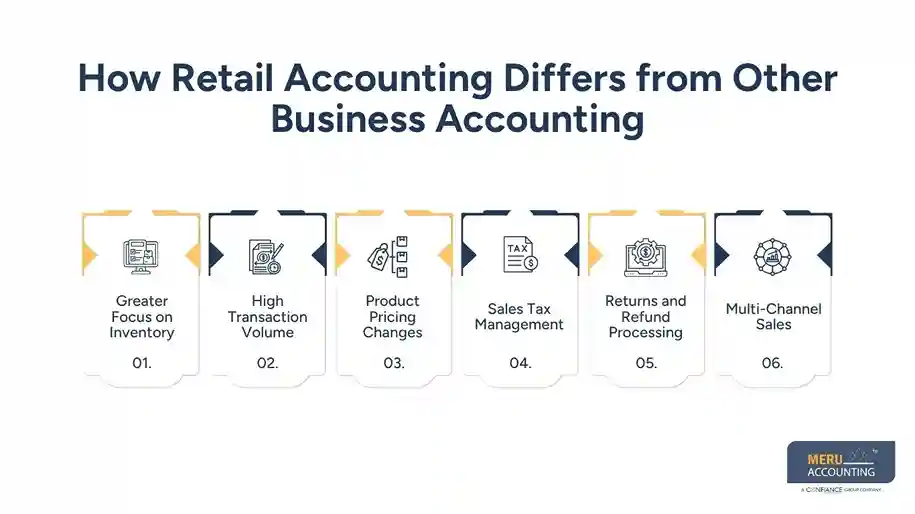
Sales Tax Management
Retail stores must record sales tax separately from business income to meet legal and tax reporting requirements. Well-maintained tax records simplify filing and reduce the risk of reporting errors.
Returns and Refund Processing
Customer returns and refunds affect sales, inventory levels, and financial statements, making accurate recording essential. Proper accounting ensures these transactions are reflected correctly without affecting financial accuracy.
Multi-Channel Sales
Many retailers sell through physical stores, websites, online marketplaces, and social media platforms, requiring all transactions to be recorded in one system. Combining data from every sales channel provides a complete financial view and eliminates duplicate recordkeeping.
Common Accounting Methods Used in Retail
Cash Accounting Method
The cash accounting method records income when payments are received and expenses when they are paid, making it a simple option for many small retailers. While easy to manage, it may not always reflect the complete financial position of a growing business.
Accrual Accounting Method
The accrual method records income and expenses when transactions occur, regardless of when money is received or paid. For accounting for retail businesses, this approach provides a more accurate view of financial performance by including outstanding invoices and supplier obligations.
Retail Inventory Method
The retail inventory method estimates inventory value by comparing the selling price with the cost of products between physical stock counts. Retailers still perform regular inventory checks to verify these estimated values and maintain accurate records.
Periodic Inventory System
A periodic inventory system updates inventory balances at scheduled intervals using physical stock counts instead of recording every sale. This method is commonly used by smaller retail businesses with lower transaction volumes.
Perpetual Inventory System
A perpetual inventory system updates stock levels after every purchase or sale, providing real-time inventory information throughout the year. Many retailers use retail accounting software to automate this process and maintain accurate inventory records.
Choosing the Right Method
Choosing the right approach to accounting for retail business depends on business size, inventory volume, reporting needs, and long-term goals. Retail store owners should evaluate their requirements and seek professional accounting advice when necessary to ensure compliance.
How Retail Accounting Software Simplifies Financial Management
Automates Daily Transactions
Modern retail accounting software automatically records sales, purchases, expenses, and bank transactions, reducing manual data entry and recording errors. Automation also saves time and makes month-end financial reporting more efficient.
Tracks Inventory in Real Time
Modern accounting platforms integrate with inventory management systems to update stock levels automatically after every sale or purchase. Real-time inventory tracking improves stock accuracy, prevents shortages, reduces excess inventory, and helps retailers make better purchasing decisions.
Creates Financial Reports
The system generates essential financial reports, including profit and loss statements, balance sheets, cash flow statements, and sales summaries. These reports provide valuable insights into business performance, profitability, and overall financial health, helping retailers make informed decisions.
Connects With POS Systems
Integration with point-of-sale (POS) systems automatically transfers sales transactions into financial records, eliminating duplicate data entry. Automated synchronization improves record accuracy, saves time, and supports efficient accounting for retail businesses by reducing manual bookkeeping tasks.
Simplifies Bank Reconciliation
The software matches bank transactions with accounting records automatically, making it easier to identify missing or incorrect entries. Automated reconciliation saves time and increases the accuracy of financial records.
Strengthens Financial Control
Using retail accounting software keeps sales, inventory, expenses, payroll, and financial reports organized in one secure system. Centralized financial data allows retail store owners to monitor business performance and make informed decisions more efficiently.
Common Accounting Mistakes Retail Store Owners Should Avoid
Mixing Business and Personal Expenses
Using the same bank account for personal and business transactions makes financial reporting and tax preparation more difficult. Keeping separate accounts makes accounting for retail business more organized and produces reliable financial records.
Ignoring Inventory Records
Inventory should be counted regularly to identify missing, damaged, or obsolete products before they affect profitability. Routine stock reviews keep inventory records accurate and support better purchasing decisions.
Delaying Transaction Entries
Waiting too long to record sales and expenses increases the risk of missing or incorrect financial information. Recording transactions daily keeps accounting for retail business accurate and reduces month-end workload.
Missing Bank Reconciliation
Bank statements should be reconciled with accounting records every month to identify missing transactions, duplicate entries, or banking errors. Regular reconciliation keeps financial records complete and dependable.
Poor Receipt Management
Receipts, supplier invoices, payroll records, and tax documents should be stored securely and organized throughout the year. Proper documentation simplifies tax filing, financial reviews, and audit preparation.
Not Reviewing Financial Reports
Financial reports such as profit and loss statements, balance sheets, and cash flow reports should be reviewed regularly to monitor business performance. Frequent reviews help retail store owners identify financial issues early and make informed decisions.
Best Practices for Maintaining Accurate Retail Financial Records
Record Transactions Daily
Recording sales, purchases, and expenses every day keeps financial records current and reduces errors caused by missed transactions. Consistent recordkeeping is a key part of accounting for retail business and simplifies month-end reporting.
Perform Regular Inventory Counts
Physical inventory counts should be conducted regularly to verify stock levels, even when inventory systems update automatically. Comparing actual inventory with accounting records helps identify missing, damaged, or misplaced products.
Review Financial Reports Monthly
Monthly reviews of profit and loss statements, cash flow reports, and balance sheets provide a clear view of business performance and support effective accounting for retail businesses. Regular analysis also supports better budgeting and informed financial planning.
Back Up Financial Data
Financial records should be backed up regularly using secure cloud storage or other reliable backup systems to prevent data loss. Maintaining backups also allows faster recovery if technical issues or system failures occur.
Use Retail Accounting Software
Modern retail accounting software automates bookkeeping, tracks inventory, and generates financial reports with greater accuracy. Choosing the right retail accounting tool reduces manual work and supports efficient financial management as the business grows.
Work With Accounting Professionals
Qualified accounting professionals can review financial statements, explain reporting requirements, and provide guidance on tax compliance. Professional advice also supports informed financial decisions and strengthens long-term business management.
Why Choose Meru Accounting for Retail Accounting
Managing retail finances requires accurate records, timely reporting, and industry expertise. Meru Accounting provides professional retail accounting services that help retailers maintain organized financial records while reducing the burden of day-to-day accounting tasks.
Our experienced accountants manage sales recording, expense tracking, inventory accounting, bank reconciliations, and financial reporting. By using modern accounting technology and proven bookkeeping processes, we deliver reliable financial information that supports better business decisions and long-term growth.
Key advantages include:
- Accurate sales and expense tracking
- Inventory accounting support
- Timely bank reconciliations
- Detailed financial reporting
- Payroll and tax compliance assistance
- Cloud-based accounting solutions
- Dedicated accounting professionals
- Scalable services for growing retailers
Whether you operate a single retail store or multiple locations, Meru Accounting delivers customized retail accounting services that simplify financial management, improve reporting accuracy, and allow you to focus on serving customers and expanding your business.
Our Expert Perspective
Retail accounting is much more than recording sales and expenses. Years of working with businesses show that retailers who maintain accurate inventory records, review financial reports regularly, and use reliable retail accounting software often make faster and more informed business decisions. A consistent approach to accounting for retail business creates stronger financial control and prepares a business for future growth.
Key Takeaways
- Accounting keeps retail financial records organized and reliable.
- Daily transaction recording reduces reporting errors.
- Inventory management plays a major role in retail accounting.
- Monthly financial reports provide useful business insights.
- Bank reconciliation should be completed regularly.
- Separate business and personal expenses at all times.
- Choose accounting methods that match business needs.
- Retail accounting software automates many routine tasks.
- Consistent accounting for retail business supports long-term financial success.
FAQs
Accounting for retail business is the process of recording sales, inventory, expenses, supplier payments, payroll, and other financial transactions so a retail store can track profit and meet tax requirements.
Inventory is one of the largest business assets for most retailers. Accurate inventory records make financial reports more reliable and show the true cost of goods sold.
The right method depends on business size and reporting needs. Many growing retailers use accrual accounting because it provides a more complete view of business performance, while smaller stores may begin with cash accounting.
Retail accounting software automates transaction recording, tracks inventory, prepares financial reports, performs bank reconciliation, and reduces manual bookkeeping work.
Retail store owners should review sales reports, expenses, inventory, cash flow, and other financial records every month. Regular reviews make it easier to identify issues early and make informed business decisions.
optional anymore
on running the business