
Short-term rental properties have become a strong income source for global property owners, especially through platforms like Airbnb. However, many hosts focus mainly on occupancy rates and nightly pricing while ignoring the financial structure behind their rental operations. This is where accounting for short term rentals becomes essential, as it provides clarity on real earnings after platform fees, maintenance costs, taxes, and seasonal fluctuations.
Without proper accounting for short term rentals, reported income often looks higher than actual profit, leading to inaccurate financial understanding.
In many cases, property owners assume strong booking numbers automatically mean strong profitability, but once expenses are properly tracked, the financial picture changes significantly. This is why financial tracking is not just an administrative task but a core part of rental business success.
At the same time, outsourced real estate bookkeeping has become a practical solution, with many owners relying on professionals for structured reporting, cash flow tracking, and expense management. This approach strengthens decision-making and reduces financial errors in growing Airbnb portfolios.
What You Will Learn From This Blog
- How financial tracking affects Airbnb profitability
- Common mistakes in rental income recording
- Why accounting for short term rentals is critical for property owners
- How outsourcing reduces financial confusion
- Ways cash flow clarity improves decision-making
- How pricing strategies depend on financial data
- How scaling becomes easier with structured reporting
How Accounting for Short Term Rentals Impacts Airbnb Profitability
Accurate Income Recording
Airbnb payouts are received after platform deductions. Owners often record only net deposits instead of total booking value. This leads to underreported income and unclear financial performance over time.
Understanding Platform Fees
Airbnb and other platforms deduct service fees before payouts. Without outsourcing real estate bookkeeping or proper accounting for short term rentals, these costs are often ignored, leading to inflated profit perception.
Expense Visibility
Rental properties involve multiple recurring expenses such as cleaning, repairs, utilities, and furnishing costs. Without consistent tracking, owners may struggle to understand the true operating cost of each property.
Tax Accuracy
Tax reporting requires correct classification of income and expenses. Missing or misclassified entries can create filing issues. Proper records reduce errors and support smoother compliance.
True Profit Calculation
Profit is not just income minus deposits; it includes all operational costs. Many owners overlook these adjustments. Accurate financial tracking ensures real net profit is clearly understood.
Key Challenges in Managing Short Term Rental Financial Records
Multiple Platform Management
Many hosts use Airbnb, Booking.com, and direct bookings. Managing records across multiple channels becomes difficult without a structured system. This often leads to scattered data and inconsistent financial reporting.
Irregular Income Patterns
Short-term rentals do not generate fixed monthly income. Seasonal demand creates frequent fluctuations in earnings. Tracking performance without outsourcing real estate bookkeeping or a system makes revenue forecasting difficult.
Hidden Charges
Service fees and transaction charges reduce actual income. These deductions are often not clearly visible in basic summaries. As a result, reported profit may not reflect real earnings.
Manual Entry Errors
Spreadsheets and manual tracking often lead to mistakes. Small errors can significantly affect final financial results. Without proper systems, accuracy becomes difficult to maintain.
Mixed Expenses
Personal and rental expenses sometimes overlap. Proper accounting for short term rentals separates business costs clearly.
Why Outsourcing Real Estate Bookkeeping is a Smart Move For Property Owners
Reduced Operational Burden
Managing guests and maintenance already takes time. Outsourcing real estate bookkeeping reduces workload while ensuring financial accuracy. Property owners gain more time to focus on guest experience and property upkeep.
Professional Record Management
Experts understand rental income structures better. This improves classification and reporting quality. Every transaction gets recorded in a structured and consistent format for better clarity.
Better Compliance Handling
Tax rules for rentals vary by location. Outsourcing real estate accounting helps maintain compliance-ready records. Lower risk of filing errors and penalties during audits due to organized documentation.
Fewer Financial Errors
Professional financial management reduces mistakes caused by manual tracking. Reduced duplication, missing entries, and incorrect expense categorization improve accuracy.
Regular Financial Reporting
Owners receive structured reports for better visibility into performance. Monthly trends and property profitability become easier to track and analyze.
How Outsourcing Real Estate Bookkeeping Improves Cash Flow Tracking and Expense Management
Clear Cash Flow Visibility
Through outsourcing real estate bookkeeping, owners can track real-time income and expenses instead of relying on estimates. Daily financial movement becomes easier to understand across all rental properties. Better visibility reduces confusion around actual available cash.
Organized Expense Recording
Every cost is properly categorized, including repairs, cleaning, and utilities. Proper classification ensures expenses are not mixed or missed during reporting. Clear records help identify which costs are recurring or avoidable.
Better Budget Planning
Historical data helps plan future expenses and maintenance budgets. Past spending patterns support more realistic financial planning for upcoming months. Budget control becomes stronger when seasonal variations are properly analyzed.
Accurate Reconciliation
Bank deposits are matched with booking records to ensure no income is missed. Matching transactions reduces errors between platform payouts and bank statements. Reconciliation improves confidence in reported financial figures.
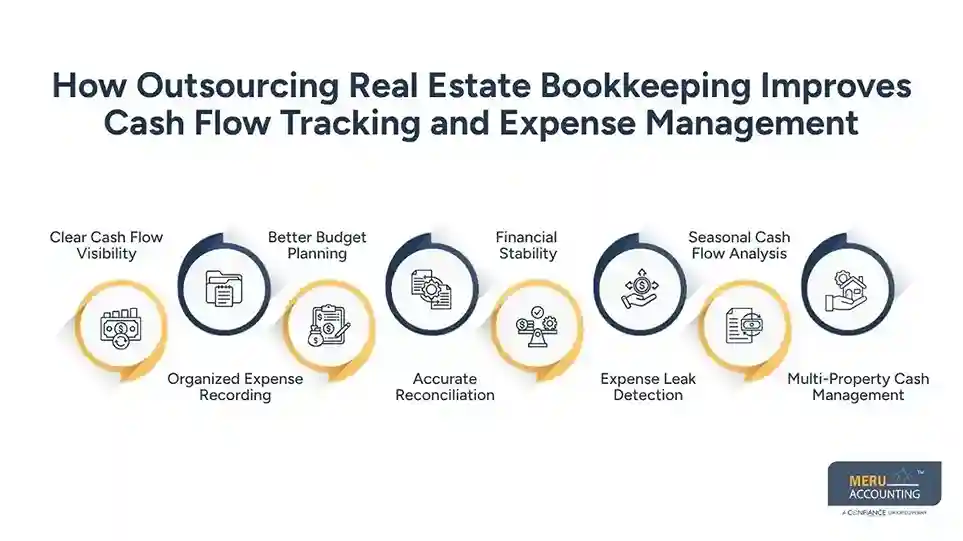
Financial Stability
Consistent reporting through accounting for short term rentals reduces uncertainty in rental income management. Stable financial tracking helps owners prepare for slow booking periods. Long-term planning becomes easier with predictable cash flow insights.
Expense Leak Detection
Small unnoticed costs such as repeated repairs or extra service charges can reduce profit. Detailed tracking highlights these leaks before they impact yearly returns. Early identification supports stronger cost control decisions.
Seasonal Cash Flow Analysis
Rental income often changes with seasons and travel demand cycles. Clear reporting helps identify high and low earning periods across the year. Seasonal insights support better planning for cash reserves.
Multi-Property Cash Management
Owners with multiple listings need separate tracking for each property. Structured reporting ensures cash flow is analyzed individually and collectively. Performance comparison becomes easier across different rental units.
How Airbnb Hosts Can Scale Profitability With Structured Financial Management
Multi Property Tracking
As portfolios grow, accounting for short term rentals ensures each property is tracked separately. Separate tracking helps avoid confusion between income and expenses across different listings.
Performance Comparison
Owners can identify which properties generate higher returns. Clear comparison supports better decisions on where to focus effort and investment.
Cost Optimization
Financial reports highlight unnecessary or repetitive expenses. Reduced wastage improves overall margin across all rental properties.
Expansion Decisions
Data from outsourcing real estate financial management helps evaluate whether new property investments are financially safe.Risk assessment becomes more accurate when backed by real financial history.
Long-Term Stability
Structured reporting supports consistent financial growth. Stable records make it easier to plan future scaling with confidence.
How Financial Data Helps Improve Guest Pricing Strategies on Airbnb
Demand-Based Pricing
With outsourcing real estate financial tracking, occupancy trends help adjust pricing based on demand levels. Real-time booking patterns allow hosts to increase or decrease rates dynamically.
Seasonal Rate Planning
High and low seasons can be identified through financial reports. This enables hosts to set optimized pricing for peak travel periods and off-peak slowdowns.
Cost-Based Pricing
Accounting for short term rentals ensures all expenses are included in pricing decisions to maintain accurate profit margins. This ensures cleaning fees, maintenance, and platform charges are fully covered.
Market Comparison
Financial data helps compare performance with similar listings. It also highlights whether pricing is competitive within the local Airbnb market.
Profit Protection
Pricing strategies ensure minimum profit levels are maintained. This helps prevent underpricing during low-demand periods and protects overall returns.
How Meru Accounting Supports Short Term Rental Owners
Structured Rental Accounting
Meru Accounting provides accounting for short term rentals services designed for Airbnb hosts and property investors. Every property receives separate tracking to ensure accurate financial visibility and control.
Financial Reporting
Clear reports show income, expenses, and net profit for each property. Detailed breakdowns make rental performance easy to evaluate and compare over time.
Tax Support Services
Accurate reporting helps in smooth tax filing and compliance. Proper documentation ensures deductible expenses are captured without missing key details.
Cash Flow Monitoring
Regular tracking helps owners understand liquidity and spending patterns. Better planning becomes possible for maintenance, upgrades, and reinvestment decisions.
Advisory Support
Financial insights help owners improve rental performance and profitability. Strategic recommendations support smarter pricing, cost control, and long-term growth decisions.
Our Expert Perspective
From experience working with property owners managing short-term rentals across different regions, a consistent challenge is the misinterpretation of true profitability, where high booking volumes often create a false sense of strong financial performance.
Once structured accounting for short term rentals is implemented, real financial outcomes become clearer as hidden costs such as platform fees, seasonal demand variations, and maintenance expenses are properly reflected in profit analysis.
In several cases, accurate financial reporting has helped owners refine pricing strategies, control unnecessary costs, and achieve more stable long-term income instead of relying on short-term booking fluctuations.
Key Takeaways
- Real profit depends on structured financial tracking across all short-term rental properties.
- Accounting for short term rentals ensures accurate income visibility and performance measurement.
- Expenses and platform fees have a significant impact on overall profitability.
- Manual tracking increases the risk of financial errors and missed entries.
- Outsourcing real estate accounting improves accuracy while reducing operational workload.
- Clear cash flow insights support stronger and more informed decision-making.
- Pricing strategies should always be based on reliable financial data rather than assumptions.
FAQs
Accounting for short term rentals refers to tracking Airbnb income, platform fees, cleaning charges, and operating expenses to understand the actual profit from each booking or property.
Airbnb earnings often include hidden deductions like service fees and cleaning costs, so proper accounting for short term rentals helps property owners see real net income instead of just gross payouts.
Clear financial tracking identifies unnecessary expenses, incorrect pricing decisions, and seasonal income gaps, allowing better control over rental profitability.
Untracked Airbnb income can lead to inaccurate profit reporting, tax filing issues, and poor pricing decisions due to missing expense visibility.
Common expenses include cleaning services, repairs, maintenance, utilities, furnishing costs, Airbnb service fees, and property management charges.