Managing rental income, property costs, owner payments, deposits, and bank records gets harder as a portfolio grows. The best accounting software for property management should match the size of the portfolio, the number of users, reporting needs, and level of accounting work involved. A landlord with 10 units may need simple tools, while a firm with hundreds of units may need property-level books, owner reports, bank reconciliation, and strong controls.
The right property portfolio management software can bring rent, expenses, reports, and property data into one place. Buildium, for example, offers property accounting, bank reconciliation, financial reports, payments, and 1099 filing features, while DoorLoop offers property-level accounting, bank sync, reporting, and QuickBooks integration.
What You Will Learn From This Blog
- How accounting needs differ between small and large property portfolios.
- Which features matter most when reviewing accounting platforms.
- How property portfolio management software can fit into a wider accounting process.
- What to check before moving from spreadsheets to dedicated software.
- How to choose the best accounting software for property management based on units, users, reports, and growth plans.
Introduction To Accounting Software For Property Management
Accounting software for property management brings rental income, property costs, bank records, and financial reports into one system. Property managers can record rent by property, unit, or owner and track costs such as repairs, utilities, insurance, taxes, and vendor bills. Keeping each transaction linked to the right property makes it easier to see income, costs, and profit for each unit or property.
Bank reconciliation is also a key part of property accounting. The process compares recorded transactions with bank activity so missing, duplicate, or incorrect entries can be found and fixed.
The best accounting software for property management should also provide reports such as profit and loss statements, balance sheets, cash flow reports, rent rolls, and owner statements to give managers a clear view of financial results.
Well-kept accounting records also make tax work easier because income and expenses are organized and easier to review. However, software does not decide how a transaction should be treated for tax purposes. Property owners and managers should consult a qualified tax professional when dealing with complex deductions, deposits, property sales, depreciation, or other tax matters.
Best Accounting Software For Small Property Management Portfolios
Simple Accounting Needs
Small landlords may only manage a few properties and have limited monthly transactions. The best accounting software for property management at this stage should be easy to learn and should not add features that are rarely used.
QuickBooks-Based Workflows
QuickBooks can suit owners who mainly need general bookkeeping, bank feeds, income tracking, expense records, and financial statements. A property-specific platform can be added when tenant, owner, or unit-level needs become more complex.
Property-Level Tracking
Even a small portfolio should keep income and costs linked to the right property. Property-level tracking makes it easier to see which units earn money and which properties carry higher costs.
Bank And Card Feeds
Bank feeds can reduce the need for manual data entry. Small owners should still review and match transactions often because automatic feeds do not remove the need for proper coding.
Easy Reporting
A small portfolio may not need a large reporting system. Basic income statements, expense reports, cash flow data, and property summaries may be enough for routine review.
Best Accounting Software For Large Property Management Portfolios
Multi-Property Accounting
Large portfolios need more than basic bookkeeping. The best accounting software for property management should let teams track many properties, units, owners, accounts, and transactions without mixing records.
Owner Statements
Property managers may need regular statements that show income, expenses, fees, reserves, and owner distributions. Dedicated platforms can bring these details together for faster reporting.
Trust And Deposit Records
Security deposits and other funds may need separate tracking under local rules. When choosing the best accounting software for property management, look for clear deposit records, access controls, and reporting features that support accurate fund tracking.
Team Access
Large portfolios often involve property managers, bookkeepers, accountants, owners, and other staff. Role-based access can limit who can view or change financial data.
Portfolio-Level Reporting
Managers need both property-level and portfolio-level views. Strong property portfolio management software can make it easier to compare properties, review cash flow, and monitor financial results across the portfolio.
Property Portfolio Management Software: Key Features To Compare
Key Feature | What to Look For | Example / Benefit |
Property and Unit Tracking | Look for tools that let users assign transactions to specific properties and units. | Creates a clearer view of rental income, expenses, and property-level financial performance. |
Automated Bank Reconciliation | Bank and credit card synchronization with automated reconciliation is an important feature to consider when choosing the best accounting software for property management. | DoorLoop, for example, states that its system can sync bank and card transactions and reconcile them within the platform. |
Financial Statements | Look for built-in reports such as profit and loss statements, balance sheets, cash flow reports, owner statements, and rent reports. | Reduces manual reporting work and provides a clearer view of portfolio finances. |
Budgeting and Forecasting | Choose software that allows users to create property or portfolio budgets and compare expected results with actual performance. | DoorLoop lists budgeting for properties and portfolios among its accounting features. |
Integrations | The best accounting software for property management should integrate with rent collection, banking, payroll, tax, maintenance, and other business tools. | Buildium provides an Open API that can connect property and accounting data with other applications. |
optional anymore
on running the business
Small Vs. Large Portfolios: Which Accounting Software Is Right For You?
Portfolio Type | Accounting Software Needs | Key Considerations |
Small Portfolio | Owners with a small number of units may need basic features such as bank feeds, expense tracking, reporting, and property records. | Avoid paying for advanced features that may not provide enough value at a smaller scale. |
Growing Portfolio | A growing portfolio may require stronger property tracking, automated rent records, owner reporting, and better financial controls. | The best accounting software for property management should allow businesses to add units and users without requiring an early system change. |
Large Portfolio | Large property managers generally need dedicated property accounting features, including unit-, property-, and portfolio-level financial management. | Buildium states that its enterprise offering supports financials across units, properties, and portfolios, along with bank feeds, reconciliations, 1099 filing, and trust accounting. |
Multiple Owners | Portfolios with multiple investors need clear owner reporting and accurate tracking of owner funds and property activity. | Choose software that simplifies owner statements and reduces manual reporting work. |
Many Team Members | Larger teams need user access controls, audit trails, defined workflows, and reliable financial reports. | Property portfolio management software becomes more valuable when multiple team members need to work with the same financial records. |
How To Choose The Best Accounting Software For Property Management
Count Units And Properties
Start with the number of units, properties, owners, bank accounts, and monthly transactions. Understanding these requirements makes it easier to identify the best accounting software for property management based on your portfolio size and accounting workload.
Check Accounting Controls
Review bank reconciliation, permissions, transaction history, approval rules, and data export options. Strong controls matter more as transaction volume increases.
Review Integration Needs
Check whether the system connects with banks, rent collection tools, payroll, tax tools, or existing accounting software. DoorLoop, for example, offers QuickBooks integration as part of its accounting setup.
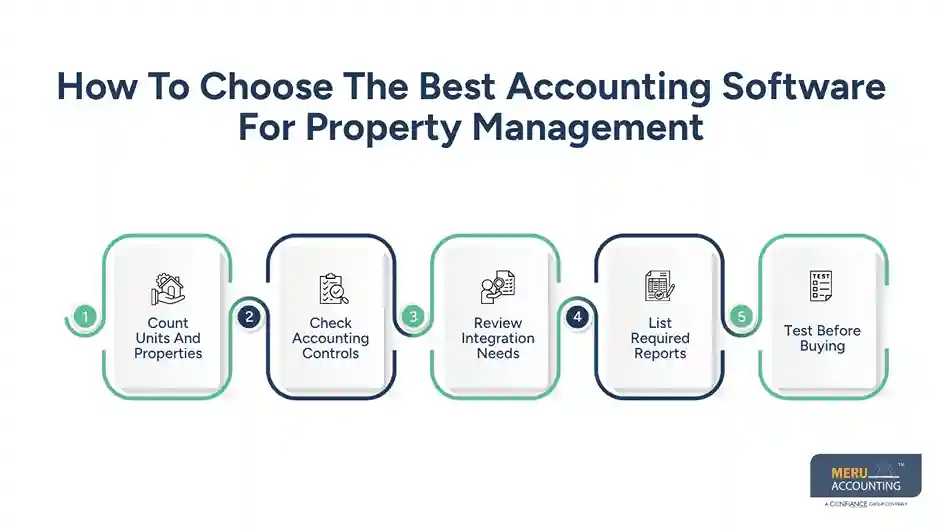
List Required Reports
Write down every report the business needs each month. The best accounting software for property management should produce core reports without forcing the team to rebuild them in spreadsheets.
Test Before Buying
A demo or trial can show whether the system fits real work. Test a rent entry, vendor bill, bank match, owner statement, and month-end report before making a final choice.
Common Mistakes When Choosing Property Management Accounting Software
Choosing By Price Alone
When comparing the best accounting software for property management, consider reporting, automation, integrations, and workflow efficiency rather than focusing only on the monthly subscription fee.
Ignoring Portfolio Growth
Software that works for 20 units may become hard to use at 200 units. Choose a system based on both current needs and a realistic growth plan.
Using Too Many Separate Tools
Separate spreadsheets, accounting files, rent records, and owner reports can create duplicate data. A connected system can reduce repeated entry and make records easier to review.
Failing To Check Data Access
Financial data should not be open to every user. Review user roles, permissions, audit history, and data export options before choosing a platform.
Not Involving The Accountant
An accountant can also help determine whether the best accounting software for property management fits the business’s chart of accounts, reporting requirements, reconciliation process, and month-end workflow.
How Meru Accounting Provides Property Accounting Services
Property Bookkeeping Services
Meru Accounting provides property bookkeeping services covering rental income, expense coding, bank reconciliation, and vendor payments.
Our team maintains accurate and organized financial records for each property and portfolio.
Property-Level Accounting And Reporting
For businesses using the best accounting software for property management, Meru Accounting can organize financial records by property, unit, entity, or portfolio based on the client’s reporting needs. Our reports give owners and managers a clear view of income, expenses, and financial results.
Accounting Software Setup And Management
Meru Accounting manages accounting software setup, including the chart of accounts, property records, and transaction categories.
Our team also configures bank feeds and reports to match the accounting needs of the property business.
Tax-Ready Financial Records
Meru Accounting maintains organized income and expense records that provide a sound base for tax preparation.
Supporting financial data stays structured and ready for review by the owner or tax professional.
Ongoing Property Accounting Services
Meru Accounting provides ongoing bookkeeping, bank reconciliation, account review, and financial reporting to help businesses get consistent value from the best accounting software for property management.
Regular accounting work keeps records current as properties, units, owners, loans, and expenses change.
Our Expert Perspective
The best accounting software for property management should match the size and needs of the portfolio rather than simply offer the most features.
Small portfolios may need basic income, expense, and reporting tools, while larger portfolios may require property-level accounting, owner statements, trust accounting, user controls, and portfolio reports.
Our experience shows that software should fit the current accounting process while allowing the portfolio to grow without frequent system changes. The right property portfolio management software keeps financial records organized, limits duplicate work, and makes bank reconciliation and month-end reporting easier to manage.
Key Takeaways
- Choose software based on units, properties, owners, users, and transaction volume.
- Small portfolios can often use simpler accounting systems with core bookkeeping features.
- Large portfolios may need property-level accounting, owner statements, trust accounting, and stronger controls.
- Property portfolio management software should provide useful reports and clear property-level records.
- Bank feeds and reconciliation can reduce manual work but still require review.
- Integrations matter when accounting connects with rent collection, banking, payroll, or tax tools.
- Test real accounting tasks before selecting the best accounting software for property management.
- Involve an accountant before changing systems or setting up a new property accounting workflow.
FAQs
The best accounting software for property management depends on portfolio size, reporting needs, users, and whether property-level accounting is required.
Yes, small landlords can use general accounting software when their needs are simple, but larger portfolios may need dedicated property accounting features.
Property portfolio management software can organize property income, expenses, reports, banking, tenant data, and other portfolio tasks in one system.
A property manager should review new software when transaction volume, units, owners, reporting needs, or manual bookkeeping work starts to outgrow the current system.
Yes, an accountant can review the chart of accounts, reports, bank reconciliation, controls, integrations, and month-end process before the software is selected.
optional anymore
on running the business