Many small business owners start out by handling their own books. It may seem like a smart way to cut costs in the early stages. Owners often track sales, pay bills, send invoices, and sort expenses on their own. At first, the process may feel easy. As the business grows, accounting tasks become more complex and take up more time. Managing books on your own can pull you away from the work that helps your business grow. Time spent sorting receipts or fixing reports is time not spent on sales, clients, staff, or new ideas. Small errors can also create larger issues later. Hiring a bookkeeper for small business needs can help create a better system.
Instead of trying to do every task alone, business owners can get support from someone who handles records and financial data each day. Bookkeeping builds a strong base for growth and better choices. In this blog, we will see why hiring a bookkeeper for a small business is smarter than managing it yourself.
What You Will Learn From This Blog
In this blog, you will learn:
- What a bookkeeper for small business does
- Signs that you may be spending too much time on bookkeeping
- Risks linked to handling books on your own
- How expert help saves time and lowers stress
- How bookkeeping firms help businesses stay on track
- Why working with a trusted team can support long-term growth
Understanding the Role of a Bookkeeper for Small Business
A bookkeeper for small business handles the day-to-day records that keep a company running smoothly. Their job is not only to enter numbers into software. They help keep financial records clean, current, and easy to review.
A bookkeeper may help with:
- Recording sales and expenses
- Tracking invoices and payments
- Matching bank and credit card records
- Managing payroll data
- Creating reports
- Watching cash flow activity
These tasks help business owners see where money comes in and where it goes out. Clear records also help with tax work and business planning.
Many owners think bookkeeping only matters at tax time. In reality, bookkeeping affects daily business health. Good records help owners understand how their business is doing at any point during the year.
Signs You Are Spending Too Much Time Managing Your Own Books
Business owners wear many hats. They manage staff, serve clients, market their services, and handle growth plans. When bookkeeping starts taking too much time, it can affect other parts of the business.
Here are some signs that your books may be taking too much of your time:
You Work on Books Late at Night
Many owners push bookkeeping tasks to the end of the day. If you spend nights sorting receipts or checking reports, your workload may be too large.
You Feel Behind on Financial Tasks
Missed invoices, late entries, and unfinished records often show that bookkeeping is becoming hard to manage.
You Avoid Looking at Financial Reports
Some owners stop checking reports because they feel confused by the numbers. This can create larger issues later.
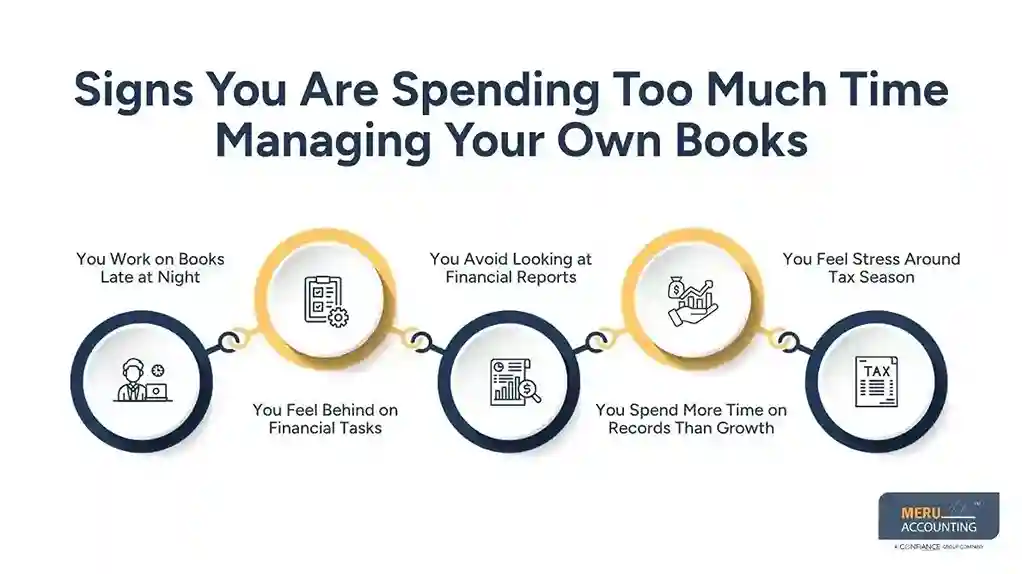
You Spend More Time on Records Than Growth
Your focus should be on building the business. If tasks take over your schedule, growth can slow down.
You Feel Stress Around Tax Season
If tax time brings panic each year, your records may not be organized enough.
These signs often show that hiring a bookkeeper for a small business may be a better choice.
Hidden Risks of Handling Small Business Bookkeeping Yourself
Doing bookkeeping yourself may save money at first, but hidden risks can cost much more over time. Here are some of the major hidden risks:
Errors in Data Entry
Small mistakes happen often. A wrong number or missed entry can affect reports and create problems later.
Missed Tax Details
Tax rules can vary with time. Missing key details may lead to penalties or payment issues.
Poor Cash Flow Tracking
Without good records, owners may not know how much money is truly available. This can create spending problems.
Limited Business Insight
Business decisions should be based on facts. Weak records make it hard to see trends and understand growth patterns.
Lost Time
Time is one of the most valuable business resources. Hours spent fixing records can take away from work that helps grow revenue.
Small bookkeeping issues may not seem serious right away. Over time, though, they can affect the health of the business.
Why Hiring a Bookkeeper for Small Business Saves Time and Reduces Stress
Hiring a bookkeeper for a small business is often less about numbers and more about time. Business owners already have enough on their plates. A bookkeeper helps remove the pressure that comes from managing financial records alone.
More Time for Core Business Work
Owners can focus on sales, clients, and business growth instead of paperwork.
Better Organization
A bookkeeper keeps records current and structured. This makes it easier to find key information when needed.
Fewer Mistakes
Professional support helps lower the risk of common bookkeeping errors.
Clear Financial Reports
Business owners gain reports that help explain business performance in a simple way.
Less Stress During Tax Time
When records stay updated throughout the year, tax preparation becomes easier.
Better Financial Visibility
Knowing where money stands helps owners make smart choices. It becomes easier to plan for future goals.
The right support gives owners more control without adding more work.
How Bookkeeping Firms Help Businesses Stay Organized and Compliant
Many businesses work with bookkeeping firms because they want steady support and reliable systems. Strong bookkeeping practices help businesses stay organized while also helping them meet financial and tax needs.
Here are some ways bookkeeping firms help:
They Create Standard Processes
A clear system helps reduce confusion. Financial records stay in one place and follow a steady process.
They Keep Records Updated
Current records help owners make decisions based on real data instead of guesswork.
They Support Compliance Needs
Rules related to taxes and reporting can change. Professional teams help businesses keep records in order.
They Help During Growth
As a company grows, bookkeeping needs often become more complex. A larger customer base usually means more invoices, expenses, payroll records, and reports.
They Provide Consistent Support
Business owners do not need to manage every task on their own. They gain access to ongoing help and guidance.
Many bookkeeping firms also use digital systems that improve speed and reduce manual work.
Why Meru Accounting Is a Smart Choice as Your Bookkeeper for Small Business
Finding the right partner matters a lot. Business owners need more than someone who enters numbers into a system. They need a team that understands business goals and supports long-term growth.
At Meru Accounting, we work as a trusted bookkeeper for small business operations across many industries. We help businesses build clean systems, maintain accurate records, and stay organized throughout the year.
Our team focuses on:
- Accurate and timely bookkeeping
- Expense and cash flow tracking
- Financial reporting support
- Tax-ready records
- Scalable bookkeeping systems
We understand that each business has different needs. Our goal is to help owners spend less time on records and more time building their business.
Our Expert Insight
Many small business owners think bookkeeping is only about keeping records for tax time. In our work with growing companies, we often see that bookkeeping has a much bigger impact on daily business health. Clear and current financial data helps owners understand spending patterns, track cash flow, and make better business choices with more confidence.
At Meru Accounting, we have also seen that businesses often gain more than time savings when they stop handling books on their own. They gain better control over their finances and a stronger view of where the business stands. A reliable bookkeeper for small business support can help turn financial data into useful information that supports growth and long-term success.
Key Takeaways
- Small business owners often lose valuable time when handling bookkeeping on their own
- A bookkeeper for small business helps manage records and maintain financial accuracy
- DIY bookkeeping can lead to mistakes, missed details, and poor cash flow tracking
- Professional support helps reduce stress and improve organization
- Bookkeeping firms provide systems and ongoing support that help businesses stay compliant
- Working with the right bookkeeping partner allows owners to focus more on growth
FAQs
A bookkeeper for small business records financial activity, tracks expenses, manages invoices, matches accounts, and prepares reports.
A business should think about hiring a bookkeeper when financial work starts taking too much time or becomes hard to manage.
Bookkeeping firms often provide a wider range of support and may offer access to skilled teams and systems without the cost of hiring full-time staff.
Yes. A bookkeeper helps track money coming in and going out so business owners can better understand cash movement.
Many business owners find value in bookkeeping support because it saves time, lowers stress, and helps improve financial accuracy.